


 Home
HomeA Practical Guide to Generating Music with AI
Artificial intelligence is reshaping diverse creative landscapes, and the world of music is a prime example. AI music generation tools empower anyone, regardless of musical background, to compose distinctive and compelling tracks. This guide details the process of creating AI music, offering practical advice and resources to unlock your creative potential.
Key Points
AI music generation tools let users create music without conventional musical training.
The process usually starts with inputting melodies, lyrics, or a style, which the AI uses to produce a full song.
Different AI platforms offer a variety of features, catering to a wide spectrum of musical genres and creative objectives.
AI-generated music is used for content creation, background scores, and as a medium for original artistic work.
Understanding AI Music Generation
What is AI Music Generation?
AI music generation involves using artificial intelligence algorithms to compose music. Unlike traditional composition, which demands extensive knowledge of music theory and instrumental proficiency, AI music generation enables users to produce music by providing high-level directions or examples. These inputs can be melodies, harmonies, rhythms, or stylistic cues. The AI processes this data to create a complete musical piece. This technology uses machine learning, training on massive datasets of existing music to learn patterns and styles, allowing it to produce novel compositions.

AI music generation is advancing rapidly, delivering increasingly sophisticated tools and features.
Primary advantages of AI music generation:
- Democratizing Music Creation: Makes composing accessible to people without formal training.
- Speed and Efficiency: Produces music much quicker than traditional methods.
- Creative Exploration: Opens up new paths for musical experimentation.
- Customized Music: Enables the creation of music tailored for specific uses and listeners.
The AI Music Generation Process
Creating music with AI generally follows these key stages:
Inputting Data: The user supplies initial information, which could be:
- Melody: A brief musical phrase or motif.
- Lyrics: Text for the AI to build a song upon.
- Style: Preferences for genre, instruments, or emotional tone.
- Existing Music: A reference track for the AI to use as inspiration for a new piece.
AI Processing: The AI algorithm examines the input. It uses its trained models to interpret the musical patterns and stylistic elements.
Music Generation: Based on its analysis, the AI creates a new musical arrangement, typically including melodies, harmonies, rhythms, and instrumentation.
Refinement: The user can then fine-tune the generated music by adjusting parameters, altering melodies, or changing instruments to achieve the desired sound.
Export: Once satisfied, the final music can be exported in various audio formats for use in different applications.
Tools for AI Music Generation
Popular AI Music Generation Platforms
A number of AI platforms are available, each with its own set of features. Here are some prominent choices:
- Amper Music (acquired by Shutterstock): Now integrated with Shutterstock, Amper Music enables users to produce custom music for videos, podcasts, and other media.

It's built for commercial applications, providing royalty-free music customized for specific project requirements.
- Boomy: Boomy lets users create songs in seconds and even distribute them to streaming platforms. It emphasizes simplicity and rapid music production.
- Jukebox (OpenAI): Jukebox is an experimental AI model from OpenAI that generates music, including vocals, across various genres. While it requires some technical proficiency, it offers unique creative potential.
- Ecrett Music: Ecrett Music streamlines the creation of royalty-free music for videos and other content, offering multiple genres and customization features.
These tools vary in their offerings, from easy-to-use interfaces to more advanced controls. Your choice should align with your specific goals and technical comfort level.
AI Vocal Generation Tools
The video highlights a specific AI tool that adapts vocals to mimic the style of other artists, such as Drake. This tool needs an initial vocal recording (about one minute long) and then applies AI models to alter the voice to resemble the chosen artist.The presenter mentions a specific website for this task.
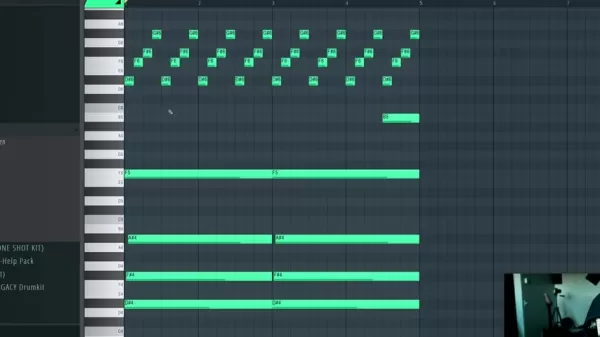
This AI application provides several voice models, including:
- Kanye West
- Kendrick Lamar
- Carti (Playboi Carti)
- Drake
- Juice WRLD
- Travis Scott
- Tyler, the Creator
The user is still responsible for providing the original vocals, meaning lyric creation and some musical input remain with the user.The AI then converts the performance into something that sounds similar to the selected artist.The presenter briefly addresses the ethical questions surrounding this technology but does not explore them in detail.The presenter intends to use this website to upload his vocals and create songs in the style of Drake.
Additional AI Music Technology
Beyond the demonstrated AI vocal transformation and general music generation, it's important to recognize other relevant technologies in the music industry:
- FL Studio: The video utilizes FL Studio, a Digital Audio Workstation (DAW), for arranging and producing music. DAWs are crucial for editing and mixing AI-generated audio, offering greater control and creative refinement.
- Addictive Keys: The video also employs Addictive Keys, a virtual instrument plugin that produces realistic piano sounds. Such digital instrument plugins can enhance AI-generated audio with more authentic and rich soundscapes.These tools aid in producing high-quality audio and improving vocal tracks.
How to Create AI Drake Songs
Step 1: Prepare your Base Vocal
First, record a vocal track that is less than one minute long.

Using a microphone or a clean acapella track yields the best outcomes. If a microphone isn't available, sourcing acapella lyrics and melodies is a workable alternative. This forms the core material for the AI transformation. Select lyrics and a melody that align with your creative vision.
Step 2: Visit AI Music Generation Website
Use the link in the video description to access the specific AI music website. This site provides code that you can run to manage the upload. You must also select the artist model you wish to emulate; for this demonstration, the model is Drake. Note that for this particular website, models might require downloading.
Step 3: Upload Vocal
Ensure your vocal file is in the correct .WAV format for website compatibility. Then, convert the file using a button on the site. After conversion, the website will process the upload. Depending on the site's traffic, this step could take some time.
Step 4: Add to Beat
Using the downloaded AI-processed vocal, you can integrate it into a beat of your choice. This is typically done using a DAW like FL Studio. From there, you can apply noise reduction and fine-tune autotune settings to suit the vocal track.
FAQ
What are the best tools for AI music generation?
Leading options include Amper Music, Boomy, Jukebox (OpenAI), and Ecrett Music, each with distinct features and strengths. Choose based on your project's requirements and your team's expertise.
Do I need to know music theory to use AI music generators?
No, AI music generators are designed for accessibility and ease of use, even for those without music theory knowledge. That said, a fundamental grasp of musical concepts can be beneficial for customizing and refining the output to better match your vision.
Is AI-generated music copyrighted?
Copyright for AI-generated music is a complex and developing area of law. Typically, if you use AI tools to create an original piece, you might hold the copyright to that composition. However, it is vital to check the terms of service of your chosen AI platform to understand their specific copyright policies and any usage limitations.
Related Questions
Can AI replace human musicians?
While AI can compose music, it is not expected to fully replace human musicians. AI is proficient at automating routine tasks and generating music based on set rules and styles. However, human musicians contribute creativity, emotional depth, and a unique artistic perspective that AI cannot entirely reproduce. Rather, AI is more likely to serve as a tool that augments human creativity, offering new avenues for artistic expression.Nevertheless, the emergence of AI models that emulate popular artists raises significant questions. An individual with minimal skill can now imitate a well-known artist, posing ethical challenges to the existing artistic ecosystem. Current copyright law remains unclear regarding AI-generated content.
Related article
 Ctrip Business Travel Unveils AI Ecosystem with 7 Industry Agents and 17 Core Capabilities
Ctrip Business Travel has officially unveiled the "Ctrip Business Travel AI Ecosystem," leveraging large language models to fundamentally restructure corporate travel management. This comprehensive ecosystem addresses four core scenarios: travel arra
Stripe to Acquire OpenRouter as AI Model Routing Gains Momentum
Stripe has agreed to acquire OpenRouter, an AI model-routing platform that gives developers access to hundreds of models through a single interface. The deal adds model selection and routing to Stripe’s existing work around AI usage and token-based b
Former OpenAI Researcher Barrett Zoph Returns to Google to Support Gemini Development
Barret Zoph, who previously abruptly left and joined OpenAI due to a disagreement with Thinking Machines Lab CEO Miriam Mularati, has once again changed employers. Alphabet's Google announced that Zoph will return as Vice President of Research, bring
Related Special Topic Recommendations
Design & Art
Ctrip Business Travel Unveils AI Ecosystem with 7 Industry Agents and 17 Core Capabilities
Ctrip Business Travel has officially unveiled the "Ctrip Business Travel AI Ecosystem," leveraging large language models to fundamentally restructure corporate travel management. This comprehensive ecosystem addresses four core scenarios: travel arra
Stripe to Acquire OpenRouter as AI Model Routing Gains Momentum
Stripe has agreed to acquire OpenRouter, an AI model-routing platform that gives developers access to hundreds of models through a single interface. The deal adds model selection and routing to Stripe’s existing work around AI usage and token-based b
Former OpenAI Researcher Barrett Zoph Returns to Google to Support Gemini Development
Barret Zoph, who previously abruptly left and joined OpenAI due to a disagreement with Thinking Machines Lab CEO Miriam Mularati, has once again changed employers. Alphabet's Google announced that Zoph will return as Vice President of Research, bring
Related Special Topic Recommendations
Design & Art
 Top AI Illustration Tools: Create Editorial Scenes and Cover Art Faster
2026 Latest Top-rated AI Illustration Tools: Our curated list features the best powerfully designed tools for creating stunning editorial scenes and eye-catching cover art quickly. Each option has gone through rigorous real-world tests, offering a free vs paid comparison to help you find the perfect match for your workflow. Try these must-try solutions today to unlock your AI edge and boost your creative productivity. Explore now at XIX.AI.
 10 tools
 xix.ai
Education and Learning
Top AI Tutors for Exam Prep: Practice Math, Science, and English
xix.ai
Education and Learning
Top AI Tutors for Exam Prep: Practice Math, Science, and English
2026 Latest Top-Rated Best AI Tutors for Exam Prep are here on XIX.AI! Our curated list features powerful game-changing tools that offer free vs paid comparison, real-world tests, and weekly updated rankings. They help boost your writing efficiency, simplify complex topic learning, and unlock your academic potential. Explore now to Discover your perfect exam prep tool and Start creating today to Unlock your AI edge!
10 tools
xix.ai
Finance
AI Budget Planning Tools for Personal Money Management
2026 Latest Best Top-Rated AI Budget Planning Tools for Personal Money Management are here on XIX.AI! This curated collection features powerful, game-changing solutions that help you conduct real-world tests, understand spending habits, and create personalized plans to boost productivity. Enjoy a free vs paid comparison along with detailed rankings. Must-try tools designed to simplify money management and unlock your AI edge. Explore now!
11 tools
xix.ai
Health & Wellness
AI Sleep Tracking Assistants: Improve Recovery with Better Bedtime Habits
2026 Latest Best Top-Rated AI Sleep Tracking Assistants curated for ultimate recovery. This fully updated weekly guide features powerful tools that deliver real-world tests, free vs paid comparison, and detailed rankings to help you find the must-try solution that boosts sleep quality and supports better bedtime habits. Explore now at XIX.AI to Unlock your AI edge.
10 tools
xix.ai
Data Analysis
AI SQL Copilots for Product and Revenue Analytics
2026 Latest Best Top-Rated AI SQL Copilots for Product and Revenue Analytics! XIX.AI has curated a powerful, game-changing collection of must-try tools that undergo real-world tests through weekly updated rankings. These tools help users boost productivity significantly by accelerating data analysis, streamlining complex queries, and generating accurate insights to drive smarter business decisions. Explore now to Discover your perfect tool for unlocking your AI edge!
14 tools
xix.ai
Education and Learning
Best AI Homework Helpers That Teach: Learn Concepts, Not Just Answers
2026 Latest Best Top-Rated AI Homework Helpers That Teach Core Concepts Not Just Answers Powerful Tools for Students Must-Try Curated List Weekly Updated Free vs Paid Comparison Real-World Tests Accurate Rankings to Help You Unlock Your Full Learning Potential Explore now to Discover your perfect tool for smarter studying.
10 tools
xix.ai

 Comments (1)
0/500
Comments (1)
0/500
![AvaHill]()
¿Alguien ha probado generar música con IA y luego usarla en un proyecto real? Me da curiosidad saber si los sellos discográficos empezarán a rechazar temas hechos así, o si al contrario los buscarán por ser más baratos. 🤔 La guía parece útil para empezar, aunque espero que no mate la creatividad humana al final.
Artificial intelligence is reshaping diverse creative landscapes, and the world of music is a prime example. AI music generation tools empower anyone, regardless of musical background, to compose distinctive and compelling tracks. This guide details the process of creating AI music, offering practical advice and resources to unlock your creative potential.
Key Points
AI music generation tools let users create music without conventional musical training.
The process usually starts with inputting melodies, lyrics, or a style, which the AI uses to produce a full song.
Different AI platforms offer a variety of features, catering to a wide spectrum of musical genres and creative objectives.
AI-generated music is used for content creation, background scores, and as a medium for original artistic work.
Understanding AI Music Generation
What is AI Music Generation?
AI music generation involves using artificial intelligence algorithms to compose music. Unlike traditional composition, which demands extensive knowledge of music theory and instrumental proficiency, AI music generation enables users to produce music by providing high-level directions or examples. These inputs can be melodies, harmonies, rhythms, or stylistic cues. The AI processes this data to create a complete musical piece. This technology uses machine learning, training on massive datasets of existing music to learn patterns and styles, allowing it to produce novel compositions.
AI music generation is advancing rapidly, delivering increasingly sophisticated tools and features.
Primary advantages of AI music generation:
- Democratizing Music Creation: Makes composing accessible to people without formal training.
- Speed and Efficiency: Produces music much quicker than traditional methods.
- Creative Exploration: Opens up new paths for musical experimentation.
- Customized Music: Enables the creation of music tailored for specific uses and listeners.
The AI Music Generation Process
Creating music with AI generally follows these key stages:
Inputting Data: The user supplies initial information, which could be:
- Melody: A brief musical phrase or motif.
- Lyrics: Text for the AI to build a song upon.
- Style: Preferences for genre, instruments, or emotional tone.
- Existing Music: A reference track for the AI to use as inspiration for a new piece.
AI Processing: The AI algorithm examines the input. It uses its trained models to interpret the musical patterns and stylistic elements.
Music Generation: Based on its analysis, the AI creates a new musical arrangement, typically including melodies, harmonies, rhythms, and instrumentation.
Refinement: The user can then fine-tune the generated music by adjusting parameters, altering melodies, or changing instruments to achieve the desired sound.
Export: Once satisfied, the final music can be exported in various audio formats for use in different applications.
Tools for AI Music Generation
Popular AI Music Generation Platforms
A number of AI platforms are available, each with its own set of features. Here are some prominent choices:
- Amper Music (acquired by Shutterstock): Now integrated with Shutterstock, Amper Music enables users to produce custom music for videos, podcasts, and other media.
It's built for commercial applications, providing royalty-free music customized for specific project requirements.
- Boomy: Boomy lets users create songs in seconds and even distribute them to streaming platforms. It emphasizes simplicity and rapid music production.
- Jukebox (OpenAI): Jukebox is an experimental AI model from OpenAI that generates music, including vocals, across various genres. While it requires some technical proficiency, it offers unique creative potential.
- Ecrett Music: Ecrett Music streamlines the creation of royalty-free music for videos and other content, offering multiple genres and customization features.
These tools vary in their offerings, from easy-to-use interfaces to more advanced controls. Your choice should align with your specific goals and technical comfort level.
AI Vocal Generation Tools
The video highlights a specific AI tool that adapts vocals to mimic the style of other artists, such as Drake. This tool needs an initial vocal recording (about one minute long) and then applies AI models to alter the voice to resemble the chosen artist.The presenter mentions a specific website for this task.
This AI application provides several voice models, including:
- Kanye West
- Kendrick Lamar
- Carti (Playboi Carti)
- Drake
- Juice WRLD
- Travis Scott
- Tyler, the Creator
The user is still responsible for providing the original vocals, meaning lyric creation and some musical input remain with the user.The AI then converts the performance into something that sounds similar to the selected artist.The presenter briefly addresses the ethical questions surrounding this technology but does not explore them in detail.The presenter intends to use this website to upload his vocals and create songs in the style of Drake.
Additional AI Music Technology
Beyond the demonstrated AI vocal transformation and general music generation, it's important to recognize other relevant technologies in the music industry:
- FL Studio: The video utilizes FL Studio, a Digital Audio Workstation (DAW), for arranging and producing music. DAWs are crucial for editing and mixing AI-generated audio, offering greater control and creative refinement.
- Addictive Keys: The video also employs Addictive Keys, a virtual instrument plugin that produces realistic piano sounds. Such digital instrument plugins can enhance AI-generated audio with more authentic and rich soundscapes.These tools aid in producing high-quality audio and improving vocal tracks.
How to Create AI Drake Songs
Step 1: Prepare your Base Vocal
First, record a vocal track that is less than one minute long.
Using a microphone or a clean acapella track yields the best outcomes. If a microphone isn't available, sourcing acapella lyrics and melodies is a workable alternative. This forms the core material for the AI transformation. Select lyrics and a melody that align with your creative vision.
Step 2: Visit AI Music Generation Website
Use the link in the video description to access the specific AI music website. This site provides code that you can run to manage the upload. You must also select the artist model you wish to emulate; for this demonstration, the model is Drake. Note that for this particular website, models might require downloading.
Step 3: Upload Vocal
Ensure your vocal file is in the correct .WAV format for website compatibility. Then, convert the file using a button on the site. After conversion, the website will process the upload. Depending on the site's traffic, this step could take some time.
Step 4: Add to Beat
Using the downloaded AI-processed vocal, you can integrate it into a beat of your choice. This is typically done using a DAW like FL Studio. From there, you can apply noise reduction and fine-tune autotune settings to suit the vocal track.
FAQ
What are the best tools for AI music generation?
Leading options include Amper Music, Boomy, Jukebox (OpenAI), and Ecrett Music, each with distinct features and strengths. Choose based on your project's requirements and your team's expertise.
Do I need to know music theory to use AI music generators?
No, AI music generators are designed for accessibility and ease of use, even for those without music theory knowledge. That said, a fundamental grasp of musical concepts can be beneficial for customizing and refining the output to better match your vision.
Is AI-generated music copyrighted?
Copyright for AI-generated music is a complex and developing area of law. Typically, if you use AI tools to create an original piece, you might hold the copyright to that composition. However, it is vital to check the terms of service of your chosen AI platform to understand their specific copyright policies and any usage limitations.
Related Questions
Can AI replace human musicians?
While AI can compose music, it is not expected to fully replace human musicians. AI is proficient at automating routine tasks and generating music based on set rules and styles. However, human musicians contribute creativity, emotional depth, and a unique artistic perspective that AI cannot entirely reproduce. Rather, AI is more likely to serve as a tool that augments human creativity, offering new avenues for artistic expression.Nevertheless, the emergence of AI models that emulate popular artists raises significant questions. An individual with minimal skill can now imitate a well-known artist, posing ethical challenges to the existing artistic ecosystem. Current copyright law remains unclear regarding AI-generated content.








 Ctrip Business Travel Unveils AI Ecosystem with 7 Industry Agents and 17 Core Capabilities
Ctrip Business Travel has officially unveiled the "Ctrip Business Travel AI Ecosystem," leveraging large language models to fundamentally restructure corporate travel management. This comprehensive ecosystem addresses four core scenarios: travel arra
Ctrip Business Travel Unveils AI Ecosystem with 7 Industry Agents and 17 Core Capabilities
Ctrip Business Travel has officially unveiled the "Ctrip Business Travel AI Ecosystem," leveraging large language models to fundamentally restructure corporate travel management. This comprehensive ecosystem addresses four core scenarios: travel arra
 Stripe to Acquire OpenRouter as AI Model Routing Gains Momentum
Stripe has agreed to acquire OpenRouter, an AI model-routing platform that gives developers access to hundreds of models through a single interface. The deal adds model selection and routing to Stripe’s existing work around AI usage and token-based b
Stripe to Acquire OpenRouter as AI Model Routing Gains Momentum
Stripe has agreed to acquire OpenRouter, an AI model-routing platform that gives developers access to hundreds of models through a single interface. The deal adds model selection and routing to Stripe’s existing work around AI usage and token-based b
 Former OpenAI Researcher Barrett Zoph Returns to Google to Support Gemini Development
Barret Zoph, who previously abruptly left and joined OpenAI due to a disagreement with Thinking Machines Lab CEO Miriam Mularati, has once again changed employers. Alphabet's Google announced that Zoph will return as Vice President of Research, bring
Former OpenAI Researcher Barrett Zoph Returns to Google to Support Gemini Development
Barret Zoph, who previously abruptly left and joined OpenAI due to a disagreement with Thinking Machines Lab CEO Miriam Mularati, has once again changed employers. Alphabet's Google announced that Zoph will return as Vice President of Research, bring

2026 Latest Top-rated AI Illustration Tools: Our curated list features the best powerfully designed tools for creating stunning editorial scenes and eye-catching cover art quickly. Each option has gone through rigorous real-world tests, offering a free vs paid comparison to help you find the perfect match for your workflow. Try these must-try solutions today to unlock your AI edge and boost your creative productivity. Explore now at XIX.AI.
10 tools
xix.ai

2026 Latest Top-Rated Best AI Tutors for Exam Prep are here on XIX.AI! Our curated list features powerful game-changing tools that offer free vs paid comparison, real-world tests, and weekly updated rankings. They help boost your writing efficiency, simplify complex topic learning, and unlock your academic potential. Explore now to Discover your perfect exam prep tool and Start creating today to Unlock your AI edge!
10 tools
xix.ai

2026 Latest Best Top-Rated AI Budget Planning Tools for Personal Money Management are here on XIX.AI! This curated collection features powerful, game-changing solutions that help you conduct real-world tests, understand spending habits, and create personalized plans to boost productivity. Enjoy a free vs paid comparison along with detailed rankings. Must-try tools designed to simplify money management and unlock your AI edge. Explore now!
11 tools
xix.ai

2026 Latest Best Top-Rated AI Sleep Tracking Assistants curated for ultimate recovery. This fully updated weekly guide features powerful tools that deliver real-world tests, free vs paid comparison, and detailed rankings to help you find the must-try solution that boosts sleep quality and supports better bedtime habits. Explore now at XIX.AI to Unlock your AI edge.
10 tools
xix.ai

2026 Latest Best Top-Rated AI SQL Copilots for Product and Revenue Analytics! XIX.AI has curated a powerful, game-changing collection of must-try tools that undergo real-world tests through weekly updated rankings. These tools help users boost productivity significantly by accelerating data analysis, streamlining complex queries, and generating accurate insights to drive smarter business decisions. Explore now to Discover your perfect tool for unlocking your AI edge!
14 tools
xix.ai

2026 Latest Best Top-Rated AI Homework Helpers That Teach Core Concepts Not Just Answers Powerful Tools for Students Must-Try Curated List Weekly Updated Free vs Paid Comparison Real-World Tests Accurate Rankings to Help You Unlock Your Full Learning Potential Explore now to Discover your perfect tool for smarter studying.
10 tools
xix.ai

¿Alguien ha probado generar música con IA y luego usarla en un proyecto real? Me da curiosidad saber si los sellos discográficos empezarán a rechazar temas hechos así, o si al contrario los buscarán por ser más baratos. 🤔 La guía parece útil para empezar, aunque espero que no mate la creatividad humana al final.












