


 Home
HomeMichael Jackson AI Vocals Cover Yoasobi Hit Song Idol
The fusion of artificial intelligence and music is unlocking thrilling opportunities for creative expression and artistic interpretation. A particularly captivating advancement in this area is the emergence of AI music covers, where one artist's vocal identity is used to perform another artist's song. Envision Michael Jackson performing a famous Japanese track—this is now within the realm of possibility thanks to AI. This idea sparks curiosity and prompts discussion, ultimately inspiring novel musical experiments and remixes. This blog post delves into the world of AI music covers, focusing on the innovative version of YOASOBI's "Idol" sung with Michael Jackson's AI-generated voice.
Key Points
AI technology enables the production of music covers, letting one artist's voice perform songs originally by another.
An AI-generated rendition of YOASOBI's "Idol," featuring Michael Jackson's voice, has become a viral sensation.
AI music covers unlock fresh pathways for creative exploration and musical reinterpretation.
The production of AI covers brings up important discussions surrounding copyright, artistic ownership, and authenticity.
AI music technology is advancing at a remarkable speed, leading to the creation of innovative musical content.
The Rise of AI Music Covers
What are AI Music Covers?
AI music covers are produced using artificial intelligence to clone a singer's voice and adapt it to a different musical piece. This process requires training an AI model on a collection of the artist's vocal data, enabling it to imitate their distinct vocal qualities, including tone, pitch, and vibrato. Once the model is fully trained, it can generate the artist's voice performing any song, unveiling a realm of creative potential and mashups that were once thought impossible.
The underlying technology for AI music covers has progressed quickly in recent years, driven by improvements in machine learning and deep learning. Modern AI models can precisely capture the subtle details of a singer's voice, resulting in covers that sound incredibly authentic. These covers can be produced by anyone with the right tools, making music production more accessible and enabling the creation of distinct, personalized listening experiences.
Nonetheless, AI music covers also present ethical and legal challenges. A primary issue is copyright violation, since employing a singer's voice without consent might infringe upon their intellectual property rights. Furthermore, there are debates regarding the authenticity and artistic merit of AI-created music, with critics pointing to its potential lack of emotional depth and the human element found in traditional music.
The Appeal of AI Music
The allure of AI music covers stems from their novelty and the capacity to craft surprising and inventive musical pairings. Listening to a well-known voice perform a familiar song in a different genre or style can be both engaging and thought-provoking. AI music covers provide listeners with a chance to re-envision their favorite tracks and artists in refreshing and dynamic ways.
Moreover, AI music covers can serve as a tribute to artists who have passed away or retired, revitalizing their voices and enabling them to perform songs they never had the chance to record in their lifetime. For devoted fans, this offers a powerful and emotional experience, as they get to hear their cherished artists deliver new material.
Even so, it is crucial to listen to AI music covers with a discerning ear and reflect on the ethical implications of using AI to emulate artists' voices. While these covers can be enjoyable and entertaining, they should not be considered a substitute for original music created by human artists. Supporting and appreciating original music remains essential.
Michael Jackson Sings YOASOBI's "Idol": A Unique AI Cover
The Fusion of Styles
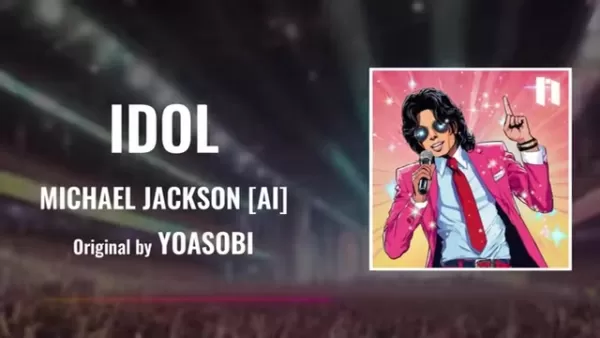
A particularly striking example of an AI music cover is the reinterpretation of YOASOBI's popular track "Idol," performed using Michael Jackson's AI-generated voice. This stylistic fusion merges two legendary artists from diverse cultural backgrounds and eras, forming a truly one-of-a-kind and unforgettable auditory journey. YOASOBI, a Japanese duo celebrated for their J-pop successes, composed "Idol" as the opening theme for the anime series Oshi no Ko. Michael Jackson, the undisputed King of Pop, continues to be one of the most iconic voices in music history. The combination blends two distinct styles into an entirely new creation.
The AI-generated Michael Jackson version of "Idol" demonstrates the power of current AI music technology. The AI model faithfully reproduces the subtleties of Jackson's voice, from his unique vocal inflections to his characteristic ad-libs and melodic runs. The experience of hearing the King of Pop singing in Japanese over a J-pop instrumental is both surprising and delightful for audiences. As a result, fans of both artists have found it highly entertaining, contributing to the cover's widespread popularity.
Despite the innovative and intriguing nature of this AI cover, it inevitably brings ethical and legal questions to the surface. Ongoing debates address the authenticity and artistic worth of AI-generated music, along with potential copyright infringements. Copyright issues remain a central topic in conversations about AI music.
Reactions and Impact
The Michael Jackson AI rendition of "Idol" has attracted broad attention and elicited varied responses from listeners. Some have commended the cover for its inventiveness and the clever application of AI, while others have voiced unease regarding the ethics of using a deceased artist's voice without authorization.
Many Michael Jackson admirers have been positively startled by the cover, observing how seamlessly his voice fits within the J-pop genre. They have applauded the AI model's precision in replicating Jackson's vocal mannerisms and have shared enthusiasm about the prospects of using AI to produce new music with the voices of late artists.
Still, some fans have also highlighted worries about the potential misuse of AI to exploit artists' voices without consent. They contend that AI music covers should only be made with the artist's or their estate's approval, and that AI-generated music ought not to be viewed as a replacement for original works by human musicians.
In summary, the Michael Jackson AI version of "Idol" has stimulated a broader dialogue about the possibilities and obstacles of AI music, raising critical questions about copyright, artistic ownership, and the future direction of music production. As AI music keeps developing, it is vital to address these ethical and legal considerations to ensure the responsible and ethical application of AI technology within the music industry.
Pros and Cons of AI Music Covers
Pros
Novelty and entertainment appeal.
Capacity to generate unique musical fusions.
Potential to honor deceased or retired artists.
Can revive voices for new performances.
Cons
Ethical considerations regarding unauthorized use of artists' voices.
Legal complications associated with copyright violation.
Debates over authenticity and artistic integrity.
Risk of AI displacing human artists and diminishing the value of original music.
Frequently Asked Questions
What is an AI music cover?
An AI music cover is a performance of a song generated by artificial intelligence that replicates an artist's voice and applies it to a track they did not originally perform. This technique involves training an AI system on a collection of the singer's audio recordings, empowering it to imitate their unique vocal attributes like tone, pitch, and vibrato.
How are AI music covers created?
AI music covers are made by training an AI model on a dataset of a singer's vocal tracks. This training enables the model to learn the artist's distinctive vocal features and subsequently use that understanding to synthesize their voice performing any song. The technology powering AI music covers has evolved swiftly in recent years, fueled by progress in machine learning and deep learning.
What are the ethical and legal implications of AI music covers?
AI music covers introduce several ethical and legal concerns. A major issue is copyright infringement, since utilizing a singer's voice without permission may violate their intellectual property rights. Additionally, there are questions about the genuine artistic value of AI-created music, as some believe it misses the emotional richness and human sensibility of conventional music.
What are the potential benefits of AI music covers?
AI music covers offer a range of possible advantages. They can be employed to craft original and surprising musical blends, pay homage to artists who have passed away or retired, and deliver a unique and customized listening experience for fans.
What are the potential drawbacks of AI music covers?
AI music covers also come with possible disadvantages. They could be used to take advantage of artists' voices without their agreement, and they might not convey the same emotional depth and human touch as traditional music. There are also fears that AI could eventually supplant human artists and reduce the appreciation for originally composed music.
Related Questions
How do I make my own AI music?
Producing your own AI music involves multiple stages, beginning with assembling or selecting a dataset of audio recordings from which the AI model will learn. This dataset should ideally be extensive and representative of the vocal traits or musical genre you want to replicate. Next, you must choose a suitable AI model and train it with your dataset. Various AI music generation tools and platforms exist, each with distinct capabilities and constraints. Many of these tools provide pre-trained models that you can adjust or personalize to meet your specific goals.Once your AI model is trained, you can use it to compose new music or produce AI covers of existing songs. Try out different parameters and configurations to get the sound and style you want. Finally, refine your AI-generated track using audio editing software to enhance its quality and add any final details. Remember that AI music creation is a cyclical process, so feel free to test and improve your method until you reach the intended outcome. Getting to know different AI music tools will simplify the initial steps.
Will AI replace musicians and singers?
The possibility of AI replacing musicians and singers is a topic of continuous discussion. Although AI has achieved considerable progress in music generation and voice synthesis, it is improbable that it will entirely supplant human artists in the near term. Human artists contribute an irreplaceable blend of creativity, emotional insight, and personal stories to their music, something AI cannot entirely reproduce.Nevertheless, AI is expected to become a more integral part of the music industry as a resource for supporting and enhancing human creativity. AI can help brainstorm new musical concepts, produce lifelike instrument sounds, and even write complete songs. It can also be used to create AI versions of existing songs, as seen with the Michael Jackson AI cover of "Idol."In the end, the future of music will probably involve a synergy between human and AI creativity. Human artists will keep producing original works, while AI will assist them in the creative workflow and help craft new and groundbreaking musical experiences. It is also crucial to recognize the enduring value of original music.
Related article
 DeepMind CEO Hassabis: I sleep six hours a day, usually feel energetic around 1 a.m.
Fortune recently featured an interview with Demis Hassabis, CEO of Google DeepMind, revealing his unconventional approach to rest and productivity. Hassabis disclosed that he sleeps very little, structuring his waking hours into two distinct work blo
OpenAI, Anthropic Vie for Market Share Despite Revenue Shortfalls
Despite recent reports suggesting OpenAI missed revenue targets, creating pressure on tech stocks this Tuesday, private AI lab investors remain resilient. Seasoned backers have confirmed they will not reduce investment despite negative media coverage
California AV Compliance: A New Era of Tickets, Geofences, and 1M Miles
Guident operates an AuveTech shuttle in South Florida, managing a four-mile route in West Palm Beach and a one-mile route in Boca Raton using its remote monitoring technology. | Credit: GuidentCalifornia is redefining the regulatory landscape for dri
Related Special Topic Recommendations
Video creation
DeepMind CEO Hassabis: I sleep six hours a day, usually feel energetic around 1 a.m.
Fortune recently featured an interview with Demis Hassabis, CEO of Google DeepMind, revealing his unconventional approach to rest and productivity. Hassabis disclosed that he sleeps very little, structuring his waking hours into two distinct work blo
OpenAI, Anthropic Vie for Market Share Despite Revenue Shortfalls
Despite recent reports suggesting OpenAI missed revenue targets, creating pressure on tech stocks this Tuesday, private AI lab investors remain resilient. Seasoned backers have confirmed they will not reduce investment despite negative media coverage
California AV Compliance: A New Era of Tickets, Geofences, and 1M Miles
Guident operates an AuveTech shuttle in South Florida, managing a four-mile route in West Palm Beach and a one-mile route in Boca Raton using its remote monitoring technology. | Credit: GuidentCalifornia is redefining the regulatory landscape for dri
Related Special Topic Recommendations
Video creation
 AI Short-Form Video Hook Generators for Reels, Shorts, and Product Launch Campaigns
2026 Latest Best AI Short-Form Video Hook Generators for Reels Shorts and Product Launch Campaigns! XIX.AI curates top-rated powerful game-changing tools that deliver must-try results through real-world tests. This weekly updated page offers free vs paid comparison rankings to help you find the perfect solution for boosting content creativity and productivity. Explore now to Unlock your AI edge!
 11 tools
 xix.ai
writing
AI Article Outline Tools for Long Form Writing
xix.ai
writing
AI Article Outline Tools for Long Form Writing
2026 Latest Best Top-Rated AI Article Outline Tools for Long Form Writing! This curated collection features powerful, game-changing tools that deliver accurate, structured outlines with real-world tests to boost writing efficiency significantly. XIX.AI is part of this elite selection. Get a free vs paid comparison to help you choose the perfect tool. Explore now and Unlock your AI edge!
9 tools
xix.ai
chatbot
Best AI Roleplay Chat Apps for Language Practice, Interview Prep, and Daily Fluency
2026 Latest Best Top-rated AI Roleplay Chat Apps for Language Practice, Interview Prep, and Daily Fluency! XIX.AI curates a powerful game-changing collection that offers free vs paid comparison, real-world tests, and updated rankings weekly. These must-try tools help you boost writing skills, overcome fluency challenges, and improve communication efficiency across all daily scenarios. Explore now to discover your perfect tool for language growth!
10 tools
xix.ai
Music composition
AI Stem Separation Tools for Remix Production, Sampling Prep, and Karaoke Masters
2026 Latest Best Top-rated AI Stem Separation Tools Curated for Remix Production, Sampling Prep, and Karaoke Masters. These powerful game-changing tools offer real-world tests to deliver precise audio isolation, boosting productivity significantly. XIX.AI provides a weekly updated free vs paid comparison guide to help you find the must-try solution that suits your needs. Explore now to unlock your AI edge.
8 tools
xix.ai
Data Analysis
AI SQL Copilots for Revenue Dashboards, Funnel Analysis, and Product Metrics
2026 Latest Best AI SQL Copilots Ranked Top-Rated! XIX.AI curates a powerful game-changing collection for weekly updated real-world tests. These must-try tools help you generate accurate revenue dashboards, analyze sales funnels, and track product metrics swiftly, boosting productivity massively. Explore now to Discover your perfect tool for data-driven decision making! 238 characters
9 tools
xix.ai
Music composition
Best AI Melody Writing Tools for Song Drafts
2026 Latest Best Top-Rated AI Melody Writing Tools for Song Drafts! XIX.AI has curated a highly powerful game-changing collection that goes through rigorous real-world tests to deliver the best writing experience. You can find detailed free vs paid comparisons, accurate rankings, and must-try options designed to help you create stunning song drafts effortlessly and boost your creative productivity significantly. Explore now to discover your perfect tool!
8 tools
xix.ai

 Comments (2)
0/500
Comments (2)
0/500
![WillLopez]()
Wow, AI can mimic MJ's voice so well? 😮 But I wonder about the ethics of using a deceased artist's voice without permission. Still, the tech is mind-blowing!
![CharlesThomas]()
這個AI翻唱也太神了吧!麥可傑克森的聲音唱YOASOBI的《Idol》有種奇妙的違和感,但意外好聽 😂 不過版權問題該怎麼解決啊?感覺音樂產業要大地震了...
The fusion of artificial intelligence and music is unlocking thrilling opportunities for creative expression and artistic interpretation. A particularly captivating advancement in this area is the emergence of AI music covers, where one artist's vocal identity is used to perform another artist's song. Envision Michael Jackson performing a famous Japanese track—this is now within the realm of possibility thanks to AI. This idea sparks curiosity and prompts discussion, ultimately inspiring novel musical experiments and remixes. This blog post delves into the world of AI music covers, focusing on the innovative version of YOASOBI's "Idol" sung with Michael Jackson's AI-generated voice.
Key Points
AI technology enables the production of music covers, letting one artist's voice perform songs originally by another.
An AI-generated rendition of YOASOBI's "Idol," featuring Michael Jackson's voice, has become a viral sensation.
AI music covers unlock fresh pathways for creative exploration and musical reinterpretation.
The production of AI covers brings up important discussions surrounding copyright, artistic ownership, and authenticity.
AI music technology is advancing at a remarkable speed, leading to the creation of innovative musical content.
The Rise of AI Music Covers
What are AI Music Covers?
AI music covers are produced using artificial intelligence to clone a singer's voice and adapt it to a different musical piece. This process requires training an AI model on a collection of the artist's vocal data, enabling it to imitate their distinct vocal qualities, including tone, pitch, and vibrato. Once the model is fully trained, it can generate the artist's voice performing any song, unveiling a realm of creative potential and mashups that were once thought impossible.
The underlying technology for AI music covers has progressed quickly in recent years, driven by improvements in machine learning and deep learning. Modern AI models can precisely capture the subtle details of a singer's voice, resulting in covers that sound incredibly authentic. These covers can be produced by anyone with the right tools, making music production more accessible and enabling the creation of distinct, personalized listening experiences.
Nonetheless, AI music covers also present ethical and legal challenges. A primary issue is copyright violation, since employing a singer's voice without consent might infringe upon their intellectual property rights. Furthermore, there are debates regarding the authenticity and artistic merit of AI-created music, with critics pointing to its potential lack of emotional depth and the human element found in traditional music.
The Appeal of AI Music
The allure of AI music covers stems from their novelty and the capacity to craft surprising and inventive musical pairings. Listening to a well-known voice perform a familiar song in a different genre or style can be both engaging and thought-provoking. AI music covers provide listeners with a chance to re-envision their favorite tracks and artists in refreshing and dynamic ways.
Moreover, AI music covers can serve as a tribute to artists who have passed away or retired, revitalizing their voices and enabling them to perform songs they never had the chance to record in their lifetime. For devoted fans, this offers a powerful and emotional experience, as they get to hear their cherished artists deliver new material.
Even so, it is crucial to listen to AI music covers with a discerning ear and reflect on the ethical implications of using AI to emulate artists' voices. While these covers can be enjoyable and entertaining, they should not be considered a substitute for original music created by human artists. Supporting and appreciating original music remains essential.
Michael Jackson Sings YOASOBI's "Idol": A Unique AI Cover
The Fusion of Styles
A particularly striking example of an AI music cover is the reinterpretation of YOASOBI's popular track "Idol," performed using Michael Jackson's AI-generated voice. This stylistic fusion merges two legendary artists from diverse cultural backgrounds and eras, forming a truly one-of-a-kind and unforgettable auditory journey. YOASOBI, a Japanese duo celebrated for their J-pop successes, composed "Idol" as the opening theme for the anime series Oshi no Ko. Michael Jackson, the undisputed King of Pop, continues to be one of the most iconic voices in music history. The combination blends two distinct styles into an entirely new creation.
The AI-generated Michael Jackson version of "Idol" demonstrates the power of current AI music technology. The AI model faithfully reproduces the subtleties of Jackson's voice, from his unique vocal inflections to his characteristic ad-libs and melodic runs. The experience of hearing the King of Pop singing in Japanese over a J-pop instrumental is both surprising and delightful for audiences. As a result, fans of both artists have found it highly entertaining, contributing to the cover's widespread popularity.
Despite the innovative and intriguing nature of this AI cover, it inevitably brings ethical and legal questions to the surface. Ongoing debates address the authenticity and artistic worth of AI-generated music, along with potential copyright infringements. Copyright issues remain a central topic in conversations about AI music.
Reactions and Impact
The Michael Jackson AI rendition of "Idol" has attracted broad attention and elicited varied responses from listeners. Some have commended the cover for its inventiveness and the clever application of AI, while others have voiced unease regarding the ethics of using a deceased artist's voice without authorization.
Many Michael Jackson admirers have been positively startled by the cover, observing how seamlessly his voice fits within the J-pop genre. They have applauded the AI model's precision in replicating Jackson's vocal mannerisms and have shared enthusiasm about the prospects of using AI to produce new music with the voices of late artists.
Still, some fans have also highlighted worries about the potential misuse of AI to exploit artists' voices without consent. They contend that AI music covers should only be made with the artist's or their estate's approval, and that AI-generated music ought not to be viewed as a replacement for original works by human musicians.
In summary, the Michael Jackson AI version of "Idol" has stimulated a broader dialogue about the possibilities and obstacles of AI music, raising critical questions about copyright, artistic ownership, and the future direction of music production. As AI music keeps developing, it is vital to address these ethical and legal considerations to ensure the responsible and ethical application of AI technology within the music industry.
Pros and Cons of AI Music Covers
Pros
Novelty and entertainment appeal.
Capacity to generate unique musical fusions.
Potential to honor deceased or retired artists.
Can revive voices for new performances.
Cons
Ethical considerations regarding unauthorized use of artists' voices.
Legal complications associated with copyright violation.
Debates over authenticity and artistic integrity.
Risk of AI displacing human artists and diminishing the value of original music.
Frequently Asked Questions
What is an AI music cover?
An AI music cover is a performance of a song generated by artificial intelligence that replicates an artist's voice and applies it to a track they did not originally perform. This technique involves training an AI system on a collection of the singer's audio recordings, empowering it to imitate their unique vocal attributes like tone, pitch, and vibrato.
How are AI music covers created?
AI music covers are made by training an AI model on a dataset of a singer's vocal tracks. This training enables the model to learn the artist's distinctive vocal features and subsequently use that understanding to synthesize their voice performing any song. The technology powering AI music covers has evolved swiftly in recent years, fueled by progress in machine learning and deep learning.
What are the ethical and legal implications of AI music covers?
AI music covers introduce several ethical and legal concerns. A major issue is copyright infringement, since utilizing a singer's voice without permission may violate their intellectual property rights. Additionally, there are questions about the genuine artistic value of AI-created music, as some believe it misses the emotional richness and human sensibility of conventional music.
What are the potential benefits of AI music covers?
AI music covers offer a range of possible advantages. They can be employed to craft original and surprising musical blends, pay homage to artists who have passed away or retired, and deliver a unique and customized listening experience for fans.
What are the potential drawbacks of AI music covers?
AI music covers also come with possible disadvantages. They could be used to take advantage of artists' voices without their agreement, and they might not convey the same emotional depth and human touch as traditional music. There are also fears that AI could eventually supplant human artists and reduce the appreciation for originally composed music.
Related Questions
How do I make my own AI music?
Producing your own AI music involves multiple stages, beginning with assembling or selecting a dataset of audio recordings from which the AI model will learn. This dataset should ideally be extensive and representative of the vocal traits or musical genre you want to replicate. Next, you must choose a suitable AI model and train it with your dataset. Various AI music generation tools and platforms exist, each with distinct capabilities and constraints. Many of these tools provide pre-trained models that you can adjust or personalize to meet your specific goals.Once your AI model is trained, you can use it to compose new music or produce AI covers of existing songs. Try out different parameters and configurations to get the sound and style you want. Finally, refine your AI-generated track using audio editing software to enhance its quality and add any final details. Remember that AI music creation is a cyclical process, so feel free to test and improve your method until you reach the intended outcome. Getting to know different AI music tools will simplify the initial steps.
Will AI replace musicians and singers?
The possibility of AI replacing musicians and singers is a topic of continuous discussion. Although AI has achieved considerable progress in music generation and voice synthesis, it is improbable that it will entirely supplant human artists in the near term. Human artists contribute an irreplaceable blend of creativity, emotional insight, and personal stories to their music, something AI cannot entirely reproduce.Nevertheless, AI is expected to become a more integral part of the music industry as a resource for supporting and enhancing human creativity. AI can help brainstorm new musical concepts, produce lifelike instrument sounds, and even write complete songs. It can also be used to create AI versions of existing songs, as seen with the Michael Jackson AI cover of "Idol."In the end, the future of music will probably involve a synergy between human and AI creativity. Human artists will keep producing original works, while AI will assist them in the creative workflow and help craft new and groundbreaking musical experiences. It is also crucial to recognize the enduring value of original music.








 DeepMind CEO Hassabis: I sleep six hours a day, usually feel energetic around 1 a.m.
Fortune recently featured an interview with Demis Hassabis, CEO of Google DeepMind, revealing his unconventional approach to rest and productivity. Hassabis disclosed that he sleeps very little, structuring his waking hours into two distinct work blo
DeepMind CEO Hassabis: I sleep six hours a day, usually feel energetic around 1 a.m.
Fortune recently featured an interview with Demis Hassabis, CEO of Google DeepMind, revealing his unconventional approach to rest and productivity. Hassabis disclosed that he sleeps very little, structuring his waking hours into two distinct work blo
 OpenAI, Anthropic Vie for Market Share Despite Revenue Shortfalls
Despite recent reports suggesting OpenAI missed revenue targets, creating pressure on tech stocks this Tuesday, private AI lab investors remain resilient. Seasoned backers have confirmed they will not reduce investment despite negative media coverage
California AV Compliance: A New Era of Tickets, Geofences, and 1M Miles
Guident operates an AuveTech shuttle in South Florida, managing a four-mile route in West Palm Beach and a one-mile route in Boca Raton using its remote monitoring technology. | Credit: GuidentCalifornia is redefining the regulatory landscape for dri
OpenAI, Anthropic Vie for Market Share Despite Revenue Shortfalls
Despite recent reports suggesting OpenAI missed revenue targets, creating pressure on tech stocks this Tuesday, private AI lab investors remain resilient. Seasoned backers have confirmed they will not reduce investment despite negative media coverage
California AV Compliance: A New Era of Tickets, Geofences, and 1M Miles
Guident operates an AuveTech shuttle in South Florida, managing a four-mile route in West Palm Beach and a one-mile route in Boca Raton using its remote monitoring technology. | Credit: GuidentCalifornia is redefining the regulatory landscape for dri

2026 Latest Best AI Short-Form Video Hook Generators for Reels Shorts and Product Launch Campaigns! XIX.AI curates top-rated powerful game-changing tools that deliver must-try results through real-world tests. This weekly updated page offers free vs paid comparison rankings to help you find the perfect solution for boosting content creativity and productivity. Explore now to Unlock your AI edge!
11 tools
xix.ai

2026 Latest Best Top-Rated AI Article Outline Tools for Long Form Writing! This curated collection features powerful, game-changing tools that deliver accurate, structured outlines with real-world tests to boost writing efficiency significantly. XIX.AI is part of this elite selection. Get a free vs paid comparison to help you choose the perfect tool. Explore now and Unlock your AI edge!
9 tools
xix.ai

2026 Latest Best Top-rated AI Roleplay Chat Apps for Language Practice, Interview Prep, and Daily Fluency! XIX.AI curates a powerful game-changing collection that offers free vs paid comparison, real-world tests, and updated rankings weekly. These must-try tools help you boost writing skills, overcome fluency challenges, and improve communication efficiency across all daily scenarios. Explore now to discover your perfect tool for language growth!
10 tools
xix.ai

2026 Latest Best Top-rated AI Stem Separation Tools Curated for Remix Production, Sampling Prep, and Karaoke Masters. These powerful game-changing tools offer real-world tests to deliver precise audio isolation, boosting productivity significantly. XIX.AI provides a weekly updated free vs paid comparison guide to help you find the must-try solution that suits your needs. Explore now to unlock your AI edge.
8 tools
xix.ai

2026 Latest Best AI SQL Copilots Ranked Top-Rated! XIX.AI curates a powerful game-changing collection for weekly updated real-world tests. These must-try tools help you generate accurate revenue dashboards, analyze sales funnels, and track product metrics swiftly, boosting productivity massively. Explore now to Discover your perfect tool for data-driven decision making! 238 characters
9 tools
xix.ai

2026 Latest Best Top-Rated AI Melody Writing Tools for Song Drafts! XIX.AI has curated a highly powerful game-changing collection that goes through rigorous real-world tests to deliver the best writing experience. You can find detailed free vs paid comparisons, accurate rankings, and must-try options designed to help you create stunning song drafts effortlessly and boost your creative productivity significantly. Explore now to discover your perfect tool!
8 tools
xix.ai

Wow, AI can mimic MJ's voice so well? 😮 But I wonder about the ethics of using a deceased artist's voice without permission. Still, the tech is mind-blowing!
這個AI翻唱也太神了吧!麥可傑克森的聲音唱YOASOBI的《Idol》有種奇妙的違和感,但意外好聽 😂 不過版權問題該怎麼解決啊?感覺音樂產業要大地震了...












