


 Home
HomeAI Agent Elements Claw Completes Superconducting Material Development
As artificial intelligence pushes the boundaries of scientific exploration, a significant milestone has been achieved. On July 3, Alibaba DAMO Academy, in partnership with Renmin University of China and the University of Chinese Academy of Sciences, unveiled Elements Claw, the world’s first AI agent dedicated to discovering superconducting materials. This breakthrough signifies a shift in scientific discovery, moving AI from a supporting role to an independent research partner, while establishing an efficient automated framework for new material development.
Traditional methods for finding superconductors are notoriously slow and rely heavily on trial and error. Although major international databases like SuperCon have accumulated decades of data, they contain only about 2,000 recorded materials. Elements Claw overcomes this limitation through a hybrid architecture that combines specialized and general capabilities. Trained on a database of 125 million molecules and crystal structures, it utilizes a 10-billion-parameter atomic foundation model (Elements). This allows the system to accurately assess superconducting potential, achieving an AUC score of 0.996 and keeping critical temperature prediction errors within 1K.
Elements Claw operates with the comprehensive workflow of human scientists. It independently accesses vast literature, evaluates synthesis feasibility, designs experimental protocols, and enables algorithmic self-evolution upon identifying new insights. In practical applications, the AI efficiently screened 68,000 superconducting candidates from 2.4 million crystal structures, completing the task in just 28 GPU hours.
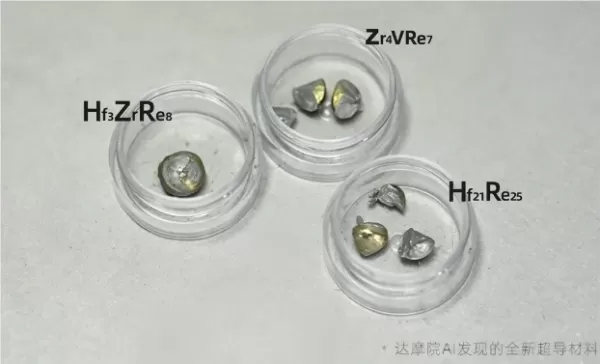
Experimental validation has confirmed four new superconducting materials, including HfZrRe4, which was designed entirely by AI, as well as Hf21Re25, Zr4VRe7, and Zr3ScRe8, discovered through the correction and deep analysis of existing databases. These materials exhibit critical temperatures as high as 6.5K.
Rong Yu, head of the Science Intelligence department at DAMO Academy, noted that these results validate the substantial potential of AI agents in material discovery. To accelerate industry progress, the team has open-sourced data for 2.4 million stable crystals. Professor Huang Wenbing from Renmin University’s Gaoqiang Institute of Artificial Intelligence highlighted that this intelligent framework is expected to be widely applied to other critical materials, such as solid-state battery electrolytes, multiphase catalysts, and thermoelectric materials, marking a new era in scientific research.
Related article
 How to check SEO ranking on Google Japan and Yahoo Japan effectively
Turn a Portrait Photo into a Harry Potter SketchTable of Contents:IntroductionConverting a Photograph into a SketchUsing the Minimum FilterA Different Technique for Converting PortraitsGetting StartedDownload the Required ImagePrepare the LayersDesat
AI Chip Startup Etched Valued at $5 Billion Lands $1 Billion Order for First Inference System
Etched, a prominent rival to NVIDIA in the AI chip sector, has officially launched from stealth, unveiling its latest progress. The company’s proprietary chip system, produced by TSMC earlier this year, has already landed a $1 billion contract.Named
Tech Mahindra and ServiceNow Scale Generative AI Pilots
Tech Mahindra and ServiceNow deepen their multi-year alliance to empower global enterprises with production-ready AI. Credit: Tech MahindraAccording to Mohit Joshi of Tech Mahindra, this partnership enables organizations to transition from generative
Related Special Topic Recommendations
code
How to check SEO ranking on Google Japan and Yahoo Japan effectively
Turn a Portrait Photo into a Harry Potter SketchTable of Contents:IntroductionConverting a Photograph into a SketchUsing the Minimum FilterA Different Technique for Converting PortraitsGetting StartedDownload the Required ImagePrepare the LayersDesat
AI Chip Startup Etched Valued at $5 Billion Lands $1 Billion Order for First Inference System
Etched, a prominent rival to NVIDIA in the AI chip sector, has officially launched from stealth, unveiling its latest progress. The company’s proprietary chip system, produced by TSMC earlier this year, has already landed a $1 billion contract.Named
Tech Mahindra and ServiceNow Scale Generative AI Pilots
Tech Mahindra and ServiceNow deepen their multi-year alliance to empower global enterprises with production-ready AI. Credit: Tech MahindraAccording to Mohit Joshi of Tech Mahindra, this partnership enables organizations to transition from generative
Related Special Topic Recommendations
code
 ChatGPT Debugging Tools for Python Errors, API Logs, and Stack Trace Triage
2026 Latest Best ChatGPT debugging tools for Python errors, API logs, and stack trace triage are here on XIX.AI. This curated list of top-rated solutions offers a free vs paid comparison, real-world tests, and detailed rankings to help you find the most powerful tool that can significantly boost your productivity and help you solve complex technical issues faster. Explore now to discover your perfect solution!
 9 tools
 xix.ai
Text-to-speech
AI Voiceover Tools for Product Demo Videos
xix.ai
Text-to-speech
AI Voiceover Tools for Product Demo Videos
2026 Latest Best Top-Rated AI Voiceover Tools for Product Demo Videos are here on XIX.AI! This curated list features powerful, game-changing options that help you create professional-quality audio content fast, boosting your demo efficiency significantly. We conduct real-world tests and provide a free vs paid comparison along with weekly updated rankings to help you find the perfect fit. Explore now to Unlock your AI edge!
10 tools
xix.ai
Business
AI Business Plan Tools for Startup Validation
2026 Latest Best AI Business Plan Tools for Startup Validation! XIX.AI has curated a top-rated list of powerful game-changing tools that go through real-world tests to deliver accurate results. You’ll find a free vs paid comparison, detailed rankings, and easy-to-understand insights to help you choose the perfect solution and boost your startup’s success rate. Explore now to Unlock your AI edge!
9 tools
xix.ai
chatbot
AI Chat Apps for Roleplay and Conversation Practice
2026 Latest Best AI Chat Apps for Roleplay and Conversation Practice! XIX.AI curates a top-rated list of powerful must-try tools that go through rigorous real-world tests to deliver exceptional results. You’ll find detailed free vs paid comparison, comprehensive rankings, and insights into how these apps can boost your language skills and communication confidence effectively. Explore now to discover your perfect tool for practice!
10 tools
xix.ai
design
Best AI Wireframe Tools for Product Teams
2026 Latest Best Top-rated AI Wireframe Tools for Product Teams! This curated list showcases powerful, game-changing solutions that significantly boost productivity through real-world tests and rigorous rankings. It includes a detailed free vs paid comparison to help you find the perfect fit. XIX.AI provides expert insights to guide your decision. Explore now to Discover your perfect tool and Unlock your AI edge in product development!
8 tools
xix.ai
Software Development
Best AI DevOps Tools for Deployment Monitoring
2026 Latest Best Top-Rated AI DevOps Tools for Deployment Monitoring are featured here in our carefully curated list. These powerful tools help teams boost productivity significantly through real-world tests and rigorous rankings. Get a free vs paid comparison to find the perfect option that suits your needs. Explore now to unlock your AI edge!
11 tools
xix.ai

 Comments (0)
0/500
Comments (0)
0/500
As artificial intelligence pushes the boundaries of scientific exploration, a significant milestone has been achieved. On July 3, Alibaba DAMO Academy, in partnership with Renmin University of China and the University of Chinese Academy of Sciences, unveiled Elements Claw, the world’s first AI agent dedicated to discovering superconducting materials. This breakthrough signifies a shift in scientific discovery, moving AI from a supporting role to an independent research partner, while establishing an efficient automated framework for new material development.
Traditional methods for finding superconductors are notoriously slow and rely heavily on trial and error. Although major international databases like SuperCon have accumulated decades of data, they contain only about 2,000 recorded materials. Elements Claw overcomes this limitation through a hybrid architecture that combines specialized and general capabilities. Trained on a database of 125 million molecules and crystal structures, it utilizes a 10-billion-parameter atomic foundation model (Elements). This allows the system to accurately assess superconducting potential, achieving an AUC score of 0.996 and keeping critical temperature prediction errors within 1K.
Elements Claw operates with the comprehensive workflow of human scientists. It independently accesses vast literature, evaluates synthesis feasibility, designs experimental protocols, and enables algorithmic self-evolution upon identifying new insights. In practical applications, the AI efficiently screened 68,000 superconducting candidates from 2.4 million crystal structures, completing the task in just 28 GPU hours.
Experimental validation has confirmed four new superconducting materials, including HfZrRe4, which was designed entirely by AI, as well as Hf21Re25, Zr4VRe7, and Zr3ScRe8, discovered through the correction and deep analysis of existing databases. These materials exhibit critical temperatures as high as 6.5K.
Rong Yu, head of the Science Intelligence department at DAMO Academy, noted that these results validate the substantial potential of AI agents in material discovery. To accelerate industry progress, the team has open-sourced data for 2.4 million stable crystals. Professor Huang Wenbing from Renmin University’s Gaoqiang Institute of Artificial Intelligence highlighted that this intelligent framework is expected to be widely applied to other critical materials, such as solid-state battery electrolytes, multiphase catalysts, and thermoelectric materials, marking a new era in scientific research.








 How to check SEO ranking on Google Japan and Yahoo Japan effectively
Turn a Portrait Photo into a Harry Potter SketchTable of Contents:IntroductionConverting a Photograph into a SketchUsing the Minimum FilterA Different Technique for Converting PortraitsGetting StartedDownload the Required ImagePrepare the LayersDesat
How to check SEO ranking on Google Japan and Yahoo Japan effectively
Turn a Portrait Photo into a Harry Potter SketchTable of Contents:IntroductionConverting a Photograph into a SketchUsing the Minimum FilterA Different Technique for Converting PortraitsGetting StartedDownload the Required ImagePrepare the LayersDesat
 AI Chip Startup Etched Valued at $5 Billion Lands $1 Billion Order for First Inference System
Etched, a prominent rival to NVIDIA in the AI chip sector, has officially launched from stealth, unveiling its latest progress. The company’s proprietary chip system, produced by TSMC earlier this year, has already landed a $1 billion contract.Named
AI Chip Startup Etched Valued at $5 Billion Lands $1 Billion Order for First Inference System
Etched, a prominent rival to NVIDIA in the AI chip sector, has officially launched from stealth, unveiling its latest progress. The company’s proprietary chip system, produced by TSMC earlier this year, has already landed a $1 billion contract.Named
 Tech Mahindra and ServiceNow Scale Generative AI Pilots
Tech Mahindra and ServiceNow deepen their multi-year alliance to empower global enterprises with production-ready AI. Credit: Tech MahindraAccording to Mohit Joshi of Tech Mahindra, this partnership enables organizations to transition from generative
Tech Mahindra and ServiceNow Scale Generative AI Pilots
Tech Mahindra and ServiceNow deepen their multi-year alliance to empower global enterprises with production-ready AI. Credit: Tech MahindraAccording to Mohit Joshi of Tech Mahindra, this partnership enables organizations to transition from generative

2026 Latest Best ChatGPT debugging tools for Python errors, API logs, and stack trace triage are here on XIX.AI. This curated list of top-rated solutions offers a free vs paid comparison, real-world tests, and detailed rankings to help you find the most powerful tool that can significantly boost your productivity and help you solve complex technical issues faster. Explore now to discover your perfect solution!
9 tools
xix.ai

2026 Latest Best Top-Rated AI Voiceover Tools for Product Demo Videos are here on XIX.AI! This curated list features powerful, game-changing options that help you create professional-quality audio content fast, boosting your demo efficiency significantly. We conduct real-world tests and provide a free vs paid comparison along with weekly updated rankings to help you find the perfect fit. Explore now to Unlock your AI edge!
10 tools
xix.ai

2026 Latest Best AI Business Plan Tools for Startup Validation! XIX.AI has curated a top-rated list of powerful game-changing tools that go through real-world tests to deliver accurate results. You’ll find a free vs paid comparison, detailed rankings, and easy-to-understand insights to help you choose the perfect solution and boost your startup’s success rate. Explore now to Unlock your AI edge!
9 tools
xix.ai

2026 Latest Best AI Chat Apps for Roleplay and Conversation Practice! XIX.AI curates a top-rated list of powerful must-try tools that go through rigorous real-world tests to deliver exceptional results. You’ll find detailed free vs paid comparison, comprehensive rankings, and insights into how these apps can boost your language skills and communication confidence effectively. Explore now to discover your perfect tool for practice!
10 tools
xix.ai

2026 Latest Best Top-rated AI Wireframe Tools for Product Teams! This curated list showcases powerful, game-changing solutions that significantly boost productivity through real-world tests and rigorous rankings. It includes a detailed free vs paid comparison to help you find the perfect fit. XIX.AI provides expert insights to guide your decision. Explore now to Discover your perfect tool and Unlock your AI edge in product development!
8 tools
xix.ai

2026 Latest Best Top-Rated AI DevOps Tools for Deployment Monitoring are featured here in our carefully curated list. These powerful tools help teams boost productivity significantly through real-world tests and rigorous rankings. Get a free vs paid comparison to find the perfect option that suits your needs. Explore now to unlock your AI edge!
11 tools
xix.ai












