


 Home
HomeUnitree and Figure AI Report Latest Advances in Humanoid Robot Development
The field of robotics is expanding at an unprecedented rate, with innovations continuously redefining the limits of possibility. A particularly fascinating area of progress is in humanoid robots, engineered to replicate human appearance and capabilities. This article examines the latest breakthroughs from Unitree Robotics and Figure AI, highlighting their strides in developing natural, human-like walking and dynamic stability. Discover these pioneering technologies and their potential to shape what lies ahead.
Key Points
Unitree Robotics has made a remarkable leap, training its Unitree G1 humanoid robot to walk with a human-like stride in just two days.
Figure AI is showcasing exceptional dynamic stability in its humanoid robots, a critical attribute for reliable operation in unpredictable, real-world settings.
Rapid progress in AI and robotics is accelerating the development of more capable and adaptable robots for various sectors.
Reinforcement learning within simulated environments is a fundamental technique for preparing robots for physical-world tasks.
Enhancing energy efficiency and flexibility remains a central challenge for the next generation of humanoid robots.
Humanoid Robot Advancements: A New Era
Unitree Robotics: Mastering Human-Like Walking
Unitree Robotics recently released a video demonstrating its Unitree G1 humanoid agent learning to walk with a natural, human-like gait in only two days
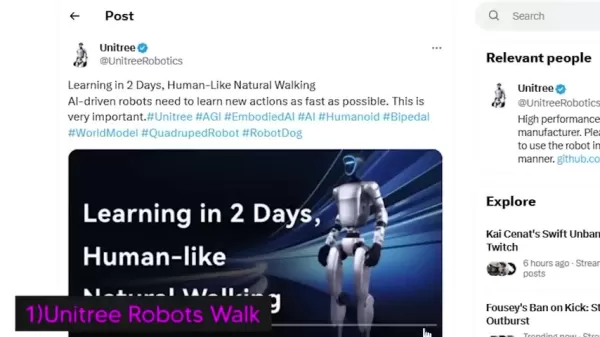
. This achievement highlights the accelerating pace of AI-powered robotics. The capacity for robots to acquire new skills rapidly is essential for their successful integration into diverse workplaces.
Imitating the complexity of human walking has long been a significant obstacle in robotics. Human locomotion involves a delicate balance of stability, coordination, and precise neuromuscular control. Duplicating this in a machine demands advanced algorithms and resilient hardware.
Unitree's success in replicating human walking represents a major milestone. It indicates that AI-driven robots are becoming increasingly proficient at learning and adapting to novel challenges. This is especially important for applications requiring navigation and interaction within spaces built for people.
For effective collaboration, these AI-driven systems must learn new actions quickly. This speed of learning is vital for seamless integration into human-centric environments. The related discussion includes #Unitree #AGI #EmbodiedAI #AI #Humanoid #Bipedal #WorldModel #QuadrupedRobot #RobotDog
The Significance of Natural Walking in Humanoid Robots
Developing a natural walking gait for humanoid robots carries profound implications for numerous industries. Here’s why achieving this human-like movement is so critical:
- Superior Mobility: Natural walking allows robots to traverse complex landscapes and environments designed for human use, including staircases, uneven ground, and crowded areas.
- Better Human-Robot Interaction: A familiar, human-like gait makes robots seem less mechanical and more approachable, which fosters trust and improves collaboration in shared tasks.
- Pursuit of Energy Efficiency: Although current models are still evolving, the goal of natural walking is to optimize energy use by emulating the efficient biomechanics of human movement.
- Broad Application Potential: Robots that walk naturally can be deployed in a wide array of roles, from logistics and security to patient care in healthcare and emergency response in disaster zones.
Ultimately, robots that move like humans can integrate more effectively into our world, working alongside us to augment our capabilities and improve daily life. Unitree's development marks a significant advance toward this objective.
Dynamic Stability: The Key to Robust Robot Performance
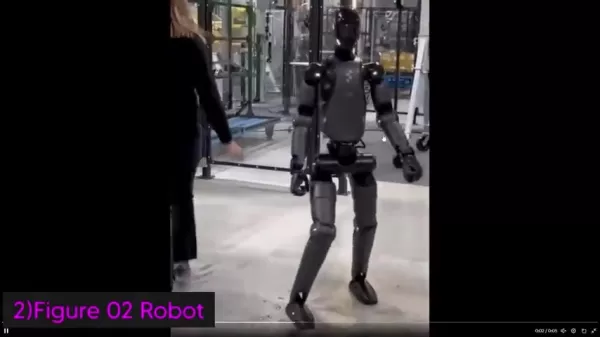
While natural walking is essential, dynamic stability is equally important for humanoid robots. Dynamic stability refers to a robot's ability to maintain balance and controlled movement while in motion, even when encountering external pushes or unexpected obstacles. Figure AI is at the forefront of advancing the frontiers of robotic stability .
A lack of dynamic stability can lead to frequent falls, rendering a robot ineffective and potentially hazardous. Robust stability ensures robots can operate dependably in authentic environments where conditions are constantly changing.
Core components of dynamic stability include:
- Balance Control: The capability to detect and correct deviations from a stable position.
- Precise Foot Placement: Accurate control over where the foot lands to maintain balance on varied surfaces.
- Joint Torque Management: Regulating the force applied at each joint to ensure stability and prevent damage.
- Response to External Disturbances: The agility to react swiftly and effectively to shoves, impacts, or sudden changes in the ground.
Figure AI's work on enhancing dynamic stability is crucial for building robots that can operate safely and reliably alongside people in dynamic settings. This reliability is a necessity given the substantial potential investment each unit represents.
Exploring Robot Dog Capabilities
Unleashing Reinforcement Learning Potential
The impressive advancements discussed are largely driven by employing reinforcement learning within highly detailed virtual simulations.
Reinforcement learning allows robots to learn through continuous trial and error, refining their performance over countless iterations. Training in simulation exposes robots to a vast spectrum of scenarios without the risks associated with physical damage or safety hazards.
A typical reinforcement learning process involves several key stages:
- Environment Simulation: Building a realistic digital world that replicates physical conditions, including terrain, obstacles, and external forces.
- Reward Structure: Establishing a system of rewards that encourages the robot to accomplish specific objectives, like stable walking or maintaining balance.
- Iterative Training: Running the robot through millions of simulations, enabling it to learn from failures and continuously optimize its control policies.
- Real-World Transfer: Applying the knowledge gained in simulation to a physical robot, with final adjustments made through controlled real-world testing.
Reinforcement learning has proven to be an exceptionally powerful method for training robots to execute complex maneuvers. It enables autonomous learning without exhaustive manual programming. The potential of this approach for robot navigation and adaptation is immense.
Beyond Walking: Agile Movements and Enhanced Balance
The featured footage also highlighted the agility and impressive balance of Unitree's quadrupedal robot
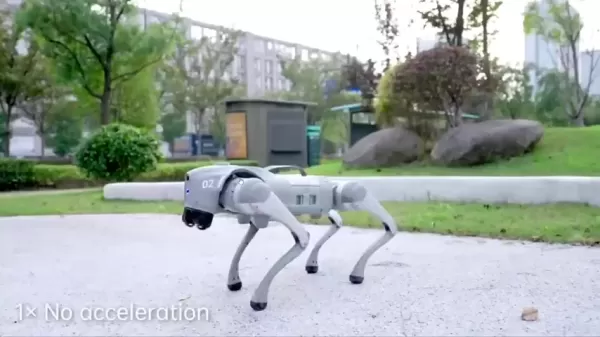
. These four-legged machines demonstrate exceptional skill in negotiating difficult terrain and performing dynamic actions. The robot dog's capacity to stay upright even when kicked or pushed underscores the strides made in dynamic stability.
Practical uses for agile quadrupedal robots are expanding and include:
- Search and Rescue: Accessing hazardous or collapsed structures to locate survivors.
- Infrastructure Inspection: Examining hard-to-reach areas like pipelines, power lines, and bridges.
- Security and Surveillance: Patrolling perimeters and detecting unusual activity.
- Entertainment and Education: Performing in dynamic shows and engaging with the public.
The agile motions and refined balance displayed by these robot dogs illustrate the versatility and real-world potential of quadrupedal platforms. Testing a robot's stability through physical interaction demonstrates its resilience and operational readiness.
Integrating Humanoid Robots into Real-World Applications
Steps for Successful Robot Integration
Deploying humanoid robots in practical settings requires meticulous planning and a structured approach. Consider these essential steps for a successful integration:
- Identify Specific Use Cases: Clearly define the tasks or applications where a humanoid robot offers the greatest value, such as precision assembly, hospital support, or retail customer service.
- Evaluate the Operating Environment: Thoroughly assess the physical and operational conditions, including floor surfaces, lighting, space constraints, and interaction with people.
- Customize Hardware and Software: Tailor the robot's sensors, tools, and control software to meet the precise demands of the chosen application.
- Train Human Colleagues: Provide comprehensive training for the human workforce that will interact with or manage the robot, covering operation, safety protocols, and basic troubleshooting.
- Implement Ongoing Monitoring and Maintenance: Establish a schedule for continuous performance review, software updates, and preventive hardware maintenance to ensure long-term reliability and efficiency.
Robot Pricing and Availability
Cost Considerations for Robotics Adoption
The price of humanoid robots varies significantly based on their complexity, performance capabilities, and the manufacturer. Although the initial capital outlay can be substantial, the long-term return on investment—through gains in productivity, consistency, and reduction in certain labor costs—can justify the expense.
Robot Type Estimated Price Range Key Features Humanoid Robot (G1) $30,000 - $150,000 Natural bipedal walking, object manipulation, interactive capabilities Quadrupedal Robot Dog $3,500 - $75,000 All-terrain mobility, agile movement, customizable sensor payloads
Beyond the robot's purchase price, organizations must also budget for ongoing costs such as maintenance, specialized operator training, and any necessary environmental modifications. These sophisticated machines require skilled personnel to unlock their full operational potential.
Balancing the Promise with the Practical: Pros and Cons
Pros
Mimics human form and movement for easier deployment in human-centric spaces.
Offers potential for diverse applications across multiple sectors, from logistics to healthcare.
Rapid iteration and improvement fueled by advances in AI and machine learning.
Capable of social cues and interaction, improving user experience.
Cons
High upfront investment compared to conventional specialized automation.
Demands expertise for ongoing maintenance, programming, and troubleshooting.
Current models face constraints in power consumption and operational duration.
Raises important societal questions about workforce impact, safety, and ethical use.
Frequently Asked Questions About Humanoid Robots
What are the primary applications of humanoid robots?
Humanoid robots are currently being developed for roles in manufacturing, healthcare assistance, customer engagement, and warehouse operations. Their human-like design makes them particularly suitable for tasks requiring dexterity, mobility in human spaces, and natural interaction. As the technology advances, we can anticipate their use in even more innovative and supportive capacities.
How do humanoid robots learn new skills and behaviors?
Humanoid robots acquire skills through a blend of methods, primarily reinforcement learning, imitation learning, and supervised learning. Reinforcement learning uses reward-based trial-and-error in simulation. Imitation learning involves copying demonstrated human actions, while supervised learning trains models on large, curated datasets of examples.
What are the ethical considerations surrounding humanoid robots?
The introduction of humanoid robots brings ethical questions to the forefront, including their impact on employment, data privacy, physical safety, and societal acceptance. Addressing these concerns proactively through thoughtful design, regulation, and public dialogue is crucial for responsible development and deployment, regardless of the technological imperative.
Related Questions
How will humanoid robots impact the future of work?
The effect of humanoid robots on employment is a complex and debated topic. While automation may displace some routine tasks, it is also likely to generate new roles in robot maintenance, supervision, and programming. The optimal future involves a synergistic relationship where robots handle dangerous, repetitive, or physically demanding work, augmenting human skills and creating opportunities for more creative and strategic jobs. A measured, transparent introduction of this technology can help ease public apprehension.
What are the limitations of current humanoid robot technology?
Today's humanoid robots are constrained by factors such as high production costs, limited battery life affecting operational hours, and challenges in reliably navigating highly unstructured or cluttered environments. However, relentless research and engineering efforts are progressively overcoming these hurdles, paving the way for more affordable, enduring, and capable robots in the coming years.
Related article
 Former OpenAI Chief Scientist Ilya’s SSI Unveils First Model
AI has achieved another major milestone. Following his departure from OpenAI, former chief scientist Ilya Sutskever established Safe Superintelligence Inc. (SSI), which has recently unveiled details regarding its inaugural model. Reports from oversea
Lovable Leads Atech's Seed Round as AI Ambient Coding Officially Enters the Hardware Field
On May 14, 2026, AI application development platform Lovable announced its participation in the $800,000 seed funding round for Danish hardware startup Atech. Led by Lovable, the round attracted top-tier venture capital firms including the a16z Scout
Anthropic Expands Claude AI Coding Tools to Japan in Push for Overseas Growth
Anthropic, a prominent U.S. artificial intelligence firm, is intensifying its global outreach. On Wednesday, the company hosted a major developer gathering, "Code with Claude," in Tokyo, drawing close to 500 software engineers. This initiative seeks
Related Special Topic Recommendations
chatbot
Former OpenAI Chief Scientist Ilya’s SSI Unveils First Model
AI has achieved another major milestone. Following his departure from OpenAI, former chief scientist Ilya Sutskever established Safe Superintelligence Inc. (SSI), which has recently unveiled details regarding its inaugural model. Reports from oversea
Lovable Leads Atech's Seed Round as AI Ambient Coding Officially Enters the Hardware Field
On May 14, 2026, AI application development platform Lovable announced its participation in the $800,000 seed funding round for Danish hardware startup Atech. Led by Lovable, the round attracted top-tier venture capital firms including the a16z Scout
Anthropic Expands Claude AI Coding Tools to Japan in Push for Overseas Growth
Anthropic, a prominent U.S. artificial intelligence firm, is intensifying its global outreach. On Wednesday, the company hosted a major developer gathering, "Code with Claude," in Tokyo, drawing close to 500 software engineers. This initiative seeks
Related Special Topic Recommendations
chatbot
 Best AI Conversation Trainer Tools for Interview Practice
2026 Latest Best Top-rated AI Conversation Trainer Tools for Interview Practice are here on XIX.AI! This curated collection features powerful, game-changing tools that go through rigorous real-world tests to deliver accurate feedback. You’ll find a free vs paid comparison and detailed rankings to help you choose the must-try option that boosts your confidence and skills. Explore now to Discover your perfect tool for interview success!
 12 tools
 xix.ai
Design & Art
Best AI Style Transfer Tools for Creative Experiments
xix.ai
Design & Art
Best AI Style Transfer Tools for Creative Experiments
2026 Latest Best Top-rated AI Style Transfer Tools for Creative Experiments! XIX.AI has curated a powerful, game-changing collection of must-try tools that deliver exceptional results through real-world tests and rigorous rankings. These top solutions help creatives boost productivity significantly by accelerating content creation and unlocking endless creative possibilities. Explore now to discover your perfect tool and start creating today!
9 tools
xix.ai
Comic Creation
Best AI Dialogue Bubble Tools for Visual Storytelling
2026 Latest Best Top-Rated AI Dialogue Bubble Tools for Visual Storytelling are here on XIX.AI! This curated collection features powerful, game-changing tools that help creators boost productivity and overcome creative bottlenecks. Get a free vs paid comparison, see real-world tests, and check the latest rankings to find the must-try solutions perfect for crafting engaging visual narratives. Explore now to discover your ideal tool!
10 tools
xix.ai
Meeting Assistant
Top AI Meeting Summary Tools: Track Decisions and Follow-Ups Clearly
2026 Latest Top-Rated Best AI Meeting Summary Tools for Clear Decision Tracking and Effortless Follow-Ups. This curated list showcases powerful, game-changing solutions that boost productivity dramatically by automating meeting notes, identifying key action items, and streamlining team coordination across all projects. Get a free vs paid comparison along with real-world tests and weekly updated rankings to help you find the perfect tool. Explore now to unlock your AI edge!
9 tools
xix.ai
Data Analysis
Best AI Data Cleaning Tools: Fix Missing Values and Duplicates Fast
2026 Latest Best Top-rated AI Data Cleaning Tools for quick fixing of missing values and duplicates. This curated list showcases powerful, game-changing solutions that boost productivity significantly. Each option has undergone rigorous real-world tests to ensure reliability. Get a free vs paid comparison and discover the must-try tool that fits your needs best. Explore now at XIX.AI to Unlock your AI edge.
11 tools
xix.ai
Design & Art
Best AI Creative Ideation Tools for Artists: Break Through Visual Blocks
2026 Latest Best Top-Rated AI Creative Ideation Tools for Artists are curated by XIX.AI to help creators break through visual blocks and boost creativity instantly. These powerful game-changing tools offer real-world tests, detailed free vs paid comparison, and weekly updated rankings. Discover your perfect tool to accelerate content creation and unlock your AI edge today. Explore now!
14 tools
xix.ai

 Comments (0)
0/500
Comments (0)
0/500
The field of robotics is expanding at an unprecedented rate, with innovations continuously redefining the limits of possibility. A particularly fascinating area of progress is in humanoid robots, engineered to replicate human appearance and capabilities. This article examines the latest breakthroughs from Unitree Robotics and Figure AI, highlighting their strides in developing natural, human-like walking and dynamic stability. Discover these pioneering technologies and their potential to shape what lies ahead.
Key Points
Unitree Robotics has made a remarkable leap, training its Unitree G1 humanoid robot to walk with a human-like stride in just two days.
Figure AI is showcasing exceptional dynamic stability in its humanoid robots, a critical attribute for reliable operation in unpredictable, real-world settings.
Rapid progress in AI and robotics is accelerating the development of more capable and adaptable robots for various sectors.
Reinforcement learning within simulated environments is a fundamental technique for preparing robots for physical-world tasks.
Enhancing energy efficiency and flexibility remains a central challenge for the next generation of humanoid robots.
Humanoid Robot Advancements: A New Era
Unitree Robotics: Mastering Human-Like Walking
Unitree Robotics recently released a video demonstrating its Unitree G1 humanoid agent learning to walk with a natural, human-like gait in only two days
. This achievement highlights the accelerating pace of AI-powered robotics. The capacity for robots to acquire new skills rapidly is essential for their successful integration into diverse workplaces.
Imitating the complexity of human walking has long been a significant obstacle in robotics. Human locomotion involves a delicate balance of stability, coordination, and precise neuromuscular control. Duplicating this in a machine demands advanced algorithms and resilient hardware.
Unitree's success in replicating human walking represents a major milestone. It indicates that AI-driven robots are becoming increasingly proficient at learning and adapting to novel challenges. This is especially important for applications requiring navigation and interaction within spaces built for people.
For effective collaboration, these AI-driven systems must learn new actions quickly. This speed of learning is vital for seamless integration into human-centric environments. The related discussion includes #Unitree #AGI #EmbodiedAI #AI #Humanoid #Bipedal #WorldModel #QuadrupedRobot #RobotDog
The Significance of Natural Walking in Humanoid Robots
Developing a natural walking gait for humanoid robots carries profound implications for numerous industries. Here’s why achieving this human-like movement is so critical:
- Superior Mobility: Natural walking allows robots to traverse complex landscapes and environments designed for human use, including staircases, uneven ground, and crowded areas.
- Better Human-Robot Interaction: A familiar, human-like gait makes robots seem less mechanical and more approachable, which fosters trust and improves collaboration in shared tasks.
- Pursuit of Energy Efficiency: Although current models are still evolving, the goal of natural walking is to optimize energy use by emulating the efficient biomechanics of human movement.
- Broad Application Potential: Robots that walk naturally can be deployed in a wide array of roles, from logistics and security to patient care in healthcare and emergency response in disaster zones.
Ultimately, robots that move like humans can integrate more effectively into our world, working alongside us to augment our capabilities and improve daily life. Unitree's development marks a significant advance toward this objective.
Dynamic Stability: The Key to Robust Robot Performance
While natural walking is essential, dynamic stability is equally important for humanoid robots. Dynamic stability refers to a robot's ability to maintain balance and controlled movement while in motion, even when encountering external pushes or unexpected obstacles. Figure AI is at the forefront of advancing the frontiers of robotic stability .
A lack of dynamic stability can lead to frequent falls, rendering a robot ineffective and potentially hazardous. Robust stability ensures robots can operate dependably in authentic environments where conditions are constantly changing.
Core components of dynamic stability include:
- Balance Control: The capability to detect and correct deviations from a stable position.
- Precise Foot Placement: Accurate control over where the foot lands to maintain balance on varied surfaces.
- Joint Torque Management: Regulating the force applied at each joint to ensure stability and prevent damage.
- Response to External Disturbances: The agility to react swiftly and effectively to shoves, impacts, or sudden changes in the ground.
Figure AI's work on enhancing dynamic stability is crucial for building robots that can operate safely and reliably alongside people in dynamic settings. This reliability is a necessity given the substantial potential investment each unit represents.
Exploring Robot Dog Capabilities
Unleashing Reinforcement Learning Potential
The impressive advancements discussed are largely driven by employing reinforcement learning within highly detailed virtual simulations.
Reinforcement learning allows robots to learn through continuous trial and error, refining their performance over countless iterations. Training in simulation exposes robots to a vast spectrum of scenarios without the risks associated with physical damage or safety hazards.
A typical reinforcement learning process involves several key stages:
- Environment Simulation: Building a realistic digital world that replicates physical conditions, including terrain, obstacles, and external forces.
- Reward Structure: Establishing a system of rewards that encourages the robot to accomplish specific objectives, like stable walking or maintaining balance.
- Iterative Training: Running the robot through millions of simulations, enabling it to learn from failures and continuously optimize its control policies.
- Real-World Transfer: Applying the knowledge gained in simulation to a physical robot, with final adjustments made through controlled real-world testing.
Reinforcement learning has proven to be an exceptionally powerful method for training robots to execute complex maneuvers. It enables autonomous learning without exhaustive manual programming. The potential of this approach for robot navigation and adaptation is immense.
Beyond Walking: Agile Movements and Enhanced Balance
The featured footage also highlighted the agility and impressive balance of Unitree's quadrupedal robot
. These four-legged machines demonstrate exceptional skill in negotiating difficult terrain and performing dynamic actions. The robot dog's capacity to stay upright even when kicked or pushed underscores the strides made in dynamic stability.
Practical uses for agile quadrupedal robots are expanding and include:
- Search and Rescue: Accessing hazardous or collapsed structures to locate survivors.
- Infrastructure Inspection: Examining hard-to-reach areas like pipelines, power lines, and bridges.
- Security and Surveillance: Patrolling perimeters and detecting unusual activity.
- Entertainment and Education: Performing in dynamic shows and engaging with the public.
The agile motions and refined balance displayed by these robot dogs illustrate the versatility and real-world potential of quadrupedal platforms. Testing a robot's stability through physical interaction demonstrates its resilience and operational readiness.
Integrating Humanoid Robots into Real-World Applications
Steps for Successful Robot Integration
Deploying humanoid robots in practical settings requires meticulous planning and a structured approach. Consider these essential steps for a successful integration:
- Identify Specific Use Cases: Clearly define the tasks or applications where a humanoid robot offers the greatest value, such as precision assembly, hospital support, or retail customer service.
- Evaluate the Operating Environment: Thoroughly assess the physical and operational conditions, including floor surfaces, lighting, space constraints, and interaction with people.
- Customize Hardware and Software: Tailor the robot's sensors, tools, and control software to meet the precise demands of the chosen application.
- Train Human Colleagues: Provide comprehensive training for the human workforce that will interact with or manage the robot, covering operation, safety protocols, and basic troubleshooting.
- Implement Ongoing Monitoring and Maintenance: Establish a schedule for continuous performance review, software updates, and preventive hardware maintenance to ensure long-term reliability and efficiency.
Robot Pricing and Availability
Cost Considerations for Robotics Adoption
The price of humanoid robots varies significantly based on their complexity, performance capabilities, and the manufacturer. Although the initial capital outlay can be substantial, the long-term return on investment—through gains in productivity, consistency, and reduction in certain labor costs—can justify the expense.
| Robot Type | Estimated Price Range | Key Features |
|---|---|---|
| Humanoid Robot (G1) | $30,000 - $150,000 | Natural bipedal walking, object manipulation, interactive capabilities |
| Quadrupedal Robot Dog | $3,500 - $75,000 | All-terrain mobility, agile movement, customizable sensor payloads |
Beyond the robot's purchase price, organizations must also budget for ongoing costs such as maintenance, specialized operator training, and any necessary environmental modifications. These sophisticated machines require skilled personnel to unlock their full operational potential.
Balancing the Promise with the Practical: Pros and Cons
Pros
Mimics human form and movement for easier deployment in human-centric spaces.
Offers potential for diverse applications across multiple sectors, from logistics to healthcare.
Rapid iteration and improvement fueled by advances in AI and machine learning.
Capable of social cues and interaction, improving user experience.
Cons
High upfront investment compared to conventional specialized automation.
Demands expertise for ongoing maintenance, programming, and troubleshooting.
Current models face constraints in power consumption and operational duration.
Raises important societal questions about workforce impact, safety, and ethical use.
Frequently Asked Questions About Humanoid Robots
What are the primary applications of humanoid robots?
Humanoid robots are currently being developed for roles in manufacturing, healthcare assistance, customer engagement, and warehouse operations. Their human-like design makes them particularly suitable for tasks requiring dexterity, mobility in human spaces, and natural interaction. As the technology advances, we can anticipate their use in even more innovative and supportive capacities.
How do humanoid robots learn new skills and behaviors?
Humanoid robots acquire skills through a blend of methods, primarily reinforcement learning, imitation learning, and supervised learning. Reinforcement learning uses reward-based trial-and-error in simulation. Imitation learning involves copying demonstrated human actions, while supervised learning trains models on large, curated datasets of examples.
What are the ethical considerations surrounding humanoid robots?
The introduction of humanoid robots brings ethical questions to the forefront, including their impact on employment, data privacy, physical safety, and societal acceptance. Addressing these concerns proactively through thoughtful design, regulation, and public dialogue is crucial for responsible development and deployment, regardless of the technological imperative.
Related Questions
How will humanoid robots impact the future of work?
The effect of humanoid robots on employment is a complex and debated topic. While automation may displace some routine tasks, it is also likely to generate new roles in robot maintenance, supervision, and programming. The optimal future involves a synergistic relationship where robots handle dangerous, repetitive, or physically demanding work, augmenting human skills and creating opportunities for more creative and strategic jobs. A measured, transparent introduction of this technology can help ease public apprehension.
What are the limitations of current humanoid robot technology?
Today's humanoid robots are constrained by factors such as high production costs, limited battery life affecting operational hours, and challenges in reliably navigating highly unstructured or cluttered environments. However, relentless research and engineering efforts are progressively overcoming these hurdles, paving the way for more affordable, enduring, and capable robots in the coming years.








 Former OpenAI Chief Scientist Ilya’s SSI Unveils First Model
AI has achieved another major milestone. Following his departure from OpenAI, former chief scientist Ilya Sutskever established Safe Superintelligence Inc. (SSI), which has recently unveiled details regarding its inaugural model. Reports from oversea
Former OpenAI Chief Scientist Ilya’s SSI Unveils First Model
AI has achieved another major milestone. Following his departure from OpenAI, former chief scientist Ilya Sutskever established Safe Superintelligence Inc. (SSI), which has recently unveiled details regarding its inaugural model. Reports from oversea
 Lovable Leads Atech's Seed Round as AI Ambient Coding Officially Enters the Hardware Field
On May 14, 2026, AI application development platform Lovable announced its participation in the $800,000 seed funding round for Danish hardware startup Atech. Led by Lovable, the round attracted top-tier venture capital firms including the a16z Scout
Lovable Leads Atech's Seed Round as AI Ambient Coding Officially Enters the Hardware Field
On May 14, 2026, AI application development platform Lovable announced its participation in the $800,000 seed funding round for Danish hardware startup Atech. Led by Lovable, the round attracted top-tier venture capital firms including the a16z Scout
 Anthropic Expands Claude AI Coding Tools to Japan in Push for Overseas Growth
Anthropic, a prominent U.S. artificial intelligence firm, is intensifying its global outreach. On Wednesday, the company hosted a major developer gathering, "Code with Claude," in Tokyo, drawing close to 500 software engineers. This initiative seeks
Anthropic Expands Claude AI Coding Tools to Japan in Push for Overseas Growth
Anthropic, a prominent U.S. artificial intelligence firm, is intensifying its global outreach. On Wednesday, the company hosted a major developer gathering, "Code with Claude," in Tokyo, drawing close to 500 software engineers. This initiative seeks

2026 Latest Best Top-rated AI Conversation Trainer Tools for Interview Practice are here on XIX.AI! This curated collection features powerful, game-changing tools that go through rigorous real-world tests to deliver accurate feedback. You’ll find a free vs paid comparison and detailed rankings to help you choose the must-try option that boosts your confidence and skills. Explore now to Discover your perfect tool for interview success!
12 tools
xix.ai

2026 Latest Best Top-rated AI Style Transfer Tools for Creative Experiments! XIX.AI has curated a powerful, game-changing collection of must-try tools that deliver exceptional results through real-world tests and rigorous rankings. These top solutions help creatives boost productivity significantly by accelerating content creation and unlocking endless creative possibilities. Explore now to discover your perfect tool and start creating today!
9 tools
xix.ai

2026 Latest Best Top-Rated AI Dialogue Bubble Tools for Visual Storytelling are here on XIX.AI! This curated collection features powerful, game-changing tools that help creators boost productivity and overcome creative bottlenecks. Get a free vs paid comparison, see real-world tests, and check the latest rankings to find the must-try solutions perfect for crafting engaging visual narratives. Explore now to discover your ideal tool!
10 tools
xix.ai

2026 Latest Top-Rated Best AI Meeting Summary Tools for Clear Decision Tracking and Effortless Follow-Ups. This curated list showcases powerful, game-changing solutions that boost productivity dramatically by automating meeting notes, identifying key action items, and streamlining team coordination across all projects. Get a free vs paid comparison along with real-world tests and weekly updated rankings to help you find the perfect tool. Explore now to unlock your AI edge!
9 tools
xix.ai

2026 Latest Best Top-rated AI Data Cleaning Tools for quick fixing of missing values and duplicates. This curated list showcases powerful, game-changing solutions that boost productivity significantly. Each option has undergone rigorous real-world tests to ensure reliability. Get a free vs paid comparison and discover the must-try tool that fits your needs best. Explore now at XIX.AI to Unlock your AI edge.
11 tools
xix.ai

2026 Latest Best Top-Rated AI Creative Ideation Tools for Artists are curated by XIX.AI to help creators break through visual blocks and boost creativity instantly. These powerful game-changing tools offer real-world tests, detailed free vs paid comparison, and weekly updated rankings. Discover your perfect tool to accelerate content creation and unlock your AI edge today. Explore now!
14 tools
xix.ai












