


 Home
HomeWeChat Plans to Launch Its Own Independent AI Model This Year, Reports Say

WeChat, a Tencent subsidiary, is rapidly advancing its AI strategy. According to 36Kr, the platform is quietly developing a fully independent AI model. The model has reached basic capability milestones and an internal name, with an official launch expected in 2026. This move reflects WeChat's goal to reduce dependence on third-party systems and strengthen its social and utility features through integrated AI tools.
According to WeChat's internal roadmap, the core mission of this in-house model is deep integration with the mini-program ecosystem. By offering foundational AI capabilities, developers can more easily create various AI agents within WeChat, significantly improving the interactivity and efficiency of mini-programs. WeChat executives have stated in internal meetings that while AI cannot replace core human social connections, it will play an indispensable role in transforming information access and productivity tools.
Meanwhile, Tencent is progressing with an AI assistant project codenamed "Top Secret." The initiative plans to begin gray-box testing this year and aims for a full rollout to its 1.4 billion global monthly active users in the third quarter. Once launched, the AI agent will seamlessly interface with millions of mini-programs on WeChat. Users will then be able to use natural language commands for complex tasks like ride-hailing and food ordering across apps, turning WeChat from a messaging tool into a comprehensive digital life interface.
This deep integration of "AI + social" is not only evident in cloud services but is also expanding into local office scenarios. QClaw, currently in internal testing, is a prime example. It enables users to remotely control their personal computers via WeChat chat windows. By sending simple commands, users can have the AI automatically execute over 5,000 skills, including report summarization and file transfers on Windows or Mac systems. As these self-developed models and application clusters gradually come into place, WeChat is redefining the boundaries between people and the digital world, as well as between people and physical devices, through AI.
Related article
 India mandates caller-ID apps to share spam data with telecom operators
India has expanded its anti-spam regulations to mandate that caller-ID and call-management applications share user spam reports with telecom operators, a move that has led Truecaller, a prominent spam-blocking app provider, to label the policy as ant
Qwen AI Platform Expands Model Matrix With Official Launch of GLM-5.3 and DeepSeek-V4-Pro
The Alibaba Cloud Qwen AI platform (MaaS) has recently expanded its model service matrix, integrating Zhipu’s flagship large model GLM-5.3 and the official release of DeepSeek-V4-Pro. The corresponding API services are now publicly available, enablin
Why Agents Forget and Go Off-Track in Long Tasks: AWS, Claude Code, and Manus Unpack Four Frameworks
Large language models frequently lose focus during extended operations, drifting away from their original objectives—a persistent challenge in the intelligent agent sector. The issue often stems not from the model itself, but from the surrounding exe
Related Special Topic Recommendations
Health & Wellness
India mandates caller-ID apps to share spam data with telecom operators
India has expanded its anti-spam regulations to mandate that caller-ID and call-management applications share user spam reports with telecom operators, a move that has led Truecaller, a prominent spam-blocking app provider, to label the policy as ant
Qwen AI Platform Expands Model Matrix With Official Launch of GLM-5.3 and DeepSeek-V4-Pro
The Alibaba Cloud Qwen AI platform (MaaS) has recently expanded its model service matrix, integrating Zhipu’s flagship large model GLM-5.3 and the official release of DeepSeek-V4-Pro. The corresponding API services are now publicly available, enablin
Why Agents Forget and Go Off-Track in Long Tasks: AWS, Claude Code, and Manus Unpack Four Frameworks
Large language models frequently lose focus during extended operations, drifting away from their original objectives—a persistent challenge in the intelligent agent sector. The issue often stems not from the model itself, but from the surrounding exe
Related Special Topic Recommendations
Health & Wellness
 ChatGPT Meal Planning Apps for Macro Tracking, Grocery Lists, and Weekly Prep
2026 Latest Best ChatGPT Meal Planning Apps Top-rated must-try curated powerful game-changing tools for macro tracking grocery lists and weekly prep. XIX.AI delivers weekly updated rankings based on real-world tests, including free vs paid comparison details. Discover your perfect tool to boost productivity and unlock your AI edge today. Explore now!
 9 tools
 xix.ai
Video creation
AI Video Script Tools for Short Form Content
xix.ai
Video creation
AI Video Script Tools for Short Form Content
2026 Latest Best Top-Rated AI Video Script Tools for Short Form Content! XIX.AI has curated a powerful, game-changing collection of must-try tools that go through rigorous real-world tests. You’ll find detailed weekly updated rankings, free vs paid comparison info, and insights to help you boost productivity and unlock your AI edge in creating high-quality short form content. Explore now to discover your perfect tool!
10 tools
xix.ai
Comic Creation
AI Comic Panel Tools for Storyboard Style Narratives
2026 Latest Best AI Comic Panel Tools for Storyboard Style Narratives! This curated top-rated collection features powerful game-changing solutions that help creators boost writing efficiency and overcome creation bottlenecks. You’ll find detailed free vs paid comparison, real-world tests, and official rankings to guide your pick. XIX.AI offers expert insights too. Explore now to Discover your perfect tool for bringing vivid stories to life! 238 characters
9 tools
xix.ai
Video creation
Best AI Video Generation Tools for Short Content
2026 Latest Best Top-rated AI Video Generation Tools for Short Content are here on XIX.AI’s curated collection. These powerful game-changing tools have undergone rigorous real-world tests, featuring a comprehensive free vs paid comparison and detailed rankings to help you find the perfect option. Whether you need to create high-quality short videos fast or boost your productivity across various tasks, these must-try solutions deliver outstanding results. Explore now to discover your ideal tool and unlock your AI edge.
9 tools
xix.ai
Design & Art
Best AI Art Generators: Explore Moodboards, Styles, and Visual Directions
2026 Latest Best AI Art Generators ranking showcases top-rated tools for creating stunning moodboards, exploring diverse styles, and defining visual directions. XIX.AI offers a curated list of powerful, game-changing options that have passed rigorous real-world tests. Get a free vs paid comparison to help you find the perfect fit for boosting your creative workflow. Explore now to Unlock your AI edge in art creation.
10 tools
xix.ai
Marketing
AI Email Personalization Platforms for Shopify Flows, Retention, and Win-Backs
2026 Latest Best AI Email Personalization Platforms for Shopify Flows that boost retention and win-backs. This top-rated curated list features powerful game-changing tools经过real-world tests, offering free vs paid comparison insights. XIX.AI is part of our trusted selection. Discover your perfect tool to unlock your AI edge today. Explore now!
9 tools
xix.ai

 Comments (0)
0/500
Comments (0)
0/500
WeChat, a Tencent subsidiary, is rapidly advancing its AI strategy. According to 36Kr, the platform is quietly developing a fully independent AI model. The model has reached basic capability milestones and an internal name, with an official launch expected in 2026. This move reflects WeChat's goal to reduce dependence on third-party systems and strengthen its social and utility features through integrated AI tools.
According to WeChat's internal roadmap, the core mission of this in-house model is deep integration with the mini-program ecosystem. By offering foundational AI capabilities, developers can more easily create various AI agents within WeChat, significantly improving the interactivity and efficiency of mini-programs. WeChat executives have stated in internal meetings that while AI cannot replace core human social connections, it will play an indispensable role in transforming information access and productivity tools.
Meanwhile, Tencent is progressing with an AI assistant project codenamed "Top Secret." The initiative plans to begin gray-box testing this year and aims for a full rollout to its 1.4 billion global monthly active users in the third quarter. Once launched, the AI agent will seamlessly interface with millions of mini-programs on WeChat. Users will then be able to use natural language commands for complex tasks like ride-hailing and food ordering across apps, turning WeChat from a messaging tool into a comprehensive digital life interface.
This deep integration of "AI + social" is not only evident in cloud services but is also expanding into local office scenarios. QClaw, currently in internal testing, is a prime example. It enables users to remotely control their personal computers via WeChat chat windows. By sending simple commands, users can have the AI automatically execute over 5,000 skills, including report summarization and file transfers on Windows or Mac systems. As these self-developed models and application clusters gradually come into place, WeChat is redefining the boundaries between people and the digital world, as well as between people and physical devices, through AI.








 India mandates caller-ID apps to share spam data with telecom operators
India has expanded its anti-spam regulations to mandate that caller-ID and call-management applications share user spam reports with telecom operators, a move that has led Truecaller, a prominent spam-blocking app provider, to label the policy as ant
India mandates caller-ID apps to share spam data with telecom operators
India has expanded its anti-spam regulations to mandate that caller-ID and call-management applications share user spam reports with telecom operators, a move that has led Truecaller, a prominent spam-blocking app provider, to label the policy as ant
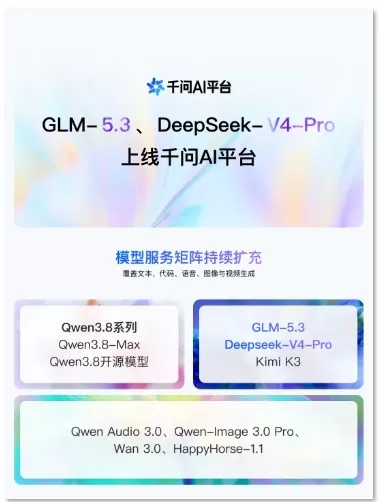 Qwen AI Platform Expands Model Matrix With Official Launch of GLM-5.3 and DeepSeek-V4-Pro
The Alibaba Cloud Qwen AI platform (MaaS) has recently expanded its model service matrix, integrating Zhipu’s flagship large model GLM-5.3 and the official release of DeepSeek-V4-Pro. The corresponding API services are now publicly available, enablin
Qwen AI Platform Expands Model Matrix With Official Launch of GLM-5.3 and DeepSeek-V4-Pro
The Alibaba Cloud Qwen AI platform (MaaS) has recently expanded its model service matrix, integrating Zhipu’s flagship large model GLM-5.3 and the official release of DeepSeek-V4-Pro. The corresponding API services are now publicly available, enablin
 Why Agents Forget and Go Off-Track in Long Tasks: AWS, Claude Code, and Manus Unpack Four Frameworks
Large language models frequently lose focus during extended operations, drifting away from their original objectives—a persistent challenge in the intelligent agent sector. The issue often stems not from the model itself, but from the surrounding exe
Why Agents Forget and Go Off-Track in Long Tasks: AWS, Claude Code, and Manus Unpack Four Frameworks
Large language models frequently lose focus during extended operations, drifting away from their original objectives—a persistent challenge in the intelligent agent sector. The issue often stems not from the model itself, but from the surrounding exe

2026 Latest Best ChatGPT Meal Planning Apps Top-rated must-try curated powerful game-changing tools for macro tracking grocery lists and weekly prep. XIX.AI delivers weekly updated rankings based on real-world tests, including free vs paid comparison details. Discover your perfect tool to boost productivity and unlock your AI edge today. Explore now!
9 tools
xix.ai

2026 Latest Best Top-Rated AI Video Script Tools for Short Form Content! XIX.AI has curated a powerful, game-changing collection of must-try tools that go through rigorous real-world tests. You’ll find detailed weekly updated rankings, free vs paid comparison info, and insights to help you boost productivity and unlock your AI edge in creating high-quality short form content. Explore now to discover your perfect tool!
10 tools
xix.ai

2026 Latest Best AI Comic Panel Tools for Storyboard Style Narratives! This curated top-rated collection features powerful game-changing solutions that help creators boost writing efficiency and overcome creation bottlenecks. You’ll find detailed free vs paid comparison, real-world tests, and official rankings to guide your pick. XIX.AI offers expert insights too. Explore now to Discover your perfect tool for bringing vivid stories to life! 238 characters
9 tools
xix.ai

2026 Latest Best Top-rated AI Video Generation Tools for Short Content are here on XIX.AI’s curated collection. These powerful game-changing tools have undergone rigorous real-world tests, featuring a comprehensive free vs paid comparison and detailed rankings to help you find the perfect option. Whether you need to create high-quality short videos fast or boost your productivity across various tasks, these must-try solutions deliver outstanding results. Explore now to discover your ideal tool and unlock your AI edge.
9 tools
xix.ai

2026 Latest Best AI Art Generators ranking showcases top-rated tools for creating stunning moodboards, exploring diverse styles, and defining visual directions. XIX.AI offers a curated list of powerful, game-changing options that have passed rigorous real-world tests. Get a free vs paid comparison to help you find the perfect fit for boosting your creative workflow. Explore now to Unlock your AI edge in art creation.
10 tools
xix.ai

2026 Latest Best AI Email Personalization Platforms for Shopify Flows that boost retention and win-backs. This top-rated curated list features powerful game-changing tools经过real-world tests, offering free vs paid comparison insights. XIX.AI is part of our trusted selection. Discover your perfect tool to unlock your AI edge today. Explore now!
9 tools
xix.ai












