


 Home
HomeUS DOJ Pushes Tech Injunctions as Antitrust Crackdown Threatens Firefox

The landmark Google antitrust trial has reached a pivotal stage, with the U.S. Department of Justice aggressively pursuing measures to stop Google from paying substantial sums to major browsers for default search engine placement. While this regulatory push aims to dismantle Google's market dominance, it has inadvertently triggered a severe survival crisis for Mozilla, the organization behind the Firefox browser.
As the dominant force in the search engine sector, Google allocates more than $26 billion annually to secure default search positions. Although courts have so far declined to impose a total ban on these payments, the Department of Justice argues in its appeal that Google leverages its monopoly profits to suppress emerging competitors.
Revenue streams under threat leave independent browser makers struggling
For Mozilla, which depends heavily on these arrangements, the proposed ban represents a catastrophic blow. Data indicates that approximately 85% of Mozilla's U.S. revenue stems directly from Google's default search payments. Without this financial support, sustaining its business operations becomes nearly impossible.
Mozilla has previously warned that prohibiting these payments would force independent developers to exit the browser and engine markets entirely. As the ban moves forward, this dire prediction is increasingly materializing into reality.
Regulatory irony: Google's response due in September
This legal conflict is marked by significant irony. The ban may fail to significantly reduce Google's market control, yet it could effectively eliminate its few independent rivals. In this high-stakes legal battle, independent browser vendors like Mozilla have found their ability to advocate for themselves severely restricted.
Under current legal procedures, Google is scheduled to file its formal response brief on September 29. Facing this critical legal challenge, independent browsers reliant on Google's payments are left hoping for a favorable outcome in Google's defense.
Related article
 Hong Kong Stocks Open Higher as AI Names Like MiniMax Plunge Nearly 9%
On March 11, 2026, Hong Kong’s AI sector faced a sudden downturn. Stocks tied to the trending open-source intelligent agent OpenClaw—nicknamed "Lobster"—plummeted after a sharp rally. MiniMax, recently hitting new market cap highs, led the decline, d
China to Approve NVIDIA H200 AI Chip Imports
NVIDIA H200 chips enter mainland China as Beijing balances local chipmaking goals with AI acceleration. Credit: Liu Liqun/Getty ImagesChina is easing limitations on NVIDIA H200 AI, permitting these shipments to help domestic technology firms train ad
AI not close to curing cancer, this startup says it knows what it will take
A biotech startup named Vivodyne argues that the AI drug-discovery sector suffers from a critical data shortage, and has engineered a machine to resolve it.HIVE, a modular robotic laboratory system developed by the company, can cultivate 20 types of
Related Special Topic Recommendations
Meeting Assistant
Hong Kong Stocks Open Higher as AI Names Like MiniMax Plunge Nearly 9%
On March 11, 2026, Hong Kong’s AI sector faced a sudden downturn. Stocks tied to the trending open-source intelligent agent OpenClaw—nicknamed "Lobster"—plummeted after a sharp rally. MiniMax, recently hitting new market cap highs, led the decline, d
China to Approve NVIDIA H200 AI Chip Imports
NVIDIA H200 chips enter mainland China as Beijing balances local chipmaking goals with AI acceleration. Credit: Liu Liqun/Getty ImagesChina is easing limitations on NVIDIA H200 AI, permitting these shipments to help domestic technology firms train ad
AI not close to curing cancer, this startup says it knows what it will take
A biotech startup named Vivodyne argues that the AI drug-discovery sector suffers from a critical data shortage, and has engineered a machine to resolve it.HIVE, a modular robotic laboratory system developed by the company, can cultivate 20 types of
Related Special Topic Recommendations
Meeting Assistant
 Best AI Agenda Builders: Plan Better Weekly Syncs in Minutes
2026 Latest Best AI Agenda Builders page features a curated list of top-rated tools that make planning weekly team syncs effortless. These powerful solutions help you create organized, efficient agendas in just minutes, saving valuable time and boosting productivity. XIX.AI ensures all entries go through rigorous real-world tests before inclusion. Get a free vs paid comparison and discover the must-try options that deliver game-changing results. Explore now to find your perfect tool for smoother workflows!
 15 tools
 xix.ai
Business
Best AI Business Plan Tools for Startups
xix.ai
Business
Best AI Business Plan Tools for Startups
2026 Latest Best Top-Rated AI Business Plan Tools for Startups! XIX.AI curates a powerful, game-changing collection of must-try tools that go through real-world tests and rigorous weekly updated rankings. These top solutions help startups draft flawless plans, boost productivity, and unlock their full AI edge. Explore now to discover your perfect tool!
9 tools
xix.ai
Marketing
Best AI Persona Builder Tools for Audience Research
2026 Latest Best Top-rated AI Persona Builder Tools for Audience Research are here on XIX.AI! This curated list features powerful, game-changing tools that help you conduct real-world tests and create accurate audience profiles through detailed free vs paid comparison. You’ll discover the must-try options that boost writing efficiency and unlock your AI edge in marketing strategies. Explore now to find your perfect tool!
9 tools
xix.ai
Video creation
AI Demo Video Tools for SaaS Product Marketing
2026 Latest Best Top-rated AI Demo Video Tools for SaaS Product Marketing, carefully curated by XIX.AI. These powerful game-changing solutions help marketers create high-quality video content fast, boost writing efficiency, and streamline marketing workflows. Enjoy a free vs paid comparison along with real-world tests and updated rankings weekly. Explore now to Discover your perfect tool for boosting SaaS sales!
9 tools
xix.ai
Prompt
AI Prompt Testing Tools for Better Output Quality
2026 Latest Best Top-rated AI Prompt Testing Tools for Better Output Quality! XIX.AI has curated a powerful, game-changing collection of highly efficient tools that undergo rigorous real-world tests to ensure consistent top-tier results. You’ll find detailed free vs paid comparison insights, comprehensive rankings, and expert guidance to help you identify the must-try solutions that boost your workflow significantly. Explore now to unlock your AI edge!
11 tools
xix.ai
Business
AI Customer Insight Tools for Product Positioning
2026 Latest Best Top-rated AI Customer Insight Tools for Product Positioning! XIX.AI has curated a powerful, game-changing collection that goes through real-world tests and weekly updated rankings. It helps you uncover customer needs quickly to boost writing efficiency, create optimal SEO content, and craft perfect social media messages without wasting time. Explore now to Discover your perfect tool and Unlock your AI edge.
10 tools
xix.ai

 Comments (0)
0/500
Comments (0)
0/500
The landmark Google antitrust trial has reached a pivotal stage, with the U.S. Department of Justice aggressively pursuing measures to stop Google from paying substantial sums to major browsers for default search engine placement. While this regulatory push aims to dismantle Google's market dominance, it has inadvertently triggered a severe survival crisis for Mozilla, the organization behind the Firefox browser.
As the dominant force in the search engine sector, Google allocates more than $26 billion annually to secure default search positions. Although courts have so far declined to impose a total ban on these payments, the Department of Justice argues in its appeal that Google leverages its monopoly profits to suppress emerging competitors.
Revenue streams under threat leave independent browser makers struggling
For Mozilla, which depends heavily on these arrangements, the proposed ban represents a catastrophic blow. Data indicates that approximately 85% of Mozilla's U.S. revenue stems directly from Google's default search payments. Without this financial support, sustaining its business operations becomes nearly impossible.
Mozilla has previously warned that prohibiting these payments would force independent developers to exit the browser and engine markets entirely. As the ban moves forward, this dire prediction is increasingly materializing into reality.
Regulatory irony: Google's response due in September
This legal conflict is marked by significant irony. The ban may fail to significantly reduce Google's market control, yet it could effectively eliminate its few independent rivals. In this high-stakes legal battle, independent browser vendors like Mozilla have found their ability to advocate for themselves severely restricted.
Under current legal procedures, Google is scheduled to file its formal response brief on September 29. Facing this critical legal challenge, independent browsers reliant on Google's payments are left hoping for a favorable outcome in Google's defense.








 Hong Kong Stocks Open Higher as AI Names Like MiniMax Plunge Nearly 9%
On March 11, 2026, Hong Kong’s AI sector faced a sudden downturn. Stocks tied to the trending open-source intelligent agent OpenClaw—nicknamed "Lobster"—plummeted after a sharp rally. MiniMax, recently hitting new market cap highs, led the decline, d
Hong Kong Stocks Open Higher as AI Names Like MiniMax Plunge Nearly 9%
On March 11, 2026, Hong Kong’s AI sector faced a sudden downturn. Stocks tied to the trending open-source intelligent agent OpenClaw—nicknamed "Lobster"—plummeted after a sharp rally. MiniMax, recently hitting new market cap highs, led the decline, d
 China to Approve NVIDIA H200 AI Chip Imports
NVIDIA H200 chips enter mainland China as Beijing balances local chipmaking goals with AI acceleration. Credit: Liu Liqun/Getty ImagesChina is easing limitations on NVIDIA H200 AI, permitting these shipments to help domestic technology firms train ad
China to Approve NVIDIA H200 AI Chip Imports
NVIDIA H200 chips enter mainland China as Beijing balances local chipmaking goals with AI acceleration. Credit: Liu Liqun/Getty ImagesChina is easing limitations on NVIDIA H200 AI, permitting these shipments to help domestic technology firms train ad
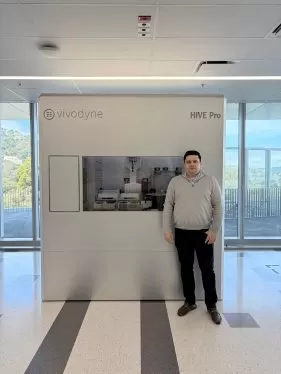 AI not close to curing cancer, this startup says it knows what it will take
A biotech startup named Vivodyne argues that the AI drug-discovery sector suffers from a critical data shortage, and has engineered a machine to resolve it.HIVE, a modular robotic laboratory system developed by the company, can cultivate 20 types of
AI not close to curing cancer, this startup says it knows what it will take
A biotech startup named Vivodyne argues that the AI drug-discovery sector suffers from a critical data shortage, and has engineered a machine to resolve it.HIVE, a modular robotic laboratory system developed by the company, can cultivate 20 types of

2026 Latest Best AI Agenda Builders page features a curated list of top-rated tools that make planning weekly team syncs effortless. These powerful solutions help you create organized, efficient agendas in just minutes, saving valuable time and boosting productivity. XIX.AI ensures all entries go through rigorous real-world tests before inclusion. Get a free vs paid comparison and discover the must-try options that deliver game-changing results. Explore now to find your perfect tool for smoother workflows!
15 tools
xix.ai

2026 Latest Best Top-Rated AI Business Plan Tools for Startups! XIX.AI curates a powerful, game-changing collection of must-try tools that go through real-world tests and rigorous weekly updated rankings. These top solutions help startups draft flawless plans, boost productivity, and unlock their full AI edge. Explore now to discover your perfect tool!
9 tools
xix.ai

2026 Latest Best Top-rated AI Persona Builder Tools for Audience Research are here on XIX.AI! This curated list features powerful, game-changing tools that help you conduct real-world tests and create accurate audience profiles through detailed free vs paid comparison. You’ll discover the must-try options that boost writing efficiency and unlock your AI edge in marketing strategies. Explore now to find your perfect tool!
9 tools
xix.ai

2026 Latest Best Top-rated AI Demo Video Tools for SaaS Product Marketing, carefully curated by XIX.AI. These powerful game-changing solutions help marketers create high-quality video content fast, boost writing efficiency, and streamline marketing workflows. Enjoy a free vs paid comparison along with real-world tests and updated rankings weekly. Explore now to Discover your perfect tool for boosting SaaS sales!
9 tools
xix.ai

2026 Latest Best Top-rated AI Prompt Testing Tools for Better Output Quality! XIX.AI has curated a powerful, game-changing collection of highly efficient tools that undergo rigorous real-world tests to ensure consistent top-tier results. You’ll find detailed free vs paid comparison insights, comprehensive rankings, and expert guidance to help you identify the must-try solutions that boost your workflow significantly. Explore now to unlock your AI edge!
11 tools
xix.ai

2026 Latest Best Top-rated AI Customer Insight Tools for Product Positioning! XIX.AI has curated a powerful, game-changing collection that goes through real-world tests and weekly updated rankings. It helps you uncover customer needs quickly to boost writing efficiency, create optimal SEO content, and craft perfect social media messages without wasting time. Explore now to Discover your perfect tool and Unlock your AI edge.
10 tools
xix.ai












