


 Home
HomeWhat are the hidden gods of the Bible and evidence of ancient polytheism?
For centuries, the Bible has been upheld as a testament to monotheism—the belief in a single, all-powerful deity. Yet a closer examination of the text reveals a more intricate and layered narrative. This article explores the compelling evidence that the ancient Israelites, like their neighbors, originally practiced polytheism, venerating a pantheon of gods and goddesses before gradually shifting toward a singular focus. Prepare to reconsider your understanding of biblical history and uncover the hidden deities embedded within scripture.
Key Points
The Bible preserves traces of polytheistic beliefs and practices.
The concept of a single, all-powerful God emerged later in Israelite religious development.
Ancient Israelites worshipped El, Asherah, Baal, and other deities alongside Yahweh.
Monotheism arose through a gradual process of religious and political consolidation.
Revealing the Bible's polytheistic roots challenges traditional scriptural interpretations.
Examining other ancient creation myths provides a broader perspective.
Discovering Polytheistic Echoes in the Bible
Challenging the Monotheistic Narrative: El and the Divine Council
Conventional wisdom depicts the Bible as steadfastly monotheistic from its origins. However, the Old Testament, particularly its earlier books, offers glimpses into a world abundant with multiple deities. This video challenges that prevailing view, suggesting ancient Israelites did not always adhere to exclusive worship of a single God as commonly assumed.
One compelling piece of evidence is the frequent reference to "El Elyon," meaning "The Most High God." This was the supreme deity in the Canaanite pantheon, not Yahweh. The Bible's acknowledgment of this figure implies a pre-existing religious landscape where Yahweh was merely one among many gods. Even the name 'Israel' incorporates 'El,' further revealing the concealed ancient pantheon. This is just the beginning.
Adding support to this argument is the concept of the Divine Council.
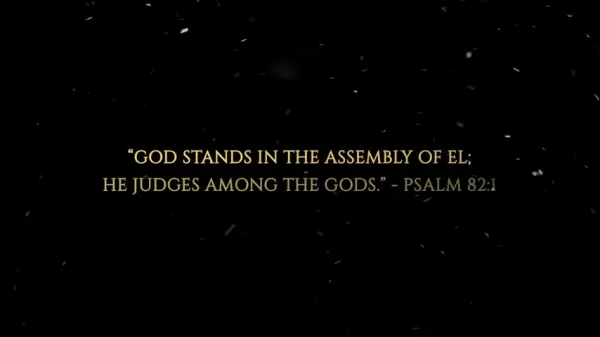
Psalm 82:1 states, "God stands in the assembly of El; he judges among the gods." This passage explicitly acknowledges other gods, suggesting a divine hierarchy where Yahweh participates in a council presided over by El. Furthermore, Deuteronomy 32:8-9 indicates that El Elyon divided the nations according to the number of divine beings, with Yahweh receiving Israel as his portion. These verses depict a pantheon where Yahweh holds a specific role rather than being the sole deity. This verse is often translated as 'Sons of Israel' in modern versions, potentially obscuring the truth.
These biblical hints, combined with archaeological evidence, point to a religious landscape far more diverse and complex than traditional interpretations suggest. This prompts the question: Who exactly was El, and what was his role in the ancient Near East? This article will examine the evidence and attempt to shed light on the subject.
Key Terms: Bible, polytheism, El Elyon, Divine Council, Yahweh, ancient Israelites, monotheism, pantheon, Psalm 82, Deuteronomy 32.
A Cosmic Power Struggle: Warring Gods, Jealous Deities, and Forgotten Goddesses
Within the carefully constructed narrative of monotheism, subtle hints of polytheism can be startling. Yet the reality is even more astonishing—featuring jealous deities, child sacrifice, and God's literal wife. How did so many polytheistic references remain in the Bible? The presenter unveils what they describe as startling religious facts, stating, '... what I found is absolutely astounding. We're talking about divine councils, jealous deities, warring gods, and a cosmic power struggle hidden right before your eyes, in the very book portrayed as concerning one almighty, all-loving, solitary God.'
The video contends that multiple warring gods existed, not just one. God had a rival, and the Bible admits this. 'A cosmic power struggle, hidden right in front of you,' the presenter remarks, urging viewers to delve deeper. It also notes other gods who demanded child sacrifice, and, more strikingly, that 'Yahweh accepted one too.' This underscores polytheistic themes within the Bible, portraying the God of Abrahamic faiths as one contender among many. The Bible, it argues, becomes a record of divine power struggles.
The implications are profound. If monotheism was not the original religion, what was? Can the Bible still be viewed as the inerrant word of God? What is the truth? Let's investigate.
Key Terms: Jealous deities, child sacrifice, warring gods, power struggle, divine council, multiple gods, God's rival, God's wife.
Rewriting History: The Suppression of Asherah and the Rise of Monotheism
The idea of God having a literal wife seems nearly blasphemous to many today. But ancient cultures recognized multiple gods, complete with families. This is evident in the goddess Asherah.
Asherah was a major goddess in the ancient Near East, known as the consort of El (the high god) and later linked to Yahweh. What became of her?
According to the video, her 'profile was scrubbed from the Bible like a bad review.' Her worship was so prevalent that texts were subsequently rewritten. Originally, the Bible referred to the "Sons of God," but modern versions often change this to the "Sons of Israel," a significant alteration! This indicates an effort to conceal a polytheistic past.
Even more intriguing, in Genesis 14:19, Melchizedek blesses Abraham in the name of El Elyon, Creator of Heaven and Earth. Why not Yahweh? What does this imply?
As the video suggests, El Elyon may have initially outranked Yahweh! Deuteronomy 32:8-9 describes El Elyon allotting nations to various gods, 'but Yahweh's portion is his people, Jacob his allotted inheritance.' In other words, El distributed divine jurisdictions, and Yahweh was assigned Israel. According to this text, Yahweh is not the supreme deity but a divine heir to El. So, who was El? Did ancient Israelites believe Yahweh originated from El? Scholar Mark S. Smith states, 'The original god of Israel was El.'
Over time, however, Asherah's role was systematically minimized, and her worship suppressed. This was part of broader efforts to consolidate religious authority and promote monotheism, elevating Yahweh to supreme status. Thus, El became identified with Yahweh. The erasure of Asherah highlights a deliberate rewriting of history, removing the divine feminine from Israelite religion.
Key Terms: Asherah, goddess, consort of Yahweh, divine feminine, El Elyon, Mark S. Smith, Deuteronomy, Sons of Israel, Sons of God, Genesis, Melchizedek.
From Tribal War God to Universal Monarch: The Rebranding of Yahweh
How did a minor tribal war god transform into the sole ruler of the entire universe?
The video argues that Yahweh absorbed other gods as his influence grew. First, Yahweh had to surpass Baal, with the Bible adopting much of Baal's imagery to redefine Yahweh. For instance, Baal was often called the 'Rider on the Clouds,' a title later applied to Yahweh in the Book of Isaiah. After consolidating power with Baal's thunderous attributes, came the assimilation of El's authority.
Old Testament scholar Mark S. Smith posits that Yahweh, originally a 'warrior-god,' was distinct from El before integrating into the pantheon. The final step involved eliminating all religious competition by depicting rival gods as evil and barbaric. For millennia, this has been part of a sophisticated power dynamic.
It is also noted that the Bible records Solomon, 'the wise king,' worshipping various foreign deities. For example, 1 Kings 11:5 states, “For Solomon followed Ashtoreth the goddess of the Sidonians, and Milcom the detestable god of the Ammonites.”
Key Terms: Yahweh, Baal, El, Mark S. Smith, warrior god, polytheistic, monotheism, rebrand, Book of Isaiah, 1 Kings 11:5.
Where is the Mother?: Asherah's Erased Role in Creation
The article asks, 'If there was a cosmic council, where is the mother?' Polytheistic traditions feature not only multiple gods but also divine marriages and husband-wife deity pairs. So, where is Yahweh's consort? The Hebrew version of ancient texts acknowledges a goddess named Asherah, yet she is translated as 'groves' in modern versions. The presenter highlights this, claiming "you've been given a filtered version of the Bible."
The suppression of the feminine often accompanies power struggles. With Asherah as Yahweh's wife, there would be a divine family, implying others of equal standing—contradicting monotheism. Hence, she was quietly omitted. However, her name appears in the Bible 40 times as 'groves.'
The presenter encourages believers to honestly assess the text. In the oldest versions of the Old Testament, do you believe Yahweh is the 'most high God'? She invites viewers to embark on their own journey to uncover the truth.
Key Terms: Asherah, goddess, consort of Yahweh, feminine, El Elyon, divine council, groves, ancient text, rewrite, Old Testament.
Affiliate Links
Amazon
The links in the description are Amazon affiliate links, meaning I receive a small commission from your support.
FAQ
Was Yahweh originally a war god?
Yes, scholars contend that Yahweh evolved from a tribal war god into Israel's supreme deity.
What is Henotheism?
Henotheism is the belief in multiple gods while recognizing one as supreme and worthy of exclusive devotion.
What is Monolatrism?
Monolatrism acknowledges the existence of many gods but involves worshipping only one.
Related Questions
What Are Some Books I Can Read To Learn More About This?
Books like 'The Early History of God' by Mark S. Smith or 'The Religion of Ancient Israel' by Patrick D. Miller are excellent starting points, alongside a thorough study of the Bible itself.
Related article
 DeepMind CEO Hassabis: I sleep six hours a day, usually feel energetic around 1 a.m.
Fortune recently featured an interview with Demis Hassabis, CEO of Google DeepMind, revealing his unconventional approach to rest and productivity. Hassabis disclosed that he sleeps very little, structuring his waking hours into two distinct work blo
OpenAI, Anthropic Vie for Market Share Despite Revenue Shortfalls
Despite recent reports suggesting OpenAI missed revenue targets, creating pressure on tech stocks this Tuesday, private AI lab investors remain resilient. Seasoned backers have confirmed they will not reduce investment despite negative media coverage
California AV Compliance: A New Era of Tickets, Geofences, and 1M Miles
Guident operates an AuveTech shuttle in South Florida, managing a four-mile route in West Palm Beach and a one-mile route in Boca Raton using its remote monitoring technology. | Credit: GuidentCalifornia is redefining the regulatory landscape for dri
Related Special Topic Recommendations
Video creation
DeepMind CEO Hassabis: I sleep six hours a day, usually feel energetic around 1 a.m.
Fortune recently featured an interview with Demis Hassabis, CEO of Google DeepMind, revealing his unconventional approach to rest and productivity. Hassabis disclosed that he sleeps very little, structuring his waking hours into two distinct work blo
OpenAI, Anthropic Vie for Market Share Despite Revenue Shortfalls
Despite recent reports suggesting OpenAI missed revenue targets, creating pressure on tech stocks this Tuesday, private AI lab investors remain resilient. Seasoned backers have confirmed they will not reduce investment despite negative media coverage
California AV Compliance: A New Era of Tickets, Geofences, and 1M Miles
Guident operates an AuveTech shuttle in South Florida, managing a four-mile route in West Palm Beach and a one-mile route in Boca Raton using its remote monitoring technology. | Credit: GuidentCalifornia is redefining the regulatory landscape for dri
Related Special Topic Recommendations
Video creation
 AI Short-Form Video Hook Generators for Reels, Shorts, and Product Launch Campaigns
2026 Latest Best AI Short-Form Video Hook Generators for Reels Shorts and Product Launch Campaigns! XIX.AI curates top-rated powerful game-changing tools that deliver must-try results through real-world tests. This weekly updated page offers free vs paid comparison rankings to help you find the perfect solution for boosting content creativity and productivity. Explore now to Unlock your AI edge!
 11 tools
 xix.ai
writing
AI Article Outline Tools for Long Form Writing
xix.ai
writing
AI Article Outline Tools for Long Form Writing
2026 Latest Best Top-Rated AI Article Outline Tools for Long Form Writing! This curated collection features powerful, game-changing tools that deliver accurate, structured outlines with real-world tests to boost writing efficiency significantly. XIX.AI is part of this elite selection. Get a free vs paid comparison to help you choose the perfect tool. Explore now and Unlock your AI edge!
9 tools
xix.ai
chatbot
Best AI Roleplay Chat Apps for Language Practice, Interview Prep, and Daily Fluency
2026 Latest Best Top-rated AI Roleplay Chat Apps for Language Practice, Interview Prep, and Daily Fluency! XIX.AI curates a powerful game-changing collection that offers free vs paid comparison, real-world tests, and updated rankings weekly. These must-try tools help you boost writing skills, overcome fluency challenges, and improve communication efficiency across all daily scenarios. Explore now to discover your perfect tool for language growth!
10 tools
xix.ai
Music composition
AI Stem Separation Tools for Remix Production, Sampling Prep, and Karaoke Masters
2026 Latest Best Top-rated AI Stem Separation Tools Curated for Remix Production, Sampling Prep, and Karaoke Masters. These powerful game-changing tools offer real-world tests to deliver precise audio isolation, boosting productivity significantly. XIX.AI provides a weekly updated free vs paid comparison guide to help you find the must-try solution that suits your needs. Explore now to unlock your AI edge.
8 tools
xix.ai
Data Analysis
AI SQL Copilots for Revenue Dashboards, Funnel Analysis, and Product Metrics
2026 Latest Best AI SQL Copilots Ranked Top-Rated! XIX.AI curates a powerful game-changing collection for weekly updated real-world tests. These must-try tools help you generate accurate revenue dashboards, analyze sales funnels, and track product metrics swiftly, boosting productivity massively. Explore now to Discover your perfect tool for data-driven decision making! 238 characters
9 tools
xix.ai
Music composition
Best AI Melody Writing Tools for Song Drafts
2026 Latest Best Top-Rated AI Melody Writing Tools for Song Drafts! XIX.AI has curated a highly powerful game-changing collection that goes through rigorous real-world tests to deliver the best writing experience. You can find detailed free vs paid comparisons, accurate rankings, and must-try options designed to help you create stunning song drafts effortlessly and boost your creative productivity significantly. Explore now to discover your perfect tool!
8 tools
xix.ai

 Comments (1)
0/500
Comments (1)
0/500
![RyanJackson]()
Wait, so the Bible might have originally been polytheistic? That's wild. Never thought about the 'gods' in the Psalms as actual deities. Makes you wonder what else got edited out. 🤔
For centuries, the Bible has been upheld as a testament to monotheism—the belief in a single, all-powerful deity. Yet a closer examination of the text reveals a more intricate and layered narrative. This article explores the compelling evidence that the ancient Israelites, like their neighbors, originally practiced polytheism, venerating a pantheon of gods and goddesses before gradually shifting toward a singular focus. Prepare to reconsider your understanding of biblical history and uncover the hidden deities embedded within scripture.
Key Points
The Bible preserves traces of polytheistic beliefs and practices.
The concept of a single, all-powerful God emerged later in Israelite religious development.
Ancient Israelites worshipped El, Asherah, Baal, and other deities alongside Yahweh.
Monotheism arose through a gradual process of religious and political consolidation.
Revealing the Bible's polytheistic roots challenges traditional scriptural interpretations.
Examining other ancient creation myths provides a broader perspective.
Discovering Polytheistic Echoes in the Bible
Challenging the Monotheistic Narrative: El and the Divine Council
Conventional wisdom depicts the Bible as steadfastly monotheistic from its origins. However, the Old Testament, particularly its earlier books, offers glimpses into a world abundant with multiple deities. This video challenges that prevailing view, suggesting ancient Israelites did not always adhere to exclusive worship of a single God as commonly assumed.
One compelling piece of evidence is the frequent reference to "El Elyon," meaning "The Most High God." This was the supreme deity in the Canaanite pantheon, not Yahweh. The Bible's acknowledgment of this figure implies a pre-existing religious landscape where Yahweh was merely one among many gods. Even the name 'Israel' incorporates 'El,' further revealing the concealed ancient pantheon. This is just the beginning.
Adding support to this argument is the concept of the Divine Council.
Psalm 82:1 states, "God stands in the assembly of El; he judges among the gods." This passage explicitly acknowledges other gods, suggesting a divine hierarchy where Yahweh participates in a council presided over by El. Furthermore, Deuteronomy 32:8-9 indicates that El Elyon divided the nations according to the number of divine beings, with Yahweh receiving Israel as his portion. These verses depict a pantheon where Yahweh holds a specific role rather than being the sole deity. This verse is often translated as 'Sons of Israel' in modern versions, potentially obscuring the truth.
These biblical hints, combined with archaeological evidence, point to a religious landscape far more diverse and complex than traditional interpretations suggest. This prompts the question: Who exactly was El, and what was his role in the ancient Near East? This article will examine the evidence and attempt to shed light on the subject.
Key Terms: Bible, polytheism, El Elyon, Divine Council, Yahweh, ancient Israelites, monotheism, pantheon, Psalm 82, Deuteronomy 32.
A Cosmic Power Struggle: Warring Gods, Jealous Deities, and Forgotten Goddesses
Within the carefully constructed narrative of monotheism, subtle hints of polytheism can be startling. Yet the reality is even more astonishing—featuring jealous deities, child sacrifice, and God's literal wife. How did so many polytheistic references remain in the Bible? The presenter unveils what they describe as startling religious facts, stating, '... what I found is absolutely astounding. We're talking about divine councils, jealous deities, warring gods, and a cosmic power struggle hidden right before your eyes, in the very book portrayed as concerning one almighty, all-loving, solitary God.'
The video contends that multiple warring gods existed, not just one. God had a rival, and the Bible admits this. 'A cosmic power struggle, hidden right in front of you,' the presenter remarks, urging viewers to delve deeper. It also notes other gods who demanded child sacrifice, and, more strikingly, that 'Yahweh accepted one too.' This underscores polytheistic themes within the Bible, portraying the God of Abrahamic faiths as one contender among many. The Bible, it argues, becomes a record of divine power struggles.
The implications are profound. If monotheism was not the original religion, what was? Can the Bible still be viewed as the inerrant word of God? What is the truth? Let's investigate.
Key Terms: Jealous deities, child sacrifice, warring gods, power struggle, divine council, multiple gods, God's rival, God's wife.
Rewriting History: The Suppression of Asherah and the Rise of Monotheism
The idea of God having a literal wife seems nearly blasphemous to many today. But ancient cultures recognized multiple gods, complete with families. This is evident in the goddess Asherah.
Asherah was a major goddess in the ancient Near East, known as the consort of El (the high god) and later linked to Yahweh. What became of her?
According to the video, her 'profile was scrubbed from the Bible like a bad review.' Her worship was so prevalent that texts were subsequently rewritten. Originally, the Bible referred to the "Sons of God," but modern versions often change this to the "Sons of Israel," a significant alteration! This indicates an effort to conceal a polytheistic past.
Even more intriguing, in Genesis 14:19, Melchizedek blesses Abraham in the name of El Elyon, Creator of Heaven and Earth. Why not Yahweh? What does this imply?
As the video suggests, El Elyon may have initially outranked Yahweh! Deuteronomy 32:8-9 describes El Elyon allotting nations to various gods, 'but Yahweh's portion is his people, Jacob his allotted inheritance.' In other words, El distributed divine jurisdictions, and Yahweh was assigned Israel. According to this text, Yahweh is not the supreme deity but a divine heir to El. So, who was El? Did ancient Israelites believe Yahweh originated from El? Scholar Mark S. Smith states, 'The original god of Israel was El.'
Over time, however, Asherah's role was systematically minimized, and her worship suppressed. This was part of broader efforts to consolidate religious authority and promote monotheism, elevating Yahweh to supreme status. Thus, El became identified with Yahweh. The erasure of Asherah highlights a deliberate rewriting of history, removing the divine feminine from Israelite religion.
Key Terms: Asherah, goddess, consort of Yahweh, divine feminine, El Elyon, Mark S. Smith, Deuteronomy, Sons of Israel, Sons of God, Genesis, Melchizedek.
From Tribal War God to Universal Monarch: The Rebranding of Yahweh
How did a minor tribal war god transform into the sole ruler of the entire universe?
The video argues that Yahweh absorbed other gods as his influence grew. First, Yahweh had to surpass Baal, with the Bible adopting much of Baal's imagery to redefine Yahweh. For instance, Baal was often called the 'Rider on the Clouds,' a title later applied to Yahweh in the Book of Isaiah. After consolidating power with Baal's thunderous attributes, came the assimilation of El's authority.
Old Testament scholar Mark S. Smith posits that Yahweh, originally a 'warrior-god,' was distinct from El before integrating into the pantheon. The final step involved eliminating all religious competition by depicting rival gods as evil and barbaric. For millennia, this has been part of a sophisticated power dynamic.
It is also noted that the Bible records Solomon, 'the wise king,' worshipping various foreign deities. For example, 1 Kings 11:5 states, “For Solomon followed Ashtoreth the goddess of the Sidonians, and Milcom the detestable god of the Ammonites.”
Key Terms: Yahweh, Baal, El, Mark S. Smith, warrior god, polytheistic, monotheism, rebrand, Book of Isaiah, 1 Kings 11:5.
Where is the Mother?: Asherah's Erased Role in Creation
The article asks, 'If there was a cosmic council, where is the mother?' Polytheistic traditions feature not only multiple gods but also divine marriages and husband-wife deity pairs. So, where is Yahweh's consort? The Hebrew version of ancient texts acknowledges a goddess named Asherah, yet she is translated as 'groves' in modern versions. The presenter highlights this, claiming "you've been given a filtered version of the Bible."
The suppression of the feminine often accompanies power struggles. With Asherah as Yahweh's wife, there would be a divine family, implying others of equal standing—contradicting monotheism. Hence, she was quietly omitted. However, her name appears in the Bible 40 times as 'groves.'
The presenter encourages believers to honestly assess the text. In the oldest versions of the Old Testament, do you believe Yahweh is the 'most high God'? She invites viewers to embark on their own journey to uncover the truth.
Key Terms: Asherah, goddess, consort of Yahweh, feminine, El Elyon, divine council, groves, ancient text, rewrite, Old Testament.
Affiliate Links
Amazon
The links in the description are Amazon affiliate links, meaning I receive a small commission from your support.
FAQ
Was Yahweh originally a war god?
Yes, scholars contend that Yahweh evolved from a tribal war god into Israel's supreme deity.
What is Henotheism?
Henotheism is the belief in multiple gods while recognizing one as supreme and worthy of exclusive devotion.
What is Monolatrism?
Monolatrism acknowledges the existence of many gods but involves worshipping only one.
Related Questions
What Are Some Books I Can Read To Learn More About This?
Books like 'The Early History of God' by Mark S. Smith or 'The Religion of Ancient Israel' by Patrick D. Miller are excellent starting points, alongside a thorough study of the Bible itself.








 DeepMind CEO Hassabis: I sleep six hours a day, usually feel energetic around 1 a.m.
Fortune recently featured an interview with Demis Hassabis, CEO of Google DeepMind, revealing his unconventional approach to rest and productivity. Hassabis disclosed that he sleeps very little, structuring his waking hours into two distinct work blo
DeepMind CEO Hassabis: I sleep six hours a day, usually feel energetic around 1 a.m.
Fortune recently featured an interview with Demis Hassabis, CEO of Google DeepMind, revealing his unconventional approach to rest and productivity. Hassabis disclosed that he sleeps very little, structuring his waking hours into two distinct work blo
 OpenAI, Anthropic Vie for Market Share Despite Revenue Shortfalls
Despite recent reports suggesting OpenAI missed revenue targets, creating pressure on tech stocks this Tuesday, private AI lab investors remain resilient. Seasoned backers have confirmed they will not reduce investment despite negative media coverage
California AV Compliance: A New Era of Tickets, Geofences, and 1M Miles
Guident operates an AuveTech shuttle in South Florida, managing a four-mile route in West Palm Beach and a one-mile route in Boca Raton using its remote monitoring technology. | Credit: GuidentCalifornia is redefining the regulatory landscape for dri
OpenAI, Anthropic Vie for Market Share Despite Revenue Shortfalls
Despite recent reports suggesting OpenAI missed revenue targets, creating pressure on tech stocks this Tuesday, private AI lab investors remain resilient. Seasoned backers have confirmed they will not reduce investment despite negative media coverage
California AV Compliance: A New Era of Tickets, Geofences, and 1M Miles
Guident operates an AuveTech shuttle in South Florida, managing a four-mile route in West Palm Beach and a one-mile route in Boca Raton using its remote monitoring technology. | Credit: GuidentCalifornia is redefining the regulatory landscape for dri

2026 Latest Best AI Short-Form Video Hook Generators for Reels Shorts and Product Launch Campaigns! XIX.AI curates top-rated powerful game-changing tools that deliver must-try results through real-world tests. This weekly updated page offers free vs paid comparison rankings to help you find the perfect solution for boosting content creativity and productivity. Explore now to Unlock your AI edge!
11 tools
xix.ai

2026 Latest Best Top-Rated AI Article Outline Tools for Long Form Writing! This curated collection features powerful, game-changing tools that deliver accurate, structured outlines with real-world tests to boost writing efficiency significantly. XIX.AI is part of this elite selection. Get a free vs paid comparison to help you choose the perfect tool. Explore now and Unlock your AI edge!
9 tools
xix.ai

2026 Latest Best Top-rated AI Roleplay Chat Apps for Language Practice, Interview Prep, and Daily Fluency! XIX.AI curates a powerful game-changing collection that offers free vs paid comparison, real-world tests, and updated rankings weekly. These must-try tools help you boost writing skills, overcome fluency challenges, and improve communication efficiency across all daily scenarios. Explore now to discover your perfect tool for language growth!
10 tools
xix.ai

2026 Latest Best Top-rated AI Stem Separation Tools Curated for Remix Production, Sampling Prep, and Karaoke Masters. These powerful game-changing tools offer real-world tests to deliver precise audio isolation, boosting productivity significantly. XIX.AI provides a weekly updated free vs paid comparison guide to help you find the must-try solution that suits your needs. Explore now to unlock your AI edge.
8 tools
xix.ai

2026 Latest Best AI SQL Copilots Ranked Top-Rated! XIX.AI curates a powerful game-changing collection for weekly updated real-world tests. These must-try tools help you generate accurate revenue dashboards, analyze sales funnels, and track product metrics swiftly, boosting productivity massively. Explore now to Discover your perfect tool for data-driven decision making! 238 characters
9 tools
xix.ai

2026 Latest Best Top-Rated AI Melody Writing Tools for Song Drafts! XIX.AI has curated a highly powerful game-changing collection that goes through rigorous real-world tests to deliver the best writing experience. You can find detailed free vs paid comparisons, accurate rankings, and must-try options designed to help you create stunning song drafts effortlessly and boost your creative productivity significantly. Explore now to discover your perfect tool!
8 tools
xix.ai

Wait, so the Bible might have originally been polytheistic? That's wild. Never thought about the 'gods' in the Psalms as actual deities. Makes you wonder what else got edited out. 🤔












