


 Home
HomeHow to trace your coat of arms in 2026? A complete heraldry guide.
Have you ever been curious about your family's coat of arms? Investigating your heraldic emblem is a captivating way to explore your ancestry, offering a window into the past and uncovering the stories of your forebears. This guide offers a comprehensive look into heraldry, from researching your family's arms to designing your own if none exists. Prepare to connect with your heritage!
Key Points
Grasping the fundamental components of a coat of arms: the shield, field, supporters, helmet, crest, and motto.
Understanding the historical role of coats of arms for identification and denoting social standing.
Investigating resources like the College of Arms to trace your family's heraldic background.
Learning how to create your own coat of arms if your family lacks one.
Appreciating the value of heraldry in comprehending family history and lineage.
Understanding Coats of Arms and Heraldry
What is a Coat of Arms?
Heraldry, with its deep history and symbolic language, may appear intricate initially. A coat of arms is fundamentally a unique visual identifier, traditionally presented on a shield.
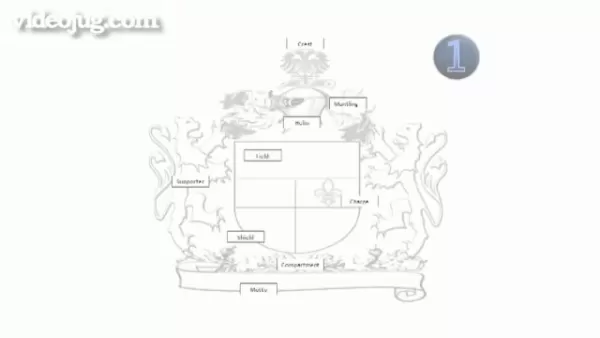
This emblem consists of various elements like colors, symbols, and geometric patterns that follow specific rules and traditions. Originally, coats of arms served to identify knights in combat, acting as an early form of personal branding.
Over the centuries, they developed to represent social status and family lineage, becoming indicators of aristocratic houses. Learning the structure and parts of a coat of arms is the initial move in researching your family's heraldic past or crafting a new one. Knowledge of heraldry is essential for tracing your coat of arms; discover the roles of English heralds like Clarenceux, Norroy and Ulster, and others!
Heraldry: Signs, Symbols, and Identification: Heraldry started as a method for nobles and monarchs to set themselves apart. Peter O'Donoghue from the College of Arms notes, "Heraldry began as a system of signs, symbols on shields, used by nobles and kings to identify themselves." These symbols were displayed on shields in battles, tournaments, and on seals for official papers. This system later came to symbolize family descent and social position.
Components of a Coat of Arms:
- The Shield (Escutcheon): The core component, featuring the primary heraldic design.
- The Field: The shield's background, which may be divided into sections or tinctures (colors and metals).
- Tinctures (Colors and Metals): Typically, the field employs a mix of seven basic colors: gold (or yellow), silver (or white), blue, red, purple, black, and green. These colors often hold symbolic meanings.
- Charges/Devices: Animals, geometric shapes, or other symbols positioned on the shield. These often denote traits, accomplishments, or ancestry.
- Supporters: Figures (commonly animals or mythical beings) on either side of the shield, offering symbolic support.
- Helmet: Positioned above the shield, frequently decorated with mantling or ornamental cloth.
- Crest: A figure or emblem atop the helmet, providing further distinction.
- Motto: A phrase, often in Latin, that conveys a family's values or guiding beliefs.
Class and Social Status: Aristocratic families would prominently exhibit their coats of arms to indicate their class and social rank. These emblems were more than decorative; they were statements of identity and heritage.
In summary, a coat of arms is not merely a decorative picture but a structured, symbolic depiction of a family's history, achievements, and principles. Understanding each element aids in tracing and interpreting your family's heraldic inheritance.
Where to Start Your Coat of Arms Search?
Initiating a search for your family's coat of arms demands a methodical strategy. The first step is to collect any existing family knowledge or evidence. Begin by inquiring with older relatives if they are aware of a family coat of arms or if any heirlooms bear a heraldic symbol. Such items could include silverware, ceramics, family paintings, or documents featuring a coat of arms. This can be a crucial initial step in verifying if your family possesses a recorded coat of arms.
Family Knowledge and Heirlooms: If your family has a coat of arms, you might already know about it.

Coats of arms are usually passed down through generations along the male line. Look for these symbols on family heirlooms, silverware, or ceramics. It's also beneficial to review family records and portraits.
The College of Arms: For a more formal and authoritative inquiry, the College of Arms in London is the main resource. This institution holds records of officially granted coats of arms and can help confirm your family's heraldic history. The College of Arms is one of the few remaining heraldic authorities in the UK and the Commonwealth. Consulting them is a significant step if you are earnest about tracing your coat of arms.
Genealogical Research: Genealogical research can often reveal information about your ancestors' social status and origins, which might indicate their potential right to a coat of arms. Websites, records, family trees, and historical documents can provide leads.
Key Steps:
- Gather Family Information: Speak with older family members and inspect family heirlooms.
- Contact the College of Arms: Get in touch with the College of Arms for professional help and record confirmation.
- Perform Genealogical Research: Investigate historical records, family trees, and online databases.
By following these steps, you can methodically explore your family's potential coat of arms and discover intriguing aspects of your heritage.
Navigating the Search with the College of Arms
The College of Arms is a heraldic authority prepared to assist you in tracing your coat of arms. Based in London, this institution maintains records of officially granted coats of arms and employs experts who can support your research. The College of Arms will inform you if they can help; contact them online at www.college-of-arms.gov.uk.
Initiating the Process:
- Initial Consultation: Contact the College of Arms to discuss your research objectives and current knowledge. They will evaluate whether they can assist based on your family history.
- Assignment of an Officer of Arms (Herald): If the College can proceed, you will be assigned an Officer of Arms, known as a herald. This specialist will conduct the research for you.
- Examination of Records: The herald will review various records, including pedigree registers and other archival documents, to find your family's coat of arms.
- Cost and Timeframe: Note that using the College of Arms' services involves a fee. The cost and duration of the research depend on the complexity of your family history and record availability.
What the College of Arms Offers:
- Expert Guidance: Professional heralds offer expert advice and perform detailed research.
- Record Verification: The College confirms the authenticity and lineage of coats of arms.
- Historical Context: The heralds can reveal the history and meanings behind the symbols on your coat of arms.
Working with the College of Arms in your coat of arms search guarantees precision and authority, aiding you in discovering and understanding your family's heraldic legacy. The College of Arms possesses extensive records and resources to support your quest.
Decoding the Elements of a Coat of Arms
Understanding Tinctures and Their Meanings
Tinctures, the colors and metals used in heraldry, are not just decorative; they carry symbolic meanings that offer deeper insight into the values and history linked to a coat of arms. Each tincture communicates specific qualities, and understanding these can enhance your appreciation of your family’s heraldic emblem.
Basic Tinctures and Their Symbolism:
- Gold (Or): Represents generosity, nobility, honor, loyalty, and wisdom.
- Silver (Argent): Symbolizes peace, purity, innocence, sincerity, and humility.
- Red (Gules): Denotes courage, bravery, patriotism, passion, and military strength.
- Blue (Azure): Stands for loyalty, truth, faith, chastity, and justice.
- Green (Vert): Signifies hope, joy, vitality, abundance, and loyalty in love.
- Black (Sable): Represents constancy, grief, repentance, and wisdom.
- Purple (Purpure): Denotes royalty, majesty, sovereignty, and justice.
Rules for Combining Tinctures: Heraldry includes guidelines for combining tinctures to ensure clarity and visual harmony. The most basic principle is the "Rule of Tinctures," which states that "metal should not be placed on metal, nor color on color." This means that gold (a metal) should not be placed on silver (another metal), and similarly, blue (a color) should not be placed on green (another color). This rule helps maintain a clear and distinguishable design.
Examples of Tincture Usage: Consider a coat of arms with a red shield and gold lions. The red (gules) could symbolize courage and military prowess, while the gold (or) lions represent generosity and nobility. Alternatively, you might see a coat of arms with a blue field and a silver cross, denoting loyalty, faith, peace, and purity.
Understanding tincture meanings allows you to interpret the deeper messages within a coat of arms, providing insight into the traits and values your ancestors aimed to express.
Deciphering Charges: Animals, Symbols, and Their Significance
Charges are the figures or objects placed on the shield of a coat of arms. These elements are not random; they are selected deliberately to represent specific attributes, achievements, or historical ties of the family. Interpreting the meaning of these charges is key to understanding the narrative behind a coat of arms.

Common Charges and Their Symbolism:
- Lion: Symbolizes courage, bravery, strength, and royalty. It is among the most common charges in heraldry.
- Eagle: Represents freedom, power, and intelligence. Often linked to leadership and high rank.
- Fleur-de-lis: A stylized lily denoting purity, light, and the French monarchy. It frequently indicates connections to France.
- Cross: Signifies faith, Christianity, and often participation in the Crusades or religious importance.
- Star (Mullet): Stands for honor, nobility, and divine guidance. Often used to mark a knightly order.
- Boar: Symbolizes courage, ferocity, and strength in battle. Often associated with hunting skill.
- Serpent: Denotes wisdom, cunning, and healing. Can also represent a physician or healer.
- Rose: Represents hope, beauty, love, and honor. Often signifies ties to the English royal family.
How Charges Are Used: Charges can appear alone or in groups, and their placement and orientation also carry meaning. For instance, a lion rampant (standing on hind legs) indicates courage and aggression, while a lion passant (walking) suggests dignity and strength. The number of charges is significant; multiple lions might represent numerous achievements or a larger family.
For example, a coat of arms with a gold lion on a red field might represent a family known for brave leadership and military strength. Conversely, a silver eagle on a blue field could indicate a lineage associated with justice, truth, and a high social standing. The College of Arms can provide more detailed interpretation of charges.
Interpreting charges enriches your understanding of the history and values connected to a coat of arms. Each symbol tells a story, and by recognizing these symbols, you can uncover the rich narrative of your family's heritage.
How to Create Your Personal Coat of Arms
Designing Your Personal Coat of Arms
If your family lacks a coat of arms, or you wish to create a more individualized emblem, designing your own can be a rewarding and creative endeavor. Here are steps for designing your personal coat of arms. By following these steps, you can create a coat of arms that mirrors your identity and values. If you want to learn more, you can find a book titled 'Design Your Own Coat of Arms' available online at Amazon.
Benefits and Limitations of Tracing Your Coat of Arms
Pros
Offers a tangible connection to your family's history and heritage.
Provides a unique avenue to discover your ancestors' accomplishments and values.
Can reveal fascinating stories and details about your family's past.
Adds a sense of identity and pride to your family.
Cons
The process can be lengthy and require detailed research.
Verifying a coat of arms may involve expenses for professional heraldic services.
Not all families possess a coat of arms, which might lead to letdown.
Misunderstandings or errors can occur without proper knowledge of heraldic rules.
Frequently Asked Questions (FAQ)
What if I can’t find any records of a coat of arms for my family?
If you find no records of a coat of arms for your family, it doesn't necessarily mean your family never had one. Records could have been lost or damaged over time. You can continue genealogical research, seek advice from heraldic experts, or think about designing your own coat of arms.
Is it legal to design and use my own coat of arms?
Yes, it is legal to design and use your own coat of arms, but it won't have official recognition unless granted by a heraldic authority like the College of Arms. Using an unregistered coat of arms is known as armorial assumption, which is generally acceptable provided it doesn't copy existing registered arms.
How much does it cost to have the College of Arms trace my coat of arms?
The cost of having the College of Arms trace your coat of arms varies based on the research complexity and time needed. It's best to contact the College directly for a consultation and a precise quote.
Can women inherit coats of arms?
Historically, coats of arms were typically inherited through the male line. However, in some cases, women can inherit and pass on coats of arms, especially if there are no male heirs. The rules for female inheritance differ by jurisdiction and specific heraldic customs.
Related Questions
What are the common mistakes to avoid when tracing a coat of arms?
When tracing a coat of arms, it's vital to avoid common errors that could result in inaccurate or misleading findings. Here are some pitfalls to watch for: 1. Assuming a Connection Based on Surname: A common mistake is assuming that sharing a surname with someone who has a coat of means you are entitled to use it. Coats of arms are granted to individuals and their direct descendants, not to everyone with the same last name. Unless you can prove direct descent from the original grantee, you cannot legitimately claim the arms. 2. Relying Solely on Online Resources: While online resources can be useful starting points, they are often unreliable and may contain errors. Many websites provide generic coats of arms based on surnames, which are not authentic. Always check information with authoritative sources like the College of Arms or respected genealogical societies. 3. Ignoring Heraldic Rules and Customs: Heraldry has specific rules and traditions that must be followed. Disregarding these can lead to incorrect interpretations or designs. For example, the Rule of Tinctures states that you cannot place metal on metal or color on color. A basic grasp of these rules is essential. 4. Overlooking Variations in Arms: Even within the same family, there can be differences in the coat of arms to distinguish various branches or descendants. These variations might involve changes to the charges, tinctures, or the inclusion of marks of cadency (symbols showing birth order). Not recognizing these differences can cause confusion. 5. Not Verifying Documentation: Always confirm any claims of a coat of arms with solid documentation. This includes grants of arms, pedigrees, and other official records. Family stories and unverified accounts should not be considered as proof. 6. Confusing Coats of Arms with Other Emblems: It's easy to mix up coats of arms with other symbols, such as badges or crests. A coat of arms is a complete heraldic achievement, including the shield, helmet, crest, and motto. Other symbols may be related to a family but don't hold the same heraldic importance. 7. Not Considering Marks of Cadency: Marks of cadency are symbols used to differentiate the arms of sons and their descendants. These marks indicate birth order and can change with each generation. Overlooking these marks can lead to an incorrect tracing of your lineage. By avoiding these common mistakes, you can ensure your research into your family's coat of arms is accurate and meaningful.
Related article
 DeepMind CEO Hassabis: I sleep six hours a day, usually feel energetic around 1 a.m.
Fortune recently featured an interview with Demis Hassabis, CEO of Google DeepMind, revealing his unconventional approach to rest and productivity. Hassabis disclosed that he sleeps very little, structuring his waking hours into two distinct work blo
OpenAI, Anthropic Vie for Market Share Despite Revenue Shortfalls
Despite recent reports suggesting OpenAI missed revenue targets, creating pressure on tech stocks this Tuesday, private AI lab investors remain resilient. Seasoned backers have confirmed they will not reduce investment despite negative media coverage
California AV Compliance: A New Era of Tickets, Geofences, and 1M Miles
Guident operates an AuveTech shuttle in South Florida, managing a four-mile route in West Palm Beach and a one-mile route in Boca Raton using its remote monitoring technology. | Credit: GuidentCalifornia is redefining the regulatory landscape for dri
Related Special Topic Recommendations
chatbot
DeepMind CEO Hassabis: I sleep six hours a day, usually feel energetic around 1 a.m.
Fortune recently featured an interview with Demis Hassabis, CEO of Google DeepMind, revealing his unconventional approach to rest and productivity. Hassabis disclosed that he sleeps very little, structuring his waking hours into two distinct work blo
OpenAI, Anthropic Vie for Market Share Despite Revenue Shortfalls
Despite recent reports suggesting OpenAI missed revenue targets, creating pressure on tech stocks this Tuesday, private AI lab investors remain resilient. Seasoned backers have confirmed they will not reduce investment despite negative media coverage
California AV Compliance: A New Era of Tickets, Geofences, and 1M Miles
Guident operates an AuveTech shuttle in South Florida, managing a four-mile route in West Palm Beach and a one-mile route in Boca Raton using its remote monitoring technology. | Credit: GuidentCalifornia is redefining the regulatory landscape for dri
Related Special Topic Recommendations
chatbot
 Best AI Roleplay Chat Apps for Language Practice, Interview Prep, and Daily Fluency
2026 Latest Best Top-rated AI Roleplay Chat Apps for Language Practice, Interview Prep, and Daily Fluency! XIX.AI curates a powerful game-changing collection that offers free vs paid comparison, real-world tests, and updated rankings weekly. These must-try tools help you boost writing skills, overcome fluency challenges, and improve communication efficiency across all daily scenarios. Explore now to discover your perfect tool for language growth!
 10 tools
 xix.ai
Music composition
AI Stem Separation Tools for Remix Production, Sampling Prep, and Karaoke Masters
xix.ai
Music composition
AI Stem Separation Tools for Remix Production, Sampling Prep, and Karaoke Masters
2026 Latest Best Top-rated AI Stem Separation Tools Curated for Remix Production, Sampling Prep, and Karaoke Masters. These powerful game-changing tools offer real-world tests to deliver precise audio isolation, boosting productivity significantly. XIX.AI provides a weekly updated free vs paid comparison guide to help you find the must-try solution that suits your needs. Explore now to unlock your AI edge.
8 tools
xix.ai
Data Analysis
AI SQL Copilots for Revenue Dashboards, Funnel Analysis, and Product Metrics
2026 Latest Best AI SQL Copilots Ranked Top-Rated! XIX.AI curates a powerful game-changing collection for weekly updated real-world tests. These must-try tools help you generate accurate revenue dashboards, analyze sales funnels, and track product metrics swiftly, boosting productivity massively. Explore now to Discover your perfect tool for data-driven decision making! 238 characters
9 tools
xix.ai
Music composition
Best AI Melody Writing Tools for Song Drafts
2026 Latest Best Top-Rated AI Melody Writing Tools for Song Drafts! XIX.AI has curated a highly powerful game-changing collection that goes through rigorous real-world tests to deliver the best writing experience. You can find detailed free vs paid comparisons, accurate rankings, and must-try options designed to help you create stunning song drafts effortlessly and boost your creative productivity significantly. Explore now to discover your perfect tool!
8 tools
xix.ai
chatbot
Best AI Conversation Trainer Tools for Interview Practice
2026 Latest Best Top-rated AI Conversation Trainer Tools for Interview Practice are here on XIX.AI! This curated collection features powerful, game-changing tools that go through rigorous real-world tests to deliver accurate feedback. You’ll find a free vs paid comparison and detailed rankings to help you choose the must-try option that boosts your confidence and skills. Explore now to Discover your perfect tool for interview success!
12 tools
xix.ai
Design & Art
Best AI Style Transfer Tools for Creative Experiments
2026 Latest Best Top-rated AI Style Transfer Tools for Creative Experiments! XIX.AI has curated a powerful, game-changing collection of must-try tools that deliver exceptional results through real-world tests and rigorous rankings. These top solutions help creatives boost productivity significantly by accelerating content creation and unlocking endless creative possibilities. Explore now to discover your perfect tool and start creating today!
9 tools
xix.ai

 Comments (2)
0/500
Comments (2)
0/500
![WilliamAllen]()
Wait, tracing a coat of arms in 2026? I thought that was just for medieval nobles or video game characters. 🎮 It’s wild how genealogy is becoming so accessible now. I tried looking up my family crest once and ended up on a site selling expensive 'official' parchments. 😅 Is this guide actually free, or is it another trap to get my credit card info? Hope it’s not just AI-generated fluff disguised as history. 🤖📜
![KennethMartin]()
Нашёл старую фотографию прадеда в военной форме с непонятным гербом на пряжке, всегда было интересно, что это за символ. Узнал из статьи про геральдику — теперь понимаю, как можно узнать, есть ли у нашей фамилии собственный герб! А вы сталкивались с тем, что в роду не было рыцарей, а семейный символ всё равно можно найти? 😅
Have you ever been curious about your family's coat of arms? Investigating your heraldic emblem is a captivating way to explore your ancestry, offering a window into the past and uncovering the stories of your forebears. This guide offers a comprehensive look into heraldry, from researching your family's arms to designing your own if none exists. Prepare to connect with your heritage!
Key Points
Grasping the fundamental components of a coat of arms: the shield, field, supporters, helmet, crest, and motto.
Understanding the historical role of coats of arms for identification and denoting social standing.
Investigating resources like the College of Arms to trace your family's heraldic background.
Learning how to create your own coat of arms if your family lacks one.
Appreciating the value of heraldry in comprehending family history and lineage.
Understanding Coats of Arms and Heraldry
What is a Coat of Arms?
Heraldry, with its deep history and symbolic language, may appear intricate initially. A coat of arms is fundamentally a unique visual identifier, traditionally presented on a shield.
This emblem consists of various elements like colors, symbols, and geometric patterns that follow specific rules and traditions. Originally, coats of arms served to identify knights in combat, acting as an early form of personal branding.
Over the centuries, they developed to represent social status and family lineage, becoming indicators of aristocratic houses. Learning the structure and parts of a coat of arms is the initial move in researching your family's heraldic past or crafting a new one. Knowledge of heraldry is essential for tracing your coat of arms; discover the roles of English heralds like Clarenceux, Norroy and Ulster, and others!
Heraldry: Signs, Symbols, and Identification: Heraldry started as a method for nobles and monarchs to set themselves apart. Peter O'Donoghue from the College of Arms notes, "Heraldry began as a system of signs, symbols on shields, used by nobles and kings to identify themselves." These symbols were displayed on shields in battles, tournaments, and on seals for official papers. This system later came to symbolize family descent and social position.
Components of a Coat of Arms:
- The Shield (Escutcheon): The core component, featuring the primary heraldic design.
- The Field: The shield's background, which may be divided into sections or tinctures (colors and metals).
- Tinctures (Colors and Metals): Typically, the field employs a mix of seven basic colors: gold (or yellow), silver (or white), blue, red, purple, black, and green. These colors often hold symbolic meanings.
- Charges/Devices: Animals, geometric shapes, or other symbols positioned on the shield. These often denote traits, accomplishments, or ancestry.
- Supporters: Figures (commonly animals or mythical beings) on either side of the shield, offering symbolic support.
- Helmet: Positioned above the shield, frequently decorated with mantling or ornamental cloth.
- Crest: A figure or emblem atop the helmet, providing further distinction.
- Motto: A phrase, often in Latin, that conveys a family's values or guiding beliefs.
Class and Social Status: Aristocratic families would prominently exhibit their coats of arms to indicate their class and social rank. These emblems were more than decorative; they were statements of identity and heritage.
In summary, a coat of arms is not merely a decorative picture but a structured, symbolic depiction of a family's history, achievements, and principles. Understanding each element aids in tracing and interpreting your family's heraldic inheritance.
Where to Start Your Coat of Arms Search?
Initiating a search for your family's coat of arms demands a methodical strategy. The first step is to collect any existing family knowledge or evidence. Begin by inquiring with older relatives if they are aware of a family coat of arms or if any heirlooms bear a heraldic symbol. Such items could include silverware, ceramics, family paintings, or documents featuring a coat of arms. This can be a crucial initial step in verifying if your family possesses a recorded coat of arms.
Family Knowledge and Heirlooms: If your family has a coat of arms, you might already know about it.
Coats of arms are usually passed down through generations along the male line. Look for these symbols on family heirlooms, silverware, or ceramics. It's also beneficial to review family records and portraits.
The College of Arms: For a more formal and authoritative inquiry, the College of Arms in London is the main resource. This institution holds records of officially granted coats of arms and can help confirm your family's heraldic history. The College of Arms is one of the few remaining heraldic authorities in the UK and the Commonwealth. Consulting them is a significant step if you are earnest about tracing your coat of arms.
Genealogical Research: Genealogical research can often reveal information about your ancestors' social status and origins, which might indicate their potential right to a coat of arms. Websites, records, family trees, and historical documents can provide leads.
Key Steps:
- Gather Family Information: Speak with older family members and inspect family heirlooms.
- Contact the College of Arms: Get in touch with the College of Arms for professional help and record confirmation.
- Perform Genealogical Research: Investigate historical records, family trees, and online databases.
By following these steps, you can methodically explore your family's potential coat of arms and discover intriguing aspects of your heritage.
Navigating the Search with the College of Arms
The College of Arms is a heraldic authority prepared to assist you in tracing your coat of arms. Based in London, this institution maintains records of officially granted coats of arms and employs experts who can support your research. The College of Arms will inform you if they can help; contact them online at www.college-of-arms.gov.uk.
Initiating the Process:
- Initial Consultation: Contact the College of Arms to discuss your research objectives and current knowledge. They will evaluate whether they can assist based on your family history.
- Assignment of an Officer of Arms (Herald): If the College can proceed, you will be assigned an Officer of Arms, known as a herald. This specialist will conduct the research for you.
- Examination of Records: The herald will review various records, including pedigree registers and other archival documents, to find your family's coat of arms.
- Cost and Timeframe: Note that using the College of Arms' services involves a fee. The cost and duration of the research depend on the complexity of your family history and record availability.
What the College of Arms Offers:
- Expert Guidance: Professional heralds offer expert advice and perform detailed research.
- Record Verification: The College confirms the authenticity and lineage of coats of arms.
- Historical Context: The heralds can reveal the history and meanings behind the symbols on your coat of arms.
Working with the College of Arms in your coat of arms search guarantees precision and authority, aiding you in discovering and understanding your family's heraldic legacy. The College of Arms possesses extensive records and resources to support your quest.
Decoding the Elements of a Coat of Arms
Understanding Tinctures and Their Meanings
Tinctures, the colors and metals used in heraldry, are not just decorative; they carry symbolic meanings that offer deeper insight into the values and history linked to a coat of arms. Each tincture communicates specific qualities, and understanding these can enhance your appreciation of your family’s heraldic emblem.
Basic Tinctures and Their Symbolism:
- Gold (Or): Represents generosity, nobility, honor, loyalty, and wisdom.
- Silver (Argent): Symbolizes peace, purity, innocence, sincerity, and humility.
- Red (Gules): Denotes courage, bravery, patriotism, passion, and military strength.
- Blue (Azure): Stands for loyalty, truth, faith, chastity, and justice.
- Green (Vert): Signifies hope, joy, vitality, abundance, and loyalty in love.
- Black (Sable): Represents constancy, grief, repentance, and wisdom.
- Purple (Purpure): Denotes royalty, majesty, sovereignty, and justice.
Rules for Combining Tinctures: Heraldry includes guidelines for combining tinctures to ensure clarity and visual harmony. The most basic principle is the "Rule of Tinctures," which states that "metal should not be placed on metal, nor color on color." This means that gold (a metal) should not be placed on silver (another metal), and similarly, blue (a color) should not be placed on green (another color). This rule helps maintain a clear and distinguishable design.
Examples of Tincture Usage: Consider a coat of arms with a red shield and gold lions. The red (gules) could symbolize courage and military prowess, while the gold (or) lions represent generosity and nobility. Alternatively, you might see a coat of arms with a blue field and a silver cross, denoting loyalty, faith, peace, and purity.
Understanding tincture meanings allows you to interpret the deeper messages within a coat of arms, providing insight into the traits and values your ancestors aimed to express.
Deciphering Charges: Animals, Symbols, and Their Significance
Charges are the figures or objects placed on the shield of a coat of arms. These elements are not random; they are selected deliberately to represent specific attributes, achievements, or historical ties of the family. Interpreting the meaning of these charges is key to understanding the narrative behind a coat of arms.
Common Charges and Their Symbolism:
- Lion: Symbolizes courage, bravery, strength, and royalty. It is among the most common charges in heraldry.
- Eagle: Represents freedom, power, and intelligence. Often linked to leadership and high rank.
- Fleur-de-lis: A stylized lily denoting purity, light, and the French monarchy. It frequently indicates connections to France.
- Cross: Signifies faith, Christianity, and often participation in the Crusades or religious importance.
- Star (Mullet): Stands for honor, nobility, and divine guidance. Often used to mark a knightly order.
- Boar: Symbolizes courage, ferocity, and strength in battle. Often associated with hunting skill.
- Serpent: Denotes wisdom, cunning, and healing. Can also represent a physician or healer.
- Rose: Represents hope, beauty, love, and honor. Often signifies ties to the English royal family.
How Charges Are Used: Charges can appear alone or in groups, and their placement and orientation also carry meaning. For instance, a lion rampant (standing on hind legs) indicates courage and aggression, while a lion passant (walking) suggests dignity and strength. The number of charges is significant; multiple lions might represent numerous achievements or a larger family.
For example, a coat of arms with a gold lion on a red field might represent a family known for brave leadership and military strength. Conversely, a silver eagle on a blue field could indicate a lineage associated with justice, truth, and a high social standing. The College of Arms can provide more detailed interpretation of charges.
Interpreting charges enriches your understanding of the history and values connected to a coat of arms. Each symbol tells a story, and by recognizing these symbols, you can uncover the rich narrative of your family's heritage.
How to Create Your Personal Coat of Arms
Designing Your Personal Coat of Arms
If your family lacks a coat of arms, or you wish to create a more individualized emblem, designing your own can be a rewarding and creative endeavor. Here are steps for designing your personal coat of arms. By following these steps, you can create a coat of arms that mirrors your identity and values. If you want to learn more, you can find a book titled 'Design Your Own Coat of Arms' available online at Amazon.
Benefits and Limitations of Tracing Your Coat of Arms
Pros
Offers a tangible connection to your family's history and heritage.
Provides a unique avenue to discover your ancestors' accomplishments and values.
Can reveal fascinating stories and details about your family's past.
Adds a sense of identity and pride to your family.
Cons
The process can be lengthy and require detailed research.
Verifying a coat of arms may involve expenses for professional heraldic services.
Not all families possess a coat of arms, which might lead to letdown.
Misunderstandings or errors can occur without proper knowledge of heraldic rules.
Frequently Asked Questions (FAQ)
What if I can’t find any records of a coat of arms for my family?
If you find no records of a coat of arms for your family, it doesn't necessarily mean your family never had one. Records could have been lost or damaged over time. You can continue genealogical research, seek advice from heraldic experts, or think about designing your own coat of arms.
Is it legal to design and use my own coat of arms?
Yes, it is legal to design and use your own coat of arms, but it won't have official recognition unless granted by a heraldic authority like the College of Arms. Using an unregistered coat of arms is known as armorial assumption, which is generally acceptable provided it doesn't copy existing registered arms.
How much does it cost to have the College of Arms trace my coat of arms?
The cost of having the College of Arms trace your coat of arms varies based on the research complexity and time needed. It's best to contact the College directly for a consultation and a precise quote.
Can women inherit coats of arms?
Historically, coats of arms were typically inherited through the male line. However, in some cases, women can inherit and pass on coats of arms, especially if there are no male heirs. The rules for female inheritance differ by jurisdiction and specific heraldic customs.
Related Questions
What are the common mistakes to avoid when tracing a coat of arms?
When tracing a coat of arms, it's vital to avoid common errors that could result in inaccurate or misleading findings. Here are some pitfalls to watch for: 1. Assuming a Connection Based on Surname: A common mistake is assuming that sharing a surname with someone who has a coat of means you are entitled to use it. Coats of arms are granted to individuals and their direct descendants, not to everyone with the same last name. Unless you can prove direct descent from the original grantee, you cannot legitimately claim the arms. 2. Relying Solely on Online Resources: While online resources can be useful starting points, they are often unreliable and may contain errors. Many websites provide generic coats of arms based on surnames, which are not authentic. Always check information with authoritative sources like the College of Arms or respected genealogical societies. 3. Ignoring Heraldic Rules and Customs: Heraldry has specific rules and traditions that must be followed. Disregarding these can lead to incorrect interpretations or designs. For example, the Rule of Tinctures states that you cannot place metal on metal or color on color. A basic grasp of these rules is essential. 4. Overlooking Variations in Arms: Even within the same family, there can be differences in the coat of arms to distinguish various branches or descendants. These variations might involve changes to the charges, tinctures, or the inclusion of marks of cadency (symbols showing birth order). Not recognizing these differences can cause confusion. 5. Not Verifying Documentation: Always confirm any claims of a coat of arms with solid documentation. This includes grants of arms, pedigrees, and other official records. Family stories and unverified accounts should not be considered as proof. 6. Confusing Coats of Arms with Other Emblems: It's easy to mix up coats of arms with other symbols, such as badges or crests. A coat of arms is a complete heraldic achievement, including the shield, helmet, crest, and motto. Other symbols may be related to a family but don't hold the same heraldic importance. 7. Not Considering Marks of Cadency: Marks of cadency are symbols used to differentiate the arms of sons and their descendants. These marks indicate birth order and can change with each generation. Overlooking these marks can lead to an incorrect tracing of your lineage. By avoiding these common mistakes, you can ensure your research into your family's coat of arms is accurate and meaningful.








 DeepMind CEO Hassabis: I sleep six hours a day, usually feel energetic around 1 a.m.
Fortune recently featured an interview with Demis Hassabis, CEO of Google DeepMind, revealing his unconventional approach to rest and productivity. Hassabis disclosed that he sleeps very little, structuring his waking hours into two distinct work blo
DeepMind CEO Hassabis: I sleep six hours a day, usually feel energetic around 1 a.m.
Fortune recently featured an interview with Demis Hassabis, CEO of Google DeepMind, revealing his unconventional approach to rest and productivity. Hassabis disclosed that he sleeps very little, structuring his waking hours into two distinct work blo
 OpenAI, Anthropic Vie for Market Share Despite Revenue Shortfalls
Despite recent reports suggesting OpenAI missed revenue targets, creating pressure on tech stocks this Tuesday, private AI lab investors remain resilient. Seasoned backers have confirmed they will not reduce investment despite negative media coverage
California AV Compliance: A New Era of Tickets, Geofences, and 1M Miles
Guident operates an AuveTech shuttle in South Florida, managing a four-mile route in West Palm Beach and a one-mile route in Boca Raton using its remote monitoring technology. | Credit: GuidentCalifornia is redefining the regulatory landscape for dri
OpenAI, Anthropic Vie for Market Share Despite Revenue Shortfalls
Despite recent reports suggesting OpenAI missed revenue targets, creating pressure on tech stocks this Tuesday, private AI lab investors remain resilient. Seasoned backers have confirmed they will not reduce investment despite negative media coverage
California AV Compliance: A New Era of Tickets, Geofences, and 1M Miles
Guident operates an AuveTech shuttle in South Florida, managing a four-mile route in West Palm Beach and a one-mile route in Boca Raton using its remote monitoring technology. | Credit: GuidentCalifornia is redefining the regulatory landscape for dri

2026 Latest Best Top-rated AI Roleplay Chat Apps for Language Practice, Interview Prep, and Daily Fluency! XIX.AI curates a powerful game-changing collection that offers free vs paid comparison, real-world tests, and updated rankings weekly. These must-try tools help you boost writing skills, overcome fluency challenges, and improve communication efficiency across all daily scenarios. Explore now to discover your perfect tool for language growth!
10 tools
xix.ai

2026 Latest Best Top-rated AI Stem Separation Tools Curated for Remix Production, Sampling Prep, and Karaoke Masters. These powerful game-changing tools offer real-world tests to deliver precise audio isolation, boosting productivity significantly. XIX.AI provides a weekly updated free vs paid comparison guide to help you find the must-try solution that suits your needs. Explore now to unlock your AI edge.
8 tools
xix.ai

2026 Latest Best AI SQL Copilots Ranked Top-Rated! XIX.AI curates a powerful game-changing collection for weekly updated real-world tests. These must-try tools help you generate accurate revenue dashboards, analyze sales funnels, and track product metrics swiftly, boosting productivity massively. Explore now to Discover your perfect tool for data-driven decision making! 238 characters
9 tools
xix.ai

2026 Latest Best Top-Rated AI Melody Writing Tools for Song Drafts! XIX.AI has curated a highly powerful game-changing collection that goes through rigorous real-world tests to deliver the best writing experience. You can find detailed free vs paid comparisons, accurate rankings, and must-try options designed to help you create stunning song drafts effortlessly and boost your creative productivity significantly. Explore now to discover your perfect tool!
8 tools
xix.ai

2026 Latest Best Top-rated AI Conversation Trainer Tools for Interview Practice are here on XIX.AI! This curated collection features powerful, game-changing tools that go through rigorous real-world tests to deliver accurate feedback. You’ll find a free vs paid comparison and detailed rankings to help you choose the must-try option that boosts your confidence and skills. Explore now to Discover your perfect tool for interview success!
12 tools
xix.ai

2026 Latest Best Top-rated AI Style Transfer Tools for Creative Experiments! XIX.AI has curated a powerful, game-changing collection of must-try tools that deliver exceptional results through real-world tests and rigorous rankings. These top solutions help creatives boost productivity significantly by accelerating content creation and unlocking endless creative possibilities. Explore now to discover your perfect tool and start creating today!
9 tools
xix.ai

Wait, tracing a coat of arms in 2026? I thought that was just for medieval nobles or video game characters. 🎮 It’s wild how genealogy is becoming so accessible now. I tried looking up my family crest once and ended up on a site selling expensive 'official' parchments. 😅 Is this guide actually free, or is it another trap to get my credit card info? Hope it’s not just AI-generated fluff disguised as history. 🤖📜
Нашёл старую фотографию прадеда в военной форме с непонятным гербом на пряжке, всегда было интересно, что это за символ. Узнал из статьи про геральдику — теперь понимаю, как можно узнать, есть ли у нашей фамилии собственный герб! А вы сталкивались с тем, что в роду не было рыцарей, а семейный символ всё равно можно найти? 😅












