Home
HomeTop 10 ETL Tools for April 2025 Revealed
In today's data-driven world, having a single, centralized hub for all your data is not just a luxury—it's a necessity. Without it, making accurate predictions and informed decisions becomes a real challenge. That's where ETL tools come into play, helping companies make sense of their data by pulling it all together into one place.
ETL, or "extract, transform, load," is the go-to process for integrating data from various sources into a unified data repository. ETL tools are the software wizards that make this happen, extracting data from different places, cleaning it up to improve quality, and then loading it into data warehouses. These tools streamline data management and boost data quality by standardizing the approach.
Benefits of ETL Tools
Using ETL tools comes with a host of advantages:
- Higher Quality: ETL tools transform data from various databases, apps, and systems to meet compliance standards. This not only improves data quality but also adds context that enhances decision-making.
- Better Consistency: By standardizing data, ETL tools simplify analysis. When all data follows the same format, calculations and predictions become more reliable and accurate.
- Faster Decision-Making: ETL tools eliminate the need to query multiple data sources, speeding up the decision-making process.
Top ETL Tools on the Market
Let's explore some of the best ETL tools out there:
1. Integrate
 Integrate.io is often hailed as one of the top ETL tools available. This cloud-based platform makes it a breeze to connect multiple data sources. With its user-friendly interface, you can easily create data pipelines that link a wide range of sources and destinations.
What's more, Integrate.io scales effortlessly to handle any data volume or use case. It helps you aggregate data into warehouses, databases, operational systems, and data stores. It supports over 100 popular data stores and SaaS applications, including MongoDB, MySQL, Amazon Redshift, Google Cloud Platform, and even Facebook.
The platform is not only scalable but also secure, offering features like Field Level Encryption to protect your data. Here are some of the key benefits of using Integrate.io:
- Highly scalable and secure
- Cloud-based ETL platform
- Easily unite multiple data sources
- Simple, intuitive interface
2. Talend
 Talend Data Integration is another stellar ETL tool, offering an open-source solution that works with both on-premises and cloud-based data sources. With hundreds of pre-built integrations, it's a versatile choice.
In addition to its open-source version, Talend provides a paid Data Management Platform that includes extra tools for productivity, design, management, monitoring, and data governance. Talend was recognized as a "Leader" in Gartner's Magic Quadrant for Data Integration Tools, which speaks volumes about its capabilities.
Here are some of the main advantages of using Talend:
- Open-source and paid versions
- Tools for design, productivity, data governance, and more
- Compatible with data sources on-premises and in the cloud
- All-purpose data integration tool
3. IBM DataStage
IBM DataStage is a robust data integration tool with a client-server design. It's designed to extract, transform, and load data from various sources to targets, including files, archives, and business applications.
Companies use DataStage to enhance business analysis by providing high-quality data. It serves as a bridge between different systems, handling data extraction, translation, and loading, making it a favorite in the banking industry.
DataStage offers flexibility and reliability, allowing for easy integration and a single interface to manage heterogeneous sources. It also optimizes hardware utilization and supports data collection and integration, making it an effective tool for building, deploying, updating, and managing data integration.
Here are some of the key benefits of IBM's DataStage:
- Client-server design
- Extracts, transforms, and loads data from source to target
- Improves business analysis
- Links many different systems together
4. Oracle Data Integrator
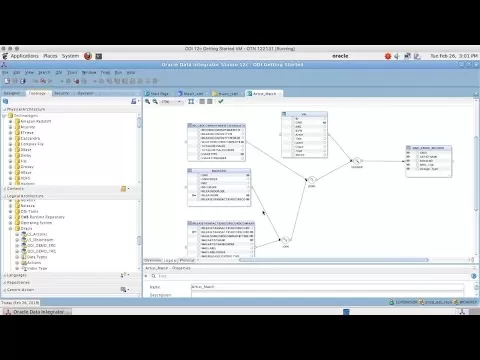 Oracle Data Integrator (ODI) is a comprehensive data integration solution that fits seamlessly into Oracle's data management ecosystem. It's an excellent choice for those already using other Oracle products like Hyperion Financial Management or Oracle E-Business Suite (EBS).
ODI offers both on-premises and cloud versions and supports ETL workloads, making it versatile for many users. While it may be more basic than some other tools on this list, it's highly effective for a wide range of data integration needs, including high-volume batch loads and service-oriented architecture data services. The tool also supports parallel task execution, speeding up data processing.
Here are some of the main benefits of Oracle Data Integrator:
- Part of Oracle's data management ecosystem
- On-premises and in cloud
- Supports ETL workloads
- Parallel task execution
5. Fivetran
 Fivetran aims to simplify data management with its diverse platform of tools. It's great for managing API updates and can pull the latest data from your database in minutes.
This cloud-based ETL solution supports integration with data warehouses like Redshift, BigQuery, Azure, and Snowflake. One of its biggest draws is the extensive array of data sources it supports, with nearly 90 possible SaaS sources and the option to add custom integrations.
Here are some of the key benefits of using Fivetran:
- Convenient data management
- Diverse platform of tools
- Manage API updates
- Cloud-based solution
6. Stitch
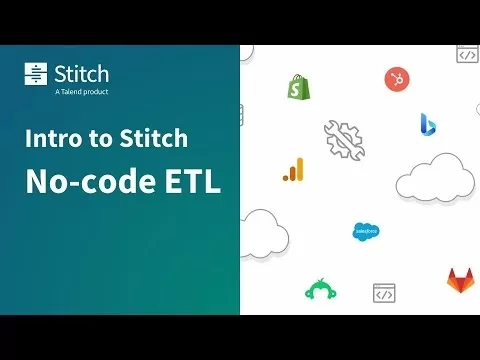 Stitch is an open-source ELT (extract, load, transform) data integration platform. Similar to Talend, it offers paid service tiers for more advanced use cases and larger data sources. Interestingly, Stitch was acquired by Talend in 2018.
The platform stands out with its self-service ELT and automated pipelines, designed to source data from over 130 platforms, services, and applications. It centralizes all this information in a data warehouse, and being open-source, development teams can extend the tool to support additional sources and features.
Here are some of the main benefits of Stitch:
- Open-source ELT platform
- Paid service tiers
- Self-service ELT and automated pipelines
- Source data from 130+ platforms, services, and applications
7. Informatica PowerCenter
Informatica PowerCenter is a metadata-driven tool aimed at improving collaboration between business and IT teams while streamlining data pipelines. It can handle advanced data formats like JSON, XML, and PDF, and automatically validates transformed data to ensure it meets defined standards.
This feature-rich platform is part of Informatica's data management suite and is an enterprise-class, database-neutral solution. It offers high performance and compatibility with various data sources, along with pre-built transformations, high availability, and optimized performance.
Here are some of the main benefits of Informatica PowerCenter:
- Improves collaboration between business and IT teams
- Streamlines data pipelines
- Parses advanced data formats
- High performance and compatibility
8. SAS Data Management
SAS Data Management is designed to connect data from various sources, including the cloud, legacy systems, and data lakes. By integrating these sources, you can gain a holistic view of your business processes and optimize workflows.
The platform is highly flexible, working in a variety of computing environments and databases. It can also be integrated with third-party data modeling tools to create excellent visualizations.
Here are some of the main benefits of SAS Data Management:
- Connects data from a variety of sources
- Builds a holistic view of business processes
- Optimizes workflows
- Operates in a variety of computing environments
9. Pentaho
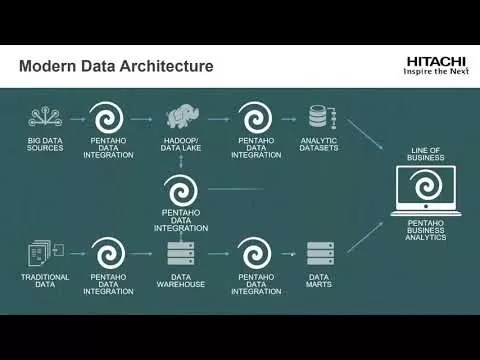 Pentaho, offered by Hitachi Vantara, is an open-source platform for data integration and analytics. You can choose between the free community edition or purchase a commercial license for the enterprise edition.
Pentaho's user-friendly interface is accessible even to beginners, allowing them to build robust data pipelines. The platform manages data integration processes like capturing, cleansing, and storing data in a standardized format. It also supports data access for IoT technologies, aiding in machine learning.
Here are some of the main benefits of Pentaho:
- Open-source platform
- Free community edition or enterprise edition
- User-friendly interface for beginners
- Supports data access for IoT technologies
10. AWS Glue
 Rounding out our list is AWS Glue, a fully managed ETL service by Amazon Web Services. It's specifically designed for big data and analytics workloads.
AWS Glue is an end-to-end ETL offering that makes ETL workloads easier and more integratable with the broader AWS ecosystem. Its unique serverless nature means Amazon automatically provisions and shuts down servers as needed, making it efficient and cost-effective. The service also offers job scheduling and testing for AWS Glue scripts.
Here are some of the main benefits of AWS Glue:
- Fully managed ETL service
- Designed for big data and analytics workloads
- Makes ETL workloads easier
- Automatically provisions and shuts down servers for workloads
Summary
In conclusion, ETL tools are essential for any data-driven organization. They provide a centralized repository for all information, enhancing data quality, consistency, and the speed of analysis. These tools simplify data management by extracting data from various sources, transforming it to meet compliance standards, and loading it into data warehouses. With a wide range of options available, businesses can select the tool that best fits their specific needs, ensuring seamless integration, improved decision-making, and optimized workflows. As the demand for high-quality data management solutions continues to grow, ETL tools will remain crucial for the success of data-driven strategies.
Related article
 WordPress.com now allows AI agents to write and publish posts, plus more
WordPress.com, the popular web hosting and publishing platform, is now embracing AI agents—a move that could reshape the look and feel of the web. The company announced Friday that it will allow AI agents to draft, edit, and publish content on custom
Kakao Mobility outlines Level 4 autonomous driving roadmap for physical AI
Kakao Mobility is planning to develop Level 4 autonomous driving technologies internally as part of its physical AI strategy.
At the 2026 World IT Show conference in Seoul's COEX, Kim Jin-kyu — vice president and head of Kakao Mobility's Physical AI
Barry Diller: Trust in Sam Altman irrelevant as AGI nears
Barry Diller, the billionaire media titan, does not believe OpenAI CEO Sam Altman is untrustworthy, despite recent reports suggesting otherwise. Speaking at the Wall Street Journal's "Future of Everything" conference this week, Diller defended Altman
Related Special Topic Recommendations
Comic Creation
WordPress.com now allows AI agents to write and publish posts, plus more
WordPress.com, the popular web hosting and publishing platform, is now embracing AI agents—a move that could reshape the look and feel of the web. The company announced Friday that it will allow AI agents to draft, edit, and publish content on custom
Kakao Mobility outlines Level 4 autonomous driving roadmap for physical AI
Kakao Mobility is planning to develop Level 4 autonomous driving technologies internally as part of its physical AI strategy.
At the 2026 World IT Show conference in Seoul's COEX, Kim Jin-kyu — vice president and head of Kakao Mobility's Physical AI
Barry Diller: Trust in Sam Altman irrelevant as AGI nears
Barry Diller, the billionaire media titan, does not believe OpenAI CEO Sam Altman is untrustworthy, despite recent reports suggesting otherwise. Speaking at the Wall Street Journal's "Future of Everything" conference this week, Diller defended Altman
Related Special Topic Recommendations
Comic Creation
 Top AI Auto-Colorization Tools for Manga: Apply Flat Colors with Zero Consistency Errors
Discover the 2026 best AI auto-colorization tools for manga at XIX.AI. Our curated list features top-rated, game-changing solutions that apply flat colors with zero consistency errors, boosting your productivity. Explore free vs paid comparisons, real-world tests, and weekly updated rankings to find your perfect match. Unlock your AI edge today.
 10 tools
 xix.ai
writing
Top AI Fiction Profile Creators: Generate Consistent Character Motivations and Fatal Flaws
xix.ai
writing
Top AI Fiction Profile Creators: Generate Consistent Character Motivations and Fatal Flaws
Discover the 2026 best AI fiction profile creators for crafting deep characters. XIX.AI's curated list features top-rated, game-changing tools that generate consistent motivations and fatal flaws. Compare free vs paid options with real-world tests. Unlock your storytelling potential now.
10 tools
xix.ai
Business
Top AI Pricing Optimization Software: Track Competitors & Auto-Adjust Store Prices
Discover the 2026 best AI pricing optimization software on XIX.AI. Our curated list features top-rated, game-changing tools that track competitors and auto-adjust your store prices for maximum profit. Compare free vs paid options with real-world tests. Unlock your pricing edge now.
10 tools
xix.ai
code
Best AI Code Reviewers: Automate Clean Code Compliance & Refactor Legacy Repo Files
Discover the 2026 best AI code reviewers on XIX.AI. Our curated list features top-rated, game-changing tools for automating clean code compliance and refactoring legacy repo files. Compare free vs paid options with real-world tests and weekly updated rankings. Unlock your AI edge today.
10 tools
xix.ai
Text-to-speech
Top AI TTS Apps for Dyslexia: Support Learning and Reading Efficiency for Students
Discover the 2026 latest top-rated AI TTS apps curated for dyslexia support. Our expert rankings compare free vs paid tools, highlighting powerful features for enhanced reading efficiency and learning. Explore must-try, game-changing solutions to unlock student potential. Start your journey at XIX.AI.
10 tools
xix.ai
Comic Creation
Top AI Generators for Shonen Manga: Create High-Octane Action Sequences & Energy Effects
Discover the 2026 best AI generators for Shonen manga at XIX.AI. Our top-rated, curated list features powerful tools for creating high-octane action sequences and dynamic energy effects. Compare free vs paid options with real-world tests. Unlock your creative potential and start crafting epic manga today!
15 tools
xix.ai

 Comments (24)
0/500
Comments (24)
0/500
![RalphJohnson]()
この記事を読んで、ETLツールの進化がここまで来たのかと驚きました。特に2025年のトップ10にどんな新顔が入っているのか気になりますね。データ統合って地味なイメージがあったけど、最近はAI連携とかクラウドネイティブ対応が当たり前になってきてるみたい。個人的には、オープンソースのツールがどれだけランクインしてるかが気になります。市場の動向を追うのは面白いです。😊
![HaroldLopez]()
데이터 툴 비교글은 항상 반갑지만... 이거 보면서 느끼는 건, 정말 '단일 중앙 허브'가 현실적일까요? 회사마다 부서마다 데이터 소스와 형식이 천차만별인데. 😅 2025년에도 ETL이 핵심이라니, 예상보다 변화가 느리네요. AI 자동화 기능이 많이 발전했으면 하는 바람입니다.
![JuanLewis]()
Интересно, сколько из этих топ-10 инструментов действительно используются в наших локальных компаниях, а не просто в западных корпорациях? 🤔 Концепция централизованного хаба данных звучит красиво, но на практике часто упирается в бюрократию и разрозненные legacy-системы. К тому же, не упомянули про вопросы суверенитета данных — актуально сейчас.
![JackPerez]()
Sempre fico curioso com essas listas, mas sinto falta de comparativos reais sobre suporte a dados não estruturados. Hoje em dia muito dado importante tá em PDF, áudio, imagem… será que essas ferramentas tradicionais de ETL dão conta? Ou vai ser mais uma encheção de linguiça sobre performance em CSV? 😅
![KeithSanchez]()
Le fameux dilemme entre outil tout-en-un et assemblage de solutions spécialisées… 🧐 Cet article tombe à pic car on doit refaire notre stack data au boulot. J’aimerais savoir si les outils listés proposent de vrais connecteurs pour les sources SaaS européennes (RGPD oblige), ou si c’est encore du bricolage côté conformité.
![GeorgeKing]()
Another 'top 10' list? I swear these articles pop up every other month, and half the tools listed are either obscenely expensive or require a PhD to configure 😅 But hey, the intro makes a valid point – without solid data plumbing, your fancy AI models are just making 'educated' guesses. Wonder if any of these tools actually play nice with real-time APIs?
In today's data-driven world, having a single, centralized hub for all your data is not just a luxury—it's a necessity. Without it, making accurate predictions and informed decisions becomes a real challenge. That's where ETL tools come into play, helping companies make sense of their data by pulling it all together into one place.
ETL, or "extract, transform, load," is the go-to process for integrating data from various sources into a unified data repository. ETL tools are the software wizards that make this happen, extracting data from different places, cleaning it up to improve quality, and then loading it into data warehouses. These tools streamline data management and boost data quality by standardizing the approach.
Benefits of ETL Tools
Using ETL tools comes with a host of advantages:
- Higher Quality: ETL tools transform data from various databases, apps, and systems to meet compliance standards. This not only improves data quality but also adds context that enhances decision-making.
- Better Consistency: By standardizing data, ETL tools simplify analysis. When all data follows the same format, calculations and predictions become more reliable and accurate.
- Faster Decision-Making: ETL tools eliminate the need to query multiple data sources, speeding up the decision-making process.
Top ETL Tools on the Market
Let's explore some of the best ETL tools out there:
1. Integrate
Integrate.io is often hailed as one of the top ETL tools available. This cloud-based platform makes it a breeze to connect multiple data sources. With its user-friendly interface, you can easily create data pipelines that link a wide range of sources and destinations.
What's more, Integrate.io scales effortlessly to handle any data volume or use case. It helps you aggregate data into warehouses, databases, operational systems, and data stores. It supports over 100 popular data stores and SaaS applications, including MongoDB, MySQL, Amazon Redshift, Google Cloud Platform, and even Facebook.
The platform is not only scalable but also secure, offering features like Field Level Encryption to protect your data. Here are some of the key benefits of using Integrate.io:
- Highly scalable and secure
- Cloud-based ETL platform
- Easily unite multiple data sources
- Simple, intuitive interface
2. Talend
Talend Data Integration is another stellar ETL tool, offering an open-source solution that works with both on-premises and cloud-based data sources. With hundreds of pre-built integrations, it's a versatile choice.
In addition to its open-source version, Talend provides a paid Data Management Platform that includes extra tools for productivity, design, management, monitoring, and data governance. Talend was recognized as a "Leader" in Gartner's Magic Quadrant for Data Integration Tools, which speaks volumes about its capabilities.
Here are some of the main advantages of using Talend:
- Open-source and paid versions
- Tools for design, productivity, data governance, and more
- Compatible with data sources on-premises and in the cloud
- All-purpose data integration tool
3. IBM DataStage
IBM DataStage is a robust data integration tool with a client-server design. It's designed to extract, transform, and load data from various sources to targets, including files, archives, and business applications.
Companies use DataStage to enhance business analysis by providing high-quality data. It serves as a bridge between different systems, handling data extraction, translation, and loading, making it a favorite in the banking industry.
DataStage offers flexibility and reliability, allowing for easy integration and a single interface to manage heterogeneous sources. It also optimizes hardware utilization and supports data collection and integration, making it an effective tool for building, deploying, updating, and managing data integration.
Here are some of the key benefits of IBM's DataStage:
- Client-server design
- Extracts, transforms, and loads data from source to target
- Improves business analysis
- Links many different systems together
4. Oracle Data Integrator
Oracle Data Integrator (ODI) is a comprehensive data integration solution that fits seamlessly into Oracle's data management ecosystem. It's an excellent choice for those already using other Oracle products like Hyperion Financial Management or Oracle E-Business Suite (EBS).
ODI offers both on-premises and cloud versions and supports ETL workloads, making it versatile for many users. While it may be more basic than some other tools on this list, it's highly effective for a wide range of data integration needs, including high-volume batch loads and service-oriented architecture data services. The tool also supports parallel task execution, speeding up data processing.
Here are some of the main benefits of Oracle Data Integrator:
- Part of Oracle's data management ecosystem
- On-premises and in cloud
- Supports ETL workloads
- Parallel task execution
5. Fivetran
Fivetran aims to simplify data management with its diverse platform of tools. It's great for managing API updates and can pull the latest data from your database in minutes.
This cloud-based ETL solution supports integration with data warehouses like Redshift, BigQuery, Azure, and Snowflake. One of its biggest draws is the extensive array of data sources it supports, with nearly 90 possible SaaS sources and the option to add custom integrations.
Here are some of the key benefits of using Fivetran:
- Convenient data management
- Diverse platform of tools
- Manage API updates
- Cloud-based solution
6. Stitch
Stitch is an open-source ELT (extract, load, transform) data integration platform. Similar to Talend, it offers paid service tiers for more advanced use cases and larger data sources. Interestingly, Stitch was acquired by Talend in 2018.
The platform stands out with its self-service ELT and automated pipelines, designed to source data from over 130 platforms, services, and applications. It centralizes all this information in a data warehouse, and being open-source, development teams can extend the tool to support additional sources and features.
Here are some of the main benefits of Stitch:
- Open-source ELT platform
- Paid service tiers
- Self-service ELT and automated pipelines
- Source data from 130+ platforms, services, and applications
7. Informatica PowerCenter
Informatica PowerCenter is a metadata-driven tool aimed at improving collaboration between business and IT teams while streamlining data pipelines. It can handle advanced data formats like JSON, XML, and PDF, and automatically validates transformed data to ensure it meets defined standards.
This feature-rich platform is part of Informatica's data management suite and is an enterprise-class, database-neutral solution. It offers high performance and compatibility with various data sources, along with pre-built transformations, high availability, and optimized performance.
Here are some of the main benefits of Informatica PowerCenter:
- Improves collaboration between business and IT teams
- Streamlines data pipelines
- Parses advanced data formats
- High performance and compatibility
8. SAS Data Management
SAS Data Management is designed to connect data from various sources, including the cloud, legacy systems, and data lakes. By integrating these sources, you can gain a holistic view of your business processes and optimize workflows.
The platform is highly flexible, working in a variety of computing environments and databases. It can also be integrated with third-party data modeling tools to create excellent visualizations.
Here are some of the main benefits of SAS Data Management:
- Connects data from a variety of sources
- Builds a holistic view of business processes
- Optimizes workflows
- Operates in a variety of computing environments
9. Pentaho
Pentaho, offered by Hitachi Vantara, is an open-source platform for data integration and analytics. You can choose between the free community edition or purchase a commercial license for the enterprise edition.
Pentaho's user-friendly interface is accessible even to beginners, allowing them to build robust data pipelines. The platform manages data integration processes like capturing, cleansing, and storing data in a standardized format. It also supports data access for IoT technologies, aiding in machine learning.
Here are some of the main benefits of Pentaho:
- Open-source platform
- Free community edition or enterprise edition
- User-friendly interface for beginners
- Supports data access for IoT technologies
10. AWS Glue
Rounding out our list is AWS Glue, a fully managed ETL service by Amazon Web Services. It's specifically designed for big data and analytics workloads.
AWS Glue is an end-to-end ETL offering that makes ETL workloads easier and more integratable with the broader AWS ecosystem. Its unique serverless nature means Amazon automatically provisions and shuts down servers as needed, making it efficient and cost-effective. The service also offers job scheduling and testing for AWS Glue scripts.
Here are some of the main benefits of AWS Glue:
- Fully managed ETL service
- Designed for big data and analytics workloads
- Makes ETL workloads easier
- Automatically provisions and shuts down servers for workloads
Summary
In conclusion, ETL tools are essential for any data-driven organization. They provide a centralized repository for all information, enhancing data quality, consistency, and the speed of analysis. These tools simplify data management by extracting data from various sources, transforming it to meet compliance standards, and loading it into data warehouses. With a wide range of options available, businesses can select the tool that best fits their specific needs, ensuring seamless integration, improved decision-making, and optimized workflows. As the demand for high-quality data management solutions continues to grow, ETL tools will remain crucial for the success of data-driven strategies.








 WordPress.com now allows AI agents to write and publish posts, plus more
WordPress.com, the popular web hosting and publishing platform, is now embracing AI agents—a move that could reshape the look and feel of the web. The company announced Friday that it will allow AI agents to draft, edit, and publish content on custom
Kakao Mobility outlines Level 4 autonomous driving roadmap for physical AI
Kakao Mobility is planning to develop Level 4 autonomous driving technologies internally as part of its physical AI strategy.
At the 2026 World IT Show conference in Seoul's COEX, Kim Jin-kyu — vice president and head of Kakao Mobility's Physical AI
WordPress.com now allows AI agents to write and publish posts, plus more
WordPress.com, the popular web hosting and publishing platform, is now embracing AI agents—a move that could reshape the look and feel of the web. The company announced Friday that it will allow AI agents to draft, edit, and publish content on custom
Kakao Mobility outlines Level 4 autonomous driving roadmap for physical AI
Kakao Mobility is planning to develop Level 4 autonomous driving technologies internally as part of its physical AI strategy.
At the 2026 World IT Show conference in Seoul's COEX, Kim Jin-kyu — vice president and head of Kakao Mobility's Physical AI
 Barry Diller: Trust in Sam Altman irrelevant as AGI nears
Barry Diller, the billionaire media titan, does not believe OpenAI CEO Sam Altman is untrustworthy, despite recent reports suggesting otherwise. Speaking at the Wall Street Journal's "Future of Everything" conference this week, Diller defended Altman
Barry Diller: Trust in Sam Altman irrelevant as AGI nears
Barry Diller, the billionaire media titan, does not believe OpenAI CEO Sam Altman is untrustworthy, despite recent reports suggesting otherwise. Speaking at the Wall Street Journal's "Future of Everything" conference this week, Diller defended Altman

Discover the 2026 best AI auto-colorization tools for manga at XIX.AI. Our curated list features top-rated, game-changing solutions that apply flat colors with zero consistency errors, boosting your productivity. Explore free vs paid comparisons, real-world tests, and weekly updated rankings to find your perfect match. Unlock your AI edge today.
10 tools
xix.ai

Discover the 2026 best AI fiction profile creators for crafting deep characters. XIX.AI's curated list features top-rated, game-changing tools that generate consistent motivations and fatal flaws. Compare free vs paid options with real-world tests. Unlock your storytelling potential now.
10 tools
xix.ai

Discover the 2026 best AI pricing optimization software on XIX.AI. Our curated list features top-rated, game-changing tools that track competitors and auto-adjust your store prices for maximum profit. Compare free vs paid options with real-world tests. Unlock your pricing edge now.
10 tools
xix.ai
Discover the 2026 best AI code reviewers on XIX.AI. Our curated list features top-rated, game-changing tools for automating clean code compliance and refactoring legacy repo files. Compare free vs paid options with real-world tests and weekly updated rankings. Unlock your AI edge today.
10 tools
xix.ai

Discover the 2026 latest top-rated AI TTS apps curated for dyslexia support. Our expert rankings compare free vs paid tools, highlighting powerful features for enhanced reading efficiency and learning. Explore must-try, game-changing solutions to unlock student potential. Start your journey at XIX.AI.
10 tools
xix.ai

Discover the 2026 best AI generators for Shonen manga at XIX.AI. Our top-rated, curated list features powerful tools for creating high-octane action sequences and dynamic energy effects. Compare free vs paid options with real-world tests. Unlock your creative potential and start crafting epic manga today!
15 tools
xix.ai

この記事を読んで、ETLツールの進化がここまで来たのかと驚きました。特に2025年のトップ10にどんな新顔が入っているのか気になりますね。データ統合って地味なイメージがあったけど、最近はAI連携とかクラウドネイティブ対応が当たり前になってきてるみたい。個人的には、オープンソースのツールがどれだけランクインしてるかが気になります。市場の動向を追うのは面白いです。😊
데이터 툴 비교글은 항상 반갑지만... 이거 보면서 느끼는 건, 정말 '단일 중앙 허브'가 현실적일까요? 회사마다 부서마다 데이터 소스와 형식이 천차만별인데. 😅 2025년에도 ETL이 핵심이라니, 예상보다 변화가 느리네요. AI 자동화 기능이 많이 발전했으면 하는 바람입니다.
Интересно, сколько из этих топ-10 инструментов действительно используются в наших локальных компаниях, а не просто в западных корпорациях? 🤔 Концепция централизованного хаба данных звучит красиво, но на практике часто упирается в бюрократию и разрозненные legacy-системы. К тому же, не упомянули про вопросы суверенитета данных — актуально сейчас.
Sempre fico curioso com essas listas, mas sinto falta de comparativos reais sobre suporte a dados não estruturados. Hoje em dia muito dado importante tá em PDF, áudio, imagem… será que essas ferramentas tradicionais de ETL dão conta? Ou vai ser mais uma encheção de linguiça sobre performance em CSV? 😅
Le fameux dilemme entre outil tout-en-un et assemblage de solutions spécialisées… 🧐 Cet article tombe à pic car on doit refaire notre stack data au boulot. J’aimerais savoir si les outils listés proposent de vrais connecteurs pour les sources SaaS européennes (RGPD oblige), ou si c’est encore du bricolage côté conformité.
Another 'top 10' list? I swear these articles pop up every other month, and half the tools listed are either obscenely expensive or require a PhD to configure 😅 But hey, the intro makes a valid point – without solid data plumbing, your fancy AI models are just making 'educated' guesses. Wonder if any of these tools actually play nice with real-time APIs?