


 Home
HomeTesla Boosts Capital Spending to $25B: Key Investment Areas Revealed
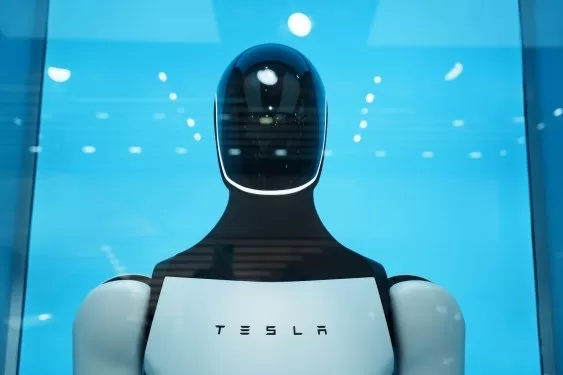
Tesla CEO Elon Musk opened the company’s first-quarter earnings call with a financial preview — or, depending on your perspective, a cautionary note. According to the Q1 earnings report, Tesla’s capital expenditures are projected to surge to $25 billion in 2026, significantly exceeding previous annual spending as the company accelerates its transition into an AI and robotics firm to maintain its competitive edge.
This figure, representing spending on physical assets beyond routine operating costs, is three times higher than Tesla’s annual capex budget in prior years. For context, Tesla spent $8.5 billion on capital expenditures in 2025, $11.3 billion in 2024, and $8.9 billion in 2023.
In January, Tesla announced that capital expenditures for 2026 would exceed $20 billion, a substantial increase intended to fund AI initiatives, including compute infrastructure and data center investments, as well as the expansion and scaling of manufacturing and R&D production lines.
This additional $5 billion indicates that these projects will require more funding than initially anticipated. However, the report shows that Tesla’s quarterly capital expenditure of $2.5 billion remains consistent with previous quarters.
Musk views this strategy positively, a sentiment likely shared by many shareholders who see it as a commitment to Tesla’s future, particularly in AI and robotics.
“In 2026, we will substantially increase our investments in the future,” Musk stated during Wednesday’s earnings call. “You should expect to see a very significant rise in capital expenditures, but I believe it is well justified by the substantially increased revenue stream it will generate.”
Musk emphasized that Tesla is not alone in raising its capital expenditure budgets. Amazon, for example, has projected $200 billion in capital expenditures for 2026, covering “AI, chips, robotics, and low earth orbit satellites.” Google is expected to spend between $175 billion and $185 billion in capital expenditures in 2026, up from $91.4 billion the previous year.
Tesla’s increased capital expenditures align with Musk’s ambition to evolve the company beyond its current focus on electric vehicles, solar products, and energy storage.
According to Musk, part of this spending will support Tesla’s core technologies, including battery systems and AI software. The company plans to invest in AI training, chip design, and “laying the groundwork” for increased manufacturing output, while also funding its robotaxi operations and a new semiconductor research fab in Austin.
The Fremont, California factory will likely absorb a portion of this capital as Tesla phases out production of the Model S and Model X and begins large-scale manufacturing of its Optimus humanoid robot. On Wednesday, the company announced it has also cleared land outside its Austin facility for a dedicated Optimus production site.
Tesla intends to boost internal production of Optimus for testing purposes and “probably” make the robot “useful outside of Tesla sometime next year,” Musk added.
Tesla is also investing in strengthening its supply chain “across the board,” Musk noted, covering batteries, energy solutions, and AI silicon.
CFO Vaibhav Taneja stated that this spending will continue for a couple of years and comes with a tangible cost. Although Tesla’s stock price briefly rose 4%, partly due to an unexpected $1.4 billion in free cash flow, Taneja warned that the company will enter negative cash flow territory later this year.
Tesla’s shares lost their after-hours gains as Musk and Taneja detailed these plans to investors. Nevertheless, Tesla remains well-capitalized, with $44.7 billion in cash, cash equivalents, and short-term investments at the end of the first quarter.
“While this may seem like a large amount, and we will experience negative free cash flow for the remainder of the year, we believe this is the correct strategy to position the company for the next era,” Taneja said.
Related article
 Meta Removes AI Photo Editing Feature Following User Backlash
Meta, the social media giant, is once again embroiled in a public debate regarding the delicate balance between artificial intelligence and user privacy. According to TechCrunch, Meta’s Superintelligence Labs introduced a new AI image generator, Muse
DeepMind CEO Hassabis: I sleep six hours a day, usually feel energetic around 1 a.m.
Fortune recently featured an interview with Demis Hassabis, CEO of Google DeepMind, revealing his unconventional approach to rest and productivity. Hassabis disclosed that he sleeps very little, structuring his waking hours into two distinct work blo
OpenAI, Anthropic Vie for Market Share Despite Revenue Shortfalls
Despite recent reports suggesting OpenAI missed revenue targets, creating pressure on tech stocks this Tuesday, private AI lab investors remain resilient. Seasoned backers have confirmed they will not reduce investment despite negative media coverage
Related Special Topic Recommendations
Video creation
Meta Removes AI Photo Editing Feature Following User Backlash
Meta, the social media giant, is once again embroiled in a public debate regarding the delicate balance between artificial intelligence and user privacy. According to TechCrunch, Meta’s Superintelligence Labs introduced a new AI image generator, Muse
DeepMind CEO Hassabis: I sleep six hours a day, usually feel energetic around 1 a.m.
Fortune recently featured an interview with Demis Hassabis, CEO of Google DeepMind, revealing his unconventional approach to rest and productivity. Hassabis disclosed that he sleeps very little, structuring his waking hours into two distinct work blo
OpenAI, Anthropic Vie for Market Share Despite Revenue Shortfalls
Despite recent reports suggesting OpenAI missed revenue targets, creating pressure on tech stocks this Tuesday, private AI lab investors remain resilient. Seasoned backers have confirmed they will not reduce investment despite negative media coverage
Related Special Topic Recommendations
Video creation
 AI Short-Form Video Hook Generators for Reels, Shorts, and Product Launch Campaigns
2026 Latest Best AI Short-Form Video Hook Generators for Reels Shorts and Product Launch Campaigns! XIX.AI curates top-rated powerful game-changing tools that deliver must-try results through real-world tests. This weekly updated page offers free vs paid comparison rankings to help you find the perfect solution for boosting content creativity and productivity. Explore now to Unlock your AI edge!
 11 tools
 xix.ai
writing
AI Article Outline Tools for Long Form Writing
xix.ai
writing
AI Article Outline Tools for Long Form Writing
2026 Latest Best Top-Rated AI Article Outline Tools for Long Form Writing! This curated collection features powerful, game-changing tools that deliver accurate, structured outlines with real-world tests to boost writing efficiency significantly. XIX.AI is part of this elite selection. Get a free vs paid comparison to help you choose the perfect tool. Explore now and Unlock your AI edge!
9 tools
xix.ai
chatbot
Best AI Roleplay Chat Apps for Language Practice, Interview Prep, and Daily Fluency
2026 Latest Best Top-rated AI Roleplay Chat Apps for Language Practice, Interview Prep, and Daily Fluency! XIX.AI curates a powerful game-changing collection that offers free vs paid comparison, real-world tests, and updated rankings weekly. These must-try tools help you boost writing skills, overcome fluency challenges, and improve communication efficiency across all daily scenarios. Explore now to discover your perfect tool for language growth!
10 tools
xix.ai
Music composition
AI Stem Separation Tools for Remix Production, Sampling Prep, and Karaoke Masters
2026 Latest Best Top-rated AI Stem Separation Tools Curated for Remix Production, Sampling Prep, and Karaoke Masters. These powerful game-changing tools offer real-world tests to deliver precise audio isolation, boosting productivity significantly. XIX.AI provides a weekly updated free vs paid comparison guide to help you find the must-try solution that suits your needs. Explore now to unlock your AI edge.
8 tools
xix.ai
Data Analysis
AI SQL Copilots for Revenue Dashboards, Funnel Analysis, and Product Metrics
2026 Latest Best AI SQL Copilots Ranked Top-Rated! XIX.AI curates a powerful game-changing collection for weekly updated real-world tests. These must-try tools help you generate accurate revenue dashboards, analyze sales funnels, and track product metrics swiftly, boosting productivity massively. Explore now to Discover your perfect tool for data-driven decision making! 238 characters
9 tools
xix.ai
Music composition
Best AI Melody Writing Tools for Song Drafts
2026 Latest Best Top-Rated AI Melody Writing Tools for Song Drafts! XIX.AI has curated a highly powerful game-changing collection that goes through rigorous real-world tests to deliver the best writing experience. You can find detailed free vs paid comparisons, accurate rankings, and must-try options designed to help you create stunning song drafts effortlessly and boost your creative productivity significantly. Explore now to discover your perfect tool!
8 tools
xix.ai

 Comments (0)
0/500
Comments (0)
0/500
Tesla CEO Elon Musk opened the company’s first-quarter earnings call with a financial preview — or, depending on your perspective, a cautionary note. According to the Q1 earnings report, Tesla’s capital expenditures are projected to surge to $25 billion in 2026, significantly exceeding previous annual spending as the company accelerates its transition into an AI and robotics firm to maintain its competitive edge.
This figure, representing spending on physical assets beyond routine operating costs, is three times higher than Tesla’s annual capex budget in prior years. For context, Tesla spent $8.5 billion on capital expenditures in 2025, $11.3 billion in 2024, and $8.9 billion in 2023.
In January, Tesla announced that capital expenditures for 2026 would exceed $20 billion, a substantial increase intended to fund AI initiatives, including compute infrastructure and data center investments, as well as the expansion and scaling of manufacturing and R&D production lines.
This additional $5 billion indicates that these projects will require more funding than initially anticipated. However, the report shows that Tesla’s quarterly capital expenditure of $2.5 billion remains consistent with previous quarters.
Musk views this strategy positively, a sentiment likely shared by many shareholders who see it as a commitment to Tesla’s future, particularly in AI and robotics.
“In 2026, we will substantially increase our investments in the future,” Musk stated during Wednesday’s earnings call. “You should expect to see a very significant rise in capital expenditures, but I believe it is well justified by the substantially increased revenue stream it will generate.”
Musk emphasized that Tesla is not alone in raising its capital expenditure budgets. Amazon, for example, has projected $200 billion in capital expenditures for 2026, covering “AI, chips, robotics, and low earth orbit satellites.” Google is expected to spend between $175 billion and $185 billion in capital expenditures in 2026, up from $91.4 billion the previous year.
Tesla’s increased capital expenditures align with Musk’s ambition to evolve the company beyond its current focus on electric vehicles, solar products, and energy storage.
According to Musk, part of this spending will support Tesla’s core technologies, including battery systems and AI software. The company plans to invest in AI training, chip design, and “laying the groundwork” for increased manufacturing output, while also funding its robotaxi operations and a new semiconductor research fab in Austin.
The Fremont, California factory will likely absorb a portion of this capital as Tesla phases out production of the Model S and Model X and begins large-scale manufacturing of its Optimus humanoid robot. On Wednesday, the company announced it has also cleared land outside its Austin facility for a dedicated Optimus production site.
Tesla intends to boost internal production of Optimus for testing purposes and “probably” make the robot “useful outside of Tesla sometime next year,” Musk added.
Tesla is also investing in strengthening its supply chain “across the board,” Musk noted, covering batteries, energy solutions, and AI silicon.
CFO Vaibhav Taneja stated that this spending will continue for a couple of years and comes with a tangible cost. Although Tesla’s stock price briefly rose 4%, partly due to an unexpected $1.4 billion in free cash flow, Taneja warned that the company will enter negative cash flow territory later this year.
Tesla’s shares lost their after-hours gains as Musk and Taneja detailed these plans to investors. Nevertheless, Tesla remains well-capitalized, with $44.7 billion in cash, cash equivalents, and short-term investments at the end of the first quarter.
“While this may seem like a large amount, and we will experience negative free cash flow for the remainder of the year, we believe this is the correct strategy to position the company for the next era,” Taneja said.








 Meta Removes AI Photo Editing Feature Following User Backlash
Meta, the social media giant, is once again embroiled in a public debate regarding the delicate balance between artificial intelligence and user privacy. According to TechCrunch, Meta’s Superintelligence Labs introduced a new AI image generator, Muse
Meta Removes AI Photo Editing Feature Following User Backlash
Meta, the social media giant, is once again embroiled in a public debate regarding the delicate balance between artificial intelligence and user privacy. According to TechCrunch, Meta’s Superintelligence Labs introduced a new AI image generator, Muse
 DeepMind CEO Hassabis: I sleep six hours a day, usually feel energetic around 1 a.m.
Fortune recently featured an interview with Demis Hassabis, CEO of Google DeepMind, revealing his unconventional approach to rest and productivity. Hassabis disclosed that he sleeps very little, structuring his waking hours into two distinct work blo
DeepMind CEO Hassabis: I sleep six hours a day, usually feel energetic around 1 a.m.
Fortune recently featured an interview with Demis Hassabis, CEO of Google DeepMind, revealing his unconventional approach to rest and productivity. Hassabis disclosed that he sleeps very little, structuring his waking hours into two distinct work blo
 OpenAI, Anthropic Vie for Market Share Despite Revenue Shortfalls
Despite recent reports suggesting OpenAI missed revenue targets, creating pressure on tech stocks this Tuesday, private AI lab investors remain resilient. Seasoned backers have confirmed they will not reduce investment despite negative media coverage
OpenAI, Anthropic Vie for Market Share Despite Revenue Shortfalls
Despite recent reports suggesting OpenAI missed revenue targets, creating pressure on tech stocks this Tuesday, private AI lab investors remain resilient. Seasoned backers have confirmed they will not reduce investment despite negative media coverage

2026 Latest Best AI Short-Form Video Hook Generators for Reels Shorts and Product Launch Campaigns! XIX.AI curates top-rated powerful game-changing tools that deliver must-try results through real-world tests. This weekly updated page offers free vs paid comparison rankings to help you find the perfect solution for boosting content creativity and productivity. Explore now to Unlock your AI edge!
11 tools
xix.ai

2026 Latest Best Top-Rated AI Article Outline Tools for Long Form Writing! This curated collection features powerful, game-changing tools that deliver accurate, structured outlines with real-world tests to boost writing efficiency significantly. XIX.AI is part of this elite selection. Get a free vs paid comparison to help you choose the perfect tool. Explore now and Unlock your AI edge!
9 tools
xix.ai

2026 Latest Best Top-rated AI Roleplay Chat Apps for Language Practice, Interview Prep, and Daily Fluency! XIX.AI curates a powerful game-changing collection that offers free vs paid comparison, real-world tests, and updated rankings weekly. These must-try tools help you boost writing skills, overcome fluency challenges, and improve communication efficiency across all daily scenarios. Explore now to discover your perfect tool for language growth!
10 tools
xix.ai

2026 Latest Best Top-rated AI Stem Separation Tools Curated for Remix Production, Sampling Prep, and Karaoke Masters. These powerful game-changing tools offer real-world tests to deliver precise audio isolation, boosting productivity significantly. XIX.AI provides a weekly updated free vs paid comparison guide to help you find the must-try solution that suits your needs. Explore now to unlock your AI edge.
8 tools
xix.ai

2026 Latest Best AI SQL Copilots Ranked Top-Rated! XIX.AI curates a powerful game-changing collection for weekly updated real-world tests. These must-try tools help you generate accurate revenue dashboards, analyze sales funnels, and track product metrics swiftly, boosting productivity massively. Explore now to Discover your perfect tool for data-driven decision making! 238 characters
9 tools
xix.ai

2026 Latest Best Top-Rated AI Melody Writing Tools for Song Drafts! XIX.AI has curated a highly powerful game-changing collection that goes through rigorous real-world tests to deliver the best writing experience. You can find detailed free vs paid comparisons, accurate rankings, and must-try options designed to help you create stunning song drafts effortlessly and boost your creative productivity significantly. Explore now to discover your perfect tool!
8 tools
xix.ai












