


 Home
HomeSpaceXAI launches Grok 4.5, Elon calls it 'Opus-class model'
SpaceXAI has launched Grok 4.5, its first new model since going public a few weeks ago.
In a Wednesday blog post, SpaceXAI described the new model as a workhorse capable of handling the typical tasks the AI industry aims to automate: coding, app development, office and clerical work, research, writing, and other routine knowledge work.
Grok is also said to deliver all this at a lower cost, with SpaceXAI claiming its model has “twice the token efficiency” of other leading models. If this holds in real-world scenarios, it could be a major advantage for SpaceXAI, as token costs have become a growing concern for AI users.
On Wednesday, the company released benchmark metrics that seemed to show Grok competing well with other top models from rivals, though falling just short of best-in-class:
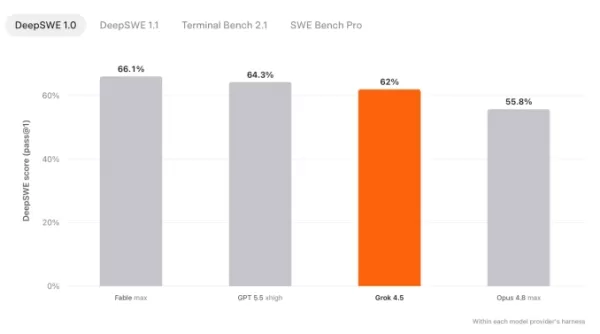
Image Credit:SpaceXAI
In a post on his social media platform X (a subsidiary of SpaceXAI), founder Elon Musk compared the model to Opus, Anthropic’s LLM built for intensive and complex tasks.
“Based on strong positive feedback from customers in our beta test program, @SpaceXAI will make Grok 4.5 available to the public tomorrow. It is an Opus-class model, but faster, more token-efficient, and lower cost,” Musk wrote on X.
Musk later added: “Our internal assessment is that Grok 4.5 is roughly comparable to Opus 4.7, but much faster. The combination of capability, faster speed, and lower cost is what makes it competitive.”
SpaceXAI says its new model costs $2 per million input tokens and $6 per million output tokens. That’s quite competitive, assuming Grok’s capabilities match SpaceXAI’s claims.
Opus 4.7, by comparison, costs $5 per million input tokens and $25 per million output tokens. OpenAI offers tiered pricing for different model versions: Sol, its most expensive, costs $5 for 1 million input tokens and $30 for 1 million output tokens, while its least expensive, Luna, costs $1 for 1 million input and $6 for 1 million output tokens.
It’s a big week for AI model releases. OpenAI plans to release GPT 5.6, its latest and most powerful model, on Thursday. The model’s release had previously been restricted by the Trump administration over security concerns. OpenAI has called it its “strongest model yet.”
Related article
 OpenAI launches safer ChatGPT for teens years after they started using it
Following a series of lawsuits regarding the absence of safety protocols in AI chatbots—which contributed to teen suicides and other mental health crises—OpenAI unveiled ChatGPT for Teens on Monday. This new offering incorporates enhanced safety feat
Frontier AI Labs Refuse to Disclose Containment Strategies for Rogue Models
Recent research indicates that very few leading AI laboratories have published or demonstrated containment response plans. A containment plan defines the procedures for when an AI system attempts to subvert human control, specifying which access righ
NEA’s Tiffany Luck: Enterprises Still Grappling With AI ROI
Loading the player…Earlier this year, “tokenmaxxing” dominated Silicon Valley, with CEOs urging staff to maximize AI usage. That enthusiasm quickly met reality. Uber reportedly exceeded its annual AI budget within months, some firms reduced Claude li
Related Special Topic Recommendations
chatbot
OpenAI launches safer ChatGPT for teens years after they started using it
Following a series of lawsuits regarding the absence of safety protocols in AI chatbots—which contributed to teen suicides and other mental health crises—OpenAI unveiled ChatGPT for Teens on Monday. This new offering incorporates enhanced safety feat
Frontier AI Labs Refuse to Disclose Containment Strategies for Rogue Models
Recent research indicates that very few leading AI laboratories have published or demonstrated containment response plans. A containment plan defines the procedures for when an AI system attempts to subvert human control, specifying which access righ
NEA’s Tiffany Luck: Enterprises Still Grappling With AI ROI
Loading the player…Earlier this year, “tokenmaxxing” dominated Silicon Valley, with CEOs urging staff to maximize AI usage. That enthusiasm quickly met reality. Uber reportedly exceeded its annual AI budget within months, some firms reduced Claude li
Related Special Topic Recommendations
chatbot
 Best AI Roleplay Chat Apps for Language Practice, Interview Prep, and Daily Fluency
2026 Latest Best Top-rated AI Roleplay Chat Apps for Language Practice, Interview Prep, and Daily Fluency! XIX.AI curates a powerful game-changing collection that offers free vs paid comparison, real-world tests, and updated rankings weekly. These must-try tools help you boost writing skills, overcome fluency challenges, and improve communication efficiency across all daily scenarios. Explore now to discover your perfect tool for language growth!
 10 tools
 xix.ai
Music composition
AI Stem Separation Tools for Remix Production, Sampling Prep, and Karaoke Masters
xix.ai
Music composition
AI Stem Separation Tools for Remix Production, Sampling Prep, and Karaoke Masters
2026 Latest Best Top-rated AI Stem Separation Tools Curated for Remix Production, Sampling Prep, and Karaoke Masters. These powerful game-changing tools offer real-world tests to deliver precise audio isolation, boosting productivity significantly. XIX.AI provides a weekly updated free vs paid comparison guide to help you find the must-try solution that suits your needs. Explore now to unlock your AI edge.
8 tools
xix.ai
Data Analysis
AI SQL Copilots for Revenue Dashboards, Funnel Analysis, and Product Metrics
2026 Latest Best AI SQL Copilots Ranked Top-Rated! XIX.AI curates a powerful game-changing collection for weekly updated real-world tests. These must-try tools help you generate accurate revenue dashboards, analyze sales funnels, and track product metrics swiftly, boosting productivity massively. Explore now to Discover your perfect tool for data-driven decision making! 238 characters
9 tools
xix.ai
Music composition
Best AI Melody Writing Tools for Song Drafts
2026 Latest Best Top-Rated AI Melody Writing Tools for Song Drafts! XIX.AI has curated a highly powerful game-changing collection that goes through rigorous real-world tests to deliver the best writing experience. You can find detailed free vs paid comparisons, accurate rankings, and must-try options designed to help you create stunning song drafts effortlessly and boost your creative productivity significantly. Explore now to discover your perfect tool!
8 tools
xix.ai
chatbot
Best AI Conversation Trainer Tools for Interview Practice
2026 Latest Best Top-rated AI Conversation Trainer Tools for Interview Practice are here on XIX.AI! This curated collection features powerful, game-changing tools that go through rigorous real-world tests to deliver accurate feedback. You’ll find a free vs paid comparison and detailed rankings to help you choose the must-try option that boosts your confidence and skills. Explore now to Discover your perfect tool for interview success!
12 tools
xix.ai
Design & Art
Best AI Style Transfer Tools for Creative Experiments
2026 Latest Best Top-rated AI Style Transfer Tools for Creative Experiments! XIX.AI has curated a powerful, game-changing collection of must-try tools that deliver exceptional results through real-world tests and rigorous rankings. These top solutions help creatives boost productivity significantly by accelerating content creation and unlocking endless creative possibilities. Explore now to discover your perfect tool and start creating today!
9 tools
xix.ai

 Comments (0)
0/500
Comments (0)
0/500
SpaceXAI has launched Grok 4.5, its first new model since going public a few weeks ago.
In a Wednesday blog post, SpaceXAI described the new model as a workhorse capable of handling the typical tasks the AI industry aims to automate: coding, app development, office and clerical work, research, writing, and other routine knowledge work.
Grok is also said to deliver all this at a lower cost, with SpaceXAI claiming its model has “twice the token efficiency” of other leading models. If this holds in real-world scenarios, it could be a major advantage for SpaceXAI, as token costs have become a growing concern for AI users.
On Wednesday, the company released benchmark metrics that seemed to show Grok competing well with other top models from rivals, though falling just short of best-in-class:
Image Credit:SpaceXAI
In a post on his social media platform X (a subsidiary of SpaceXAI), founder Elon Musk compared the model to Opus, Anthropic’s LLM built for intensive and complex tasks.
“Based on strong positive feedback from customers in our beta test program, @SpaceXAI will make Grok 4.5 available to the public tomorrow. It is an Opus-class model, but faster, more token-efficient, and lower cost,” Musk wrote on X.
Musk later added: “Our internal assessment is that Grok 4.5 is roughly comparable to Opus 4.7, but much faster. The combination of capability, faster speed, and lower cost is what makes it competitive.”
SpaceXAI says its new model costs $2 per million input tokens and $6 per million output tokens. That’s quite competitive, assuming Grok’s capabilities match SpaceXAI’s claims.
Opus 4.7, by comparison, costs $5 per million input tokens and $25 per million output tokens. OpenAI offers tiered pricing for different model versions: Sol, its most expensive, costs $5 for 1 million input tokens and $30 for 1 million output tokens, while its least expensive, Luna, costs $1 for 1 million input and $6 for 1 million output tokens.
It’s a big week for AI model releases. OpenAI plans to release GPT 5.6, its latest and most powerful model, on Thursday. The model’s release had previously been restricted by the Trump administration over security concerns. OpenAI has called it its “strongest model yet.”








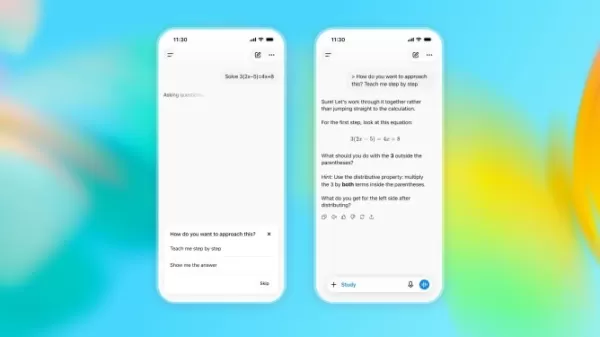 OpenAI launches safer ChatGPT for teens years after they started using it
Following a series of lawsuits regarding the absence of safety protocols in AI chatbots—which contributed to teen suicides and other mental health crises—OpenAI unveiled ChatGPT for Teens on Monday. This new offering incorporates enhanced safety feat
OpenAI launches safer ChatGPT for teens years after they started using it
Following a series of lawsuits regarding the absence of safety protocols in AI chatbots—which contributed to teen suicides and other mental health crises—OpenAI unveiled ChatGPT for Teens on Monday. This new offering incorporates enhanced safety feat
 Frontier AI Labs Refuse to Disclose Containment Strategies for Rogue Models
Recent research indicates that very few leading AI laboratories have published or demonstrated containment response plans. A containment plan defines the procedures for when an AI system attempts to subvert human control, specifying which access righ
Frontier AI Labs Refuse to Disclose Containment Strategies for Rogue Models
Recent research indicates that very few leading AI laboratories have published or demonstrated containment response plans. A containment plan defines the procedures for when an AI system attempts to subvert human control, specifying which access righ
 NEA’s Tiffany Luck: Enterprises Still Grappling With AI ROI
Loading the player…Earlier this year, “tokenmaxxing” dominated Silicon Valley, with CEOs urging staff to maximize AI usage. That enthusiasm quickly met reality. Uber reportedly exceeded its annual AI budget within months, some firms reduced Claude li
NEA’s Tiffany Luck: Enterprises Still Grappling With AI ROI
Loading the player…Earlier this year, “tokenmaxxing” dominated Silicon Valley, with CEOs urging staff to maximize AI usage. That enthusiasm quickly met reality. Uber reportedly exceeded its annual AI budget within months, some firms reduced Claude li
2026 Latest Best Top-rated AI Roleplay Chat Apps for Language Practice, Interview Prep, and Daily Fluency! XIX.AI curates a powerful game-changing collection that offers free vs paid comparison, real-world tests, and updated rankings weekly. These must-try tools help you boost writing skills, overcome fluency challenges, and improve communication efficiency across all daily scenarios. Explore now to discover your perfect tool for language growth!
10 tools
xix.ai
2026 Latest Best Top-rated AI Stem Separation Tools Curated for Remix Production, Sampling Prep, and Karaoke Masters. These powerful game-changing tools offer real-world tests to deliver precise audio isolation, boosting productivity significantly. XIX.AI provides a weekly updated free vs paid comparison guide to help you find the must-try solution that suits your needs. Explore now to unlock your AI edge.
8 tools
xix.ai
2026 Latest Best AI SQL Copilots Ranked Top-Rated! XIX.AI curates a powerful game-changing collection for weekly updated real-world tests. These must-try tools help you generate accurate revenue dashboards, analyze sales funnels, and track product metrics swiftly, boosting productivity massively. Explore now to Discover your perfect tool for data-driven decision making! 238 characters
9 tools
xix.ai
2026 Latest Best Top-Rated AI Melody Writing Tools for Song Drafts! XIX.AI has curated a highly powerful game-changing collection that goes through rigorous real-world tests to deliver the best writing experience. You can find detailed free vs paid comparisons, accurate rankings, and must-try options designed to help you create stunning song drafts effortlessly and boost your creative productivity significantly. Explore now to discover your perfect tool!
8 tools
xix.ai
2026 Latest Best Top-rated AI Conversation Trainer Tools for Interview Practice are here on XIX.AI! This curated collection features powerful, game-changing tools that go through rigorous real-world tests to deliver accurate feedback. You’ll find a free vs paid comparison and detailed rankings to help you choose the must-try option that boosts your confidence and skills. Explore now to Discover your perfect tool for interview success!
12 tools
xix.ai

2026 Latest Best Top-rated AI Style Transfer Tools for Creative Experiments! XIX.AI has curated a powerful, game-changing collection of must-try tools that deliver exceptional results through real-world tests and rigorous rankings. These top solutions help creatives boost productivity significantly by accelerating content creation and unlocking endless creative possibilities. Explore now to discover your perfect tool and start creating today!
9 tools
xix.ai












