


 Home
HomeSpaceX AI Could Outpace Anthropic Within Half a Year, Musk Says
![SpaceXAI leaders: Elon Musk, Dario Amodei, Sam Altman]()
SpaceXAI CEO Elon Musk predicts AI dominance within six months, leveraging compute hardware to bridge the gap with competitors.
SpaceXAI CEO Elon Musk recently stated on X that his company aims to lead the frontier AI landscape within approximately six months.
Musk expressed cautious optimism, suggesting SpaceXAI could match Anthropic’s Fable or OpenAI’s GPT-6 within two to three months.
SpaceXAI currently provides 17 models, each varying in intelligence, performance, and pricing.
According to Artificial Analysis benchmarks, SpaceXAI’s top models are Grok 4.7 iterations, which currently trail Anthropic, OpenAI, and Meta’s Muse Spark 1.3 (max).
If our second derivative remains strong, SpaceX will reach pole position in about 6 months
Elon Musk, SpaceXAI CEO
Elon Musk, CEO of Tesla and SpaceX. Credit: Getty Images
Key facts
- Grok 4.7 scores 46 on Artificial Analysis intelligence benchmark
- Claude Opus 5.5 leads intelligence benchmark with score 58
- OpenAI’s GPT-6 Astra (max) scores 53 on intelligence
- Grok 4.7 (xhigh) ranks 16th across general benchmark
- Grok 4.7 outperforms Alibaba’s Qwen3.8 Max and Kimi K3 on a general benchmark.
Frontier speed prediction
Musk made his prediction on X, stating: “We will keep accelerating.”
He noted that SpaceXAI’s AI efforts are only three years old, compared to six years for Anthropic and ten for OpenAI. “SpaceX will reach pole position in about 6 months,” he added.
His argument centers on hardware and intelligence capabilities, noting that current intelligence suffices for many tasks. “Once you far exceed the caliber of intelligence needed for a class of tasks, additional intelligence is pointless,” he said.
“You don’t need (and it would be cruel to put) Newton-level intelligence in your toaster!”
The hardware bottleneck
Musk explained that “Hardware is hard” and “bringing massive compute online rapidly is incredibly difficult”. He added, “SpaceX has demonstrated exceptional ability in this regard and will only get better”.
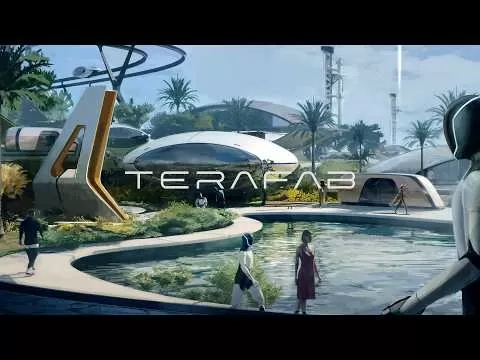
The company is entering semiconductor manufacturing via the Terafab project in Texas, essential for its mission: to build “systems and technologies necessary to make life multiplanetary”, “understand the true nature of the universe”, and “extend the light of consciousness to the stars” as stated in an SEC filing.
The project aims to produce 1 terawatt of compute annually. SpaceX and Tesla are investing an initial US$16.8 billion into this semiconductor facility.
Musk previously indicated that global production capacity cannot meet his companies' internal needs.
Speaking in Austin, Texas, Musk explained: “To give you a sense of what we are talking about, the current output of AI compute is roughly twenty gigawatts per year…. All of the rest of the output from Earth is about 2% of what we need."
We will keep accelerating
Elon Musk, SpaceXAI CEO
Elon Musk announcing the TeraFab. Credit: X/Elon Musk
Grok’s performance
According to Artificial Analysis benchmarks, SpaceXAI’s top models are Grok 4.7 iterations, scoring 46 on the intelligence benchmark at the highest level.
Anthropic’s Claude Opus 5.5 (max with fallback), currently the top model, scores 58, while OpenAI’s GPT-6 Astra (max) scores 53. Excluding cost, this 7- to 12-point intelligence gap represents the performance deficit Musk’s models must overcome.
In a general benchmark ranking over 250 AI models across intelligence, price, performance, speed, and context window, SpaceXAI’s top iteration, Grok 4.7 (xhigh), ranks 16th, behind various OpenAI and Anthropic models, as well as Meta’s Muse Spark 1.3 (max).
Grok 4.7 currently outperforms some top Chinese providers, such as Alibaba’s Qwen3.8 Max (0902) and Moonshot’s Kimi K3, who often release open-weight or open-source models.
AI providers are increasingly competing on cost to keep up with Chinese firms. Both Anthropic and OpenAI have recently released models offering core capabilities of advanced models at significantly lower costs, likely to prevent enterprise customer loss to Chinese rivals.
For example, Grok 4.7 (xhigh) costs US$3.74 per task, while Xiaomi’s advanced MiMo-V2.6-Pro, with similar capabilities, costs just US$0.13 per task.
Elon Musk has told SpaceX employees he plans for xAI data center capacity to reach 10GW of AI compute by 2027. Credit: SpaceX
Key partners
SpaceXAI's key partners include:
NVIDIA: American technology giant specializing in graphics processing units and AI chips that provide core compute power for training Grok models.
Tesla: Elon Musk's own electric vehicle and clean energy company collaborating on joint supercomputing infrastructure, shared AI research and autonomous software development.
Dell Technologies: Global IT infrastructure vendor assembling server racks and liquid-cooled data centre hardware to power SpaceXAI's massive AI factory supercomputers.
Related article
 WeRide Unveils WITT, a Physical AI Large Model
Autonomous driving technology is advancing at a remarkable pace. On July 17, WeRide, a leading autonomous driving firm, unveiled its proprietary physical AI cognitive foundation model, WeRide WITT. This launch represents a significant milestone in AI
GitHub Copilot Integrates GPT-5.4 in Hours
GitHub Copilot has once again proven its rapid response capabilities. Mere hours after OpenAI launched its newest flagship model, GPT-5.4, GitHub announced full integration, providing developers worldwide with intelligent coding assistance powered by
DeepSeek-V4.1-Flash Debuts on Qwen AI Platform With API and Token Plan Live
DeepSeek-V4.1-Flash is now live on the Qwen AI platform, offering both API access and a flexible Token Plan. Developers can seamlessly integrate the model into their workflows via standard APIs or leverage the Token Plan directly within tools like Qo
Related Special Topic Recommendations
Productivity
WeRide Unveils WITT, a Physical AI Large Model
Autonomous driving technology is advancing at a remarkable pace. On July 17, WeRide, a leading autonomous driving firm, unveiled its proprietary physical AI cognitive foundation model, WeRide WITT. This launch represents a significant milestone in AI
GitHub Copilot Integrates GPT-5.4 in Hours
GitHub Copilot has once again proven its rapid response capabilities. Mere hours after OpenAI launched its newest flagship model, GPT-5.4, GitHub announced full integration, providing developers worldwide with intelligent coding assistance powered by
DeepSeek-V4.1-Flash Debuts on Qwen AI Platform With API and Token Plan Live
DeepSeek-V4.1-Flash is now live on the Qwen AI platform, offering both API access and a flexible Token Plan. Developers can seamlessly integrate the model into their workflows via standard APIs or leverage the Token Plan directly within tools like Qo
Related Special Topic Recommendations
Productivity
 Best AI Second-Brain Organizers for Notes and Tasks
2026 Latest Best Top-Rated AI Second-Brain Organizers for Notes and Tasks! XIX.AI has curated a highly powerful game-changing collection, featuring weekly updated rankings, free vs paid comparison, and real-world tests to help you find the perfect tool that boosts productivity dramatically. Explore now to unlock your AI edge!
 11 tools
 xix.ai
Prompt
AI Prompt Testing Platforms for ChatGPT and Claude Workflows
xix.ai
Prompt
AI Prompt Testing Platforms for ChatGPT and Claude Workflows
2026 Latest Best Top-Rated AI Prompt Testing Platforms for ChatGPT and Claude Workflows! XIX.AI curates a powerful game-changing collection, featuring weekly updated rankings, free vs paid comparison, real-world tests, and detailed feature breakdowns to help you identify the must-try tools that boost productivity and deliver flawless outputs. Explore now to discover your perfect solution and unlock your AI edge. (249 characters)
9 tools
xix.ai
Marketing
AI Landing Page Copy Tools for SaaS A/B Tests, Pricing Pages, and Demo Conversion
2026 Latest Best AI Landing Page Copy Tools for SaaS A/B Tests, Pricing Pages, and Demo Conversion are here on XIX.AI. This curated list of top-rated tools offers powerful game-changing solutions to boost content quality, improve writing efficiency, and enhance overall productivity. We conduct real-world tests and provide a free vs paid comparison along with weekly updated rankings. Must-try options help you break through creation bottlenecks. Explore now to discover your perfect tool and unlock your AI edge!
8 tools
xix.ai
Finance
Excel AI Budget Forecasting Tools for Cash Flow Planning and Expense Control
2026 Latest Best Excel AI tools for cash flow planning and expense control are here on XIX.AI’s top-rated curated list. These powerful game-changing solutions help you boost productivity significantly through real-world tests and rigorous rankings. Get a free vs paid comparison to find the perfect fit for your needs. Explore now to unlock your AI edge in financial management.
9 tools
xix.ai
Prompt
AI Prompt Management Tools for Teams
2026 Latest Best Top-Rated AI Prompt Management Tools for Teams are curated by XIX.AI here. This weekly updated guide features powerful game-changing solutions that boost team productivity significantly through real-world tests and detailed rankings. Get a free vs paid comparison to help you choose the perfect tool. Explore now to Unlock your AI edge.
9 tools
xix.ai
Music composition
AI Lyric Idea Tools for Music Composition
2026 Latest Best Top-rated AI Lyric Idea Tools for Music Composition are here on XIX.AI! This curated collection features powerful game-changing options that go through real-world tests to deliver high-quality lyric concepts fast, helping users boost creativity and streamline their music creation process. Get a free vs paid comparison overview too. Explore now to Discover your perfect tool!
16 tools
xix.ai

 Comments (0)
0/500
Comments (0)
0/500
SpaceXAI CEO Elon Musk predicts AI dominance within six months, leveraging compute hardware to bridge the gap with competitors.
SpaceXAI CEO Elon Musk recently stated on X that his company aims to lead the frontier AI landscape within approximately six months.
Musk expressed cautious optimism, suggesting SpaceXAI could match Anthropic’s Fable or OpenAI’s GPT-6 within two to three months.
SpaceXAI currently provides 17 models, each varying in intelligence, performance, and pricing.
According to Artificial Analysis benchmarks, SpaceXAI’s top models are Grok 4.7 iterations, which currently trail Anthropic, OpenAI, and Meta’s Muse Spark 1.3 (max).
If our second derivative remains strong, SpaceX will reach pole position in about 6 months
Elon Musk, SpaceXAI CEO
Elon Musk, CEO of Tesla and SpaceX. Credit: Getty Images
Key facts
- Grok 4.7 scores 46 on Artificial Analysis intelligence benchmark
- Claude Opus 5.5 leads intelligence benchmark with score 58
- OpenAI’s GPT-6 Astra (max) scores 53 on intelligence
- Grok 4.7 (xhigh) ranks 16th across general benchmark
- Grok 4.7 outperforms Alibaba’s Qwen3.8 Max and Kimi K3 on a general benchmark.
Frontier speed prediction
Musk made his prediction on X, stating: “We will keep accelerating.”
He noted that SpaceXAI’s AI efforts are only three years old, compared to six years for Anthropic and ten for OpenAI. “SpaceX will reach pole position in about 6 months,” he added.
His argument centers on hardware and intelligence capabilities, noting that current intelligence suffices for many tasks. “Once you far exceed the caliber of intelligence needed for a class of tasks, additional intelligence is pointless,” he said.
“You don’t need (and it would be cruel to put) Newton-level intelligence in your toaster!”
The hardware bottleneck
Musk explained that “Hardware is hard” and “bringing massive compute online rapidly is incredibly difficult”. He added, “SpaceX has demonstrated exceptional ability in this regard and will only get better”.
The company is entering semiconductor manufacturing via the Terafab project in Texas, essential for its mission: to build “systems and technologies necessary to make life multiplanetary”, “understand the true nature of the universe”, and “extend the light of consciousness to the stars” as stated in an SEC filing.
The project aims to produce 1 terawatt of compute annually. SpaceX and Tesla are investing an initial US$16.8 billion into this semiconductor facility.
Musk previously indicated that global production capacity cannot meet his companies' internal needs.
Speaking in Austin, Texas, Musk explained: “To give you a sense of what we are talking about, the current output of AI compute is roughly twenty gigawatts per year…. All of the rest of the output from Earth is about 2% of what we need."
We will keep accelerating
Elon Musk, SpaceXAI CEO
Elon Musk announcing the TeraFab. Credit: X/Elon Musk
Grok’s performance
According to Artificial Analysis benchmarks, SpaceXAI’s top models are Grok 4.7 iterations, scoring 46 on the intelligence benchmark at the highest level.
Anthropic’s Claude Opus 5.5 (max with fallback), currently the top model, scores 58, while OpenAI’s GPT-6 Astra (max) scores 53. Excluding cost, this 7- to 12-point intelligence gap represents the performance deficit Musk’s models must overcome.
In a general benchmark ranking over 250 AI models across intelligence, price, performance, speed, and context window, SpaceXAI’s top iteration, Grok 4.7 (xhigh), ranks 16th, behind various OpenAI and Anthropic models, as well as Meta’s Muse Spark 1.3 (max).
Grok 4.7 currently outperforms some top Chinese providers, such as Alibaba’s Qwen3.8 Max (0902) and Moonshot’s Kimi K3, who often release open-weight or open-source models.
AI providers are increasingly competing on cost to keep up with Chinese firms. Both Anthropic and OpenAI have recently released models offering core capabilities of advanced models at significantly lower costs, likely to prevent enterprise customer loss to Chinese rivals.
For example, Grok 4.7 (xhigh) costs US$3.74 per task, while Xiaomi’s advanced MiMo-V2.6-Pro, with similar capabilities, costs just US$0.13 per task.
Elon Musk has told SpaceX employees he plans for xAI data center capacity to reach 10GW of AI compute by 2027. Credit: SpaceX
Key partners
SpaceXAI's key partners include:
NVIDIA: American technology giant specializing in graphics processing units and AI chips that provide core compute power for training Grok models.
Tesla: Elon Musk's own electric vehicle and clean energy company collaborating on joint supercomputing infrastructure, shared AI research and autonomous software development.
Dell Technologies: Global IT infrastructure vendor assembling server racks and liquid-cooled data centre hardware to power SpaceXAI's massive AI factory supercomputers.








 WeRide Unveils WITT, a Physical AI Large Model
Autonomous driving technology is advancing at a remarkable pace. On July 17, WeRide, a leading autonomous driving firm, unveiled its proprietary physical AI cognitive foundation model, WeRide WITT. This launch represents a significant milestone in AI
WeRide Unveils WITT, a Physical AI Large Model
Autonomous driving technology is advancing at a remarkable pace. On July 17, WeRide, a leading autonomous driving firm, unveiled its proprietary physical AI cognitive foundation model, WeRide WITT. This launch represents a significant milestone in AI
 GitHub Copilot Integrates GPT-5.4 in Hours
GitHub Copilot has once again proven its rapid response capabilities. Mere hours after OpenAI launched its newest flagship model, GPT-5.4, GitHub announced full integration, providing developers worldwide with intelligent coding assistance powered by
GitHub Copilot Integrates GPT-5.4 in Hours
GitHub Copilot has once again proven its rapid response capabilities. Mere hours after OpenAI launched its newest flagship model, GPT-5.4, GitHub announced full integration, providing developers worldwide with intelligent coding assistance powered by
 DeepSeek-V4.1-Flash Debuts on Qwen AI Platform With API and Token Plan Live
DeepSeek-V4.1-Flash is now live on the Qwen AI platform, offering both API access and a flexible Token Plan. Developers can seamlessly integrate the model into their workflows via standard APIs or leverage the Token Plan directly within tools like Qo
DeepSeek-V4.1-Flash Debuts on Qwen AI Platform With API and Token Plan Live
DeepSeek-V4.1-Flash is now live on the Qwen AI platform, offering both API access and a flexible Token Plan. Developers can seamlessly integrate the model into their workflows via standard APIs or leverage the Token Plan directly within tools like Qo

2026 Latest Best Top-Rated AI Second-Brain Organizers for Notes and Tasks! XIX.AI has curated a highly powerful game-changing collection, featuring weekly updated rankings, free vs paid comparison, and real-world tests to help you find the perfect tool that boosts productivity dramatically. Explore now to unlock your AI edge!
11 tools
xix.ai

2026 Latest Best Top-Rated AI Prompt Testing Platforms for ChatGPT and Claude Workflows! XIX.AI curates a powerful game-changing collection, featuring weekly updated rankings, free vs paid comparison, real-world tests, and detailed feature breakdowns to help you identify the must-try tools that boost productivity and deliver flawless outputs. Explore now to discover your perfect solution and unlock your AI edge. (249 characters)
9 tools
xix.ai

2026 Latest Best AI Landing Page Copy Tools for SaaS A/B Tests, Pricing Pages, and Demo Conversion are here on XIX.AI. This curated list of top-rated tools offers powerful game-changing solutions to boost content quality, improve writing efficiency, and enhance overall productivity. We conduct real-world tests and provide a free vs paid comparison along with weekly updated rankings. Must-try options help you break through creation bottlenecks. Explore now to discover your perfect tool and unlock your AI edge!
8 tools
xix.ai

2026 Latest Best Excel AI tools for cash flow planning and expense control are here on XIX.AI’s top-rated curated list. These powerful game-changing solutions help you boost productivity significantly through real-world tests and rigorous rankings. Get a free vs paid comparison to find the perfect fit for your needs. Explore now to unlock your AI edge in financial management.
9 tools
xix.ai

2026 Latest Best Top-Rated AI Prompt Management Tools for Teams are curated by XIX.AI here. This weekly updated guide features powerful game-changing solutions that boost team productivity significantly through real-world tests and detailed rankings. Get a free vs paid comparison to help you choose the perfect tool. Explore now to Unlock your AI edge.
9 tools
xix.ai

2026 Latest Best Top-rated AI Lyric Idea Tools for Music Composition are here on XIX.AI! This curated collection features powerful game-changing options that go through real-world tests to deliver high-quality lyric concepts fast, helping users boost creativity and streamline their music creation process. Get a free vs paid comparison overview too. Explore now to Discover your perfect tool!
16 tools
xix.ai












