


 Home
HomeOpenAI’s first hardware device reportedly a mobile, screenless speaker

Reports indicate OpenAI’s initial hardware venture is a mobile smart speaker featuring integrated AI that syncs with ChatGPT to deliver various home automation services.
According to a Tuesday Bloomberg report, the device, currently in development, is screen-free and internally positioned as a “humanlike AI companion” designed for home integration.
OpenAI has previously expressed interest in releasing hardware, with speculation suggesting plans for a proprietary phone that would directly compete with Apple.
Described by sources to Bloomberg, the new device diverges from conventional smart speakers by possessing a “personality” and the ability to proactively learn user preferences over time. It would access a user’s digital ecosystem, including emails, to offer highly personalized assistance.
The device reportedly incorporates “mechanical elements that can move on their own,” aiming to “feel like a companion” and serve as the physical embodiment of OpenAI’s ChatGPT technology.
Bloomberg notes the device was developed with assistance from former Apple engineers who contributed to products like the iPhone and Mac. Despite this hardware ambition, OpenAI faces significant legal challenges related to its hardware initiatives.
Apple filed a lawsuit against OpenAI last week, alleging the theft of trade secrets. Apple stated these claims are merely “the tip of the iceberg,” with further misconduct expected to emerge during legal discovery. OpenAI has denied any wrongdoing.
Anonymous sources familiar with OpenAI’s strategy told Bloomberg that the new product “veers significantly from anything Apple has on the market today” and is “unlikely that it violates trade secrets” belonging to Apple.
This launch attempt coincides with growing industry enthusiasm for consumer AI hardware. Hark, an AI lab founded by Brett Adcock, secured an oversubscribed $700 million Series A funding round in May at a $6 billion valuation. The company aims to create “personal intelligence” by pairing proprietary AI models with custom hardware designed as a “universal interface between humans and machines.”
The company has yet to reveal specific details about its device’s form factor, highlighting the substantial capital flowing into this sector even before products reach consumers.
Related article
 Tony Fadell on why the first wave of AI gadgets failed — and what comes next
As Tony Fadell steps onto the stage at the inaugural MIT Future Fest, he displays a slide featuring three discontinued, heavily hyped AI devices: the Rabbit R1, the Humane AI pin, and the Limitless pendant.“These represented the initial generation of
OpenAI fears open-weight models. Should the US be concerned?
The launch of Kimi K3, the largest open-weight large language model from Chinese lab Moonshot, has ignited a debate that conflates two distinct issues: the economic strategies of American AI giants and the technological trajectory of LLMs.Dean W. Bal
OpenAI Unveils Codex Cloud Environments for Seamless Cross-Device Use
OpenAI has expanded its software engineering agent, Codex, with new capabilities that extend its utility beyond individual laptops. These updates introduce reusable cloud development environments, enabling access from any device.Announced during Open
Related Special Topic Recommendations
Business
Tony Fadell on why the first wave of AI gadgets failed — and what comes next
As Tony Fadell steps onto the stage at the inaugural MIT Future Fest, he displays a slide featuring three discontinued, heavily hyped AI devices: the Rabbit R1, the Humane AI pin, and the Limitless pendant.“These represented the initial generation of
OpenAI fears open-weight models. Should the US be concerned?
The launch of Kimi K3, the largest open-weight large language model from Chinese lab Moonshot, has ignited a debate that conflates two distinct issues: the economic strategies of American AI giants and the technological trajectory of LLMs.Dean W. Bal
OpenAI Unveils Codex Cloud Environments for Seamless Cross-Device Use
OpenAI has expanded its software engineering agent, Codex, with new capabilities that extend its utility beyond individual laptops. These updates introduce reusable cloud development environments, enabling access from any device.Announced during Open
Related Special Topic Recommendations
Business
 AI Vendor Due Diligence Platforms for Procurement Reviews and Risk Screening
2026 Latest Best Top-rated AI Vendor Due Diligence Platforms for Procurement Reviews and Risk Screening! This curated list features powerful game-changing tools that go through rigorous real-world tests to deliver accurate rankings. You’ll find a free vs paid comparison, helping you identify the must-try solutions that boost procurement efficiency and cut risks. Backed by XIX.AI, it’s updated weekly. Explore now to discover your perfect tool for smarter sourcing! 238 characters
 10 tools
 xix.ai
Video creation
Best AI Video Generators for Demos: Turn Scripts into Explainer Videos
xix.ai
Video creation
Best AI Video Generators for Demos: Turn Scripts into Explainer Videos
2026 Latest Best Top-Rated AI Video Generators for Demos are curated here, offering powerful game-changing solutions to turn scripts into professional explainer videos fast. XIX.AI provides weekly updated rankings based on real-world tests, including free vs paid comparison details. Must-try tools help boost productivity significantly. Explore now to discover your perfect demo video creation tool!
9 tools
xix.ai
Finance
AI Cash Flow Forecasting Tools for Small Business Finance
2026 Latest Best Top-rated AI Cash Flow Forecasting Tools for Small Business Finance are here on XIX.AI! Our curated list features powerful, game-changing solutions that go through real-world tests to help small business owners boost financial accuracy, plan budgets more effectively, and avoid cash flow issues. Get a free vs paid comparison and explore now to find your perfect tool for seamless financial management.
7 tools
xix.ai
code
Best AI Coding Chatbots: Debug Python, JS, and SQL in One Place
2026 Latest Best Top-Rated AI Coding Chatbots Curated for Developers! Experience powerful game-changing tools that help you debug Python, JS, and SQL issues quickly. Get a free vs paid comparison along with real-world tests and detailed rankings to find the perfect fit for boosting your coding productivity. Try XIX.AI today to unlock your AI edge! Explore now.
12 tools
xix.ai
Prompt
AI Prompt Versioning Platforms for Reusable Claude and ChatGPT Playbooks
2026 Latest Best Top-rated AI Prompt Versioning Platforms for Reusable Playbooks are here on XIX.AI! Our curated list includes powerful game-changing tools that help you keep track of all prompts, test variations efficiently, and boost productivity across writing, content creation, and more. Get a free vs paid comparison along with real-world tests and updated rankings weekly. Explore now to discover your perfect tool for staying ahead in AI tasks!
9 tools
xix.ai
writing
Best AI Writing Assistants for Long Articles: Outline and Draft Faster
2026 Latest Best AI Writing Assistants for Long Articles: Outline and Draft Faster. XIX.AI curates the top-rated, must-try tools that offer powerful, game-changing support to boost writing efficiency significantly. You’ll find detailed free vs paid comparison, real-world tests, and updated rankings weekly. Explore now to Discover your perfect tool and Start creating today to Unlock your AI edge.
8 tools
xix.ai

 Comments (0)
0/500
Comments (0)
0/500
Reports indicate OpenAI’s initial hardware venture is a mobile smart speaker featuring integrated AI that syncs with ChatGPT to deliver various home automation services.
According to a Tuesday Bloomberg report, the device, currently in development, is screen-free and internally positioned as a “humanlike AI companion” designed for home integration.
OpenAI has previously expressed interest in releasing hardware, with speculation suggesting plans for a proprietary phone that would directly compete with Apple.
Described by sources to Bloomberg, the new device diverges from conventional smart speakers by possessing a “personality” and the ability to proactively learn user preferences over time. It would access a user’s digital ecosystem, including emails, to offer highly personalized assistance.
The device reportedly incorporates “mechanical elements that can move on their own,” aiming to “feel like a companion” and serve as the physical embodiment of OpenAI’s ChatGPT technology.
Bloomberg notes the device was developed with assistance from former Apple engineers who contributed to products like the iPhone and Mac. Despite this hardware ambition, OpenAI faces significant legal challenges related to its hardware initiatives.
Apple filed a lawsuit against OpenAI last week, alleging the theft of trade secrets. Apple stated these claims are merely “the tip of the iceberg,” with further misconduct expected to emerge during legal discovery. OpenAI has denied any wrongdoing.
Anonymous sources familiar with OpenAI’s strategy told Bloomberg that the new product “veers significantly from anything Apple has on the market today” and is “unlikely that it violates trade secrets” belonging to Apple.
This launch attempt coincides with growing industry enthusiasm for consumer AI hardware. Hark, an AI lab founded by Brett Adcock, secured an oversubscribed $700 million Series A funding round in May at a $6 billion valuation. The company aims to create “personal intelligence” by pairing proprietary AI models with custom hardware designed as a “universal interface between humans and machines.”
The company has yet to reveal specific details about its device’s form factor, highlighting the substantial capital flowing into this sector even before products reach consumers.








 Tony Fadell on why the first wave of AI gadgets failed — and what comes next
As Tony Fadell steps onto the stage at the inaugural MIT Future Fest, he displays a slide featuring three discontinued, heavily hyped AI devices: the Rabbit R1, the Humane AI pin, and the Limitless pendant.“These represented the initial generation of
Tony Fadell on why the first wave of AI gadgets failed — and what comes next
As Tony Fadell steps onto the stage at the inaugural MIT Future Fest, he displays a slide featuring three discontinued, heavily hyped AI devices: the Rabbit R1, the Humane AI pin, and the Limitless pendant.“These represented the initial generation of
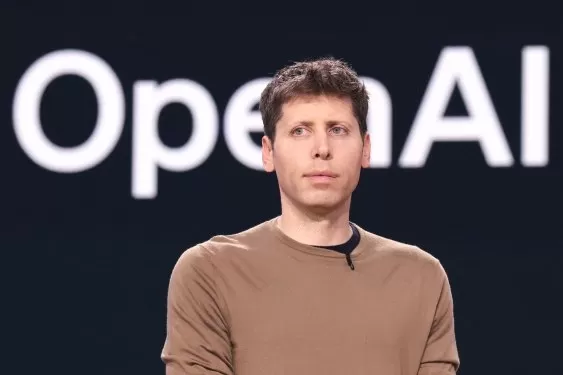 OpenAI fears open-weight models. Should the US be concerned?
The launch of Kimi K3, the largest open-weight large language model from Chinese lab Moonshot, has ignited a debate that conflates two distinct issues: the economic strategies of American AI giants and the technological trajectory of LLMs.Dean W. Bal
OpenAI fears open-weight models. Should the US be concerned?
The launch of Kimi K3, the largest open-weight large language model from Chinese lab Moonshot, has ignited a debate that conflates two distinct issues: the economic strategies of American AI giants and the technological trajectory of LLMs.Dean W. Bal
 OpenAI Unveils Codex Cloud Environments for Seamless Cross-Device Use
OpenAI has expanded its software engineering agent, Codex, with new capabilities that extend its utility beyond individual laptops. These updates introduce reusable cloud development environments, enabling access from any device.Announced during Open
OpenAI Unveils Codex Cloud Environments for Seamless Cross-Device Use
OpenAI has expanded its software engineering agent, Codex, with new capabilities that extend its utility beyond individual laptops. These updates introduce reusable cloud development environments, enabling access from any device.Announced during Open

2026 Latest Best Top-rated AI Vendor Due Diligence Platforms for Procurement Reviews and Risk Screening! This curated list features powerful game-changing tools that go through rigorous real-world tests to deliver accurate rankings. You’ll find a free vs paid comparison, helping you identify the must-try solutions that boost procurement efficiency and cut risks. Backed by XIX.AI, it’s updated weekly. Explore now to discover your perfect tool for smarter sourcing! 238 characters
10 tools
xix.ai
2026 Latest Best Top-Rated AI Video Generators for Demos are curated here, offering powerful game-changing solutions to turn scripts into professional explainer videos fast. XIX.AI provides weekly updated rankings based on real-world tests, including free vs paid comparison details. Must-try tools help boost productivity significantly. Explore now to discover your perfect demo video creation tool!
9 tools
xix.ai

2026 Latest Best Top-rated AI Cash Flow Forecasting Tools for Small Business Finance are here on XIX.AI! Our curated list features powerful, game-changing solutions that go through real-world tests to help small business owners boost financial accuracy, plan budgets more effectively, and avoid cash flow issues. Get a free vs paid comparison and explore now to find your perfect tool for seamless financial management.
7 tools
xix.ai

2026 Latest Best Top-Rated AI Coding Chatbots Curated for Developers! Experience powerful game-changing tools that help you debug Python, JS, and SQL issues quickly. Get a free vs paid comparison along with real-world tests and detailed rankings to find the perfect fit for boosting your coding productivity. Try XIX.AI today to unlock your AI edge! Explore now.
12 tools
xix.ai

2026 Latest Best Top-rated AI Prompt Versioning Platforms for Reusable Playbooks are here on XIX.AI! Our curated list includes powerful game-changing tools that help you keep track of all prompts, test variations efficiently, and boost productivity across writing, content creation, and more. Get a free vs paid comparison along with real-world tests and updated rankings weekly. Explore now to discover your perfect tool for staying ahead in AI tasks!
9 tools
xix.ai

2026 Latest Best AI Writing Assistants for Long Articles: Outline and Draft Faster. XIX.AI curates the top-rated, must-try tools that offer powerful, game-changing support to boost writing efficiency significantly. You’ll find detailed free vs paid comparison, real-world tests, and updated rankings weekly. Explore now to Discover your perfect tool and Start creating today to Unlock your AI edge.
8 tools
xix.ai












