


 Home
HomeOpenAI Unveils Privacy Filter for 128K Context with Eight Recognition Modes
OpenAI has introduced Privacy Filter, a state-of-the-art Personal Identifiable Information (PII) anonymization model. Now available under the Apache 2.0 license on Hugging Face and GitHub, this tool empowers developers with a local, highly customizable solution for robust privacy protection.
Advanced Semantic Understanding Beyond Rule-Based Matching
Unlike traditional rule-based tools, Privacy Filter leverages deep language comprehension to accurately identify sensitive data within unstructured text based on context. This approach effectively obscures private information while preserving maximum utility in public content.
Lightweight MoE Architecture for Superior Efficiency
The model’s technical design prioritizes both flexibility and performance:
Mixture of Experts (MoE) Design: With a total parameter count of 1.5 billion, only approximately 50 million parameters are activated per inference. This efficiency enables smooth operation on resource-constrained edge devices, including laptops and web browsers.
Extended Context Support: Featuring a 128,000 Token context window, the model utilizes a bidirectional token classification architecture combined with a constrained Viterbi algorithm to ensure accuracy and coherence when processing long documents.
High Accuracy Recognition: In the updated PII-Masking-300k benchmark, the model achieved an F1 score of 97.43%, boasting a recall rate of 98.08%.
Comprehensive Privacy Classification System
Privacy Filter accurately identifies and labels eight core categories of sensitive information:
Basic Identity: Names, addresses, email addresses, and phone numbers.
Online Assets: URL links.
Financial Security: Account details, including bank and credit card numbers.
Confidential Credentials: Passwords and API keys.
Time-Sensitive: Date information.
Application Scenarios: A "Local Firewall" for Cloud LLMs
OpenAI positions this tool as a pre-filter layer. By processing text locally for PII detection and anonymization before sending it to cloud-based large language models, this "data stays on device" strategy significantly reduces the risk of users inadvertently exposing private information to AI services.
Related article
 NewCore raises $66M to equip AI agents with identities as they transition into employee roles
Cybersecurity startup NewCore has officially launched from stealth, securing $66 million in funding on Monday. The company aims to address a critical challenge that many organizations will soon encounter as they integrate AI agents: how to authentica
Microsoft and Mistral Ink Multi-Billion-Dollar European AI Partnership
At the core of this collaboration lies a multi-billion-dollar pact designed to bolster artificial intelligence infrastructure across Europe. Credit: MicrosoftMicrosoft and Mistral, a leading French artificial intelligence firm, have unveiled a multi-
Microsoft exec calls AI data scraping 'biggest theft of labor in history,' unredacted filings show
Unsealed documents from the three-year-old copyright lawsuit filed by The New York Times against OpenAI and Microsoft reveal an admission that AI scraping constitutes theft and poses a severe threat to media outlets.According to the lawsuit, a senior
Related Special Topic Recommendations
Finance
NewCore raises $66M to equip AI agents with identities as they transition into employee roles
Cybersecurity startup NewCore has officially launched from stealth, securing $66 million in funding on Monday. The company aims to address a critical challenge that many organizations will soon encounter as they integrate AI agents: how to authentica
Microsoft and Mistral Ink Multi-Billion-Dollar European AI Partnership
At the core of this collaboration lies a multi-billion-dollar pact designed to bolster artificial intelligence infrastructure across Europe. Credit: MicrosoftMicrosoft and Mistral, a leading French artificial intelligence firm, have unveiled a multi-
Microsoft exec calls AI data scraping 'biggest theft of labor in history,' unredacted filings show
Unsealed documents from the three-year-old copyright lawsuit filed by The New York Times against OpenAI and Microsoft reveal an admission that AI scraping constitutes theft and poses a severe threat to media outlets.According to the lawsuit, a senior
Related Special Topic Recommendations
Finance
 Excel AI Budget Forecasting Tools for Cash Flow Planning and Expense Control
2026 Latest Best Excel AI tools for cash flow planning and expense control are here on XIX.AI’s top-rated curated list. These powerful game-changing solutions help you boost productivity significantly through real-world tests and rigorous rankings. Get a free vs paid comparison to find the perfect fit for your needs. Explore now to unlock your AI edge in financial management.
 9 tools
 xix.ai
Prompt
AI Prompt Management Tools for Teams
xix.ai
Prompt
AI Prompt Management Tools for Teams
2026 Latest Best Top-Rated AI Prompt Management Tools for Teams are curated by XIX.AI here. This weekly updated guide features powerful game-changing solutions that boost team productivity significantly through real-world tests and detailed rankings. Get a free vs paid comparison to help you choose the perfect tool. Explore now to Unlock your AI edge.
9 tools
xix.ai
Music composition
AI Lyric Idea Tools for Music Composition
2026 Latest Best Top-rated AI Lyric Idea Tools for Music Composition are here on XIX.AI! This curated collection features powerful game-changing options that go through real-world tests to deliver high-quality lyric concepts fast, helping users boost creativity and streamline their music creation process. Get a free vs paid comparison overview too. Explore now to Discover your perfect tool!
16 tools
xix.ai
Comic Creation
AI Character Sheet Tools for Comic Worldbuilding
2026 Latest Best Top-Rated AI Character Sheet Tools for Comic Worldbuilding are here on XIX.AI! This curated list features powerful, game-changing options that have undergone rigorous real-world tests. You’ll find a free vs paid comparison along with weekly updated rankings to help you discover the must-try tools that boost your creativity and streamline worldbuilding tasks. Explore now to Unlock your AI edge!
13 tools
xix.ai
automation
n8n AI Automation Tools for Internal Ops, Data Sync, and Multi-Step Agent Flows
2026 Latest Best n8n AI Automation Tools for Internal Ops, Data Sync, and Multi-Step Agent Flows are here! XIX.AI has curated a top-rated list of powerful game-changing tools that boost productivity across all work tasks. Each entry goes through rigorous real-world tests to ensure reliability, with detailed free vs paid comparison and weekly updated rankings. Must-try options help you unlock your AI edge and streamline workflows effortlessly. Explore now to discover your perfect tool!
11 tools
xix.ai
Prompt
Best Prompt Management Tools for Multi Model Teams
2026 Latest Best Top-Rated Prompt Management Tools for Multi Model Teams! XIX.AI has curated a powerful, game-changing collection of must-try tools that offer free vs paid comparison, real-world tests, and detailed rankings. These top-rated solutions help boost productivity significantly by streamlining workflows, eliminating repetition, and unlocking creativity across all team projects. Explore now to Discover your perfect tool and Start creating today!
9 tools
xix.ai

 Comments (0)
0/500
Comments (0)
0/500
OpenAI has introduced Privacy Filter, a state-of-the-art Personal Identifiable Information (PII) anonymization model. Now available under the Apache 2.0 license on Hugging Face and GitHub, this tool empowers developers with a local, highly customizable solution for robust privacy protection.
Advanced Semantic Understanding Beyond Rule-Based Matching
Unlike traditional rule-based tools, Privacy Filter leverages deep language comprehension to accurately identify sensitive data within unstructured text based on context. This approach effectively obscures private information while preserving maximum utility in public content.
Lightweight MoE Architecture for Superior Efficiency
The model’s technical design prioritizes both flexibility and performance:
Mixture of Experts (MoE) Design: With a total parameter count of 1.5 billion, only approximately 50 million parameters are activated per inference. This efficiency enables smooth operation on resource-constrained edge devices, including laptops and web browsers.
Extended Context Support: Featuring a 128,000 Token context window, the model utilizes a bidirectional token classification architecture combined with a constrained Viterbi algorithm to ensure accuracy and coherence when processing long documents.
High Accuracy Recognition: In the updated PII-Masking-300k benchmark, the model achieved an F1 score of 97.43%, boasting a recall rate of 98.08%.
Comprehensive Privacy Classification System
Privacy Filter accurately identifies and labels eight core categories of sensitive information:
Basic Identity: Names, addresses, email addresses, and phone numbers.
Online Assets: URL links.
Financial Security: Account details, including bank and credit card numbers.
Confidential Credentials: Passwords and API keys.
Time-Sensitive: Date information.
Application Scenarios: A "Local Firewall" for Cloud LLMs
OpenAI positions this tool as a pre-filter layer. By processing text locally for PII detection and anonymization before sending it to cloud-based large language models, this "data stays on device" strategy significantly reduces the risk of users inadvertently exposing private information to AI services.








 NewCore raises $66M to equip AI agents with identities as they transition into employee roles
Cybersecurity startup NewCore has officially launched from stealth, securing $66 million in funding on Monday. The company aims to address a critical challenge that many organizations will soon encounter as they integrate AI agents: how to authentica
NewCore raises $66M to equip AI agents with identities as they transition into employee roles
Cybersecurity startup NewCore has officially launched from stealth, securing $66 million in funding on Monday. The company aims to address a critical challenge that many organizations will soon encounter as they integrate AI agents: how to authentica
 Microsoft and Mistral Ink Multi-Billion-Dollar European AI Partnership
At the core of this collaboration lies a multi-billion-dollar pact designed to bolster artificial intelligence infrastructure across Europe. Credit: MicrosoftMicrosoft and Mistral, a leading French artificial intelligence firm, have unveiled a multi-
Microsoft and Mistral Ink Multi-Billion-Dollar European AI Partnership
At the core of this collaboration lies a multi-billion-dollar pact designed to bolster artificial intelligence infrastructure across Europe. Credit: MicrosoftMicrosoft and Mistral, a leading French artificial intelligence firm, have unveiled a multi-
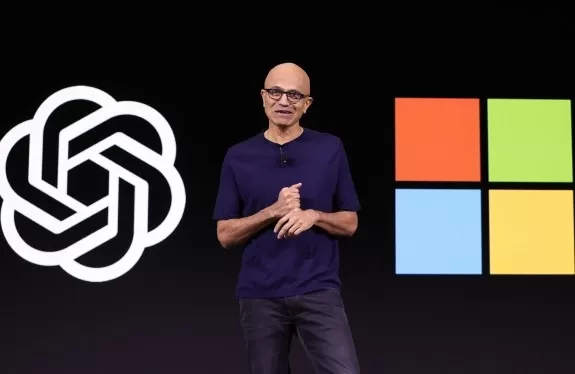 Microsoft exec calls AI data scraping 'biggest theft of labor in history,' unredacted filings show
Unsealed documents from the three-year-old copyright lawsuit filed by The New York Times against OpenAI and Microsoft reveal an admission that AI scraping constitutes theft and poses a severe threat to media outlets.According to the lawsuit, a senior
Microsoft exec calls AI data scraping 'biggest theft of labor in history,' unredacted filings show
Unsealed documents from the three-year-old copyright lawsuit filed by The New York Times against OpenAI and Microsoft reveal an admission that AI scraping constitutes theft and poses a severe threat to media outlets.According to the lawsuit, a senior

2026 Latest Best Excel AI tools for cash flow planning and expense control are here on XIX.AI’s top-rated curated list. These powerful game-changing solutions help you boost productivity significantly through real-world tests and rigorous rankings. Get a free vs paid comparison to find the perfect fit for your needs. Explore now to unlock your AI edge in financial management.
9 tools
xix.ai
2026 Latest Best Top-Rated AI Prompt Management Tools for Teams are curated by XIX.AI here. This weekly updated guide features powerful game-changing solutions that boost team productivity significantly through real-world tests and detailed rankings. Get a free vs paid comparison to help you choose the perfect tool. Explore now to Unlock your AI edge.
9 tools
xix.ai

2026 Latest Best Top-rated AI Lyric Idea Tools for Music Composition are here on XIX.AI! This curated collection features powerful game-changing options that go through real-world tests to deliver high-quality lyric concepts fast, helping users boost creativity and streamline their music creation process. Get a free vs paid comparison overview too. Explore now to Discover your perfect tool!
16 tools
xix.ai

2026 Latest Best Top-Rated AI Character Sheet Tools for Comic Worldbuilding are here on XIX.AI! This curated list features powerful, game-changing options that have undergone rigorous real-world tests. You’ll find a free vs paid comparison along with weekly updated rankings to help you discover the must-try tools that boost your creativity and streamline worldbuilding tasks. Explore now to Unlock your AI edge!
13 tools
xix.ai

2026 Latest Best n8n AI Automation Tools for Internal Ops, Data Sync, and Multi-Step Agent Flows are here! XIX.AI has curated a top-rated list of powerful game-changing tools that boost productivity across all work tasks. Each entry goes through rigorous real-world tests to ensure reliability, with detailed free vs paid comparison and weekly updated rankings. Must-try options help you unlock your AI edge and streamline workflows effortlessly. Explore now to discover your perfect tool!
11 tools
xix.ai
2026 Latest Best Top-Rated Prompt Management Tools for Multi Model Teams! XIX.AI has curated a powerful, game-changing collection of must-try tools that offer free vs paid comparison, real-world tests, and detailed rankings. These top-rated solutions help boost productivity significantly by streamlining workflows, eliminating repetition, and unlocking creativity across all team projects. Explore now to Discover your perfect tool and Start creating today!
9 tools
xix.ai












