


 Home
HomeOpenAI Promotes GPT-5.5 as New Default Model for ChatGPT, Replacing GPT-5.3
OpenAI unveiled its latest generation of foundational model, GPT-5.5Instant, on Tuesday, announcing that it will replace GPT-5.3Instant as the default model within ChatGPT. While preserving low latency, this new version is designed to mitigate cognitive biases in sensitive industries such as law, medicine, and finance. This update builds upon the strategy introduced last month with the GPT-5.5 series, which focuses on improving coding abilities and performance across knowledge-intensive tasks.
Based on benchmark tests, GPT-5.5Instant demonstrates substantial performance gains: it achieved a score of 81.2 on the AIME2025 math assessment, far exceeding the 65.4 score of its predecessor, and scored 76 on the MMMU-Pro multimodal reasoning test, representing an improvement over the previous generation’s 69.2 score. These results highlight its enhanced capacity for complex reasoning and cross-modal understanding.
From a product feature perspective, this upgrade highlights “context management” as a key capability. GPT-5.5Instant can access historical conversations, documents, and Gmail emails through search functions to generate more tailored responses. This functionality is currently available to users of the web version’s Plus and Pro tiers and will be rolled out to mobile devices sowie Free, Go Business, and enterprise user accounts in the coming weeks.
Additionally, ChatGPT has introduced a “visualized memory source” feature that allows users to see the historical information sources referenced in model responses. Users can also delete or edit these memories as needed. Regarding privacy, OpenAI has confirmed that memory sources will not be disclosed when chat records are shared, addressing concerns about data usage.
For developers, GPT-5.5 will be offered through an API under the “chat-latest” name, while GPT-5.3Instant will remain available as a paid option for a three-month transition period.
It is worth noting that OpenAI’s previous model replacement strategies have generated debate among users. When GPT-4o was discontinued in February 2026, it sparked criticism due to its “high empathy style” which led to users developing emotional dependence on the platform. Given this background, the rollout of GPT-5.5Instant faces greater pressure to ensure consistent product performance and meet users’ psychological expectations.
In summary, the release of GPT-5.5Instant represents a further effort to strike a balance among model performance, controllability, and personalized capabilities. It also reflects the platform’s accelerated push toward standardizing models and implementing a unified access strategy.
Related article
 GPT 5.5 Leads AI Security Race, DeepSeek Tops Cost-Efficiency
Kasra Rahjerdi, a security researcher, recently published a significant report detailing practical tests on the security reasoning of major large language models. He achieved this by constructing a deliberately vulnerable book review application. In
SpaceX AI Could Outpace Anthropic Within Half a Year, Musk Says
SpaceXAI CEO Elon Musk predicts AI dominance within six months, leveraging compute hardware to bridge the gap with competitors.SpaceXAI CEO Elon Musk recently stated on X that his company aims to lead the frontier AI landscape within approximately si
WeRide Unveils WITT, a Physical AI Large Model
Autonomous driving technology is advancing at a remarkable pace. On July 17, WeRide, a leading autonomous driving firm, unveiled its proprietary physical AI cognitive foundation model, WeRide WITT. This launch represents a significant milestone in AI
Related Special Topic Recommendations
SEO
GPT 5.5 Leads AI Security Race, DeepSeek Tops Cost-Efficiency
Kasra Rahjerdi, a security researcher, recently published a significant report detailing practical tests on the security reasoning of major large language models. He achieved this by constructing a deliberately vulnerable book review application. In
SpaceX AI Could Outpace Anthropic Within Half a Year, Musk Says
SpaceXAI CEO Elon Musk predicts AI dominance within six months, leveraging compute hardware to bridge the gap with competitors.SpaceXAI CEO Elon Musk recently stated on X that his company aims to lead the frontier AI landscape within approximately si
WeRide Unveils WITT, a Physical AI Large Model
Autonomous driving technology is advancing at a remarkable pace. On July 17, WeRide, a leading autonomous driving firm, unveiled its proprietary physical AI cognitive foundation model, WeRide WITT. This launch represents a significant milestone in AI
Related Special Topic Recommendations
SEO
 AI Rank Tracking Tools for Google, AI Overviews, and Answer Engine Visibility
2026 Latest Best Top-rated AI Rank Tracking Tools for Google, AI Overviews, and Answer Engine Visibility are here on XIX.AI. This curated list features powerful game-changing tools that go through rigorous real-world tests to deliver accurate rankings data. Get a free vs paid comparison, see top performers, and discover must-try options to boost your content’s visibility across search engines. Explore now to find the perfect tool for your needs.
 10 tools
 xix.ai
Productivity
Best AI Second-Brain Organizers for Notes and Tasks
xix.ai
Productivity
Best AI Second-Brain Organizers for Notes and Tasks
2026 Latest Best Top-Rated AI Second-Brain Organizers for Notes and Tasks! XIX.AI has curated a highly powerful game-changing collection, featuring weekly updated rankings, free vs paid comparison, and real-world tests to help you find the perfect tool that boosts productivity dramatically. Explore now to unlock your AI edge!
11 tools
xix.ai
Prompt
AI Prompt Testing Platforms for ChatGPT and Claude Workflows
2026 Latest Best Top-Rated AI Prompt Testing Platforms for ChatGPT and Claude Workflows! XIX.AI curates a powerful game-changing collection, featuring weekly updated rankings, free vs paid comparison, real-world tests, and detailed feature breakdowns to help you identify the must-try tools that boost productivity and deliver flawless outputs. Explore now to discover your perfect solution and unlock your AI edge. (249 characters)
9 tools
xix.ai
Marketing
AI Landing Page Copy Tools for SaaS A/B Tests, Pricing Pages, and Demo Conversion
2026 Latest Best AI Landing Page Copy Tools for SaaS A/B Tests, Pricing Pages, and Demo Conversion are here on XIX.AI. This curated list of top-rated tools offers powerful game-changing solutions to boost content quality, improve writing efficiency, and enhance overall productivity. We conduct real-world tests and provide a free vs paid comparison along with weekly updated rankings. Must-try options help you break through creation bottlenecks. Explore now to discover your perfect tool and unlock your AI edge!
8 tools
xix.ai
Finance
Excel AI Budget Forecasting Tools for Cash Flow Planning and Expense Control
2026 Latest Best Excel AI tools for cash flow planning and expense control are here on XIX.AI’s top-rated curated list. These powerful game-changing solutions help you boost productivity significantly through real-world tests and rigorous rankings. Get a free vs paid comparison to find the perfect fit for your needs. Explore now to unlock your AI edge in financial management.
9 tools
xix.ai
Prompt
AI Prompt Management Tools for Teams
2026 Latest Best Top-Rated AI Prompt Management Tools for Teams are curated by XIX.AI here. This weekly updated guide features powerful game-changing solutions that boost team productivity significantly through real-world tests and detailed rankings. Get a free vs paid comparison to help you choose the perfect tool. Explore now to Unlock your AI edge.
9 tools
xix.ai

 Comments (0)
0/500
Comments (0)
0/500
OpenAI unveiled its latest generation of foundational model, GPT-5.5Instant, on Tuesday, announcing that it will replace GPT-5.3Instant as the default model within ChatGPT. While preserving low latency, this new version is designed to mitigate cognitive biases in sensitive industries such as law, medicine, and finance. This update builds upon the strategy introduced last month with the GPT-5.5 series, which focuses on improving coding abilities and performance across knowledge-intensive tasks.
Based on benchmark tests, GPT-5.5Instant demonstrates substantial performance gains: it achieved a score of 81.2 on the AIME2025 math assessment, far exceeding the 65.4 score of its predecessor, and scored 76 on the MMMU-Pro multimodal reasoning test, representing an improvement over the previous generation’s 69.2 score. These results highlight its enhanced capacity for complex reasoning and cross-modal understanding.
From a product feature perspective, this upgrade highlights “context management” as a key capability. GPT-5.5Instant can access historical conversations, documents, and Gmail emails through search functions to generate more tailored responses. This functionality is currently available to users of the web version’s Plus and Pro tiers and will be rolled out to mobile devices sowie Free, Go Business, and enterprise user accounts in the coming weeks.
Additionally, ChatGPT has introduced a “visualized memory source” feature that allows users to see the historical information sources referenced in model responses. Users can also delete or edit these memories as needed. Regarding privacy, OpenAI has confirmed that memory sources will not be disclosed when chat records are shared, addressing concerns about data usage.
For developers, GPT-5.5 will be offered through an API under the “chat-latest” name, while GPT-5.3Instant will remain available as a paid option for a three-month transition period.
It is worth noting that OpenAI’s previous model replacement strategies have generated debate among users. When GPT-4o was discontinued in February 2026, it sparked criticism due to its “high empathy style” which led to users developing emotional dependence on the platform. Given this background, the rollout of GPT-5.5Instant faces greater pressure to ensure consistent product performance and meet users’ psychological expectations.
In summary, the release of GPT-5.5Instant represents a further effort to strike a balance among model performance, controllability, and personalized capabilities. It also reflects the platform’s accelerated push toward standardizing models and implementing a unified access strategy.








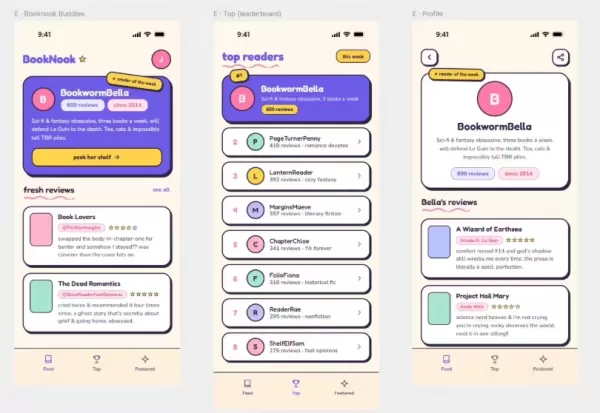 GPT 5.5 Leads AI Security Race, DeepSeek Tops Cost-Efficiency
Kasra Rahjerdi, a security researcher, recently published a significant report detailing practical tests on the security reasoning of major large language models. He achieved this by constructing a deliberately vulnerable book review application. In
GPT 5.5 Leads AI Security Race, DeepSeek Tops Cost-Efficiency
Kasra Rahjerdi, a security researcher, recently published a significant report detailing practical tests on the security reasoning of major large language models. He achieved this by constructing a deliberately vulnerable book review application. In
 SpaceX AI Could Outpace Anthropic Within Half a Year, Musk Says
SpaceXAI CEO Elon Musk predicts AI dominance within six months, leveraging compute hardware to bridge the gap with competitors.SpaceXAI CEO Elon Musk recently stated on X that his company aims to lead the frontier AI landscape within approximately si
SpaceX AI Could Outpace Anthropic Within Half a Year, Musk Says
SpaceXAI CEO Elon Musk predicts AI dominance within six months, leveraging compute hardware to bridge the gap with competitors.SpaceXAI CEO Elon Musk recently stated on X that his company aims to lead the frontier AI landscape within approximately si
 WeRide Unveils WITT, a Physical AI Large Model
Autonomous driving technology is advancing at a remarkable pace. On July 17, WeRide, a leading autonomous driving firm, unveiled its proprietary physical AI cognitive foundation model, WeRide WITT. This launch represents a significant milestone in AI
WeRide Unveils WITT, a Physical AI Large Model
Autonomous driving technology is advancing at a remarkable pace. On July 17, WeRide, a leading autonomous driving firm, unveiled its proprietary physical AI cognitive foundation model, WeRide WITT. This launch represents a significant milestone in AI
2026 Latest Best Top-rated AI Rank Tracking Tools for Google, AI Overviews, and Answer Engine Visibility are here on XIX.AI. This curated list features powerful game-changing tools that go through rigorous real-world tests to deliver accurate rankings data. Get a free vs paid comparison, see top performers, and discover must-try options to boost your content’s visibility across search engines. Explore now to find the perfect tool for your needs.
10 tools
xix.ai

2026 Latest Best Top-Rated AI Second-Brain Organizers for Notes and Tasks! XIX.AI has curated a highly powerful game-changing collection, featuring weekly updated rankings, free vs paid comparison, and real-world tests to help you find the perfect tool that boosts productivity dramatically. Explore now to unlock your AI edge!
11 tools
xix.ai

2026 Latest Best Top-Rated AI Prompt Testing Platforms for ChatGPT and Claude Workflows! XIX.AI curates a powerful game-changing collection, featuring weekly updated rankings, free vs paid comparison, real-world tests, and detailed feature breakdowns to help you identify the must-try tools that boost productivity and deliver flawless outputs. Explore now to discover your perfect solution and unlock your AI edge. (249 characters)
9 tools
xix.ai

2026 Latest Best AI Landing Page Copy Tools for SaaS A/B Tests, Pricing Pages, and Demo Conversion are here on XIX.AI. This curated list of top-rated tools offers powerful game-changing solutions to boost content quality, improve writing efficiency, and enhance overall productivity. We conduct real-world tests and provide a free vs paid comparison along with weekly updated rankings. Must-try options help you break through creation bottlenecks. Explore now to discover your perfect tool and unlock your AI edge!
8 tools
xix.ai

2026 Latest Best Excel AI tools for cash flow planning and expense control are here on XIX.AI’s top-rated curated list. These powerful game-changing solutions help you boost productivity significantly through real-world tests and rigorous rankings. Get a free vs paid comparison to find the perfect fit for your needs. Explore now to unlock your AI edge in financial management.
9 tools
xix.ai

2026 Latest Best Top-Rated AI Prompt Management Tools for Teams are curated by XIX.AI here. This weekly updated guide features powerful game-changing solutions that boost team productivity significantly through real-world tests and detailed rankings. Get a free vs paid comparison to help you choose the perfect tool. Explore now to Unlock your AI edge.
9 tools
xix.ai












