


 Home
HomeOpenAI and Microsoft Forge New AI Partnership, Ending Exclusive Era
OpenAI and Microsoft, a partnership often described as both contentious and inseparable in tech history, have recently signed a landmark "ceasefire agreement." This new contract significantly loosens previous exclusivity constraints and signals the start of a more flexible, open phase for the global AI compute and services market.
The core of this adjustment grants OpenAI substantial "freedom of choice." Under the old framework, Microsoft, as the primary investor and cloud provider, exerted strong control over OpenAI's technology output. The updated terms now allow OpenAI to sell its products and services on any cloud platform. This shift enables OpenAI to pursue deep collaborations with Microsoft's direct competitors, such as Amazon, freeing it from the confines of a single-vendor ecosystem.
Beyond decoupling their business scope, the two parties have also renegotiated financial terms. The new agreement establishes a clear cap on the revenue share OpenAI must pay Microsoft, effective until 2030. Notably, Microsoft has also stated it will cease paying a portion of revenue share to OpenAI. This "mutual reduction" is viewed by industry observers as a balancing act, responding to both antitrust regulatory pressure and intensified market competition.
Furthermore, several highly controversial clauses have been removed entirely. Most significant was a previous stipulation that if OpenAI's systems achieved "Artificial General Intelligence (AGI)," it could restrict Microsoft's access to future technology. This ambiguous, sci-fi-inspired clause has been officially deleted. While exclusivity has ended, Microsoft retains core access rights to OpenAI's existing models and products, safeguarding the competitiveness of its core technologies.
Analysts suggest OpenAI is keen to diversify risk by engaging with more partners—such as its recent major compute deal with Amazon—and to secure the expensive resources required for large model training. For Microsoft, although it has lost its exclusive status, the new agreement alleviates regulatory concerns over "unfair control" and matures the relationship from early interdependence into a more commercially grounded partnership.
With the exclusivity pact dissolved, competition among AI giants will no longer be a simple clash of factions. Instead, it will evolve into more complex ecosystem building and rivalry. This represents not only a strategic win for OpenAI but also a pivotal turning point in the competitive dynamics of the cloud computing market.
Related article
 Former OpenAI Researcher Barrett Zoph Returns to Google to Support Gemini Development
Barret Zoph, who previously abruptly left and joined OpenAI due to a disagreement with Thinking Machines Lab CEO Miriam Mularati, has once again changed employers. Alphabet's Google announced that Zoph will return as Vice President of Research, bring
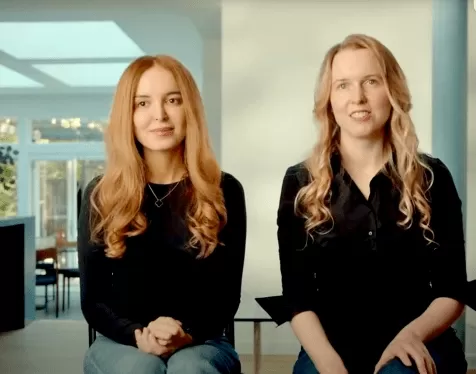
How Recursive Intelligence Raised $335M at $4B Valuation in 4 Months
The co-founders of startup Ricursive Intelligence seemed destined to be co-founders.Anna Goldie, CEO, and Azalia Mirhoseini, CTO, are so well-known in the AI community that they were among those AI engineers who “got those weird emails from Zuckerber
AI race won’t wait, nor will this TechCrunch Disrupt 25% discount
Every founder building in AI right now is asking the same question: Are we moving fast enough, and effectively enough? TechCrunch Disrupt 2026 puts you in the same room as the people wrestling with that existential question at the highest levels. Fro
Related Special Topic Recommendations
Design & Art
Former OpenAI Researcher Barrett Zoph Returns to Google to Support Gemini Development
Barret Zoph, who previously abruptly left and joined OpenAI due to a disagreement with Thinking Machines Lab CEO Miriam Mularati, has once again changed employers. Alphabet's Google announced that Zoph will return as Vice President of Research, bring
How Recursive Intelligence Raised $335M at $4B Valuation in 4 Months
The co-founders of startup Ricursive Intelligence seemed destined to be co-founders.Anna Goldie, CEO, and Azalia Mirhoseini, CTO, are so well-known in the AI community that they were among those AI engineers who “got those weird emails from Zuckerber
AI race won’t wait, nor will this TechCrunch Disrupt 25% discount
Every founder building in AI right now is asking the same question: Are we moving fast enough, and effectively enough? TechCrunch Disrupt 2026 puts you in the same room as the people wrestling with that existential question at the highest levels. Fro
Related Special Topic Recommendations
Design & Art
 Top AI Illustration Tools: Create Editorial Scenes and Cover Art Faster
2026 Latest Top-rated AI Illustration Tools: Our curated list features the best powerfully designed tools for creating stunning editorial scenes and eye-catching cover art quickly. Each option has gone through rigorous real-world tests, offering a free vs paid comparison to help you find the perfect match for your workflow. Try these must-try solutions today to unlock your AI edge and boost your creative productivity. Explore now at XIX.AI.
 10 tools
 xix.ai
Education and Learning
Top AI Tutors for Exam Prep: Practice Math, Science, and English
xix.ai
Education and Learning
Top AI Tutors for Exam Prep: Practice Math, Science, and English
2026 Latest Top-Rated Best AI Tutors for Exam Prep are here on XIX.AI! Our curated list features powerful game-changing tools that offer free vs paid comparison, real-world tests, and weekly updated rankings. They help boost your writing efficiency, simplify complex topic learning, and unlock your academic potential. Explore now to Discover your perfect exam prep tool and Start creating today to Unlock your AI edge!
10 tools
xix.ai
Finance
AI Budget Planning Tools for Personal Money Management
2026 Latest Best Top-Rated AI Budget Planning Tools for Personal Money Management are here on XIX.AI! This curated collection features powerful, game-changing solutions that help you conduct real-world tests, understand spending habits, and create personalized plans to boost productivity. Enjoy a free vs paid comparison along with detailed rankings. Must-try tools designed to simplify money management and unlock your AI edge. Explore now!
11 tools
xix.ai
Health & Wellness
AI Sleep Tracking Assistants: Improve Recovery with Better Bedtime Habits
2026 Latest Best Top-Rated AI Sleep Tracking Assistants curated for ultimate recovery. This fully updated weekly guide features powerful tools that deliver real-world tests, free vs paid comparison, and detailed rankings to help you find the must-try solution that boosts sleep quality and supports better bedtime habits. Explore now at XIX.AI to Unlock your AI edge.
10 tools
xix.ai
Data Analysis
AI SQL Copilots for Product and Revenue Analytics
2026 Latest Best Top-Rated AI SQL Copilots for Product and Revenue Analytics! XIX.AI has curated a powerful, game-changing collection of must-try tools that undergo real-world tests through weekly updated rankings. These tools help users boost productivity significantly by accelerating data analysis, streamlining complex queries, and generating accurate insights to drive smarter business decisions. Explore now to Discover your perfect tool for unlocking your AI edge!
14 tools
xix.ai
Education and Learning
Best AI Homework Helpers That Teach: Learn Concepts, Not Just Answers
2026 Latest Best Top-Rated AI Homework Helpers That Teach Core Concepts Not Just Answers Powerful Tools for Students Must-Try Curated List Weekly Updated Free vs Paid Comparison Real-World Tests Accurate Rankings to Help You Unlock Your Full Learning Potential Explore now to Discover your perfect tool for smarter studying.
10 tools
xix.ai

 Comments (0)
0/500
Comments (0)
0/500
OpenAI and Microsoft, a partnership often described as both contentious and inseparable in tech history, have recently signed a landmark "ceasefire agreement." This new contract significantly loosens previous exclusivity constraints and signals the start of a more flexible, open phase for the global AI compute and services market.
The core of this adjustment grants OpenAI substantial "freedom of choice." Under the old framework, Microsoft, as the primary investor and cloud provider, exerted strong control over OpenAI's technology output. The updated terms now allow OpenAI to sell its products and services on any cloud platform. This shift enables OpenAI to pursue deep collaborations with Microsoft's direct competitors, such as Amazon, freeing it from the confines of a single-vendor ecosystem.
Beyond decoupling their business scope, the two parties have also renegotiated financial terms. The new agreement establishes a clear cap on the revenue share OpenAI must pay Microsoft, effective until 2030. Notably, Microsoft has also stated it will cease paying a portion of revenue share to OpenAI. This "mutual reduction" is viewed by industry observers as a balancing act, responding to both antitrust regulatory pressure and intensified market competition.
Furthermore, several highly controversial clauses have been removed entirely. Most significant was a previous stipulation that if OpenAI's systems achieved "Artificial General Intelligence (AGI)," it could restrict Microsoft's access to future technology. This ambiguous, sci-fi-inspired clause has been officially deleted. While exclusivity has ended, Microsoft retains core access rights to OpenAI's existing models and products, safeguarding the competitiveness of its core technologies.
Analysts suggest OpenAI is keen to diversify risk by engaging with more partners—such as its recent major compute deal with Amazon—and to secure the expensive resources required for large model training. For Microsoft, although it has lost its exclusive status, the new agreement alleviates regulatory concerns over "unfair control" and matures the relationship from early interdependence into a more commercially grounded partnership.
With the exclusivity pact dissolved, competition among AI giants will no longer be a simple clash of factions. Instead, it will evolve into more complex ecosystem building and rivalry. This represents not only a strategic win for OpenAI but also a pivotal turning point in the competitive dynamics of the cloud computing market.








 Former OpenAI Researcher Barrett Zoph Returns to Google to Support Gemini Development
Barret Zoph, who previously abruptly left and joined OpenAI due to a disagreement with Thinking Machines Lab CEO Miriam Mularati, has once again changed employers. Alphabet's Google announced that Zoph will return as Vice President of Research, bring
Former OpenAI Researcher Barrett Zoph Returns to Google to Support Gemini Development
Barret Zoph, who previously abruptly left and joined OpenAI due to a disagreement with Thinking Machines Lab CEO Miriam Mularati, has once again changed employers. Alphabet's Google announced that Zoph will return as Vice President of Research, bring
 How Recursive Intelligence Raised $335M at $4B Valuation in 4 Months
The co-founders of startup Ricursive Intelligence seemed destined to be co-founders.Anna Goldie, CEO, and Azalia Mirhoseini, CTO, are so well-known in the AI community that they were among those AI engineers who “got those weird emails from Zuckerber
How Recursive Intelligence Raised $335M at $4B Valuation in 4 Months
The co-founders of startup Ricursive Intelligence seemed destined to be co-founders.Anna Goldie, CEO, and Azalia Mirhoseini, CTO, are so well-known in the AI community that they were among those AI engineers who “got those weird emails from Zuckerber
 AI race won’t wait, nor will this TechCrunch Disrupt 25% discount
Every founder building in AI right now is asking the same question: Are we moving fast enough, and effectively enough? TechCrunch Disrupt 2026 puts you in the same room as the people wrestling with that existential question at the highest levels. Fro
AI race won’t wait, nor will this TechCrunch Disrupt 25% discount
Every founder building in AI right now is asking the same question: Are we moving fast enough, and effectively enough? TechCrunch Disrupt 2026 puts you in the same room as the people wrestling with that existential question at the highest levels. Fro

2026 Latest Top-rated AI Illustration Tools: Our curated list features the best powerfully designed tools for creating stunning editorial scenes and eye-catching cover art quickly. Each option has gone through rigorous real-world tests, offering a free vs paid comparison to help you find the perfect match for your workflow. Try these must-try solutions today to unlock your AI edge and boost your creative productivity. Explore now at XIX.AI.
10 tools
xix.ai

2026 Latest Top-Rated Best AI Tutors for Exam Prep are here on XIX.AI! Our curated list features powerful game-changing tools that offer free vs paid comparison, real-world tests, and weekly updated rankings. They help boost your writing efficiency, simplify complex topic learning, and unlock your academic potential. Explore now to Discover your perfect exam prep tool and Start creating today to Unlock your AI edge!
10 tools
xix.ai

2026 Latest Best Top-Rated AI Budget Planning Tools for Personal Money Management are here on XIX.AI! This curated collection features powerful, game-changing solutions that help you conduct real-world tests, understand spending habits, and create personalized plans to boost productivity. Enjoy a free vs paid comparison along with detailed rankings. Must-try tools designed to simplify money management and unlock your AI edge. Explore now!
11 tools
xix.ai
2026 Latest Best Top-Rated AI Sleep Tracking Assistants curated for ultimate recovery. This fully updated weekly guide features powerful tools that deliver real-world tests, free vs paid comparison, and detailed rankings to help you find the must-try solution that boosts sleep quality and supports better bedtime habits. Explore now at XIX.AI to Unlock your AI edge.
10 tools
xix.ai

2026 Latest Best Top-Rated AI SQL Copilots for Product and Revenue Analytics! XIX.AI has curated a powerful, game-changing collection of must-try tools that undergo real-world tests through weekly updated rankings. These tools help users boost productivity significantly by accelerating data analysis, streamlining complex queries, and generating accurate insights to drive smarter business decisions. Explore now to Discover your perfect tool for unlocking your AI edge!
14 tools
xix.ai

2026 Latest Best Top-Rated AI Homework Helpers That Teach Core Concepts Not Just Answers Powerful Tools for Students Must-Try Curated List Weekly Updated Free vs Paid Comparison Real-World Tests Accurate Rankings to Help You Unlock Your Full Learning Potential Explore now to Discover your perfect tool for smarter studying.
10 tools
xix.ai












