


 Home
NVIDIA Acquires Kumo for $400M to Strengthen Full-Stack AI Ecosystem with Custom Forecasting Tools
NVIDIA, the graphics processing giant, recently finalized a major asset acquisition. According to insiders, the company acquired Kumo, a U.S.-based startup specializing in enterprise customized AI models, for at least $400 million (approximately 2.7 billion yuan). While a brief public post from a senior NVIDIA executive welcoming Kumo’s team was later deleted, multiple sources confirmed that the deal has been completed.
Top Academic and Industry Talent Unite
Founded in 2022, Kumo focuses on providing predictive AI software for enterprises. Based on public personnel changes, Kumo’s three co-founders—former Airbnb Chief Technology Officer Vanja Josifovski, renowned Stanford University professor Yury Laskov, and former LinkedIn AI head Hema Ragavan—officially joined NVIDIA as of May this year.
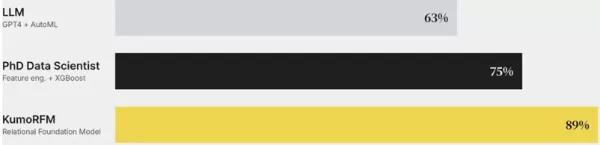
Kumo’s core strength lies in its proprietary KumoRFM foundation model, specifically designed for structured business data within enterprise data warehouses, excelling in predictive tasks. By combining graph machine learning with synthetic data generated in simulated enterprise environments, the company has overcome traditional data training bottlenecks. Its client roster already includes major industry players such as DoorDash, Reddit, and Databricks.
Key Piece for a Full-Stack Ecosystem
In practice, the KumoRFM model demonstrates remarkable computing efficiency. It can make precise predictions on complex business issues like customer churn and credit default risk without additional training. Enterprise customers can further improve overall prediction accuracy by about 10% through fine-tuning with their own unique data, providing strong technical support for NVIDIA’s expansion into enterprise-level foundation model applications.
This acquisition not only brings NVIDIA exclusive proprietary model assets but also deepens its comprehensive layout in the full-stack AI ecosystem. Over the years, to build a solid technological moat, NVIDIA has acquired more than 100 distinctive startups. The addition of Kumo undoubtedly strengthens its influence in enterprise-level structured data processing.
Related article
 Ctrip Business Travel Unveils AI Ecosystem with 7 Industry Agents and 17 Core Capabilities
Ctrip Business Travel has officially unveiled the "Ctrip Business Travel AI Ecosystem," leveraging large language models to fundamentally restructure corporate travel management. This comprehensive ecosystem addresses four core scenarios: travel arra
Stripe to Acquire OpenRouter as AI Model Routing Gains Momentum
Stripe has agreed to acquire OpenRouter, an AI model-routing platform that gives developers access to hundreds of models through a single interface. The deal adds model selection and routing to Stripe’s existing work around AI usage and token-based b
Former OpenAI Researcher Barrett Zoph Returns to Google to Support Gemini Development
Barret Zoph, who previously abruptly left and joined OpenAI due to a disagreement with Thinking Machines Lab CEO Miriam Mularati, has once again changed employers. Alphabet's Google announced that Zoph will return as Vice President of Research, bring
Related Special Topic Recommendations
Design & Art
 Top AI Illustration Tools: Create Editorial Scenes and Cover Art Faster
2026 Latest Top-rated AI Illustration Tools: Our curated list features the best powerfully designed tools for creating stunning editorial scenes and eye-catching cover art quickly. Each option has gone through rigorous real-world tests, offering a free vs paid comparison to help you find the perfect match for your workflow. Try these must-try solutions today to unlock your AI edge and boost your creative productivity. Explore now at XIX.AI.
 10 tools
 xix.ai
Education and Learning
Top AI Tutors for Exam Prep: Practice Math, Science, and English
2026 Latest Top-Rated Best AI Tutors for Exam Prep are here on XIX.AI! Our curated list features powerful game-changing tools that offer free vs paid comparison, real-world tests, and weekly updated rankings. They help boost your writing efficiency, simplify complex topic learning, and unlock your academic potential. Explore now to Discover your perfect exam prep tool and Start creating today to Unlock your AI edge!
10 tools
xix.ai
Finance
AI Budget Planning Tools for Personal Money Management
2026 Latest Best Top-Rated AI Budget Planning Tools for Personal Money Management are here on XIX.AI! This curated collection features powerful, game-changing solutions that help you conduct real-world tests, understand spending habits, and create personalized plans to boost productivity. Enjoy a free vs paid comparison along with detailed rankings. Must-try tools designed to simplify money management and unlock your AI edge. Explore now!
11 tools
xix.ai
Health & Wellness
AI Sleep Tracking Assistants: Improve Recovery with Better Bedtime Habits
2026 Latest Best Top-Rated AI Sleep Tracking Assistants curated for ultimate recovery. This fully updated weekly guide features powerful tools that deliver real-world tests, free vs paid comparison, and detailed rankings to help you find the must-try solution that boosts sleep quality and supports better bedtime habits. Explore now at XIX.AI to Unlock your AI edge.
10 tools
xix.ai
Data Analysis
AI SQL Copilots for Product and Revenue Analytics
2026 Latest Best Top-Rated AI SQL Copilots for Product and Revenue Analytics! XIX.AI has curated a powerful, game-changing collection of must-try tools that undergo real-world tests through weekly updated rankings. These tools help users boost productivity significantly by accelerating data analysis, streamlining complex queries, and generating accurate insights to drive smarter business decisions. Explore now to Discover your perfect tool for unlocking your AI edge!
14 tools
xix.ai
Education and Learning
Best AI Homework Helpers That Teach: Learn Concepts, Not Just Answers
2026 Latest Best Top-Rated AI Homework Helpers That Teach Core Concepts Not Just Answers Powerful Tools for Students Must-Try Curated List Weekly Updated Free vs Paid Comparison Real-World Tests Accurate Rankings to Help You Unlock Your Full Learning Potential Explore now to Discover your perfect tool for smarter studying.
10 tools
xix.ai

 Comments (1)
0/500
![AndrewHernández]()
Nvidia花了4亿美元收购Kumo,专攻企业定制AI预测工具?这操作明显是冲着全栈AI生态去的,跟谷歌微软抢蛋糕呢。话说Kumo的技术真值这个价吗?还是说老黄又在赌未来?😅 反正这年头AI大厂都在疯狂买买买,感觉像是军备竞赛,最后用户能不能用上便宜好用的工具才是关键吧。期待后续效果!
NVIDIA, the graphics processing giant, recently finalized a major asset acquisition. According to insiders, the company acquired Kumo, a U.S.-based startup specializing in enterprise customized AI models, for at least $400 million (approximately 2.7 billion yuan). While a brief public post from a senior NVIDIA executive welcoming Kumo’s team was later deleted, multiple sources confirmed that the deal has been completed.
Top Academic and Industry Talent Unite
Founded in 2022, Kumo focuses on providing predictive AI software for enterprises. Based on public personnel changes, Kumo’s three co-founders—former Airbnb Chief Technology Officer Vanja Josifovski, renowned Stanford University professor Yury Laskov, and former LinkedIn AI head Hema Ragavan—officially joined NVIDIA as of May this year.
Kumo’s core strength lies in its proprietary KumoRFM foundation model, specifically designed for structured business data within enterprise data warehouses, excelling in predictive tasks. By combining graph machine learning with synthetic data generated in simulated enterprise environments, the company has overcome traditional data training bottlenecks. Its client roster already includes major industry players such as DoorDash, Reddit, and Databricks.
Key Piece for a Full-Stack Ecosystem
In practice, the KumoRFM model demonstrates remarkable computing efficiency. It can make precise predictions on complex business issues like customer churn and credit default risk without additional training. Enterprise customers can further improve overall prediction accuracy by about 10% through fine-tuning with their own unique data, providing strong technical support for NVIDIA’s expansion into enterprise-level foundation model applications.
This acquisition not only brings NVIDIA exclusive proprietary model assets but also deepens its comprehensive layout in the full-stack AI ecosystem. Over the years, to build a solid technological moat, NVIDIA has acquired more than 100 distinctive startups. The addition of Kumo undoubtedly strengthens its influence in enterprise-level structured data processing.








 Ctrip Business Travel Unveils AI Ecosystem with 7 Industry Agents and 17 Core Capabilities
Ctrip Business Travel has officially unveiled the "Ctrip Business Travel AI Ecosystem," leveraging large language models to fundamentally restructure corporate travel management. This comprehensive ecosystem addresses four core scenarios: travel arra
 Stripe to Acquire OpenRouter as AI Model Routing Gains Momentum
Stripe has agreed to acquire OpenRouter, an AI model-routing platform that gives developers access to hundreds of models through a single interface. The deal adds model selection and routing to Stripe’s existing work around AI usage and token-based b
 Former OpenAI Researcher Barrett Zoph Returns to Google to Support Gemini Development
Barret Zoph, who previously abruptly left and joined OpenAI due to a disagreement with Thinking Machines Lab CEO Miriam Mularati, has once again changed employers. Alphabet's Google announced that Zoph will return as Vice President of Research, bring

2026 Latest Top-rated AI Illustration Tools: Our curated list features the best powerfully designed tools for creating stunning editorial scenes and eye-catching cover art quickly. Each option has gone through rigorous real-world tests, offering a free vs paid comparison to help you find the perfect match for your workflow. Try these must-try solutions today to unlock your AI edge and boost your creative productivity. Explore now at XIX.AI.
10 tools
xix.ai

2026 Latest Top-Rated Best AI Tutors for Exam Prep are here on XIX.AI! Our curated list features powerful game-changing tools that offer free vs paid comparison, real-world tests, and weekly updated rankings. They help boost your writing efficiency, simplify complex topic learning, and unlock your academic potential. Explore now to Discover your perfect exam prep tool and Start creating today to Unlock your AI edge!
10 tools
xix.ai

2026 Latest Best Top-Rated AI Budget Planning Tools for Personal Money Management are here on XIX.AI! This curated collection features powerful, game-changing solutions that help you conduct real-world tests, understand spending habits, and create personalized plans to boost productivity. Enjoy a free vs paid comparison along with detailed rankings. Must-try tools designed to simplify money management and unlock your AI edge. Explore now!
11 tools
xix.ai

2026 Latest Best Top-Rated AI Sleep Tracking Assistants curated for ultimate recovery. This fully updated weekly guide features powerful tools that deliver real-world tests, free vs paid comparison, and detailed rankings to help you find the must-try solution that boosts sleep quality and supports better bedtime habits. Explore now at XIX.AI to Unlock your AI edge.
10 tools
xix.ai

2026 Latest Best Top-Rated AI SQL Copilots for Product and Revenue Analytics! XIX.AI has curated a powerful, game-changing collection of must-try tools that undergo real-world tests through weekly updated rankings. These tools help users boost productivity significantly by accelerating data analysis, streamlining complex queries, and generating accurate insights to drive smarter business decisions. Explore now to Discover your perfect tool for unlocking your AI edge!
14 tools
xix.ai

2026 Latest Best Top-Rated AI Homework Helpers That Teach Core Concepts Not Just Answers Powerful Tools for Students Must-Try Curated List Weekly Updated Free vs Paid Comparison Real-World Tests Accurate Rankings to Help You Unlock Your Full Learning Potential Explore now to Discover your perfect tool for smarter studying.
10 tools
xix.ai

Nvidia花了4亿美元收购Kumo,专攻企业定制AI预测工具?这操作明显是冲着全栈AI生态去的,跟谷歌微软抢蛋糕呢。话说Kumo的技术真值这个价吗?还是说老黄又在赌未来?😅 反正这年头AI大厂都在疯狂买买买,感觉像是军备竞赛,最后用户能不能用上便宜好用的工具才是关键吧。期待后续效果!












