


 Home
HomeMuscle-Powered Robotics Push Boundaries in Biomimetic Engineering Innovation
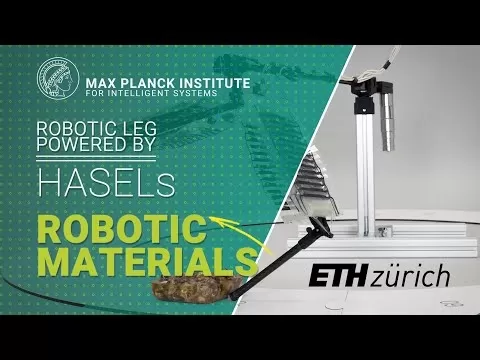
In a groundbreaking robotics breakthrough, scientists from ETH Zurich and the Max Planck Institute for Intelligent Systems have developed a bio-inspired robotic leg that outperforms traditional motor-driven systems. This novel approach using artificial muscle technology represents the most significant advancement in robotic actuation in 70 years, offering unprecedented energy efficiency and biomimetic movement capabilities.
Revolutionary Muscle Technology
The research team's electro-hydraulic HASEL actuators represent a quantum leap in robotic hardware. These artificial muscles function through an ingenious mechanism where applied voltage creates electrostatic attraction between electrodes in oil-filled polymer pouches, producing lifelike contractile motions similar to biological muscle fibers.
Key Technical Advantages
- 66% greater energy efficiency than motor systems
- Near-silent operation with minimal heat generation
- Integrated self-sensing capabilities
- Natural elasticity for terrain adaptation
Performance Breakthroughs
Current prototypes demonstrate remarkable capabilities, including:
- Dynamic jumps reaching 25cm heights
- Instantaneous obstacle detection without external sensors
- Effortless static position maintenance
- Seamless transitions across varied terrains
Future Applications
Immediate Potential
- Adaptive robotic grippers for delicate object handling
- Energy-efficient industrial automation
- Medical rehabilitation devices
Long-Term Prospects
- Search-and-rescue robots for disaster zones
- Biomimetic prosthetics with natural movement
- Humanoid robotics with organic locomotion
Technical Challenges
While promising, the technology requires further development to:
- Enable untethered operation
- Scale for multi-limb coordination
- Improve payload capacity
- Develop robust control systems
Industry Impact
This innovation represents a paradigm shift in robotic design, potentially displacing traditional motors in applications requiring:
- Energy efficiency
- Natural movement
- Safe human interaction
- Environmentally sensitive operations
The research, published in Nature Communications, establishes a new benchmark for biomimetic robotics and signals a transformative direction for the field. As development continues, this muscle-based approach could fundamentally redefine robotic capabilities across multiple industries.
Related article
 Toyota’s $6.4bn robotics estimate puts physical AI in focus
Toyota Motor projects that rolling out automation across its manufacturing facilities, subsidiaries, and key suppliers may require approximately 400,000 robots and an annual expenditure of roughly 1 trillion yen ($6.4 billion) starting in 2028.Accord
Japan tackles labor shortage with AI model for 10 million robots
Japan’s AI robotics initiative has transitioned from a discussion topic into an official national strategy. The government recently validated widely cited projections: deploying 10 million AI-driven robots across 18 sectors by 2040, supported by publ
Universal Robots Unveils Gen 7 for Physical AI Deployment
Will Healy, Director of Product & Industry Marketing at Universal Robots, credited for the imageWill Healy, Director of Product & Industry Marketing at Universal Robots, emphasizes that following the Gen 7 release, AI-driven robots must prioritize ad
Related Special Topic Recommendations
Finance
Toyota’s $6.4bn robotics estimate puts physical AI in focus
Toyota Motor projects that rolling out automation across its manufacturing facilities, subsidiaries, and key suppliers may require approximately 400,000 robots and an annual expenditure of roughly 1 trillion yen ($6.4 billion) starting in 2028.Accord
Japan tackles labor shortage with AI model for 10 million robots
Japan’s AI robotics initiative has transitioned from a discussion topic into an official national strategy. The government recently validated widely cited projections: deploying 10 million AI-driven robots across 18 sectors by 2040, supported by publ
Universal Robots Unveils Gen 7 for Physical AI Deployment
Will Healy, Director of Product & Industry Marketing at Universal Robots, credited for the imageWill Healy, Director of Product & Industry Marketing at Universal Robots, emphasizes that following the Gen 7 release, AI-driven robots must prioritize ad
Related Special Topic Recommendations
Finance
 AI Cash Flow Forecasting Tools for Small Business Finance
2026 Latest Best Top-rated AI Cash Flow Forecasting Tools for Small Business Finance are here on XIX.AI! Our curated list features powerful, game-changing solutions that go through real-world tests to help small business owners boost financial accuracy, plan budgets more effectively, and avoid cash flow issues. Get a free vs paid comparison and explore now to find your perfect tool for seamless financial management.
 7 tools
 xix.ai
code
Best AI Coding Chatbots: Debug Python, JS, and SQL in One Place
xix.ai
code
Best AI Coding Chatbots: Debug Python, JS, and SQL in One Place
2026 Latest Best Top-Rated AI Coding Chatbots Curated for Developers! Experience powerful game-changing tools that help you debug Python, JS, and SQL issues quickly. Get a free vs paid comparison along with real-world tests and detailed rankings to find the perfect fit for boosting your coding productivity. Try XIX.AI today to unlock your AI edge! Explore now.
12 tools
xix.ai
Prompt
AI Prompt Versioning Platforms for Reusable Claude and ChatGPT Playbooks
2026 Latest Best Top-rated AI Prompt Versioning Platforms for Reusable Playbooks are here on XIX.AI! Our curated list includes powerful game-changing tools that help you keep track of all prompts, test variations efficiently, and boost productivity across writing, content creation, and more. Get a free vs paid comparison along with real-world tests and updated rankings weekly. Explore now to discover your perfect tool for staying ahead in AI tasks!
9 tools
xix.ai
writing
Best AI Writing Assistants for Long Articles: Outline and Draft Faster
2026 Latest Best AI Writing Assistants for Long Articles: Outline and Draft Faster. XIX.AI curates the top-rated, must-try tools that offer powerful, game-changing support to boost writing efficiency significantly. You’ll find detailed free vs paid comparison, real-world tests, and updated rankings weekly. Explore now to Discover your perfect tool and Start creating today to Unlock your AI edge.
8 tools
xix.ai
Education and Learning
ChatGPT Study Tools for Exam Revision, Flashcards, and Homework Explanations
2026 Latest Best ChatGPT Study Tools for Exam Revision, Flashcards, and Homework Explanations! XIX.AI has curated a top-rated list of powerful game-changing tools designed to boost your productivity. These must-try solutions offer free vs paid comparison, real-world tests, and detailed rankings to help you find the perfect option for efficient exam preparation and homework support. Explore now to unlock your AI edge!
10 tools
xix.ai
Education and Learning
AI Study Planner Tools for Exam Preparation
2026 Latest Best Top-Rated AI Study Planner Tools for Exam Preparation are here on XIX.AI! This curated collection features powerful, game-changing tools that help you streamline your review process, boost focus, and create personalized study schedules. We conduct real-world tests to determine the top options, offering a free vs paid comparison along with weekly updated rankings. Must-try solutions designed to maximize your productivity and help you ace every exam. Explore now to find your perfect tool!
14 tools
xix.ai

 Comments (2)
0/500
Comments (2)
0/500
![EricJohnson]()
このバイオミメティック工学の進歩は本当にすごいね!筋肉を動力源にしたロボットが従来のモーター駆動を超えるなんて、まるでSF映画の世界が現実になったみたい。でも、こういう技術が進むと、将来的には人間の仕事が奪われるんじゃないかって少し心配にもなるなぁ…🤔
![RichardHarris]()
This is really cool, but also a bit unsettling... Imagine these walking around in a few years. The energy efficiency part is amazing, but what about maintenance? Real muscle tissue needs nutrients and can fatigue. Are they seriously planning to address that long-term? Great innovation, no doubt. But it also feels like we're building the scaffolding for something much more complex down the line. 🤔
In a groundbreaking robotics breakthrough, scientists from ETH Zurich and the Max Planck Institute for Intelligent Systems have developed a bio-inspired robotic leg that outperforms traditional motor-driven systems. This novel approach using artificial muscle technology represents the most significant advancement in robotic actuation in 70 years, offering unprecedented energy efficiency and biomimetic movement capabilities.
Revolutionary Muscle Technology
The research team's electro-hydraulic HASEL actuators represent a quantum leap in robotic hardware. These artificial muscles function through an ingenious mechanism where applied voltage creates electrostatic attraction between electrodes in oil-filled polymer pouches, producing lifelike contractile motions similar to biological muscle fibers.
Key Technical Advantages
- 66% greater energy efficiency than motor systems
- Near-silent operation with minimal heat generation
- Integrated self-sensing capabilities
- Natural elasticity for terrain adaptation
Performance Breakthroughs
Current prototypes demonstrate remarkable capabilities, including:
- Dynamic jumps reaching 25cm heights
- Instantaneous obstacle detection without external sensors
- Effortless static position maintenance
- Seamless transitions across varied terrains
Future Applications
Immediate Potential
- Adaptive robotic grippers for delicate object handling
- Energy-efficient industrial automation
- Medical rehabilitation devices
Long-Term Prospects
- Search-and-rescue robots for disaster zones
- Biomimetic prosthetics with natural movement
- Humanoid robotics with organic locomotion
Technical Challenges
While promising, the technology requires further development to:
- Enable untethered operation
- Scale for multi-limb coordination
- Improve payload capacity
- Develop robust control systems
Industry Impact
This innovation represents a paradigm shift in robotic design, potentially displacing traditional motors in applications requiring:
- Energy efficiency
- Natural movement
- Safe human interaction
- Environmentally sensitive operations
The research, published in Nature Communications, establishes a new benchmark for biomimetic robotics and signals a transformative direction for the field. As development continues, this muscle-based approach could fundamentally redefine robotic capabilities across multiple industries.








 Toyota’s $6.4bn robotics estimate puts physical AI in focus
Toyota Motor projects that rolling out automation across its manufacturing facilities, subsidiaries, and key suppliers may require approximately 400,000 robots and an annual expenditure of roughly 1 trillion yen ($6.4 billion) starting in 2028.Accord
Toyota’s $6.4bn robotics estimate puts physical AI in focus
Toyota Motor projects that rolling out automation across its manufacturing facilities, subsidiaries, and key suppliers may require approximately 400,000 robots and an annual expenditure of roughly 1 trillion yen ($6.4 billion) starting in 2028.Accord
 Japan tackles labor shortage with AI model for 10 million robots
Japan’s AI robotics initiative has transitioned from a discussion topic into an official national strategy. The government recently validated widely cited projections: deploying 10 million AI-driven robots across 18 sectors by 2040, supported by publ
Japan tackles labor shortage with AI model for 10 million robots
Japan’s AI robotics initiative has transitioned from a discussion topic into an official national strategy. The government recently validated widely cited projections: deploying 10 million AI-driven robots across 18 sectors by 2040, supported by publ
 Universal Robots Unveils Gen 7 for Physical AI Deployment
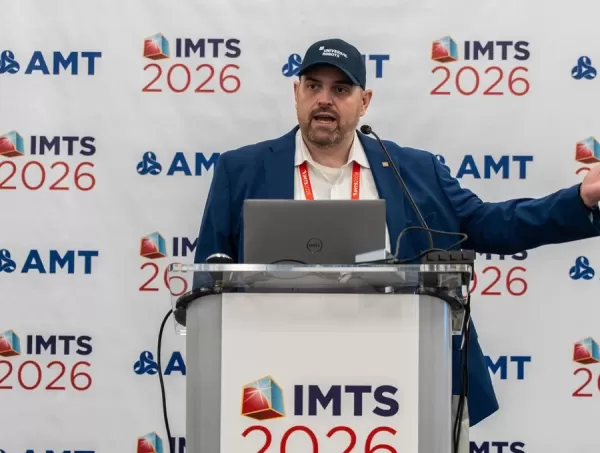
Will Healy, Director of Product & Industry Marketing at Universal Robots, credited for the imageWill Healy, Director of Product & Industry Marketing at Universal Robots, emphasizes that following the Gen 7 release, AI-driven robots must prioritize ad
Universal Robots Unveils Gen 7 for Physical AI Deployment
Will Healy, Director of Product & Industry Marketing at Universal Robots, credited for the imageWill Healy, Director of Product & Industry Marketing at Universal Robots, emphasizes that following the Gen 7 release, AI-driven robots must prioritize ad

2026 Latest Best Top-rated AI Cash Flow Forecasting Tools for Small Business Finance are here on XIX.AI! Our curated list features powerful, game-changing solutions that go through real-world tests to help small business owners boost financial accuracy, plan budgets more effectively, and avoid cash flow issues. Get a free vs paid comparison and explore now to find your perfect tool for seamless financial management.
7 tools
xix.ai

2026 Latest Best Top-Rated AI Coding Chatbots Curated for Developers! Experience powerful game-changing tools that help you debug Python, JS, and SQL issues quickly. Get a free vs paid comparison along with real-world tests and detailed rankings to find the perfect fit for boosting your coding productivity. Try XIX.AI today to unlock your AI edge! Explore now.
12 tools
xix.ai

2026 Latest Best Top-rated AI Prompt Versioning Platforms for Reusable Playbooks are here on XIX.AI! Our curated list includes powerful game-changing tools that help you keep track of all prompts, test variations efficiently, and boost productivity across writing, content creation, and more. Get a free vs paid comparison along with real-world tests and updated rankings weekly. Explore now to discover your perfect tool for staying ahead in AI tasks!
9 tools
xix.ai

2026 Latest Best AI Writing Assistants for Long Articles: Outline and Draft Faster. XIX.AI curates the top-rated, must-try tools that offer powerful, game-changing support to boost writing efficiency significantly. You’ll find detailed free vs paid comparison, real-world tests, and updated rankings weekly. Explore now to Discover your perfect tool and Start creating today to Unlock your AI edge.
8 tools
xix.ai

2026 Latest Best ChatGPT Study Tools for Exam Revision, Flashcards, and Homework Explanations! XIX.AI has curated a top-rated list of powerful game-changing tools designed to boost your productivity. These must-try solutions offer free vs paid comparison, real-world tests, and detailed rankings to help you find the perfect option for efficient exam preparation and homework support. Explore now to unlock your AI edge!
10 tools
xix.ai

2026 Latest Best Top-Rated AI Study Planner Tools for Exam Preparation are here on XIX.AI! This curated collection features powerful, game-changing tools that help you streamline your review process, boost focus, and create personalized study schedules. We conduct real-world tests to determine the top options, offering a free vs paid comparison along with weekly updated rankings. Must-try solutions designed to maximize your productivity and help you ace every exam. Explore now to find your perfect tool!
14 tools
xix.ai

このバイオミメティック工学の進歩は本当にすごいね!筋肉を動力源にしたロボットが従来のモーター駆動を超えるなんて、まるでSF映画の世界が現実になったみたい。でも、こういう技術が進むと、将来的には人間の仕事が奪われるんじゃないかって少し心配にもなるなぁ…🤔
This is really cool, but also a bit unsettling... Imagine these walking around in a few years. The energy efficiency part is amazing, but what about maintenance? Real muscle tissue needs nutrients and can fatigue. Are they seriously planning to address that long-term? Great innovation, no doubt. But it also feels like we're building the scaffolding for something much more complex down the line. 🤔












