

 Home
Microsoft Streamlines Copilot as Windows 11 Embraces Minimalism
Following nearly two years of "AI feature innovation," Microsoft is reassessing AI's role within the operating system. The company has recently shifted its update strategy for Windows 11, planning a significant reduction of Copilot entry points across the system to deliver a cleaner, more focused user experience.
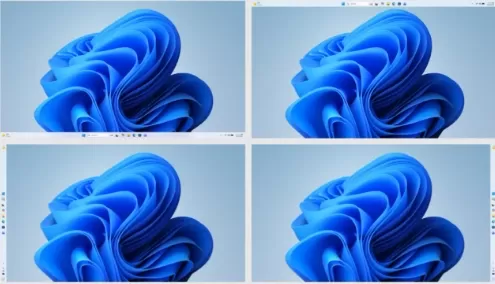
Microsoft Executive Vice President Pavan Davuluri noted that community feedback revealed omnipresent AI access points were disruptive. This refinement will initially target the following applications by removing or hiding unnecessary Copilot buttons:
Snipping Tool and Photos: Minimize distractions from automated editing suggestions.
Notepad: Eliminate redundant AI writing entries from the sidebar.
Widgets: Simplify AI-driven push notifications within the news feed.
The Privacy and Security Shadow: Windows Recall Faces an Uncertain Future
Beyond simplifying access, Microsoft is also proceeding more cautiously with core AI features. The controversial "all-seeing" Windows Recall, due to significant privacy risks and security flaws, has had its full release postponed for over a year. While Microsoft attempted to drive AI adoption via "Copilot+ PC" hardware standards, user resistance to system-level monitoring surpassed official expectations.
Returning Control to Users: Taskbar Positioning Customization Returns
While scaling back AI, Microsoft is finally reintroducing a highly requested feature: the ability to move the taskbar to the top or sides of the screen. This update also includes:
File Explorer Performance Boost: Underlying optimizations address longstanding slow launch issues.
Enhanced Update Management: Users gain more flexible control over automatic system updates.
Streamlined Insider Navigation: Makes it easier for Windows Insiders to submit quick feedback.
Related article
 Stripe to Acquire OpenRouter as AI Model Routing Gains Momentum
Stripe has agreed to acquire OpenRouter, an AI model-routing platform that gives developers access to hundreds of models through a single interface. The deal adds model selection and routing to Stripe’s existing work around AI usage and token-based b
Former OpenAI Researcher Barrett Zoph Returns to Google to Support Gemini Development
Barret Zoph, who previously abruptly left and joined OpenAI due to a disagreement with Thinking Machines Lab CEO Miriam Mularati, has once again changed employers. Alphabet's Google announced that Zoph will return as Vice President of Research, bring
How Recursive Intelligence Raised $335M at $4B Valuation in 4 Months
The co-founders of startup Ricursive Intelligence seemed destined to be co-founders.Anna Goldie, CEO, and Azalia Mirhoseini, CTO, are so well-known in the AI community that they were among those AI engineers who “got those weird emails from Zuckerber
Related Special Topic Recommendations
Design & Art
 Top AI Illustration Tools: Create Editorial Scenes and Cover Art Faster
2026 Latest Top-rated AI Illustration Tools: Our curated list features the best powerfully designed tools for creating stunning editorial scenes and eye-catching cover art quickly. Each option has gone through rigorous real-world tests, offering a free vs paid comparison to help you find the perfect match for your workflow. Try these must-try solutions today to unlock your AI edge and boost your creative productivity. Explore now at XIX.AI.
 10 tools
 xix.ai
Education and Learning
Top AI Tutors for Exam Prep: Practice Math, Science, and English
2026 Latest Top-Rated Best AI Tutors for Exam Prep are here on XIX.AI! Our curated list features powerful game-changing tools that offer free vs paid comparison, real-world tests, and weekly updated rankings. They help boost your writing efficiency, simplify complex topic learning, and unlock your academic potential. Explore now to Discover your perfect exam prep tool and Start creating today to Unlock your AI edge!
10 tools
xix.ai
Finance
AI Budget Planning Tools for Personal Money Management
2026 Latest Best Top-Rated AI Budget Planning Tools for Personal Money Management are here on XIX.AI! This curated collection features powerful, game-changing solutions that help you conduct real-world tests, understand spending habits, and create personalized plans to boost productivity. Enjoy a free vs paid comparison along with detailed rankings. Must-try tools designed to simplify money management and unlock your AI edge. Explore now!
11 tools
xix.ai
Health & Wellness
AI Sleep Tracking Assistants: Improve Recovery with Better Bedtime Habits
2026 Latest Best Top-Rated AI Sleep Tracking Assistants curated for ultimate recovery. This fully updated weekly guide features powerful tools that deliver real-world tests, free vs paid comparison, and detailed rankings to help you find the must-try solution that boosts sleep quality and supports better bedtime habits. Explore now at XIX.AI to Unlock your AI edge.
10 tools
xix.ai
Data Analysis
AI SQL Copilots for Product and Revenue Analytics
2026 Latest Best Top-Rated AI SQL Copilots for Product and Revenue Analytics! XIX.AI has curated a powerful, game-changing collection of must-try tools that undergo real-world tests through weekly updated rankings. These tools help users boost productivity significantly by accelerating data analysis, streamlining complex queries, and generating accurate insights to drive smarter business decisions. Explore now to Discover your perfect tool for unlocking your AI edge!
14 tools
xix.ai
Education and Learning
Best AI Homework Helpers That Teach: Learn Concepts, Not Just Answers
2026 Latest Best Top-Rated AI Homework Helpers That Teach Core Concepts Not Just Answers Powerful Tools for Students Must-Try Curated List Weekly Updated Free vs Paid Comparison Real-World Tests Accurate Rankings to Help You Unlock Your Full Learning Potential Explore now to Discover your perfect tool for smarter studying.
10 tools
xix.ai

 Comments (1)
0/500
![RaymondBaker]()
Die Reduzierung von Copilot-Eintrittspunkten klingt nach einer sinnvollen Vereinfachung. Manchmal ist weniger wirklich mehr – vor allem bei Betriebssystemen, die oft mit Funktionen überladen sind. Hoffentlich führt das zu einer intuitiveren Nutzung, statt dass man die KI-Funktionen erst mühsam suchen muss. Die Frage ist, ob Microsoft hier wirklich Nutzerfreundlichkeit priorisiert oder einfach nur die auffälligsten Marketing-Elemente zurückfährt. 🤔
Following nearly two years of "AI feature innovation," Microsoft is reassessing AI's role within the operating system. The company has recently shifted its update strategy for Windows 11, planning a significant reduction of Copilot entry points across the system to deliver a cleaner, more focused user experience.
Microsoft Executive Vice President Pavan Davuluri noted that community feedback revealed omnipresent AI access points were disruptive. This refinement will initially target the following applications by removing or hiding unnecessary Copilot buttons:
Snipping Tool and Photos: Minimize distractions from automated editing suggestions.
Notepad: Eliminate redundant AI writing entries from the sidebar.
Widgets: Simplify AI-driven push notifications within the news feed.
The Privacy and Security Shadow: Windows Recall Faces an Uncertain Future
Beyond simplifying access, Microsoft is also proceeding more cautiously with core AI features. The controversial "all-seeing" Windows Recall, due to significant privacy risks and security flaws, has had its full release postponed for over a year. While Microsoft attempted to drive AI adoption via "Copilot+ PC" hardware standards, user resistance to system-level monitoring surpassed official expectations.
Returning Control to Users: Taskbar Positioning Customization Returns
While scaling back AI, Microsoft is finally reintroducing a highly requested feature: the ability to move the taskbar to the top or sides of the screen. This update also includes:
File Explorer Performance Boost: Underlying optimizations address longstanding slow launch issues.
Enhanced Update Management: Users gain more flexible control over automatic system updates.
Streamlined Insider Navigation: Makes it easier for Windows Insiders to submit quick feedback.








 Stripe to Acquire OpenRouter as AI Model Routing Gains Momentum
Stripe has agreed to acquire OpenRouter, an AI model-routing platform that gives developers access to hundreds of models through a single interface. The deal adds model selection and routing to Stripe’s existing work around AI usage and token-based b
 Former OpenAI Researcher Barrett Zoph Returns to Google to Support Gemini Development
Barret Zoph, who previously abruptly left and joined OpenAI due to a disagreement with Thinking Machines Lab CEO Miriam Mularati, has once again changed employers. Alphabet's Google announced that Zoph will return as Vice President of Research, bring
 How Recursive Intelligence Raised $335M at $4B Valuation in 4 Months
The co-founders of startup Ricursive Intelligence seemed destined to be co-founders.Anna Goldie, CEO, and Azalia Mirhoseini, CTO, are so well-known in the AI community that they were among those AI engineers who “got those weird emails from Zuckerber
2026 Latest Top-rated AI Illustration Tools: Our curated list features the best powerfully designed tools for creating stunning editorial scenes and eye-catching cover art quickly. Each option has gone through rigorous real-world tests, offering a free vs paid comparison to help you find the perfect match for your workflow. Try these must-try solutions today to unlock your AI edge and boost your creative productivity. Explore now at XIX.AI.
10 tools
xix.ai

2026 Latest Top-Rated Best AI Tutors for Exam Prep are here on XIX.AI! Our curated list features powerful game-changing tools that offer free vs paid comparison, real-world tests, and weekly updated rankings. They help boost your writing efficiency, simplify complex topic learning, and unlock your academic potential. Explore now to Discover your perfect exam prep tool and Start creating today to Unlock your AI edge!
10 tools
xix.ai

2026 Latest Best Top-Rated AI Budget Planning Tools for Personal Money Management are here on XIX.AI! This curated collection features powerful, game-changing solutions that help you conduct real-world tests, understand spending habits, and create personalized plans to boost productivity. Enjoy a free vs paid comparison along with detailed rankings. Must-try tools designed to simplify money management and unlock your AI edge. Explore now!
11 tools
xix.ai

2026 Latest Best Top-Rated AI Sleep Tracking Assistants curated for ultimate recovery. This fully updated weekly guide features powerful tools that deliver real-world tests, free vs paid comparison, and detailed rankings to help you find the must-try solution that boosts sleep quality and supports better bedtime habits. Explore now at XIX.AI to Unlock your AI edge.
10 tools
xix.ai

2026 Latest Best Top-Rated AI SQL Copilots for Product and Revenue Analytics! XIX.AI has curated a powerful, game-changing collection of must-try tools that undergo real-world tests through weekly updated rankings. These tools help users boost productivity significantly by accelerating data analysis, streamlining complex queries, and generating accurate insights to drive smarter business decisions. Explore now to Discover your perfect tool for unlocking your AI edge!
14 tools
xix.ai

2026 Latest Best Top-Rated AI Homework Helpers That Teach Core Concepts Not Just Answers Powerful Tools for Students Must-Try Curated List Weekly Updated Free vs Paid Comparison Real-World Tests Accurate Rankings to Help You Unlock Your Full Learning Potential Explore now to Discover your perfect tool for smarter studying.
10 tools
xix.ai

Die Reduzierung von Copilot-Eintrittspunkten klingt nach einer sinnvollen Vereinfachung. Manchmal ist weniger wirklich mehr – vor allem bei Betriebssystemen, die oft mit Funktionen überladen sind. Hoffentlich führt das zu einer intuitiveren Nutzung, statt dass man die KI-Funktionen erst mühsam suchen muss. Die Frage ist, ob Microsoft hier wirklich Nutzerfreundlichkeit priorisiert oder einfach nur die auffälligsten Marketing-Elemente zurückfährt. 🤔