


 Home
Home
Microsoft Debuts Self-Developed Models MAI-Image-2.5-Pro and MAI-Voice-2-Flash, Now Integrated into Bing and PowerPoint
On July 23, Microsoft announced the public preview of two proprietary AI models: MAI-Image-2.5-Pro and MAI-Voice-2-Flash. These models are designed for high-quality image generation and high-concurrency voice interactions. Microsoft emphasized that the training data is cleaned, traceable, and not derived from third-party model distillation. Built from the ground up, they directly serve Microsoft product users.
Highest-precision image model reduces GPU costs by up to 84%
MAI-Image-2.5-Pro is Microsoft's most precise image model, targeting demanding use cases like hero image generation, detailed editing, and in-image text rendering, while supporting natural language editing instructions. It has become the default image generation model in Bing Image Creator and is used for image-to-image editing in PowerPoint. Compared to GPT-Image-2, it cuts GPU costs by up to 84%. After deployment in OneDrive, scenario success rates rose by 26%, P95 latency dropped by about 25%, and efficiency in medium-load production environments improved by 2.5 times.
Pricing is $5 per million tokens for text input and $106 per million tokens for image output.
Voice model doubles speed, serving customers like T-Mobile
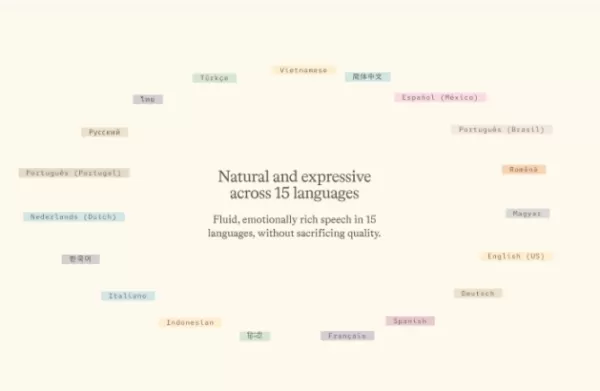
MAI-Voice-2-Flash is optimized for high-frequency voice applications, offering roughly twice the speed of the previous generation and a 32% cost reduction, making it ideal for fast-response scenarios such as contact centers and voice assistants. Integrated into Dynamics 365 Contact Center, it serves customers like T-Mobile and EasyJet, with GPU cost reductions of up to 89%. Microsoft has also embedded it into the Azure Voice Live service, enabling developers to build voice-to-voice interactive agents.
Additionally, the MAI-Transcribe-1.5 model from the same series has been applied to the medical voice solution Dragon Copilot, used by 170,000 healthcare providers. It processed 28 million patient consultations last quarter, supports 58 languages, and reduces transcription error rates by roughly 50% for most languages. Microsoft revealed that the next-generation GB200 computing cluster is already operational, and the MAI series will continue to expand.
Related article
 Mozilla Partners with Mistral to Bring AI Models to Firefox Smart Window
Mozilla has partnered with French AI startup Mistral to integrate the Mistral model into Firefox, enhancing the experimental "Firefox Smart Window" browsing experience.Designed for complex, multi-tab tasks, the Smart Window helps users analyze search
OpenAI reportedly exploring smartphone with AI agents replacing traditional apps
Speculation regarding OpenAI’s hardware strategy has intensified, with recent reports pointing toward the development of a dedicated smartphone. Industry analyst Ming-Chi Kuo indicates that the AI firm is collaborating with chipmakers MediaTek and Qu
Google Tests Gemini Daily Brief Text Customization for Precise Fine-Tuning
Google is rolling out a direct prompt customization feature for Gemini Daily Brief in the Google App 17.43.11 beta, enabling users to tailor their morning AI summaries via text, voice commands, or preset preferences. This update replaces the previous
Related Special Topic Recommendations
Marketing
Mozilla Partners with Mistral to Bring AI Models to Firefox Smart Window
Mozilla has partnered with French AI startup Mistral to integrate the Mistral model into Firefox, enhancing the experimental "Firefox Smart Window" browsing experience.Designed for complex, multi-tab tasks, the Smart Window helps users analyze search
OpenAI reportedly exploring smartphone with AI agents replacing traditional apps
Speculation regarding OpenAI’s hardware strategy has intensified, with recent reports pointing toward the development of a dedicated smartphone. Industry analyst Ming-Chi Kuo indicates that the AI firm is collaborating with chipmakers MediaTek and Qu
Google Tests Gemini Daily Brief Text Customization for Precise Fine-Tuning
Google is rolling out a direct prompt customization feature for Gemini Daily Brief in the Google App 17.43.11 beta, enabling users to tailor their morning AI summaries via text, voice commands, or preset preferences. This update replaces the previous
Related Special Topic Recommendations
Marketing
 ChatGPT Ad Copy Tools for Meta Campaigns, Landing Pages, and Creative Testing
2026 Latest Best ChatGPT Ad Copy Tools Reviewed! This curated top-rated list offers powerful game-changing solutions to help you craft high-converting copy for Meta campaigns, landing pages, and creative testing. Get a free vs paid comparison along with real-world tests and detailed rankings to find the must-try tool that boosts your productivity significantly. Explore now at XIX.AI to unlock your AI edge!
 11 tools
 xix.ai
Business
Best AI Pricing Strategy Tools for Market Testing
xix.ai
Business
Best AI Pricing Strategy Tools for Market Testing
2026 Latest Best Top-rated AI Pricing Strategy Tools for Market Testing! XIX.AI has curated a powerful game-changing collection of must-try tools, featuring weekly updated rankings and free vs paid comparison. These top-rated solutions help businesses run real-world tests, boost productivity, and discover the perfect pricing model to stand out in competitive markets. Explore now to Unlock your AI edge!
9 tools
xix.ai
Academic Research
AI PDF Citation Extractors for Journal Articles, Methods Sections, and References
2026 Latest Best Top-rated AI PDF Citation Extractors for Journal Articles, Methods Sections, and References are here on XIX.AI. This curated list features powerful game-changing tools that go through real-world tests to deliver accurate results every time. You can find a free vs paid comparison along with detailed rankings to help you choose the must-try option that boosts your research efficiency significantly. Explore now to discover your perfect tool for faster academic work!
9 tools
xix.ai
Design & Art
Canva AI Brand Kit Assistants for Social Creatives, Decks, and Campaign Assets
2026 Latest Best Canva AI Brand Kit Assistants for Social Creatives, Decks, and Campaign Assets! This curated top-rated list features powerful game-changing tools that help social creatives streamline content creation, boost writing efficiency, and produce high-quality assets fast through real-world tests. XIX.AI offers a free vs paid comparison to help you find the perfect fit. Explore now to unlock your AI edge!
12 tools
xix.ai
automation
AI Integration Tools for No Code Automation Teams
2026 Latest Best AI Integration Tools for No Code Automation Teams are here on XIX.AI! This curated list features top-rated, powerful solutions that help teams streamline workflows, boost productivity, and tackle complex automation tasks with ease. We conduct real-world tests to deliver accurate rankings and a free vs paid comparison, making it simple to find the must-try option that fits your needs. Explore now to uncover your perfect tool for seamless no code integration!
8 tools
xix.ai
Video creation
Best AI Screen Recording Editors for Product Demos, Walkthroughs, and Training Clips
2026 Latest Best Top-rated AI screen recording editors curated by XIX.AI for product demos, walkthroughs, and training clips. These powerful game-changing tools offer real-world tests, free vs paid comparison, and weekly updated rankings to help you boost productivity significantly. Explore now to Discover your perfect tool for streamlining creative workflows! 238 characters
10 tools
xix.ai

 Comments (0)
0/500
Comments (0)
0/500
On July 23, Microsoft announced the public preview of two proprietary AI models: MAI-Image-2.5-Pro and MAI-Voice-2-Flash. These models are designed for high-quality image generation and high-concurrency voice interactions. Microsoft emphasized that the training data is cleaned, traceable, and not derived from third-party model distillation. Built from the ground up, they directly serve Microsoft product users.
Highest-precision image model reduces GPU costs by up to 84%
MAI-Image-2.5-Pro is Microsoft's most precise image model, targeting demanding use cases like hero image generation, detailed editing, and in-image text rendering, while supporting natural language editing instructions. It has become the default image generation model in Bing Image Creator and is used for image-to-image editing in PowerPoint. Compared to GPT-Image-2, it cuts GPU costs by up to 84%. After deployment in OneDrive, scenario success rates rose by 26%, P95 latency dropped by about 25%, and efficiency in medium-load production environments improved by 2.5 times.
Pricing is $5 per million tokens for text input and $106 per million tokens for image output.
Voice model doubles speed, serving customers like T-Mobile
MAI-Voice-2-Flash is optimized for high-frequency voice applications, offering roughly twice the speed of the previous generation and a 32% cost reduction, making it ideal for fast-response scenarios such as contact centers and voice assistants. Integrated into Dynamics 365 Contact Center, it serves customers like T-Mobile and EasyJet, with GPU cost reductions of up to 89%. Microsoft has also embedded it into the Azure Voice Live service, enabling developers to build voice-to-voice interactive agents.
Additionally, the MAI-Transcribe-1.5 model from the same series has been applied to the medical voice solution Dragon Copilot, used by 170,000 healthcare providers. It processed 28 million patient consultations last quarter, supports 58 languages, and reduces transcription error rates by roughly 50% for most languages. Microsoft revealed that the next-generation GB200 computing cluster is already operational, and the MAI series will continue to expand.








 Mozilla Partners with Mistral to Bring AI Models to Firefox Smart Window
Mozilla has partnered with French AI startup Mistral to integrate the Mistral model into Firefox, enhancing the experimental "Firefox Smart Window" browsing experience.Designed for complex, multi-tab tasks, the Smart Window helps users analyze search
Mozilla Partners with Mistral to Bring AI Models to Firefox Smart Window
Mozilla has partnered with French AI startup Mistral to integrate the Mistral model into Firefox, enhancing the experimental "Firefox Smart Window" browsing experience.Designed for complex, multi-tab tasks, the Smart Window helps users analyze search
 OpenAI reportedly exploring smartphone with AI agents replacing traditional apps
Speculation regarding OpenAI’s hardware strategy has intensified, with recent reports pointing toward the development of a dedicated smartphone. Industry analyst Ming-Chi Kuo indicates that the AI firm is collaborating with chipmakers MediaTek and Qu
OpenAI reportedly exploring smartphone with AI agents replacing traditional apps
Speculation regarding OpenAI’s hardware strategy has intensified, with recent reports pointing toward the development of a dedicated smartphone. Industry analyst Ming-Chi Kuo indicates that the AI firm is collaborating with chipmakers MediaTek and Qu
 Google Tests Gemini Daily Brief Text Customization for Precise Fine-Tuning
Google is rolling out a direct prompt customization feature for Gemini Daily Brief in the Google App 17.43.11 beta, enabling users to tailor their morning AI summaries via text, voice commands, or preset preferences. This update replaces the previous
Google Tests Gemini Daily Brief Text Customization for Precise Fine-Tuning
Google is rolling out a direct prompt customization feature for Gemini Daily Brief in the Google App 17.43.11 beta, enabling users to tailor their morning AI summaries via text, voice commands, or preset preferences. This update replaces the previous
2026 Latest Best ChatGPT Ad Copy Tools Reviewed! This curated top-rated list offers powerful game-changing solutions to help you craft high-converting copy for Meta campaigns, landing pages, and creative testing. Get a free vs paid comparison along with real-world tests and detailed rankings to find the must-try tool that boosts your productivity significantly. Explore now at XIX.AI to unlock your AI edge!
11 tools
xix.ai

2026 Latest Best Top-rated AI Pricing Strategy Tools for Market Testing! XIX.AI has curated a powerful game-changing collection of must-try tools, featuring weekly updated rankings and free vs paid comparison. These top-rated solutions help businesses run real-world tests, boost productivity, and discover the perfect pricing model to stand out in competitive markets. Explore now to Unlock your AI edge!
9 tools
xix.ai

2026 Latest Best Top-rated AI PDF Citation Extractors for Journal Articles, Methods Sections, and References are here on XIX.AI. This curated list features powerful game-changing tools that go through real-world tests to deliver accurate results every time. You can find a free vs paid comparison along with detailed rankings to help you choose the must-try option that boosts your research efficiency significantly. Explore now to discover your perfect tool for faster academic work!
9 tools
xix.ai
2026 Latest Best Canva AI Brand Kit Assistants for Social Creatives, Decks, and Campaign Assets! This curated top-rated list features powerful game-changing tools that help social creatives streamline content creation, boost writing efficiency, and produce high-quality assets fast through real-world tests. XIX.AI offers a free vs paid comparison to help you find the perfect fit. Explore now to unlock your AI edge!
12 tools
xix.ai

2026 Latest Best AI Integration Tools for No Code Automation Teams are here on XIX.AI! This curated list features top-rated, powerful solutions that help teams streamline workflows, boost productivity, and tackle complex automation tasks with ease. We conduct real-world tests to deliver accurate rankings and a free vs paid comparison, making it simple to find the must-try option that fits your needs. Explore now to uncover your perfect tool for seamless no code integration!
8 tools
xix.ai

2026 Latest Best Top-rated AI screen recording editors curated by XIX.AI for product demos, walkthroughs, and training clips. These powerful game-changing tools offer real-world tests, free vs paid comparison, and weekly updated rankings to help you boost productivity significantly. Explore now to Discover your perfect tool for streamlining creative workflows! 238 characters
10 tools
xix.ai












