


 Home
HomeMicrosoft and Qualcomm Launch Project Solara, Ushering New Era of AI Agents
Microsoft and Qualcomm have unveiled a major partnership with the launch of "Project Solara," a chip-to-cloud platform. In a detailed video discussion, Microsoft CEO Satya Nadella and Qualcomm President Cristiano Amon explored how AI agents are set to become the central interface for human-computer interaction.

This platform represents a significant paradigm shift in the tech industry. Nadella emphasized that current platforms are undergoing real transformation, as the industry moves from building traditional operating systems and applications toward creating more personalized and intelligent AI agents.
Reimagining Seamless Multi-Device Connectivity
The standout feature of Project Solara is its "agent-first" computing philosophy, which seamlessly integrates chip hardware, underlying software, and cloud capabilities. AI experiences will no longer be limited to a single device; instead, they will follow users across devices, delivering personalized and continuous intelligent services.
To demonstrate real-world use cases, Qualcomm’s Cristiano Amon wore and showcased a concept smart badge device in the video. Microsoft reportedly displayed two Solara concept terminals at Build 2026: one a desktop terminal resembling a smart speaker with a screen, and the other this wearable smart badge.
AI Agents Become the New Core Interface
Powered by the Solara platform, the desktop terminal can unlock quickly via facial recognition. Users can interact directly with various AI agents without launching complex apps, significantly streamlining daily work and life operations.
The strong partnership between Microsoft and Qualcomm highlights the immense potential of an integrated chip-to-cloud architecture and points the direction for next-generation computing devices. As Project Solara progresses, a multi-device ecosystem centered around AI agents is rapidly becoming a reality.
Related article
 Tencent Accelerates AI Push With Doubled-Size Hunyuan Hy4, Morgan Stanley Lifts Target to HKD 550
Tencent has officially unveiled the preview of HuanYuan Hy4, accelerating its timeline ahead of Morgan Stanley’s September forecast and fulfilling the company’s Q2 earnings commitment to launch the model within the year. Since appointing Yao Shunyu a
Pearson’s Dave Treat: AI Should Guide Learning, Not Cheat
Pearson’s Chief Technology Officer, Dave TreatOn academic integrity, AI adoption, and the critical skills that matter as agentic AI transforms educationDave Treat joined Pearson nearly two years ago as Chief Technology Officer, later assuming the rol
OpenAI Launches GPT-5.6-Cyber, Boosting Zero-Day Detection with AI Automation
OpenAI has expanded its Daybreak cybersecurity initiative, introducing a two-tier access system and launching GPT-5.6-Cyber, a model purpose-built for security operations. This move addresses the growing reality that threat actors are leveraging AI t
Related Special Topic Recommendations
code
Tencent Accelerates AI Push With Doubled-Size Hunyuan Hy4, Morgan Stanley Lifts Target to HKD 550
Tencent has officially unveiled the preview of HuanYuan Hy4, accelerating its timeline ahead of Morgan Stanley’s September forecast and fulfilling the company’s Q2 earnings commitment to launch the model within the year. Since appointing Yao Shunyu a
Pearson’s Dave Treat: AI Should Guide Learning, Not Cheat
Pearson’s Chief Technology Officer, Dave TreatOn academic integrity, AI adoption, and the critical skills that matter as agentic AI transforms educationDave Treat joined Pearson nearly two years ago as Chief Technology Officer, later assuming the rol
OpenAI Launches GPT-5.6-Cyber, Boosting Zero-Day Detection with AI Automation
OpenAI has expanded its Daybreak cybersecurity initiative, introducing a two-tier access system and launching GPT-5.6-Cyber, a model purpose-built for security operations. This move addresses the growing reality that threat actors are leveraging AI t
Related Special Topic Recommendations
code
 Best AI Coding Chatbots: Debug Python, JS, and SQL in One Place
2026 Latest Best Top-Rated AI Coding Chatbots Curated for Developers! Experience powerful game-changing tools that help you debug Python, JS, and SQL issues quickly. Get a free vs paid comparison along with real-world tests and detailed rankings to find the perfect fit for boosting your coding productivity. Try XIX.AI today to unlock your AI edge! Explore now.
 12 tools
 xix.ai
Prompt
AI Prompt Versioning Platforms for Reusable Claude and ChatGPT Playbooks
xix.ai
Prompt
AI Prompt Versioning Platforms for Reusable Claude and ChatGPT Playbooks
2026 Latest Best Top-rated AI Prompt Versioning Platforms for Reusable Playbooks are here on XIX.AI! Our curated list includes powerful game-changing tools that help you keep track of all prompts, test variations efficiently, and boost productivity across writing, content creation, and more. Get a free vs paid comparison along with real-world tests and updated rankings weekly. Explore now to discover your perfect tool for staying ahead in AI tasks!
9 tools
xix.ai
writing
Best AI Writing Assistants for Long Articles: Outline and Draft Faster
2026 Latest Best AI Writing Assistants for Long Articles: Outline and Draft Faster. XIX.AI curates the top-rated, must-try tools that offer powerful, game-changing support to boost writing efficiency significantly. You’ll find detailed free vs paid comparison, real-world tests, and updated rankings weekly. Explore now to Discover your perfect tool and Start creating today to Unlock your AI edge.
8 tools
xix.ai
Education and Learning
ChatGPT Study Tools for Exam Revision, Flashcards, and Homework Explanations
2026 Latest Best ChatGPT Study Tools for Exam Revision, Flashcards, and Homework Explanations! XIX.AI has curated a top-rated list of powerful game-changing tools designed to boost your productivity. These must-try solutions offer free vs paid comparison, real-world tests, and detailed rankings to help you find the perfect option for efficient exam preparation and homework support. Explore now to unlock your AI edge!
10 tools
xix.ai
Education and Learning
AI Study Planner Tools for Exam Preparation
2026 Latest Best Top-Rated AI Study Planner Tools for Exam Preparation are here on XIX.AI! This curated collection features powerful, game-changing tools that help you streamline your review process, boost focus, and create personalized study schedules. We conduct real-world tests to determine the top options, offering a free vs paid comparison along with weekly updated rankings. Must-try solutions designed to maximize your productivity and help you ace every exam. Explore now to find your perfect tool!
14 tools
xix.ai
SEO
Best AI Keyword Gap Tools for Organic Growth
2026 Latest Best Top-rated AI Keyword Gap Tools for Organic Growth! XIX.AI has carefully curated a powerful, game-changing collection of the best tools available, featuring weekly updated rankings and real-world tests. You can find a detailed free vs paid comparison to help you choose the perfect option that boosts your content creation efficiency and unlocks your AI edge. Explore now!
8 tools
xix.ai

 Comments (0)
0/500
Comments (0)
0/500
Microsoft and Qualcomm have unveiled a major partnership with the launch of "Project Solara," a chip-to-cloud platform. In a detailed video discussion, Microsoft CEO Satya Nadella and Qualcomm President Cristiano Amon explored how AI agents are set to become the central interface for human-computer interaction.
This platform represents a significant paradigm shift in the tech industry. Nadella emphasized that current platforms are undergoing real transformation, as the industry moves from building traditional operating systems and applications toward creating more personalized and intelligent AI agents.
Reimagining Seamless Multi-Device Connectivity
The standout feature of Project Solara is its "agent-first" computing philosophy, which seamlessly integrates chip hardware, underlying software, and cloud capabilities. AI experiences will no longer be limited to a single device; instead, they will follow users across devices, delivering personalized and continuous intelligent services.
To demonstrate real-world use cases, Qualcomm’s Cristiano Amon wore and showcased a concept smart badge device in the video. Microsoft reportedly displayed two Solara concept terminals at Build 2026: one a desktop terminal resembling a smart speaker with a screen, and the other this wearable smart badge.
AI Agents Become the New Core Interface
Powered by the Solara platform, the desktop terminal can unlock quickly via facial recognition. Users can interact directly with various AI agents without launching complex apps, significantly streamlining daily work and life operations.
The strong partnership between Microsoft and Qualcomm highlights the immense potential of an integrated chip-to-cloud architecture and points the direction for next-generation computing devices. As Project Solara progresses, a multi-device ecosystem centered around AI agents is rapidly becoming a reality.








 Tencent Accelerates AI Push With Doubled-Size Hunyuan Hy4, Morgan Stanley Lifts Target to HKD 550
Tencent has officially unveiled the preview of HuanYuan Hy4, accelerating its timeline ahead of Morgan Stanley’s September forecast and fulfilling the company’s Q2 earnings commitment to launch the model within the year. Since appointing Yao Shunyu a
Tencent Accelerates AI Push With Doubled-Size Hunyuan Hy4, Morgan Stanley Lifts Target to HKD 550
Tencent has officially unveiled the preview of HuanYuan Hy4, accelerating its timeline ahead of Morgan Stanley’s September forecast and fulfilling the company’s Q2 earnings commitment to launch the model within the year. Since appointing Yao Shunyu a
 Pearson’s Dave Treat: AI Should Guide Learning, Not Cheat
Pearson’s Chief Technology Officer, Dave TreatOn academic integrity, AI adoption, and the critical skills that matter as agentic AI transforms educationDave Treat joined Pearson nearly two years ago as Chief Technology Officer, later assuming the rol
Pearson’s Dave Treat: AI Should Guide Learning, Not Cheat
Pearson’s Chief Technology Officer, Dave TreatOn academic integrity, AI adoption, and the critical skills that matter as agentic AI transforms educationDave Treat joined Pearson nearly two years ago as Chief Technology Officer, later assuming the rol
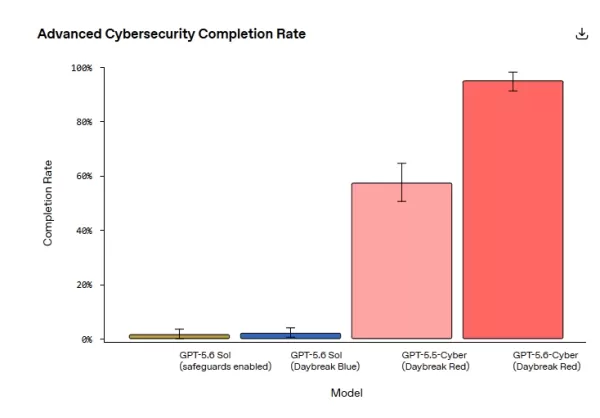 OpenAI Launches GPT-5.6-Cyber, Boosting Zero-Day Detection with AI Automation
OpenAI has expanded its Daybreak cybersecurity initiative, introducing a two-tier access system and launching GPT-5.6-Cyber, a model purpose-built for security operations. This move addresses the growing reality that threat actors are leveraging AI t
OpenAI Launches GPT-5.6-Cyber, Boosting Zero-Day Detection with AI Automation
OpenAI has expanded its Daybreak cybersecurity initiative, introducing a two-tier access system and launching GPT-5.6-Cyber, a model purpose-built for security operations. This move addresses the growing reality that threat actors are leveraging AI t
2026 Latest Best Top-Rated AI Coding Chatbots Curated for Developers! Experience powerful game-changing tools that help you debug Python, JS, and SQL issues quickly. Get a free vs paid comparison along with real-world tests and detailed rankings to find the perfect fit for boosting your coding productivity. Try XIX.AI today to unlock your AI edge! Explore now.
12 tools
xix.ai

2026 Latest Best Top-rated AI Prompt Versioning Platforms for Reusable Playbooks are here on XIX.AI! Our curated list includes powerful game-changing tools that help you keep track of all prompts, test variations efficiently, and boost productivity across writing, content creation, and more. Get a free vs paid comparison along with real-world tests and updated rankings weekly. Explore now to discover your perfect tool for staying ahead in AI tasks!
9 tools
xix.ai
2026 Latest Best AI Writing Assistants for Long Articles: Outline and Draft Faster. XIX.AI curates the top-rated, must-try tools that offer powerful, game-changing support to boost writing efficiency significantly. You’ll find detailed free vs paid comparison, real-world tests, and updated rankings weekly. Explore now to Discover your perfect tool and Start creating today to Unlock your AI edge.
8 tools
xix.ai
2026 Latest Best ChatGPT Study Tools for Exam Revision, Flashcards, and Homework Explanations! XIX.AI has curated a top-rated list of powerful game-changing tools designed to boost your productivity. These must-try solutions offer free vs paid comparison, real-world tests, and detailed rankings to help you find the perfect option for efficient exam preparation and homework support. Explore now to unlock your AI edge!
10 tools
xix.ai
2026 Latest Best Top-Rated AI Study Planner Tools for Exam Preparation are here on XIX.AI! This curated collection features powerful, game-changing tools that help you streamline your review process, boost focus, and create personalized study schedules. We conduct real-world tests to determine the top options, offering a free vs paid comparison along with weekly updated rankings. Must-try solutions designed to maximize your productivity and help you ace every exam. Explore now to find your perfect tool!
14 tools
xix.ai

2026 Latest Best Top-rated AI Keyword Gap Tools for Organic Growth! XIX.AI has carefully curated a powerful, game-changing collection of the best tools available, featuring weekly updated rankings and real-world tests. You can find a detailed free vs paid comparison to help you choose the perfect option that boosts your content creation efficiency and unlocks your AI edge. Explore now!
8 tools
xix.ai












