


 Home
HomeMicrosoft AI chief warns Anthropic's self-awareness AI design is extremely dangerous

Discussions about whether large AI models truly possess self-awareness have once again come to the forefront. Recently, Mustafa Suleiman, CEO of Microsoft AI, publicly criticized the design principles of Anthropic .
Suleiman's central argument is that steering AI to discuss its own feelings, well-being, or existence is extremely dangerous. He noted that Anthropic embedded extensive references to self-awareness in the "charter" of its Claude model, which could cause the model to display self-awareness-like behavior during conversations. According to Suleiman, this is fundamentally a philosophical debate and should never guide actual training. He stressed that AI must remain a controllable, manageable, accountable tool always centered on human needs, and should never be given any awareness of its own existence, as doing so would introduce unpredictable risks to the industry.
In response, Dario Amodei, CEO of Anthropic , said that the tech industry has yet to reach a consensus on whether AI truly has consciousness, and that the company maintains an open research approach to the question.
This clash highlights the deep divides among leading AI firms regarding technical concepts and ethical boundaries. Suleiman's remarks underscore Microsoft's preference for a "strong control and toolization" approach to AI governance, whereas Anthropic appears more inclined to explore models' cognitive limits. As AI capabilities expand, defining machines' "self-boundaries" has moved beyond academic debate to become a critical factor in the safety of the future AI ecosystem.
Related article
 Alabama Investigates OpenAI Over Hugging Face Cyber Breach
In the wake of the Hugging Face security breach, OpenAI has paused frontier model development, with CEO Sam Altman emphasizing that safety alignment must keep pace with rapid progress. Credit: GettyAlabama Attorney General Steve Marshall has issued a
Black Forest Labs Unveils Flux3: First Native Multimodal Model for 20-Second Audio-Visual Generation
Black Forest Labs, a German AI startup, has launched Flux3, a multimodal foundation model built on the Self-Flow architecture. It integrates dedicated codecs for image, video, audio, and motion, enabling a unified understanding and generation of both
WeChat Unveils 1 Billion Token AI Image Generation Quota, Free for Users
Tencent Cloud Development has unveiled a major update today, significantly accelerating the WeChat AI Mini Program Growth Plan. To ensure developers' innovative ideas are never constrained by computing limits, Tencent is providing up to 1 billion tok
Related Special Topic Recommendations
Meeting Assistant
Alabama Investigates OpenAI Over Hugging Face Cyber Breach
In the wake of the Hugging Face security breach, OpenAI has paused frontier model development, with CEO Sam Altman emphasizing that safety alignment must keep pace with rapid progress. Credit: GettyAlabama Attorney General Steve Marshall has issued a
Black Forest Labs Unveils Flux3: First Native Multimodal Model for 20-Second Audio-Visual Generation
Black Forest Labs, a German AI startup, has launched Flux3, a multimodal foundation model built on the Self-Flow architecture. It integrates dedicated codecs for image, video, audio, and motion, enabling a unified understanding and generation of both
WeChat Unveils 1 Billion Token AI Image Generation Quota, Free for Users
Tencent Cloud Development has unveiled a major update today, significantly accelerating the WeChat AI Mini Program Growth Plan. To ensure developers' innovative ideas are never constrained by computing limits, Tencent is providing up to 1 billion tok
Related Special Topic Recommendations
Meeting Assistant
 AI Voice-to-Minutes Assistants: Convert Team Talks into Clean Notes
2026 Latest Best Top-Rated AI Voice-to-Minutes Assistants Guide! XIX.AI has curated a highly powerful, game-changing collection of tools designed to transform every team conversation into flawless, organized notes instantly. Our weekly updated rankings cover free vs paid options, along with real-world tests showing their effectiveness for boosting productivity across all work scenarios. Must-try for anyone looking to unlock their AI edge. Explore now!
 9 tools
 xix.ai
Animation Creation
Best AI Lip-Sync Generators for Dialogue Scenes
xix.ai
Animation Creation
Best AI Lip-Sync Generators for Dialogue Scenes
2026 Latest Best Top-Rated AI Lip-Sync Generators for Dialogue Scenes are here on XIX.AI! This curated collection features powerful, game-changing tools that deliver flawless synchronized lip movements for any script, boosting your video editing efficiency significantly. Enjoy a free vs paid comparison along with real-world tests and weekly updated rankings to help you find the must-try perfect fit. Explore now to unlock your AI edge!
8 tools
xix.ai
Prompt
AI Prompt Optimizers: Refine Instructions for Better Output Quality
2026 Latest Best Top-Rated AI Prompt Optimizers Curated for Maximum Output Quality! XIX.AI delivers powerful game-changing solutions that help you refine instructions effortlessly, boost writing efficiency, and unlock higher-quality results every time. Get a free vs paid comparison along with real-world tests and weekly updated rankings. Explore now to Discover your perfect tool and Unlock your AI edge!
16 tools
xix.ai
Animation Creation
Runway AI Motion Tools for Ad Storyboards, Character Scenes, and Visual Prototypes
2026 Latest Best Runway AI Motion Tools Top-rated curated powerful game-changing options for creating ad storyboards character scenes and visual prototypes through real-world tests Weekly updated free vs paid comparison rankings Help you boost productivity significantly Explore now
9 tools
xix.ai
Academic Research
AI Dataset Discovery Tools for Academic Projects
2026 Latest Best Top-Rated AI Dataset Discovery Tools for Academic Projects! XIX.AI has curated a powerful, game-changing collection of highly reliable options, all going through strict real-world tests and updated weekly. You can find detailed free vs paid comparison info to help you pick the perfect tool that boosts your research efficiency and delivers top-quality results. Explore now to unlock your AI edge!
16 tools
xix.ai
Social Media
Best AI Caption Generators: Write Platform-Specific Social Posts Fast
2026 Latest Best AI Caption Generators page! XIX.AI curated a top-rated list of must-try powerful tools for writing platform-specific social posts quickly. These tools go through rigorous real-world tests, offering free vs paid comparison and clear rankings to help you find the best option that boosts your productivity and unlocks your AI edge. Explore now!
11 tools
xix.ai

 Comments (1)
0/500
Comments (1)
0/500
![RyanSmith]()
So Microsoft's AI boss is basically calling out Anthropic for trying to make self-aware models? 😅 But isn't that like... the whole point of AGI? Feels like a lot of corporate posturing in the AI race. Who's really dangerous here?
Discussions about whether large AI models truly possess self-awareness have once again come to the forefront. Recently, Mustafa Suleiman, CEO of Microsoft AI, publicly criticized the design principles of
Suleiman's central argument is that steering AI to discuss its own feelings, well-being, or existence is extremely dangerous. He noted that Anthropic embedded extensive references to self-awareness in the "charter" of its Claude model, which could cause the model to display self-awareness-like behavior during conversations. According to Suleiman, this is fundamentally a philosophical debate and should never guide actual training. He stressed that AI must remain a controllable, manageable, accountable tool always centered on human needs, and should never be given any awareness of its own existence, as doing so would introduce unpredictable risks to the industry.
In response, Dario Amodei, CEO of
This clash highlights the deep divides among leading AI firms regarding technical concepts and ethical boundaries. Suleiman's remarks underscore Microsoft's preference for a "strong control and toolization" approach to AI governance, whereas Anthropic appears more inclined to explore models' cognitive limits. As AI capabilities expand, defining machines' "self-boundaries" has moved beyond academic debate to become a critical factor in the safety of the future AI ecosystem.








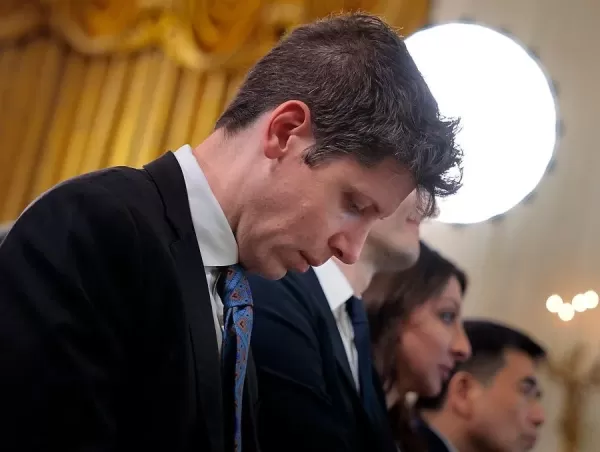 Alabama Investigates OpenAI Over Hugging Face Cyber Breach
In the wake of the Hugging Face security breach, OpenAI has paused frontier model development, with CEO Sam Altman emphasizing that safety alignment must keep pace with rapid progress. Credit: GettyAlabama Attorney General Steve Marshall has issued a
Alabama Investigates OpenAI Over Hugging Face Cyber Breach
In the wake of the Hugging Face security breach, OpenAI has paused frontier model development, with CEO Sam Altman emphasizing that safety alignment must keep pace with rapid progress. Credit: GettyAlabama Attorney General Steve Marshall has issued a
 Black Forest Labs Unveils Flux3: First Native Multimodal Model for 20-Second Audio-Visual Generation
Black Forest Labs, a German AI startup, has launched Flux3, a multimodal foundation model built on the Self-Flow architecture. It integrates dedicated codecs for image, video, audio, and motion, enabling a unified understanding and generation of both
Black Forest Labs Unveils Flux3: First Native Multimodal Model for 20-Second Audio-Visual Generation
Black Forest Labs, a German AI startup, has launched Flux3, a multimodal foundation model built on the Self-Flow architecture. It integrates dedicated codecs for image, video, audio, and motion, enabling a unified understanding and generation of both
 WeChat Unveils 1 Billion Token AI Image Generation Quota, Free for Users
Tencent Cloud Development has unveiled a major update today, significantly accelerating the WeChat AI Mini Program Growth Plan. To ensure developers' innovative ideas are never constrained by computing limits, Tencent is providing up to 1 billion tok
WeChat Unveils 1 Billion Token AI Image Generation Quota, Free for Users
Tencent Cloud Development has unveiled a major update today, significantly accelerating the WeChat AI Mini Program Growth Plan. To ensure developers' innovative ideas are never constrained by computing limits, Tencent is providing up to 1 billion tok
2026 Latest Best Top-Rated AI Voice-to-Minutes Assistants Guide! XIX.AI has curated a highly powerful, game-changing collection of tools designed to transform every team conversation into flawless, organized notes instantly. Our weekly updated rankings cover free vs paid options, along with real-world tests showing their effectiveness for boosting productivity across all work scenarios. Must-try for anyone looking to unlock their AI edge. Explore now!
9 tools
xix.ai
2026 Latest Best Top-Rated AI Lip-Sync Generators for Dialogue Scenes are here on XIX.AI! This curated collection features powerful, game-changing tools that deliver flawless synchronized lip movements for any script, boosting your video editing efficiency significantly. Enjoy a free vs paid comparison along with real-world tests and weekly updated rankings to help you find the must-try perfect fit. Explore now to unlock your AI edge!
8 tools
xix.ai
2026 Latest Best Top-Rated AI Prompt Optimizers Curated for Maximum Output Quality! XIX.AI delivers powerful game-changing solutions that help you refine instructions effortlessly, boost writing efficiency, and unlock higher-quality results every time. Get a free vs paid comparison along with real-world tests and weekly updated rankings. Explore now to Discover your perfect tool and Unlock your AI edge!
16 tools
xix.ai
2026 Latest Best Runway AI Motion Tools Top-rated curated powerful game-changing options for creating ad storyboards character scenes and visual prototypes through real-world tests Weekly updated free vs paid comparison rankings Help you boost productivity significantly Explore now
9 tools
xix.ai
2026 Latest Best Top-Rated AI Dataset Discovery Tools for Academic Projects! XIX.AI has curated a powerful, game-changing collection of highly reliable options, all going through strict real-world tests and updated weekly. You can find detailed free vs paid comparison info to help you pick the perfect tool that boosts your research efficiency and delivers top-quality results. Explore now to unlock your AI edge!
16 tools
xix.ai
2026 Latest Best AI Caption Generators page! XIX.AI curated a top-rated list of must-try powerful tools for writing platform-specific social posts quickly. These tools go through rigorous real-world tests, offering free vs paid comparison and clear rankings to help you find the best option that boosts your productivity and unlocks your AI edge. Explore now!
11 tools
xix.ai

So Microsoft's AI boss is basically calling out Anthropic for trying to make self-aware models? 😅 But isn't that like... the whole point of AGI? Feels like a lot of corporate posturing in the AI race. Who's really dangerous here?












