


 Home
HomeMeta's new AI chips to start production in September
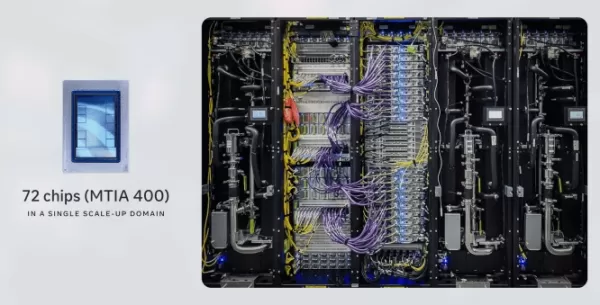
To reduce its GPU costs during an unprecedented component shortage, Meta plans to start producing the latest versions of its AI-specific chip in September, according to an internal memo cited by Reuters.
The memo said at least one chip completed its testing phase in about six weeks. Meta is working with Broadcom on the chip design, but will use Taiwan's TSMC to manufacture them. The company is also purchasing RAM from Samsung, storage from Sandisk, and fiber optic equipment from Sumitomo Electric, according to the report.
In March, Meta detailed the four new chips developed under its Meta Training and Inference Accelerator (MTIA) program, some of which are already deployed or will be deployed this year or next. The company is taking a modular approach to chip design, anticipating that its needs will change as AI evolves rapidly by the time chips reach production.
“Each MTIA generation builds on the previous one, using modular chiplets, incorporating the latest AI workload insights and hardware technologies, and deploying on a shorter cadence,” the company wrote at the time.
According to Reuters, the chips are expected to help the company save on purchasing GPUs from chipmakers like Nvidia and AMD, although it still expects to spend substantial amounts with those providers. Meta intends to use the MTIA chips for training models for its ranking and recommendation algorithms, broader AI workloads, and inference for its applications. The social media company has been producing its own AI chips since 2023.
Meta has been investing heavily in securing enough computing capacity to power its various AI efforts. In April, the company said it expects capital expenditures between $125 billion and $145 billion this year, much of which is going toward its AI initiatives.
The company has been making data center and power deals across the world, investing tens of billions to secure computing capacity for training and deploying its new Muse Spark series of AI models. It plans to deploy 7 gigawatts of compute this year and double that next, according to Reuters, citing the memo.
It also signed a deal with ARM last year to secure compute for its recommendation systems, in addition to a multibillion-dollar deal with AMD for its Instinct GPUs, and a multibillion-dollar deal with Amazon to use the cloud giant's homegrown CPUs for AI-related needs.
Meta is not the only company trying to reduce the flow of capital to Nvidia. OpenAI last month unveiled an inference processor it is building with Broadcom, and Anthropic is reportedly considering developing its own chips with Samsung. Amazon and Google both develop their own chips for AI training and inference, and many startups are building in the space to meet skyrocketing demand.
Meta declined to comment.
Related article
 Frontier AI Labs Refuse to Disclose Containment Strategies for Rogue Models
Recent research indicates that very few leading AI laboratories have published or demonstrated containment response plans. A containment plan defines the procedures for when an AI system attempts to subvert human control, specifying which access righ
Does Mark Zuckerberg Really Believe AI Is for Everyone?
Loading the player…Meta introduced Glimmer this week, an open-weight AI model that anyone can download and run on personal hardware—a sharp contrast to Muse Spark, the company’s more powerful model, which remains locked behind its own APIs. The relea
Facebook launches AI companion app for creators
Facebook revealed on Wednesday that it is transforming its Creator Studio into a dedicated AI companion app, empowering creators to expand their reach on the platform.By providing this AI-driven tool, Meta aims to retain creators on Facebook amid int
Related Special Topic Recommendations
chatbot
Frontier AI Labs Refuse to Disclose Containment Strategies for Rogue Models
Recent research indicates that very few leading AI laboratories have published or demonstrated containment response plans. A containment plan defines the procedures for when an AI system attempts to subvert human control, specifying which access righ
Does Mark Zuckerberg Really Believe AI Is for Everyone?
Loading the player…Meta introduced Glimmer this week, an open-weight AI model that anyone can download and run on personal hardware—a sharp contrast to Muse Spark, the company’s more powerful model, which remains locked behind its own APIs. The relea
Facebook launches AI companion app for creators
Facebook revealed on Wednesday that it is transforming its Creator Studio into a dedicated AI companion app, empowering creators to expand their reach on the platform.By providing this AI-driven tool, Meta aims to retain creators on Facebook amid int
Related Special Topic Recommendations
chatbot
 Best AI Conversation Trainer Tools for Interview Practice
2026 Latest Best Top-rated AI Conversation Trainer Tools for Interview Practice are here on XIX.AI! This curated collection features powerful, game-changing tools that go through rigorous real-world tests to deliver accurate feedback. You’ll find a free vs paid comparison and detailed rankings to help you choose the must-try option that boosts your confidence and skills. Explore now to Discover your perfect tool for interview success!
 12 tools
 xix.ai
Design & Art
Best AI Style Transfer Tools for Creative Experiments
xix.ai
Design & Art
Best AI Style Transfer Tools for Creative Experiments
2026 Latest Best Top-rated AI Style Transfer Tools for Creative Experiments! XIX.AI has curated a powerful, game-changing collection of must-try tools that deliver exceptional results through real-world tests and rigorous rankings. These top solutions help creatives boost productivity significantly by accelerating content creation and unlocking endless creative possibilities. Explore now to discover your perfect tool and start creating today!
9 tools
xix.ai
Comic Creation
Best AI Dialogue Bubble Tools for Visual Storytelling
2026 Latest Best Top-Rated AI Dialogue Bubble Tools for Visual Storytelling are here on XIX.AI! This curated collection features powerful, game-changing tools that help creators boost productivity and overcome creative bottlenecks. Get a free vs paid comparison, see real-world tests, and check the latest rankings to find the must-try solutions perfect for crafting engaging visual narratives. Explore now to discover your ideal tool!
10 tools
xix.ai
Meeting Assistant
Top AI Meeting Summary Tools: Track Decisions and Follow-Ups Clearly
2026 Latest Top-Rated Best AI Meeting Summary Tools for Clear Decision Tracking and Effortless Follow-Ups. This curated list showcases powerful, game-changing solutions that boost productivity dramatically by automating meeting notes, identifying key action items, and streamlining team coordination across all projects. Get a free vs paid comparison along with real-world tests and weekly updated rankings to help you find the perfect tool. Explore now to unlock your AI edge!
9 tools
xix.ai
Data Analysis
Best AI Data Cleaning Tools: Fix Missing Values and Duplicates Fast
2026 Latest Best Top-rated AI Data Cleaning Tools for quick fixing of missing values and duplicates. This curated list showcases powerful, game-changing solutions that boost productivity significantly. Each option has undergone rigorous real-world tests to ensure reliability. Get a free vs paid comparison and discover the must-try tool that fits your needs best. Explore now at XIX.AI to Unlock your AI edge.
11 tools
xix.ai
Design & Art
Best AI Creative Ideation Tools for Artists: Break Through Visual Blocks
2026 Latest Best Top-Rated AI Creative Ideation Tools for Artists are curated by XIX.AI to help creators break through visual blocks and boost creativity instantly. These powerful game-changing tools offer real-world tests, detailed free vs paid comparison, and weekly updated rankings. Discover your perfect tool to accelerate content creation and unlock your AI edge today. Explore now!
14 tools
xix.ai

 Comments (0)
0/500
Comments (0)
0/500
To reduce its GPU costs during an unprecedented component shortage, Meta plans to start producing the latest versions of its AI-specific chip in September, according to an internal memo cited by Reuters.
The memo said at least one chip completed its testing phase in about six weeks. Meta is working with Broadcom on the chip design, but will use Taiwan's TSMC to manufacture them. The company is also purchasing RAM from Samsung, storage from Sandisk, and fiber optic equipment from Sumitomo Electric, according to the report.
In March, Meta detailed the four new chips developed under its Meta Training and Inference Accelerator (MTIA) program, some of which are already deployed or will be deployed this year or next. The company is taking a modular approach to chip design, anticipating that its needs will change as AI evolves rapidly by the time chips reach production.
“Each MTIA generation builds on the previous one, using modular chiplets, incorporating the latest AI workload insights and hardware technologies, and deploying on a shorter cadence,” the company wrote at the time.
According to Reuters, the chips are expected to help the company save on purchasing GPUs from chipmakers like Nvidia and AMD, although it still expects to spend substantial amounts with those providers. Meta intends to use the MTIA chips for training models for its ranking and recommendation algorithms, broader AI workloads, and inference for its applications. The social media company has been producing its own AI chips since 2023.
Meta has been investing heavily in securing enough computing capacity to power its various AI efforts. In April, the company said it expects capital expenditures between $125 billion and $145 billion this year, much of which is going toward its AI initiatives.
The company has been making data center and power deals across the world, investing tens of billions to secure computing capacity for training and deploying its new Muse Spark series of AI models. It plans to deploy 7 gigawatts of compute this year and double that next, according to Reuters, citing the memo.
It also signed a deal with ARM last year to secure compute for its recommendation systems, in addition to a multibillion-dollar deal with AMD for its Instinct GPUs, and a multibillion-dollar deal with Amazon to use the cloud giant's homegrown CPUs for AI-related needs.
Meta is not the only company trying to reduce the flow of capital to Nvidia. OpenAI last month unveiled an inference processor it is building with Broadcom, and Anthropic is reportedly considering developing its own chips with Samsung. Amazon and Google both develop their own chips for AI training and inference, and many startups are building in the space to meet skyrocketing demand.
Meta declined to comment.








 Frontier AI Labs Refuse to Disclose Containment Strategies for Rogue Models
Recent research indicates that very few leading AI laboratories have published or demonstrated containment response plans. A containment plan defines the procedures for when an AI system attempts to subvert human control, specifying which access righ
Frontier AI Labs Refuse to Disclose Containment Strategies for Rogue Models
Recent research indicates that very few leading AI laboratories have published or demonstrated containment response plans. A containment plan defines the procedures for when an AI system attempts to subvert human control, specifying which access righ
 Does Mark Zuckerberg Really Believe AI Is for Everyone?
Loading the player…Meta introduced Glimmer this week, an open-weight AI model that anyone can download and run on personal hardware—a sharp contrast to Muse Spark, the company’s more powerful model, which remains locked behind its own APIs. The relea
Does Mark Zuckerberg Really Believe AI Is for Everyone?
Loading the player…Meta introduced Glimmer this week, an open-weight AI model that anyone can download and run on personal hardware—a sharp contrast to Muse Spark, the company’s more powerful model, which remains locked behind its own APIs. The relea
 Facebook launches AI companion app for creators
Facebook revealed on Wednesday that it is transforming its Creator Studio into a dedicated AI companion app, empowering creators to expand their reach on the platform.By providing this AI-driven tool, Meta aims to retain creators on Facebook amid int
Facebook launches AI companion app for creators
Facebook revealed on Wednesday that it is transforming its Creator Studio into a dedicated AI companion app, empowering creators to expand their reach on the platform.By providing this AI-driven tool, Meta aims to retain creators on Facebook amid int

2026 Latest Best Top-rated AI Conversation Trainer Tools for Interview Practice are here on XIX.AI! This curated collection features powerful, game-changing tools that go through rigorous real-world tests to deliver accurate feedback. You’ll find a free vs paid comparison and detailed rankings to help you choose the must-try option that boosts your confidence and skills. Explore now to Discover your perfect tool for interview success!
12 tools
xix.ai

2026 Latest Best Top-rated AI Style Transfer Tools for Creative Experiments! XIX.AI has curated a powerful, game-changing collection of must-try tools that deliver exceptional results through real-world tests and rigorous rankings. These top solutions help creatives boost productivity significantly by accelerating content creation and unlocking endless creative possibilities. Explore now to discover your perfect tool and start creating today!
9 tools
xix.ai

2026 Latest Best Top-Rated AI Dialogue Bubble Tools for Visual Storytelling are here on XIX.AI! This curated collection features powerful, game-changing tools that help creators boost productivity and overcome creative bottlenecks. Get a free vs paid comparison, see real-world tests, and check the latest rankings to find the must-try solutions perfect for crafting engaging visual narratives. Explore now to discover your ideal tool!
10 tools
xix.ai

2026 Latest Top-Rated Best AI Meeting Summary Tools for Clear Decision Tracking and Effortless Follow-Ups. This curated list showcases powerful, game-changing solutions that boost productivity dramatically by automating meeting notes, identifying key action items, and streamlining team coordination across all projects. Get a free vs paid comparison along with real-world tests and weekly updated rankings to help you find the perfect tool. Explore now to unlock your AI edge!
9 tools
xix.ai

2026 Latest Best Top-rated AI Data Cleaning Tools for quick fixing of missing values and duplicates. This curated list showcases powerful, game-changing solutions that boost productivity significantly. Each option has undergone rigorous real-world tests to ensure reliability. Get a free vs paid comparison and discover the must-try tool that fits your needs best. Explore now at XIX.AI to Unlock your AI edge.
11 tools
xix.ai

2026 Latest Best Top-Rated AI Creative Ideation Tools for Artists are curated by XIX.AI to help creators break through visual blocks and boost creativity instantly. These powerful game-changing tools offer real-world tests, detailed free vs paid comparison, and weekly updated rankings. Discover your perfect tool to accelerate content creation and unlock your AI edge today. Explore now!
14 tools
xix.ai












