


 Home
Meta Unveils New AI Bedtime Story App Targeting Adults Lacking Creative Imagination
Meta is currently developing an AI-powered storytelling application named StoryKit, designed to create original children’s stories using custom characters, settings, educational themes, and original music. As stated in the App Store description, parents need not write a single word to bring these stories to life.
For the first time, a technology company has found a way to handle what has long been humanity’s most cherished pastime: using our imagination to create content.
StoryKit was first identified on the App Store by 9to5Mac. Meta confirmed to TechCrunch that it is currently testing the app in select countries to gauge parental feedback. A Meta spokesperson described StoryKit as a creative storytelling tool aimed at producing personalized, imaginative storybooks for children. They also noted that the app incorporates AI safety filters, lacks any social features, and is intended solely for users aged 18 and older.
To create a story within the app, users first select a character, which can be generated by “taking a photo of their favorite toy or person to bring them to life,” according to the App Store description. After that, they describe the setting of their story and choose an educational theme, allowing them to “integrate values such as kindness, courage, or empathy in a way that doesn’t feel like a lecture.”
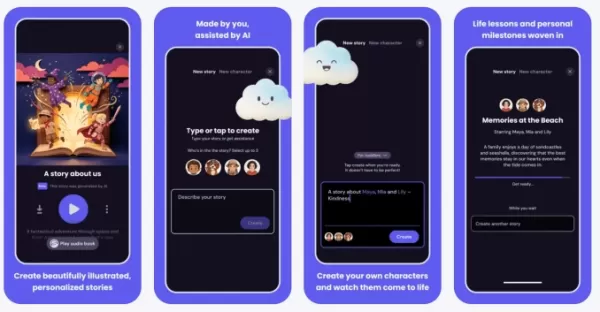
Image Credits:StoryKit (opens in a new window)
The positive aspect of StoryKit is that it could be much worse. Meta has previously released several controversial products, such as Instagram’s deepfake generators and “pervert glasses.” In comparison, is it really that bad to provide children with storybooks that lack creativity? Should we have expected anything different from a company that once promised us a utopian future through virtual reality work meetings?
While humans certainly have their flaws, we excel at one thing: storytelling. We have been sharing stories throughout history. We don’t even need to invent entirely new tales about fairy princesses or dragon slayers — we often draw from mythology, fables, and existing stories. Even the most popular movies of the year often originate from ancient myths that stem from this tradition of oral storytelling.
Parents lead busy and demanding lives, but it has always been possible to manage bedtime routines without relying on uncreative technology that simply generates the most predictable responses to given prompts.
It might be tempting to use StoryKit when a child refuses all the children’s books on your shelf and insists on an impromptu intergalactic story about a turtle and a hedgehog who are best friends and solve space mysteries. But should we really give up the chance for whimsy and fun by relying on AI-generated scripts from our smartphones instead?
Perhaps the lesson here is that we have the choice not to live in a world where children are raised primarily on bedtime stories created by large language models. Although Meta’s vision for the future may seem antisocial and bleak, we still have the power to reject that outcome.
Related article
 Meta's Muse outpaces ChatGPT in early mobile launch
New data suggests Meta’s latest AI app, Muse, could become the social giant’s next major success. According to recent estimates from Appfigures, Muse has been downloaded on mobile devices more times in its first twelve days than ChatGPT did in the tw
Meta’s Muse arrives on Mac, enabling AI to perform actions on your computer
Meta’s latest AI assistant, Muse, is now live on Mac.On macOS, Muse integrates with your files, messages, calendar, notes, and mail, operating directly within their native apps.This desktop release follows Muse’s mobile and web debut earlier this mon
Zuckerberg expands Meta’s enterprise AI vision beyond agents
In June, Meta launched a new AI agent for enterprises, designed to assist with customer service, support, and daily operations. However, CEO Mark Zuckerberg revealed to investors on Wednesday’s second-quarter earnings call that the company’s enterpri
Related Special Topic Recommendations
Design & Art
 Top AI Illustration Tools: Create Editorial Scenes and Cover Art Faster
2026 Latest Top-rated AI Illustration Tools: Our curated list features the best powerfully designed tools for creating stunning editorial scenes and eye-catching cover art quickly. Each option has gone through rigorous real-world tests, offering a free vs paid comparison to help you find the perfect match for your workflow. Try these must-try solutions today to unlock your AI edge and boost your creative productivity. Explore now at XIX.AI.
 10 tools
 xix.ai
Education and Learning
Top AI Tutors for Exam Prep: Practice Math, Science, and English
2026 Latest Top-Rated Best AI Tutors for Exam Prep are here on XIX.AI! Our curated list features powerful game-changing tools that offer free vs paid comparison, real-world tests, and weekly updated rankings. They help boost your writing efficiency, simplify complex topic learning, and unlock your academic potential. Explore now to Discover your perfect exam prep tool and Start creating today to Unlock your AI edge!
10 tools
xix.ai
Finance
AI Budget Planning Tools for Personal Money Management
2026 Latest Best Top-Rated AI Budget Planning Tools for Personal Money Management are here on XIX.AI! This curated collection features powerful, game-changing solutions that help you conduct real-world tests, understand spending habits, and create personalized plans to boost productivity. Enjoy a free vs paid comparison along with detailed rankings. Must-try tools designed to simplify money management and unlock your AI edge. Explore now!
11 tools
xix.ai
Health & Wellness
AI Sleep Tracking Assistants: Improve Recovery with Better Bedtime Habits
2026 Latest Best Top-Rated AI Sleep Tracking Assistants curated for ultimate recovery. This fully updated weekly guide features powerful tools that deliver real-world tests, free vs paid comparison, and detailed rankings to help you find the must-try solution that boosts sleep quality and supports better bedtime habits. Explore now at XIX.AI to Unlock your AI edge.
10 tools
xix.ai
Data Analysis
AI SQL Copilots for Product and Revenue Analytics
2026 Latest Best Top-Rated AI SQL Copilots for Product and Revenue Analytics! XIX.AI has curated a powerful, game-changing collection of must-try tools that undergo real-world tests through weekly updated rankings. These tools help users boost productivity significantly by accelerating data analysis, streamlining complex queries, and generating accurate insights to drive smarter business decisions. Explore now to Discover your perfect tool for unlocking your AI edge!
14 tools
xix.ai
Education and Learning
Best AI Homework Helpers That Teach: Learn Concepts, Not Just Answers
2026 Latest Best Top-Rated AI Homework Helpers That Teach Core Concepts Not Just Answers Powerful Tools for Students Must-Try Curated List Weekly Updated Free vs Paid Comparison Real-World Tests Accurate Rankings to Help You Unlock Your Full Learning Potential Explore now to Discover your perfect tool for smarter studying.
10 tools
xix.ai

 Comments (0)
0/500
Meta is currently developing an AI-powered storytelling application named StoryKit, designed to create original children’s stories using custom characters, settings, educational themes, and original music. As stated in the App Store description, parents need not write a single word to bring these stories to life.
For the first time, a technology company has found a way to handle what has long been humanity’s most cherished pastime: using our imagination to create content.
StoryKit was first identified on the App Store by 9to5Mac. Meta confirmed to TechCrunch that it is currently testing the app in select countries to gauge parental feedback. A Meta spokesperson described StoryKit as a creative storytelling tool aimed at producing personalized, imaginative storybooks for children. They also noted that the app incorporates AI safety filters, lacks any social features, and is intended solely for users aged 18 and older.
To create a story within the app, users first select a character, which can be generated by “taking a photo of their favorite toy or person to bring them to life,” according to the App Store description. After that, they describe the setting of their story and choose an educational theme, allowing them to “integrate values such as kindness, courage, or empathy in a way that doesn’t feel like a lecture.”
Image Credits:StoryKit (opens in a new window)
The positive aspect of StoryKit is that it could be much worse. Meta has previously released several controversial products, such as Instagram’s deepfake generators and “pervert glasses.” In comparison, is it really that bad to provide children with storybooks that lack creativity? Should we have expected anything different from a company that once promised us a utopian future through virtual reality work meetings?
While humans certainly have their flaws, we excel at one thing: storytelling. We have been sharing stories throughout history. We don’t even need to invent entirely new tales about fairy princesses or dragon slayers — we often draw from mythology, fables, and existing stories. Even the most popular movies of the year often originate from ancient myths that stem from this tradition of oral storytelling.
Parents lead busy and demanding lives, but it has always been possible to manage bedtime routines without relying on uncreative technology that simply generates the most predictable responses to given prompts.
It might be tempting to use StoryKit when a child refuses all the children’s books on your shelf and insists on an impromptu intergalactic story about a turtle and a hedgehog who are best friends and solve space mysteries. But should we really give up the chance for whimsy and fun by relying on AI-generated scripts from our smartphones instead?
Perhaps the lesson here is that we have the choice not to live in a world where children are raised primarily on bedtime stories created by large language models. Although Meta’s vision for the future may seem antisocial and bleak, we still have the power to reject that outcome.








 Meta's Muse outpaces ChatGPT in early mobile launch
New data suggests Meta’s latest AI app, Muse, could become the social giant’s next major success. According to recent estimates from Appfigures, Muse has been downloaded on mobile devices more times in its first twelve days than ChatGPT did in the tw
 Meta’s Muse arrives on Mac, enabling AI to perform actions on your computer
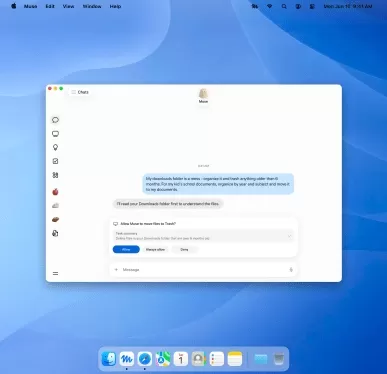
Meta’s latest AI assistant, Muse, is now live on Mac.On macOS, Muse integrates with your files, messages, calendar, notes, and mail, operating directly within their native apps.This desktop release follows Muse’s mobile and web debut earlier this mon
 Zuckerberg expands Meta’s enterprise AI vision beyond agents
In June, Meta launched a new AI agent for enterprises, designed to assist with customer service, support, and daily operations. However, CEO Mark Zuckerberg revealed to investors on Wednesday’s second-quarter earnings call that the company’s enterpri

2026 Latest Top-rated AI Illustration Tools: Our curated list features the best powerfully designed tools for creating stunning editorial scenes and eye-catching cover art quickly. Each option has gone through rigorous real-world tests, offering a free vs paid comparison to help you find the perfect match for your workflow. Try these must-try solutions today to unlock your AI edge and boost your creative productivity. Explore now at XIX.AI.
10 tools
xix.ai

2026 Latest Top-Rated Best AI Tutors for Exam Prep are here on XIX.AI! Our curated list features powerful game-changing tools that offer free vs paid comparison, real-world tests, and weekly updated rankings. They help boost your writing efficiency, simplify complex topic learning, and unlock your academic potential. Explore now to Discover your perfect exam prep tool and Start creating today to Unlock your AI edge!
10 tools
xix.ai

2026 Latest Best Top-Rated AI Budget Planning Tools for Personal Money Management are here on XIX.AI! This curated collection features powerful, game-changing solutions that help you conduct real-world tests, understand spending habits, and create personalized plans to boost productivity. Enjoy a free vs paid comparison along with detailed rankings. Must-try tools designed to simplify money management and unlock your AI edge. Explore now!
11 tools
xix.ai

2026 Latest Best Top-Rated AI Sleep Tracking Assistants curated for ultimate recovery. This fully updated weekly guide features powerful tools that deliver real-world tests, free vs paid comparison, and detailed rankings to help you find the must-try solution that boosts sleep quality and supports better bedtime habits. Explore now at XIX.AI to Unlock your AI edge.
10 tools
xix.ai

2026 Latest Best Top-Rated AI SQL Copilots for Product and Revenue Analytics! XIX.AI has curated a powerful, game-changing collection of must-try tools that undergo real-world tests through weekly updated rankings. These tools help users boost productivity significantly by accelerating data analysis, streamlining complex queries, and generating accurate insights to drive smarter business decisions. Explore now to Discover your perfect tool for unlocking your AI edge!
14 tools
xix.ai

2026 Latest Best Top-Rated AI Homework Helpers That Teach Core Concepts Not Just Answers Powerful Tools for Students Must-Try Curated List Weekly Updated Free vs Paid Comparison Real-World Tests Accurate Rankings to Help You Unlock Your Full Learning Potential Explore now to Discover your perfect tool for smarter studying.
10 tools
xix.ai












