


 Home
HomeHow does MECREGEN generate renewable water for a sustainable future in 2026?
In an era marked by growing environmental challenges and limited access to clean resources, the demand for innovative, sustainable solutions has reached a critical point. The MECREGEN Renewable Water Generator stands as a promising development, offering a comprehensive method for water purification and renewable energy production. This system tackles the urgent problem of water scarcity while paving the way for a zero-emission future, merging technological progress with ecological stewardship. As climate change increasingly restricts conventional water supplies, advanced systems capable of producing clean drinking water from the atmosphere are more vital than ever.
Key Points
The global water crisis is intensifying due to climate change.
Conventional water purification techniques are energy-heavy and depend on finite resources.
MECREGEN’s technology presents a sustainable alternative by creating water from air using renewable power.
The system is built for zero emissions, lessening its environmental footprint.
The generator yields between 200 and 20,000 gallons of clean water per day, varying by system size.
MECREGEN delivers clean renewable transportation and clean renewable electricity.
Understanding the Global Water Crisis and the Need for Innovation
The Dire State of Water Resources
Water is undeniably the foundation of life, crucial for maintaining ecosystems, supporting agriculture, and ensuring human health.
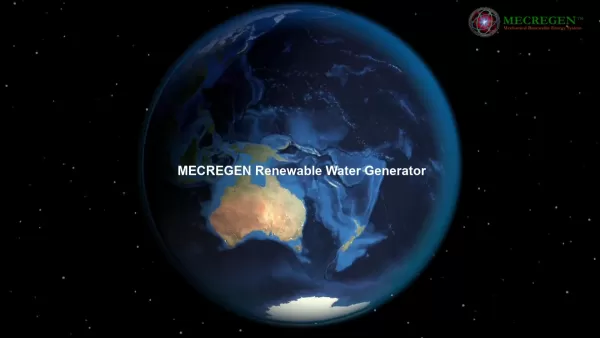
Although the planet is mostly covered in water, a large percentage is saltwater and unfit for drinking or farming. Freshwater supplies are under increasing strain from overuse, contamination, and the erratic effects of climate change. This shortage is not just an environmental concern; it is an emerging humanitarian issue that risks global security.
With the world population continuing to grow, the need for drinkable water rises, adding stress to already overtaxed resources. The United Nations reports that around 2.2 billion people do not have access to safe drinking water services, a shocking number that highlights the severity of the problem. The effects of water scarcity go beyond simple inconvenience, contributing to malnutrition, disease outbreaks, and social inequality.
Additionally, the close link between water and energy must be acknowledged. Traditional water purification and distribution networks consume large amounts of energy, primarily from fossil fuels. This creates a destructive cycle where the act of supplying clean water worsens the environmental issues that initially cause water shortages.
Hence, innovative approaches that separate water production from fossil fuels are essential. Technologies that use renewable energy to create clean water offer a sustainable direction, tackling both the water and climate crises together. The MECREGEN Renewable Water Generator exemplifies this strategy, marking a fundamental change in how we obtain and manage this vital resource.
Conventional Water Purification: A Critical Review
Traditional water purification techniques, like desalination and reverse osmosis, have historically been the primary solutions for water scarcity.
Desalination, in particular, removes salt and minerals from seawater to make it drinkable. While successful, these methods are known for their high energy use, often depending on fossil fuels and thereby adding to greenhouse gas emissions.
Reverse osmosis, another common method, uses pressure to push water through a semi-permeable membrane, separating it from pollutants. This technique, while good at removing impurities, still requires considerable energy, making it less sustainable over time.
Moreover, these conventional purification methods usually need direct access to substantial water sources, restricting their use in dry or inland areas. Building and maintaining desalination plants can also harm marine environments.
Furthermore, chemical-based purification processes, though effective for disinfecting water, can release dangerous byproducts into the environment. Using chlorine, for instance, can lead to the creation of trihalomethanes (THMs), which are recognized carcinogens.
Therefore, while traditional water purification methods have been important for supplying clean water to communities globally, their dependence on fossil fuels and potential ecological damage call for the investigation of more sustainable options. Technologies such as the MECREGEN Renewable Water Generator provide a hopeful alternative, using renewable energy to produce clean water with a minimal environmental impact.
MECREGEN Renewable Water Generator: A Sustainable Alternative
The MECREGEN Renewable Water Generator signifies a revolutionary method for water purification and energy creation, offering a sustainable option to conventional approaches.
Unlike traditional systems that depend on fossil fuels and add to environmental decline, the MECREGEN system uses renewable energy to produce clean drinking water from the atmosphere.
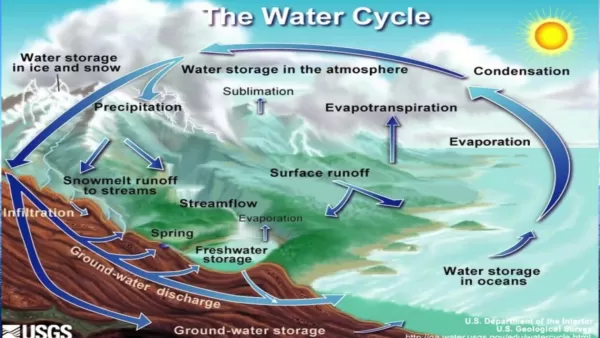
Fundamentally, the MECREGEN system employs an atmospheric water generator (AWG) to pull moisture from the air. This technology replicates the natural water cycle, condensing water vapor into liquid through a cooling process. The water is then cleansed using sophisticated filtration and disinfection methods, guaranteeing it meets top drinking standards.
The distinguishing feature of the MECREGEN system is its combination with a renewable energy source. By connecting the AWG to a MECREGEN Renewable Generator, the system becomes completely self-reliant and emission-free. This removes the need for fossil fuels, reducing the environmental harm linked with standard water purification techniques.
The MECREGEN system provides several key benefits: It can be installed in almost any location with humidity over 20%, making it perfect for dry and isolated areas. It produces clean drinking water without requiring direct access to large water bodies. It functions with zero emissions, supporting a cleaner and more sustainable future.
Furthermore, the MECREGEN system is scalable, able to generate between 200 to 20,000 gallons of water daily, based on the AWG size. This makes it appropriate for various uses, from small residential setups to large industrial needs.
The MECREGEN Renewable Water Generator is more than a technical advancement; it is a fundamental shift in water management strategy. By utilizing renewable energy to create clean water from the air, it offers a sustainable answer to the global water crisis, leading to a stronger and more ecologically conscious future.
Technical Deep Dive: How MECREGEN's Water Generator Works
The Atmospheric Water Generation Process
The atmospheric water generator (AWG) is the central component of the MECREGEN Renewable Water Generator system. This advanced technology takes cues from the natural water cycle, duplicating the condensation process to draw moisture from the air.

Here is a step-by-step explanation of the AWG operation:
- Air Intake: The AWG uses a strong fan to pull in surrounding air. The air then goes through multiple filters to eliminate dust, pollen, and other particles, ensuring the incoming air is clean.
- Cooling and Condensation: The filtered air is cooled to its dew point, the temperature where water vapor turns into liquid. This cooling is accomplished with a refrigeration system that circulates a refrigerant through coils.
- Water Collection: As the air cools, water vapor condenses on the cooling coils, forming water droplets. These droplets gather in a reservoir at the AWG base.
- Filtration and Purification: The collected water then passes through several filters to remove any leftover impurities. These filters usually include sediment filters, activated carbon filters, and reverse osmosis membranes. Finally, the water is disinfected with ultraviolet (UV) light or ozone to eliminate bacteria or viruses.
- Storage and Distribution: The purified water is kept in a clean tank, ready for use. The AWG can be linked to a plumbing system for on-demand water, or it can fill bottles or other containers.
Factors Affecting AWG Performance
An AWG's performance is influenced by several factors, such as:
- Humidity: Higher humidity allows the AWG to produce more water.
- Temperature: AWGs generally work best in temperatures from 60°F to 90°F.
- Airflow: The AWG requires a constant airflow to operate correctly.
- System Size: Larger AWGs can generate more water.
The Role of the MECREGEN Renewable Generator
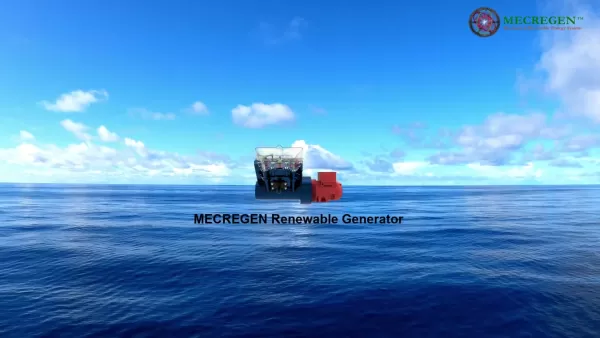
The MECREGEN Renewable Generator is what truly distinguishes this system. It supplies the sustainable, emission-free energy required to run the AWG, making the whole process environmentally sound.
Here is a closer examination of its function:
- Energy Generation: The MECREGEN Renewable Generator is a mechanical system that turns kinetic energy into electricity. This kinetic energy can come from various renewable sources, like wind, solar, or hydro power.
- Energy Storage: The electricity produced by the MECREGEN Renewable Generator is stored in a battery bank, offering a steady and dependable power source for the AWG.
- Control System: An advanced control system regulates the energy flow between the MECREGEN Renewable Generator, the battery bank, and the AWG. This system makes sure the AWG gets the right amount of power to optimize water production while lowering energy use.
- Integration with the AWG: The MECREGEN Renewable Generator is fully integrated with the AWG, forming a self-sufficient system that can operate off the electrical grid.
Benefits of the MECREGEN Renewable Generator
- Sustainability: It ends the reliance on fossil fuels, cutting greenhouse gas emissions.
- Reliability: It offers a consistent and reliable power supply, even in remote places.
- Cost-Effectiveness: It lowers energy expenses by generating electricity locally.
- Environmental Friendliness: It operates with zero emissions, reducing environmental impact.
The MECREGEN Renewable Generator is not just a power supply; it is a dedication to a cleaner, more sustainable future.
Water Purification and Quality Assurance
Guaranteeing the safety and purity of the water produced by the MECREGEN system is essential.
The system includes a multi-stage purification process to eliminate contaminants and ensure the water meets or surpasses the highest drinking standards. Here is a detailed view of the purification process:
- Sediment Filtration: The water first goes through a sediment filter to remove any particulate matter, like dirt, sand, and rust.
- Activated Carbon Filtration: The water then passes through an activated carbon filter to remove chlorine, volatile organic compounds (VOCs), and other chemicals that can impact taste and smell.
- Reverse Osmosis (RO): The water is pushed through a semi-permeable membrane under high pressure, separating it from dissolved salts, minerals, and other impurities. RO is very effective at removing a broad range of contaminants, including heavy metals, bacteria, and viruses.
- Ultraviolet (UV) Disinfection: The water is exposed to UV light to kill any remaining bacteria or viruses. UV disinfection is a safe and efficient way to neutralize microorganisms without adding chemicals to the water.
- Ozone Disinfection: In some systems, ozone is used as a disinfectant. Ozone is a powerful oxidizing agent that can kill bacteria and viruses more effectively than chlorine. It also improves the water's taste and odor.
Quality Control Measures
- Regular testing: The water is routinely tested to ensure it meets all relevant drinking standards.
- System Maintenance: The system is regularly serviced to ensure all filters and parts work correctly.
- Remote Monitoring: Some systems have remote monitoring features, letting technicians check water quality and system performance in real time.
Integrating MECREGEN into Daily Life: Usage Scenarios
Residential Applications: Clean Water at Home
For homeowners, the MECREGEN Renewable Water Generator provides a dependable and sustainable source of clean drinking water.

Imagine having a continuous supply of purified water without depending on city water systems or bottled water. Here are some ways to incorporate the system into your home:
- Whole-House Water System: Connect the MECREGEN system to your home's plumbing to supply purified water to every tap and appliance.
- Drinking Water Station: Set up a dedicated drinking water station in your kitchen for easy access to clean water.
- Emergency Water Supply: Use the MECREGEN system as a backup water source during emergencies or natural disasters.
Commercial Use: Sustainable Water Solutions for Businesses
Businesses can also gain from the MECREGEN system by providing clean water for staff, clients, and operations. Here are some potential uses:
- Offices: Supply purified water for employees and customers, decreasing the need for bottled water.
- Restaurants: Use purified water for cooking, cleaning, and serving customers.
- Hotels: Provide guests with a sustainable and healthy water choice.
- Manufacturing: Use purified water for industrial processes, reducing water use and waste.
Community and Humanitarian Efforts: Providing Water to Those in Need
The MECREGEN Renewable Water Generator is especially suitable for supplying clean water to communities in need, particularly in remote or disaster-affected regions.
Its portability and self-sufficiency make it a perfect solution for:
- Remote Villages: Provide clean water to communities without access to municipal water systems.
- Refugee Camps: Offer a reliable water source for refugees and displaced people.
- Disaster Relief: Deploy the system in disaster-affected areas to supply clean water to victims.
Understanding the Investment: MECREGEN System Pricing
Factors Influencing the Cost
The price of a MECREGEN Renewable Water Generator system differs based on several factors, including:
- System Size: Larger systems cost more.
- Water Production Capacity: Systems with higher water output capacities are more expensive.
- Energy Source: The kind of renewable energy used to power the system can influence the cost.
- Installation Costs: Installation expenses can vary by location and project complexity.
Estimated Costs and ROI
While the initial investment in a MECREGEN system might be higher than traditional water purification methods, the long-term savings and environmental advantages can make it a valuable investment. The return on investment (ROI) can be determined by factors like:
- Water Savings: The money saved on water bills.
- Energy Savings: The money saved on energy bills.
- Environmental Benefits: The value of lowering greenhouse gas emissions and water pollution.
Weighing the Options: Pros
and Cons
of MECREGEN
Pros
Sustainable water source: Produces water from the air, decreasing dependence on traditional water sources.
Renewable energy powered: Runs on renewable energy, reducing greenhouse gas emissions.
Multi-stage purification: Ensures the water meets the highest drinking standards.
Portability and self-sufficiency: Can be set up in almost any location.
Scalability: Can generate between 200 to 20,000 gallons of water per day.
Zero emissions: Operates with zero emissions, minimizing environmental impact.
Cons
Initial investment: May be costlier than traditional water purification methods.
Humidity dependent: Water output relies on humidity levels.
Maintenance requirements: Needs regular upkeep for best performance.
Key Differentiators: Core Features of MECREGEN
Atmospheric Water Generation
Draws moisture from the air using a condensation process, offering a sustainable water source.
Renewable Energy Integration
Operates on renewable energy sources, like solar or wind power, eliminating fossil fuel use.
Multi-Stage Purification
Removes contaminants and ensures the water meets the highest drinking standards.
Portability and Self-Sufficiency
Can be installed in almost any location, even without municipal water or electricity access.
Scalability
Can produce between 200 to 20,000 gallons of water daily, depending on system size.
Real-World Applications: Use Cases for MECREGEN
Residential Water Supply
Supplies clean drinking water for homeowners, reducing dependence on municipal systems and bottled water.
Commercial Operations
Provides a sustainable water solution for businesses, offering clean water for employees, customers, and operations.
Community and Humanitarian Efforts
Delivers clean water to communities in need, especially in remote or disaster-affected areas.
Agricultural Irrigation
Provides water for irrigation, lessening reliance on groundwater and surface water resources.
Emergency Water Supply
Acts as a backup water source during emergencies or natural disasters.
Frequently Asked Questions About MECREGEN
How does the MECREGEN system work?
The MECREGEN system extracts moisture from the air with an atmospheric water generator (AWG), purifies the water using advanced filtration and disinfection methods, and powers the entire operation with renewable energy.
Where can the MECREGEN system be deployed?
The MECREGEN system can be set up in almost any location with humidity above 20%, making it ideal for dry and remote areas.
How much water can the MECREGEN system produce?
The MECREGEN system can generate between 200 to 20,000 gallons of water per day, depending on the AWG size.
Is the water generated by the MECREGEN system safe to drink?
Yes, the water produced by the MECREGEN system goes through a multi-stage purification process to ensure it meets or exceeds the highest drinking standards.
How is the MECREGEN system powered?
The MECREGEN system is powered by renewable energy sources, like solar or wind power, removing the need for fossil fuels.
Addressing Your Concerns: Related Questions
What are the environmental benefits of the MECREGEN system?
The MECREGEN system offers multiple environmental benefits, including: Lower greenhouse gas emissions: By running on renewable energy, the MECREGEN system removes the need for fossil fuels, cutting greenhouse gas emissions. Water conservation: The MECREGEN system extracts moisture from the air, reducing reliance on groundwater and surface water resources. Less water pollution: The MECREGEN system purifies water on-site, eliminating the need for water treatment plants and reducing water pollution. Sustainable water management: The MECREGEN system provides a sustainable approach to water management, ensuring future generations have access to clean water.
How does MECREGEN compare to other renewable energy sources?
MECREGEN provides distinct advantages over other renewable energy options by combining water generation with renewable electricity. This dual function addresses two crucial global needs at once, making it a more complete sustainable solution. While solar and wind power are important for electricity, MECREGEN includes the aspect of clean water production directly from the atmosphere. This is especially beneficial in areas with water scarcity, where traditional renewable energy sources may not directly solve this urgent problem.
Related article
 Ctrip Business Travel Unveils AI Ecosystem with 7 Industry Agents and 17 Core Capabilities
Ctrip Business Travel has officially unveiled the "Ctrip Business Travel AI Ecosystem," leveraging large language models to fundamentally restructure corporate travel management. This comprehensive ecosystem addresses four core scenarios: travel arra
Stripe to Acquire OpenRouter as AI Model Routing Gains Momentum
Stripe has agreed to acquire OpenRouter, an AI model-routing platform that gives developers access to hundreds of models through a single interface. The deal adds model selection and routing to Stripe’s existing work around AI usage and token-based b
Former OpenAI Researcher Barrett Zoph Returns to Google to Support Gemini Development
Barret Zoph, who previously abruptly left and joined OpenAI due to a disagreement with Thinking Machines Lab CEO Miriam Mularati, has once again changed employers. Alphabet's Google announced that Zoph will return as Vice President of Research, bring
Related Special Topic Recommendations
Design & Art
Ctrip Business Travel Unveils AI Ecosystem with 7 Industry Agents and 17 Core Capabilities
Ctrip Business Travel has officially unveiled the "Ctrip Business Travel AI Ecosystem," leveraging large language models to fundamentally restructure corporate travel management. This comprehensive ecosystem addresses four core scenarios: travel arra
Stripe to Acquire OpenRouter as AI Model Routing Gains Momentum
Stripe has agreed to acquire OpenRouter, an AI model-routing platform that gives developers access to hundreds of models through a single interface. The deal adds model selection and routing to Stripe’s existing work around AI usage and token-based b
Former OpenAI Researcher Barrett Zoph Returns to Google to Support Gemini Development
Barret Zoph, who previously abruptly left and joined OpenAI due to a disagreement with Thinking Machines Lab CEO Miriam Mularati, has once again changed employers. Alphabet's Google announced that Zoph will return as Vice President of Research, bring
Related Special Topic Recommendations
Design & Art
 Top AI Illustration Tools: Create Editorial Scenes and Cover Art Faster
2026 Latest Top-rated AI Illustration Tools: Our curated list features the best powerfully designed tools for creating stunning editorial scenes and eye-catching cover art quickly. Each option has gone through rigorous real-world tests, offering a free vs paid comparison to help you find the perfect match for your workflow. Try these must-try solutions today to unlock your AI edge and boost your creative productivity. Explore now at XIX.AI.
 10 tools
 xix.ai
Education and Learning
Top AI Tutors for Exam Prep: Practice Math, Science, and English
xix.ai
Education and Learning
Top AI Tutors for Exam Prep: Practice Math, Science, and English
2026 Latest Top-Rated Best AI Tutors for Exam Prep are here on XIX.AI! Our curated list features powerful game-changing tools that offer free vs paid comparison, real-world tests, and weekly updated rankings. They help boost your writing efficiency, simplify complex topic learning, and unlock your academic potential. Explore now to Discover your perfect exam prep tool and Start creating today to Unlock your AI edge!
10 tools
xix.ai
Finance
AI Budget Planning Tools for Personal Money Management
2026 Latest Best Top-Rated AI Budget Planning Tools for Personal Money Management are here on XIX.AI! This curated collection features powerful, game-changing solutions that help you conduct real-world tests, understand spending habits, and create personalized plans to boost productivity. Enjoy a free vs paid comparison along with detailed rankings. Must-try tools designed to simplify money management and unlock your AI edge. Explore now!
11 tools
xix.ai
Health & Wellness
AI Sleep Tracking Assistants: Improve Recovery with Better Bedtime Habits
2026 Latest Best Top-Rated AI Sleep Tracking Assistants curated for ultimate recovery. This fully updated weekly guide features powerful tools that deliver real-world tests, free vs paid comparison, and detailed rankings to help you find the must-try solution that boosts sleep quality and supports better bedtime habits. Explore now at XIX.AI to Unlock your AI edge.
10 tools
xix.ai
Data Analysis
AI SQL Copilots for Product and Revenue Analytics
2026 Latest Best Top-Rated AI SQL Copilots for Product and Revenue Analytics! XIX.AI has curated a powerful, game-changing collection of must-try tools that undergo real-world tests through weekly updated rankings. These tools help users boost productivity significantly by accelerating data analysis, streamlining complex queries, and generating accurate insights to drive smarter business decisions. Explore now to Discover your perfect tool for unlocking your AI edge!
14 tools
xix.ai
Education and Learning
Best AI Homework Helpers That Teach: Learn Concepts, Not Just Answers
2026 Latest Best Top-Rated AI Homework Helpers That Teach Core Concepts Not Just Answers Powerful Tools for Students Must-Try Curated List Weekly Updated Free vs Paid Comparison Real-World Tests Accurate Rankings to Help You Unlock Your Full Learning Potential Explore now to Discover your perfect tool for smarter studying.
10 tools
xix.ai

 Comments (2)
0/500
Comments (2)
0/500
![RobertMartin]()
これはすごい技術ですね!でも、2026年に本当に実用化されるのかな?ちょっと怪しい気もするけど…期待して待ちます!😅
![KevinJohnson]()
Wait, so we can just... pull water out of thin air with renewable energy? That sounds too good to be true. 🤔 I'm all for innovation, but I hope this isn't another vaporware that looks great on paper but fails in real-world drought conditions. Still, if MECREGEN actually scales cheaply by 2026, it could be a game-changer for water-scarce regions. Anyone know if they've tested this in a desert yet?
In an era marked by growing environmental challenges and limited access to clean resources, the demand for innovative, sustainable solutions has reached a critical point. The MECREGEN Renewable Water Generator stands as a promising development, offering a comprehensive method for water purification and renewable energy production. This system tackles the urgent problem of water scarcity while paving the way for a zero-emission future, merging technological progress with ecological stewardship. As climate change increasingly restricts conventional water supplies, advanced systems capable of producing clean drinking water from the atmosphere are more vital than ever.
Key Points
The global water crisis is intensifying due to climate change.
Conventional water purification techniques are energy-heavy and depend on finite resources.
MECREGEN’s technology presents a sustainable alternative by creating water from air using renewable power.
The system is built for zero emissions, lessening its environmental footprint.
The generator yields between 200 and 20,000 gallons of clean water per day, varying by system size.
MECREGEN delivers clean renewable transportation and clean renewable electricity.
Understanding the Global Water Crisis and the Need for Innovation
The Dire State of Water Resources
Water is undeniably the foundation of life, crucial for maintaining ecosystems, supporting agriculture, and ensuring human health.
Although the planet is mostly covered in water, a large percentage is saltwater and unfit for drinking or farming. Freshwater supplies are under increasing strain from overuse, contamination, and the erratic effects of climate change. This shortage is not just an environmental concern; it is an emerging humanitarian issue that risks global security.
With the world population continuing to grow, the need for drinkable water rises, adding stress to already overtaxed resources. The United Nations reports that around 2.2 billion people do not have access to safe drinking water services, a shocking number that highlights the severity of the problem. The effects of water scarcity go beyond simple inconvenience, contributing to malnutrition, disease outbreaks, and social inequality.
Additionally, the close link between water and energy must be acknowledged. Traditional water purification and distribution networks consume large amounts of energy, primarily from fossil fuels. This creates a destructive cycle where the act of supplying clean water worsens the environmental issues that initially cause water shortages.
Hence, innovative approaches that separate water production from fossil fuels are essential. Technologies that use renewable energy to create clean water offer a sustainable direction, tackling both the water and climate crises together. The MECREGEN Renewable Water Generator exemplifies this strategy, marking a fundamental change in how we obtain and manage this vital resource.
Conventional Water Purification: A Critical Review
Traditional water purification techniques, like desalination and reverse osmosis, have historically been the primary solutions for water scarcity.
Desalination, in particular, removes salt and minerals from seawater to make it drinkable. While successful, these methods are known for their high energy use, often depending on fossil fuels and thereby adding to greenhouse gas emissions.
Reverse osmosis, another common method, uses pressure to push water through a semi-permeable membrane, separating it from pollutants. This technique, while good at removing impurities, still requires considerable energy, making it less sustainable over time.
Moreover, these conventional purification methods usually need direct access to substantial water sources, restricting their use in dry or inland areas. Building and maintaining desalination plants can also harm marine environments.
Furthermore, chemical-based purification processes, though effective for disinfecting water, can release dangerous byproducts into the environment. Using chlorine, for instance, can lead to the creation of trihalomethanes (THMs), which are recognized carcinogens.
Therefore, while traditional water purification methods have been important for supplying clean water to communities globally, their dependence on fossil fuels and potential ecological damage call for the investigation of more sustainable options. Technologies such as the MECREGEN Renewable Water Generator provide a hopeful alternative, using renewable energy to produce clean water with a minimal environmental impact.
MECREGEN Renewable Water Generator: A Sustainable Alternative
The MECREGEN Renewable Water Generator signifies a revolutionary method for water purification and energy creation, offering a sustainable option to conventional approaches.
Unlike traditional systems that depend on fossil fuels and add to environmental decline, the MECREGEN system uses renewable energy to produce clean drinking water from the atmosphere.
Fundamentally, the MECREGEN system employs an atmospheric water generator (AWG) to pull moisture from the air. This technology replicates the natural water cycle, condensing water vapor into liquid through a cooling process. The water is then cleansed using sophisticated filtration and disinfection methods, guaranteeing it meets top drinking standards.
The distinguishing feature of the MECREGEN system is its combination with a renewable energy source. By connecting the AWG to a MECREGEN Renewable Generator, the system becomes completely self-reliant and emission-free. This removes the need for fossil fuels, reducing the environmental harm linked with standard water purification techniques.
The MECREGEN system provides several key benefits: It can be installed in almost any location with humidity over 20%, making it perfect for dry and isolated areas. It produces clean drinking water without requiring direct access to large water bodies. It functions with zero emissions, supporting a cleaner and more sustainable future.
Furthermore, the MECREGEN system is scalable, able to generate between 200 to 20,000 gallons of water daily, based on the AWG size. This makes it appropriate for various uses, from small residential setups to large industrial needs.
The MECREGEN Renewable Water Generator is more than a technical advancement; it is a fundamental shift in water management strategy. By utilizing renewable energy to create clean water from the air, it offers a sustainable answer to the global water crisis, leading to a stronger and more ecologically conscious future.
Technical Deep Dive: How MECREGEN's Water Generator Works
The Atmospheric Water Generation Process
The atmospheric water generator (AWG) is the central component of the MECREGEN Renewable Water Generator system. This advanced technology takes cues from the natural water cycle, duplicating the condensation process to draw moisture from the air.
Here is a step-by-step explanation of the AWG operation:
- Air Intake: The AWG uses a strong fan to pull in surrounding air. The air then goes through multiple filters to eliminate dust, pollen, and other particles, ensuring the incoming air is clean.
- Cooling and Condensation: The filtered air is cooled to its dew point, the temperature where water vapor turns into liquid. This cooling is accomplished with a refrigeration system that circulates a refrigerant through coils.
- Water Collection: As the air cools, water vapor condenses on the cooling coils, forming water droplets. These droplets gather in a reservoir at the AWG base.
- Filtration and Purification: The collected water then passes through several filters to remove any leftover impurities. These filters usually include sediment filters, activated carbon filters, and reverse osmosis membranes. Finally, the water is disinfected with ultraviolet (UV) light or ozone to eliminate bacteria or viruses.
- Storage and Distribution: The purified water is kept in a clean tank, ready for use. The AWG can be linked to a plumbing system for on-demand water, or it can fill bottles or other containers.
Factors Affecting AWG Performance
An AWG's performance is influenced by several factors, such as:
- Humidity: Higher humidity allows the AWG to produce more water.
- Temperature: AWGs generally work best in temperatures from 60°F to 90°F.
- Airflow: The AWG requires a constant airflow to operate correctly.
- System Size: Larger AWGs can generate more water.
The Role of the MECREGEN Renewable Generator
The MECREGEN Renewable Generator is what truly distinguishes this system. It supplies the sustainable, emission-free energy required to run the AWG, making the whole process environmentally sound.
Here is a closer examination of its function:
- Energy Generation: The MECREGEN Renewable Generator is a mechanical system that turns kinetic energy into electricity. This kinetic energy can come from various renewable sources, like wind, solar, or hydro power.
- Energy Storage: The electricity produced by the MECREGEN Renewable Generator is stored in a battery bank, offering a steady and dependable power source for the AWG.
- Control System: An advanced control system regulates the energy flow between the MECREGEN Renewable Generator, the battery bank, and the AWG. This system makes sure the AWG gets the right amount of power to optimize water production while lowering energy use.
- Integration with the AWG: The MECREGEN Renewable Generator is fully integrated with the AWG, forming a self-sufficient system that can operate off the electrical grid.
Benefits of the MECREGEN Renewable Generator
- Sustainability: It ends the reliance on fossil fuels, cutting greenhouse gas emissions.
- Reliability: It offers a consistent and reliable power supply, even in remote places.
- Cost-Effectiveness: It lowers energy expenses by generating electricity locally.
- Environmental Friendliness: It operates with zero emissions, reducing environmental impact.
The MECREGEN Renewable Generator is not just a power supply; it is a dedication to a cleaner, more sustainable future.
Water Purification and Quality Assurance
Guaranteeing the safety and purity of the water produced by the MECREGEN system is essential.
The system includes a multi-stage purification process to eliminate contaminants and ensure the water meets or surpasses the highest drinking standards. Here is a detailed view of the purification process:
- Sediment Filtration: The water first goes through a sediment filter to remove any particulate matter, like dirt, sand, and rust.
- Activated Carbon Filtration: The water then passes through an activated carbon filter to remove chlorine, volatile organic compounds (VOCs), and other chemicals that can impact taste and smell.
- Reverse Osmosis (RO): The water is pushed through a semi-permeable membrane under high pressure, separating it from dissolved salts, minerals, and other impurities. RO is very effective at removing a broad range of contaminants, including heavy metals, bacteria, and viruses.
- Ultraviolet (UV) Disinfection: The water is exposed to UV light to kill any remaining bacteria or viruses. UV disinfection is a safe and efficient way to neutralize microorganisms without adding chemicals to the water.
- Ozone Disinfection: In some systems, ozone is used as a disinfectant. Ozone is a powerful oxidizing agent that can kill bacteria and viruses more effectively than chlorine. It also improves the water's taste and odor.
Quality Control Measures
- Regular testing: The water is routinely tested to ensure it meets all relevant drinking standards.
- System Maintenance: The system is regularly serviced to ensure all filters and parts work correctly.
- Remote Monitoring: Some systems have remote monitoring features, letting technicians check water quality and system performance in real time.
Integrating MECREGEN into Daily Life: Usage Scenarios
Residential Applications: Clean Water at Home
For homeowners, the MECREGEN Renewable Water Generator provides a dependable and sustainable source of clean drinking water.
Imagine having a continuous supply of purified water without depending on city water systems or bottled water. Here are some ways to incorporate the system into your home:
- Whole-House Water System: Connect the MECREGEN system to your home's plumbing to supply purified water to every tap and appliance.
- Drinking Water Station: Set up a dedicated drinking water station in your kitchen for easy access to clean water.
- Emergency Water Supply: Use the MECREGEN system as a backup water source during emergencies or natural disasters.
Commercial Use: Sustainable Water Solutions for Businesses
Businesses can also gain from the MECREGEN system by providing clean water for staff, clients, and operations. Here are some potential uses:
- Offices: Supply purified water for employees and customers, decreasing the need for bottled water.
- Restaurants: Use purified water for cooking, cleaning, and serving customers.
- Hotels: Provide guests with a sustainable and healthy water choice.
- Manufacturing: Use purified water for industrial processes, reducing water use and waste.
Community and Humanitarian Efforts: Providing Water to Those in Need
The MECREGEN Renewable Water Generator is especially suitable for supplying clean water to communities in need, particularly in remote or disaster-affected regions.
Its portability and self-sufficiency make it a perfect solution for:
- Remote Villages: Provide clean water to communities without access to municipal water systems.
- Refugee Camps: Offer a reliable water source for refugees and displaced people.
- Disaster Relief: Deploy the system in disaster-affected areas to supply clean water to victims.
Understanding the Investment: MECREGEN System Pricing
Factors Influencing the Cost
The price of a MECREGEN Renewable Water Generator system differs based on several factors, including:
- System Size: Larger systems cost more.
- Water Production Capacity: Systems with higher water output capacities are more expensive.
- Energy Source: The kind of renewable energy used to power the system can influence the cost.
- Installation Costs: Installation expenses can vary by location and project complexity.
Estimated Costs and ROI
While the initial investment in a MECREGEN system might be higher than traditional water purification methods, the long-term savings and environmental advantages can make it a valuable investment. The return on investment (ROI) can be determined by factors like:
- Water Savings: The money saved on water bills.
- Energy Savings: The money saved on energy bills.
- Environmental Benefits: The value of lowering greenhouse gas emissions and water pollution.
Weighing the Options: Pros
and Cons
of MECREGEN
Pros
Sustainable water source: Produces water from the air, decreasing dependence on traditional water sources.
Renewable energy powered: Runs on renewable energy, reducing greenhouse gas emissions.
Multi-stage purification: Ensures the water meets the highest drinking standards.
Portability and self-sufficiency: Can be set up in almost any location.
Scalability: Can generate between 200 to 20,000 gallons of water per day.
Zero emissions: Operates with zero emissions, minimizing environmental impact.
Cons
Initial investment: May be costlier than traditional water purification methods.
Humidity dependent: Water output relies on humidity levels.
Maintenance requirements: Needs regular upkeep for best performance.
Key Differentiators: Core Features of MECREGEN
Atmospheric Water Generation
Draws moisture from the air using a condensation process, offering a sustainable water source.
Renewable Energy Integration
Operates on renewable energy sources, like solar or wind power, eliminating fossil fuel use.
Multi-Stage Purification
Removes contaminants and ensures the water meets the highest drinking standards.
Portability and Self-Sufficiency
Can be installed in almost any location, even without municipal water or electricity access.
Scalability
Can produce between 200 to 20,000 gallons of water daily, depending on system size.
Real-World Applications: Use Cases for MECREGEN
Residential Water Supply
Supplies clean drinking water for homeowners, reducing dependence on municipal systems and bottled water.
Commercial Operations
Provides a sustainable water solution for businesses, offering clean water for employees, customers, and operations.
Community and Humanitarian Efforts
Delivers clean water to communities in need, especially in remote or disaster-affected areas.
Agricultural Irrigation
Provides water for irrigation, lessening reliance on groundwater and surface water resources.
Emergency Water Supply
Acts as a backup water source during emergencies or natural disasters.
Frequently Asked Questions About MECREGEN
How does the MECREGEN system work?
The MECREGEN system extracts moisture from the air with an atmospheric water generator (AWG), purifies the water using advanced filtration and disinfection methods, and powers the entire operation with renewable energy.
Where can the MECREGEN system be deployed?
The MECREGEN system can be set up in almost any location with humidity above 20%, making it ideal for dry and remote areas.
How much water can the MECREGEN system produce?
The MECREGEN system can generate between 200 to 20,000 gallons of water per day, depending on the AWG size.
Is the water generated by the MECREGEN system safe to drink?
Yes, the water produced by the MECREGEN system goes through a multi-stage purification process to ensure it meets or exceeds the highest drinking standards.
How is the MECREGEN system powered?
The MECREGEN system is powered by renewable energy sources, like solar or wind power, removing the need for fossil fuels.
Addressing Your Concerns: Related Questions
What are the environmental benefits of the MECREGEN system?
The MECREGEN system offers multiple environmental benefits, including: Lower greenhouse gas emissions: By running on renewable energy, the MECREGEN system removes the need for fossil fuels, cutting greenhouse gas emissions. Water conservation: The MECREGEN system extracts moisture from the air, reducing reliance on groundwater and surface water resources. Less water pollution: The MECREGEN system purifies water on-site, eliminating the need for water treatment plants and reducing water pollution. Sustainable water management: The MECREGEN system provides a sustainable approach to water management, ensuring future generations have access to clean water.
How does MECREGEN compare to other renewable energy sources?
MECREGEN provides distinct advantages over other renewable energy options by combining water generation with renewable electricity. This dual function addresses two crucial global needs at once, making it a more complete sustainable solution. While solar and wind power are important for electricity, MECREGEN includes the aspect of clean water production directly from the atmosphere. This is especially beneficial in areas with water scarcity, where traditional renewable energy sources may not directly solve this urgent problem.








 Ctrip Business Travel Unveils AI Ecosystem with 7 Industry Agents and 17 Core Capabilities
Ctrip Business Travel has officially unveiled the "Ctrip Business Travel AI Ecosystem," leveraging large language models to fundamentally restructure corporate travel management. This comprehensive ecosystem addresses four core scenarios: travel arra
Ctrip Business Travel Unveils AI Ecosystem with 7 Industry Agents and 17 Core Capabilities
Ctrip Business Travel has officially unveiled the "Ctrip Business Travel AI Ecosystem," leveraging large language models to fundamentally restructure corporate travel management. This comprehensive ecosystem addresses four core scenarios: travel arra
 Stripe to Acquire OpenRouter as AI Model Routing Gains Momentum
Stripe has agreed to acquire OpenRouter, an AI model-routing platform that gives developers access to hundreds of models through a single interface. The deal adds model selection and routing to Stripe’s existing work around AI usage and token-based b
Stripe to Acquire OpenRouter as AI Model Routing Gains Momentum
Stripe has agreed to acquire OpenRouter, an AI model-routing platform that gives developers access to hundreds of models through a single interface. The deal adds model selection and routing to Stripe’s existing work around AI usage and token-based b
 Former OpenAI Researcher Barrett Zoph Returns to Google to Support Gemini Development
Barret Zoph, who previously abruptly left and joined OpenAI due to a disagreement with Thinking Machines Lab CEO Miriam Mularati, has once again changed employers. Alphabet's Google announced that Zoph will return as Vice President of Research, bring
Former OpenAI Researcher Barrett Zoph Returns to Google to Support Gemini Development
Barret Zoph, who previously abruptly left and joined OpenAI due to a disagreement with Thinking Machines Lab CEO Miriam Mularati, has once again changed employers. Alphabet's Google announced that Zoph will return as Vice President of Research, bring

2026 Latest Top-rated AI Illustration Tools: Our curated list features the best powerfully designed tools for creating stunning editorial scenes and eye-catching cover art quickly. Each option has gone through rigorous real-world tests, offering a free vs paid comparison to help you find the perfect match for your workflow. Try these must-try solutions today to unlock your AI edge and boost your creative productivity. Explore now at XIX.AI.
10 tools
xix.ai

2026 Latest Top-Rated Best AI Tutors for Exam Prep are here on XIX.AI! Our curated list features powerful game-changing tools that offer free vs paid comparison, real-world tests, and weekly updated rankings. They help boost your writing efficiency, simplify complex topic learning, and unlock your academic potential. Explore now to Discover your perfect exam prep tool and Start creating today to Unlock your AI edge!
10 tools
xix.ai

2026 Latest Best Top-Rated AI Budget Planning Tools for Personal Money Management are here on XIX.AI! This curated collection features powerful, game-changing solutions that help you conduct real-world tests, understand spending habits, and create personalized plans to boost productivity. Enjoy a free vs paid comparison along with detailed rankings. Must-try tools designed to simplify money management and unlock your AI edge. Explore now!
11 tools
xix.ai

2026 Latest Best Top-Rated AI Sleep Tracking Assistants curated for ultimate recovery. This fully updated weekly guide features powerful tools that deliver real-world tests, free vs paid comparison, and detailed rankings to help you find the must-try solution that boosts sleep quality and supports better bedtime habits. Explore now at XIX.AI to Unlock your AI edge.
10 tools
xix.ai
2026 Latest Best Top-Rated AI SQL Copilots for Product and Revenue Analytics! XIX.AI has curated a powerful, game-changing collection of must-try tools that undergo real-world tests through weekly updated rankings. These tools help users boost productivity significantly by accelerating data analysis, streamlining complex queries, and generating accurate insights to drive smarter business decisions. Explore now to Discover your perfect tool for unlocking your AI edge!
14 tools
xix.ai

2026 Latest Best Top-Rated AI Homework Helpers That Teach Core Concepts Not Just Answers Powerful Tools for Students Must-Try Curated List Weekly Updated Free vs Paid Comparison Real-World Tests Accurate Rankings to Help You Unlock Your Full Learning Potential Explore now to Discover your perfect tool for smarter studying.
10 tools
xix.ai

これはすごい技術ですね!でも、2026年に本当に実用化されるのかな?ちょっと怪しい気もするけど…期待して待ちます!😅
Wait, so we can just... pull water out of thin air with renewable energy? That sounds too good to be true. 🤔 I'm all for innovation, but I hope this isn't another vaporware that looks great on paper but fails in real-world drought conditions. Still, if MECREGEN actually scales cheaply by 2026, it could be a game-changer for water-scarce regions. Anyone know if they've tested this in a desert yet?












