


 Home
HomeU.S. Judge Rules Apple Must Loosen Control Over App Store
Epic Games v. Apple Judge Yvonne Gonzalez Rogers has ruled that, effective immediately, Apple is prohibited from collecting fees on purchases made outside of apps. Apple is also barred from restricting how developers direct users to external purchase options. Apple has announced it will appeal the order.
The ruling, issued as part of Epic Games' ongoing legal battle with Apple, represents a significant win for Epic's position. Judge Gonzalez Rogers stated that Apple “willfully” failed to comply with her earlier injunction from the 2021 ruling. “Apple’s assumption that this Court would tolerate such noncompliance was a serious miscalculation,” she noted.
Additionally, the judge has referred the case to the US attorney for review regarding potential criminal contempt proceedings.
As part of the ruling, Apple is prohibited from:
- Imposing any commission or fee on consumer purchases made outside an app
- Restricting the style, formatting, or placement of links directing users to external purchasing channels
- Blocking or limiting the use of buttons and other calls to action
- Interfering with a user’s decision to leave an app, beyond displaying a neutral message informing them they are being redirected to a third-party site
Apple’s senior director of corporate communications, Olivia Dalton, provided a statement to The Verge: “We strongly disagree with the decision. We will comply with the court’s order while we pursue an appeal.”
Related
- Apple executive accused of lying under oath during Epic trial
- Spotify calls court decision “a landmark victory for all developers."
Epic Games CEO Tim Sweeney announced that, following the ruling, the company plans to relaunch Fortnite on the US App Store “next week.” Sweeney also extended a “peace proposal” from Epic: If Apple applies the court’s commission-free, frictionless framework globally, Epic will return Fortnite to the App Store worldwide and drop all current and future related litigation.
Apple has historically taken a 30 percent commission on in-app purchases. Judge Gonzalez Rogers' 2021 ruling required Apple to allow developers to link to alternative payment methods. However, Apple then introduced a policy demanding a 27 percent commission on external purchases—a move that drew criticism from Epic and other companies.
“Ultimately, Apple attempted to preserve a multibillion-dollar revenue stream in direct violation of this Court’s injunction,” Judge Gonzalez Rogers stated. She noted that, internally, App Store chief Phil Schiller advocated for compliance, but CEO Tim Cook “made a poor decision” by disregarding Schiller and following the advice of CFO Luca Maestri.
Updated April 30th: Includes Apple’s response.
Related article
 Apple Watch’s New AI Features Normalize Always-Listening Tech
Apple is pushing consumers to embrace a new norm: your devices are constantly listening.During Wednesday’s “Surprise and Shine” iPhone launch, which unveiled the latest hardware, the true revelation wasn’t the rumored foldable iPhone, but rather how
OpenAI’s first hardware device reportedly a mobile, screenless speaker
Reports indicate OpenAI’s initial hardware venture is a mobile smart speaker featuring integrated AI that syncs with ChatGPT to deliver various home automation services.According to a Tuesday Bloomberg report, the device, currently in development, is
Tony Fadell on why the first wave of AI gadgets failed — and what comes next
As Tony Fadell steps onto the stage at the inaugural MIT Future Fest, he displays a slide featuring three discontinued, heavily hyped AI devices: the Rabbit R1, the Humane AI pin, and the Limitless pendant.“These represented the initial generation of
Related Special Topic Recommendations
Design & Art
Apple Watch’s New AI Features Normalize Always-Listening Tech
Apple is pushing consumers to embrace a new norm: your devices are constantly listening.During Wednesday’s “Surprise and Shine” iPhone launch, which unveiled the latest hardware, the true revelation wasn’t the rumored foldable iPhone, but rather how
OpenAI’s first hardware device reportedly a mobile, screenless speaker
Reports indicate OpenAI’s initial hardware venture is a mobile smart speaker featuring integrated AI that syncs with ChatGPT to deliver various home automation services.According to a Tuesday Bloomberg report, the device, currently in development, is
Tony Fadell on why the first wave of AI gadgets failed — and what comes next
As Tony Fadell steps onto the stage at the inaugural MIT Future Fest, he displays a slide featuring three discontinued, heavily hyped AI devices: the Rabbit R1, the Humane AI pin, and the Limitless pendant.“These represented the initial generation of
Related Special Topic Recommendations
Design & Art
 Top AI Illustration Tools: Create Editorial Scenes and Cover Art Faster
2026 Latest Top-rated AI Illustration Tools: Our curated list features the best powerfully designed tools for creating stunning editorial scenes and eye-catching cover art quickly. Each option has gone through rigorous real-world tests, offering a free vs paid comparison to help you find the perfect match for your workflow. Try these must-try solutions today to unlock your AI edge and boost your creative productivity. Explore now at XIX.AI.
 10 tools
 xix.ai
Education and Learning
Top AI Tutors for Exam Prep: Practice Math, Science, and English
xix.ai
Education and Learning
Top AI Tutors for Exam Prep: Practice Math, Science, and English
2026 Latest Top-Rated Best AI Tutors for Exam Prep are here on XIX.AI! Our curated list features powerful game-changing tools that offer free vs paid comparison, real-world tests, and weekly updated rankings. They help boost your writing efficiency, simplify complex topic learning, and unlock your academic potential. Explore now to Discover your perfect exam prep tool and Start creating today to Unlock your AI edge!
10 tools
xix.ai
Finance
AI Budget Planning Tools for Personal Money Management
2026 Latest Best Top-Rated AI Budget Planning Tools for Personal Money Management are here on XIX.AI! This curated collection features powerful, game-changing solutions that help you conduct real-world tests, understand spending habits, and create personalized plans to boost productivity. Enjoy a free vs paid comparison along with detailed rankings. Must-try tools designed to simplify money management and unlock your AI edge. Explore now!
11 tools
xix.ai
Health & Wellness
AI Sleep Tracking Assistants: Improve Recovery with Better Bedtime Habits
2026 Latest Best Top-Rated AI Sleep Tracking Assistants curated for ultimate recovery. This fully updated weekly guide features powerful tools that deliver real-world tests, free vs paid comparison, and detailed rankings to help you find the must-try solution that boosts sleep quality and supports better bedtime habits. Explore now at XIX.AI to Unlock your AI edge.
10 tools
xix.ai
Data Analysis
AI SQL Copilots for Product and Revenue Analytics
2026 Latest Best Top-Rated AI SQL Copilots for Product and Revenue Analytics! XIX.AI has curated a powerful, game-changing collection of must-try tools that undergo real-world tests through weekly updated rankings. These tools help users boost productivity significantly by accelerating data analysis, streamlining complex queries, and generating accurate insights to drive smarter business decisions. Explore now to Discover your perfect tool for unlocking your AI edge!
14 tools
xix.ai
Education and Learning
Best AI Homework Helpers That Teach: Learn Concepts, Not Just Answers
2026 Latest Best Top-Rated AI Homework Helpers That Teach Core Concepts Not Just Answers Powerful Tools for Students Must-Try Curated List Weekly Updated Free vs Paid Comparison Real-World Tests Accurate Rankings to Help You Unlock Your Full Learning Potential Explore now to Discover your perfect tool for smarter studying.
10 tools
xix.ai

 Comments (0)
0/500
Comments (0)
0/500
Epic Games v. Apple Judge Yvonne Gonzalez Rogers has ruled that, effective immediately, Apple is prohibited from collecting fees on purchases made outside of apps. Apple is also barred from restricting how developers direct users to external purchase options. Apple has announced it will appeal the order.
The ruling, issued as part of Epic Games' ongoing legal battle with Apple, represents a significant win for Epic's position. Judge Gonzalez Rogers stated that Apple “willfully” failed to comply with her earlier injunction from the 2021 ruling. “Apple’s assumption that this Court would tolerate such noncompliance was a serious miscalculation,” she noted.
Additionally, the judge has referred the case to the US attorney for review regarding potential criminal contempt proceedings.
As part of the ruling, Apple is prohibited from:
- Imposing any commission or fee on consumer purchases made outside an app
- Restricting the style, formatting, or placement of links directing users to external purchasing channels
- Blocking or limiting the use of buttons and other calls to action
- Interfering with a user’s decision to leave an app, beyond displaying a neutral message informing them they are being redirected to a third-party site
Apple’s senior director of corporate communications, Olivia Dalton, provided a statement to The Verge: “We strongly disagree with the decision. We will comply with the court’s order while we pursue an appeal.”
Related
- Apple executive accused of lying under oath during Epic trial
- Spotify calls court decision “a landmark victory for all developers."
Epic Games CEO Tim Sweeney announced that, following the ruling, the company plans to relaunch Fortnite on the US App Store “next week.” Sweeney also extended a “peace proposal” from Epic: If Apple applies the court’s commission-free, frictionless framework globally, Epic will return Fortnite to the App Store worldwide and drop all current and future related litigation.
Apple has historically taken a 30 percent commission on in-app purchases. Judge Gonzalez Rogers' 2021 ruling required Apple to allow developers to link to alternative payment methods. However, Apple then introduced a policy demanding a 27 percent commission on external purchases—a move that drew criticism from Epic and other companies.
“Ultimately, Apple attempted to preserve a multibillion-dollar revenue stream in direct violation of this Court’s injunction,” Judge Gonzalez Rogers stated. She noted that, internally, App Store chief Phil Schiller advocated for compliance, but CEO Tim Cook “made a poor decision” by disregarding Schiller and following the advice of CFO Luca Maestri.
Updated April 30th: Includes Apple’s response.








 Apple Watch’s New AI Features Normalize Always-Listening Tech
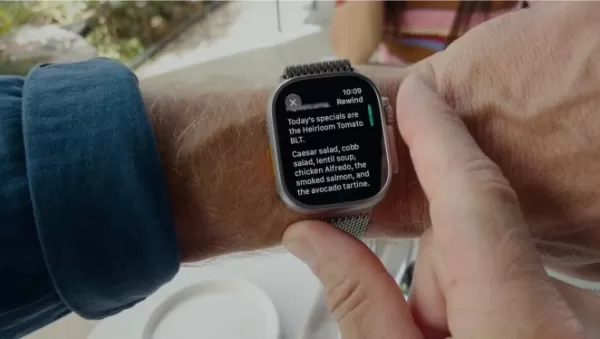
Apple is pushing consumers to embrace a new norm: your devices are constantly listening.During Wednesday’s “Surprise and Shine” iPhone launch, which unveiled the latest hardware, the true revelation wasn’t the rumored foldable iPhone, but rather how
Apple Watch’s New AI Features Normalize Always-Listening Tech
Apple is pushing consumers to embrace a new norm: your devices are constantly listening.During Wednesday’s “Surprise and Shine” iPhone launch, which unveiled the latest hardware, the true revelation wasn’t the rumored foldable iPhone, but rather how
 OpenAI’s first hardware device reportedly a mobile, screenless speaker
Reports indicate OpenAI’s initial hardware venture is a mobile smart speaker featuring integrated AI that syncs with ChatGPT to deliver various home automation services.According to a Tuesday Bloomberg report, the device, currently in development, is
OpenAI’s first hardware device reportedly a mobile, screenless speaker
Reports indicate OpenAI’s initial hardware venture is a mobile smart speaker featuring integrated AI that syncs with ChatGPT to deliver various home automation services.According to a Tuesday Bloomberg report, the device, currently in development, is
 Tony Fadell on why the first wave of AI gadgets failed — and what comes next
As Tony Fadell steps onto the stage at the inaugural MIT Future Fest, he displays a slide featuring three discontinued, heavily hyped AI devices: the Rabbit R1, the Humane AI pin, and the Limitless pendant.“These represented the initial generation of
Tony Fadell on why the first wave of AI gadgets failed — and what comes next
As Tony Fadell steps onto the stage at the inaugural MIT Future Fest, he displays a slide featuring three discontinued, heavily hyped AI devices: the Rabbit R1, the Humane AI pin, and the Limitless pendant.“These represented the initial generation of

2026 Latest Top-rated AI Illustration Tools: Our curated list features the best powerfully designed tools for creating stunning editorial scenes and eye-catching cover art quickly. Each option has gone through rigorous real-world tests, offering a free vs paid comparison to help you find the perfect match for your workflow. Try these must-try solutions today to unlock your AI edge and boost your creative productivity. Explore now at XIX.AI.
10 tools
xix.ai

2026 Latest Top-Rated Best AI Tutors for Exam Prep are here on XIX.AI! Our curated list features powerful game-changing tools that offer free vs paid comparison, real-world tests, and weekly updated rankings. They help boost your writing efficiency, simplify complex topic learning, and unlock your academic potential. Explore now to Discover your perfect exam prep tool and Start creating today to Unlock your AI edge!
10 tools
xix.ai

2026 Latest Best Top-Rated AI Budget Planning Tools for Personal Money Management are here on XIX.AI! This curated collection features powerful, game-changing solutions that help you conduct real-world tests, understand spending habits, and create personalized plans to boost productivity. Enjoy a free vs paid comparison along with detailed rankings. Must-try tools designed to simplify money management and unlock your AI edge. Explore now!
11 tools
xix.ai

2026 Latest Best Top-Rated AI Sleep Tracking Assistants curated for ultimate recovery. This fully updated weekly guide features powerful tools that deliver real-world tests, free vs paid comparison, and detailed rankings to help you find the must-try solution that boosts sleep quality and supports better bedtime habits. Explore now at XIX.AI to Unlock your AI edge.
10 tools
xix.ai

2026 Latest Best Top-Rated AI SQL Copilots for Product and Revenue Analytics! XIX.AI has curated a powerful, game-changing collection of must-try tools that undergo real-world tests through weekly updated rankings. These tools help users boost productivity significantly by accelerating data analysis, streamlining complex queries, and generating accurate insights to drive smarter business decisions. Explore now to Discover your perfect tool for unlocking your AI edge!
14 tools
xix.ai

2026 Latest Best Top-Rated AI Homework Helpers That Teach Core Concepts Not Just Answers Powerful Tools for Students Must-Try Curated List Weekly Updated Free vs Paid Comparison Real-World Tests Accurate Rankings to Help You Unlock Your Full Learning Potential Explore now to Discover your perfect tool for smarter studying.
10 tools
xix.ai












