


 Home
Home
Judge Approves Major Settlement in Anthropic Book Plagiarism Case, Ordering Over $1.5 Billion in Damages

A copyright dispute that has dominated the entire AI sector has finally reached a conclusion. According to a report from Associated Press based in San Francisco, a federal judge has authorized a $1.5 billion settlement agreement for Anthropic. The artificial intelligence company will be required to pay roughly $3,000 per book to thousands of authors who had their works used without permission to train its Claude chatbot.
In the ruling issued on Monday, district court judge Araceli Martínez-Olguín stated that this class-action settlement offers substantial relief to the affected authors and publishers. The distribution process is now well defined — approximately 91% of the more than 482,000 books covered by the decision have already been claimed by their respective authors or publishers, who are now eligible to receive compensation.
Justin Nelson, the lead attorney representing the plaintiffs, said in a statement that this settlement represents the largest copyright recovery case ever recorded. He also expressed optimism about the prompt distribution of funds to all affected parties. The significance of this claim lies in the fact that it highlights the scale of compensation involved in an AI training data infringement lawsuit and places such cases at the forefront of copyright jurisprudence.
Examining the journey that led to this ruling reveals the legal principles underlying the settlement. Last September, U.S. District Court Judge William Alsup in San Francisco granted preliminary approval before stepping down from his position. Earlier that same summer, Alsup had issued a mixed ruling: he ruled that using copyrighted books to train AI chatbots was not unlawful, but he also determined that Anthropic had acquired millions of books through unauthorized sources, which he considered unacceptable. The distinction between lawful training practices and illegal data acquisition became the key factor in determining the outcome of the case.
In response to the ruling, Anthropic emphasized the legality of its training methods. Aparna Sridhar, the company’s Deputy General Counsel, stated that the decision marks an important milestone, confirming that using books to train AI falls under fair use under copyright law. For both Anthropic and the broader large model industry, this recognition is far more valuable than the $1.5 billion settlement amount itself — it signals that the judiciary has endorsed the training activities that have already taken place.
While the $1.5 billion settlement has been approved by the judge and the compensation of $3,000 per book is set to be distributed, the true lasting impact of this lawsuit lies not in the monetary payment but in two clear principles it establishes: obtaining data through piracy comes with severe consequences and is unjustifiable, whereas training models using lawful methods is increasingly being recognized as fair use by courts. Every AI company must navigate carefully within the boundaries defined by these two principles moving forward.
Related article
 Moonshot AI's Kimi Racks Up Over $3.5 Billion Series F, Hitting $35 Billion Valuation
Moonshot AI’s Kimi has successfully closed its Series F funding round, securing over $3.5 billion and achieving a post-money valuation of $35 billion, as reported by Sci-Tech Daily.Driven by subscription demand that surpassed targets by more than thr
After spending millions on AI, Rippling launches employee ROI tool
Rippling, a leading HR software provider, has launched AI Spend Console, a tool designed to curb tokenmaxxing by helping organizations monitor and control their AI expenditures. A standout feature allows companies to track spending by individual empl
Google tests AI-driven gaming platform
Game creation barriers are falling fast as AI opens development to those without coding, design, or art backgrounds. Google Labs recently demonstrated this with a new experiment.On Wednesday, Google’s experimental platform launched Playground, an AI-
Related Special Topic Recommendations
writing
Moonshot AI's Kimi Racks Up Over $3.5 Billion Series F, Hitting $35 Billion Valuation
Moonshot AI’s Kimi has successfully closed its Series F funding round, securing over $3.5 billion and achieving a post-money valuation of $35 billion, as reported by Sci-Tech Daily.Driven by subscription demand that surpassed targets by more than thr
After spending millions on AI, Rippling launches employee ROI tool
Rippling, a leading HR software provider, has launched AI Spend Console, a tool designed to curb tokenmaxxing by helping organizations monitor and control their AI expenditures. A standout feature allows companies to track spending by individual empl
Google tests AI-driven gaming platform
Game creation barriers are falling fast as AI opens development to those without coding, design, or art backgrounds. Google Labs recently demonstrated this with a new experiment.On Wednesday, Google’s experimental platform launched Playground, an AI-
Related Special Topic Recommendations
writing
 Best AI Editing Tools for ESL Writers: Improve Tone, Grammar, and Flow
2026 Latest Best Top-Rated AI Editing Tools for ESL Writers are here on XIX.AI! This curated list features powerful game-changing tools that go through real-world tests to ensure accuracy. You can find a free vs paid comparison alongside detailed rankings to help you pick the must-try solution that boosts your writing tone, grammar, and flow perfectly. Explore now to Unlock your AI edge!
 9 tools
 xix.ai
Software Development
Best AI Bug Triage Tools for Engineering Teams
xix.ai
Software Development
Best AI Bug Triage Tools for Engineering Teams
2026 Latest Best Top-Rated AI Bug Triage Tools for Engineering Teams! XIX.AI has curated a powerful, game-changing collection of must-try tools that go through rigorous real-world tests to deliver accurate issue analysis and efficient resolution. Get a free vs paid comparison along with detailed rankings to help you find the perfect solution that boosts your team’s productivity significantly. Explore now to unlock your AI edge!
9 tools
xix.ai
Image editing
Best AI Portrait Enhancers: Improve Lighting, Skin Tone, and Sharpness
2026 Latest Best Top-rated AI Portrait Enhancers curated for ultimate image quality. These powerful tools deliver game-changing results by boosting lighting, skin tone, and sharpness effortlessly, perfect for creators needing to enhance photos quickly. XIX.AI provides a free vs paid comparison along with real-world tests and weekly updated rankings. Discover your perfect tool to unlock your AI edge today. Explore now!
7 tools
xix.ai
writing
AI Technical Documentation Tools for API Guides, Release Notes, and Onboarding Docs
2026 Latest Best Top-rated AI Technical Documentation Tools for API Guides Release Notes and Onboarding Docs. This curated list features powerful game-changing solutions that streamline content creation boost writing efficiency and save time across all project phases. XIX.AI provides weekly updated rankings along with free vs paid comparison results from real-world tests. Explore now to Discover your perfect tool and Unlock your AI edge.
10 tools
xix.ai
design
AI Dashboard Wireframing Tools for B2B Product Teams
2026 Latest Best AI Dashboard Wireframing Tools for B2B Product Teams! XIX.AI has curated a top-rated list of powerful, game-changing tools that go through rigorous real-world tests to deliver exceptional results. You’ll find detailed free vs paid comparison insights and updated weekly rankings showing which options offer the most value for streamlining product design workflows and boosting overall productivity. Must-try choices are clearly highlighted to help you unlock your AI edge. Explore now!
11 tools
xix.ai
Business
AI Proposal Writing Assistants for Agencies: Draft Better Client Pitches
2026 Latest Best AI Proposal Writing Assistants for Agencies: XIX.AI curates a top-rated list of powerful tools that go through rigorous real-world tests to deliver game-changing results. These must-try solutions help agencies craft highly persuasive client pitches faster, boosting productivity significantly. Get a free vs paid comparison and see the rankings for yourself before exploring now to find your perfect tool.
8 tools
xix.ai

 Comments (0)
0/500
Comments (0)
0/500
A copyright dispute that has dominated the entire AI sector has finally reached a conclusion. According to a report from Associated Press based in San Francisco, a federal judge has authorized a $1.5 billion settlement agreement for Anthropic. The artificial intelligence company will be required to pay roughly $3,000 per book to thousands of authors who had their works used without permission to train its Claude chatbot.
In the ruling issued on Monday, district court judge Araceli Martínez-Olguín stated that this class-action settlement offers substantial relief to the affected authors and publishers. The distribution process is now well defined — approximately 91% of the more than 482,000 books covered by the decision have already been claimed by their respective authors or publishers, who are now eligible to receive compensation.
Justin Nelson, the lead attorney representing the plaintiffs, said in a statement that this settlement represents the largest copyright recovery case ever recorded. He also expressed optimism about the prompt distribution of funds to all affected parties. The significance of this claim lies in the fact that it highlights the scale of compensation involved in an AI training data infringement lawsuit and places such cases at the forefront of copyright jurisprudence.
Examining the journey that led to this ruling reveals the legal principles underlying the settlement. Last September, U.S. District Court Judge William Alsup in San Francisco granted preliminary approval before stepping down from his position. Earlier that same summer, Alsup had issued a mixed ruling: he ruled that using copyrighted books to train AI chatbots was not unlawful, but he also determined that Anthropic had acquired millions of books through unauthorized sources, which he considered unacceptable. The distinction between lawful training practices and illegal data acquisition became the key factor in determining the outcome of the case.
In response to the ruling, Anthropic emphasized the legality of its training methods. Aparna Sridhar, the company’s Deputy General Counsel, stated that the decision marks an important milestone, confirming that using books to train AI falls under fair use under copyright law. For both Anthropic and the broader large model industry, this recognition is far more valuable than the $1.5 billion settlement amount itself — it signals that the judiciary has endorsed the training activities that have already taken place.
While the $1.5 billion settlement has been approved by the judge and the compensation of $3,000 per book is set to be distributed, the true lasting impact of this lawsuit lies not in the monetary payment but in two clear principles it establishes: obtaining data through piracy comes with severe consequences and is unjustifiable, whereas training models using lawful methods is increasingly being recognized as fair use by courts. Every AI company must navigate carefully within the boundaries defined by these two principles moving forward.








 Moonshot AI's Kimi Racks Up Over $3.5 Billion Series F, Hitting $35 Billion Valuation
Moonshot AI’s Kimi has successfully closed its Series F funding round, securing over $3.5 billion and achieving a post-money valuation of $35 billion, as reported by Sci-Tech Daily.Driven by subscription demand that surpassed targets by more than thr
Moonshot AI's Kimi Racks Up Over $3.5 Billion Series F, Hitting $35 Billion Valuation
Moonshot AI’s Kimi has successfully closed its Series F funding round, securing over $3.5 billion and achieving a post-money valuation of $35 billion, as reported by Sci-Tech Daily.Driven by subscription demand that surpassed targets by more than thr
 After spending millions on AI, Rippling launches employee ROI tool
Rippling, a leading HR software provider, has launched AI Spend Console, a tool designed to curb tokenmaxxing by helping organizations monitor and control their AI expenditures. A standout feature allows companies to track spending by individual empl
After spending millions on AI, Rippling launches employee ROI tool
Rippling, a leading HR software provider, has launched AI Spend Console, a tool designed to curb tokenmaxxing by helping organizations monitor and control their AI expenditures. A standout feature allows companies to track spending by individual empl
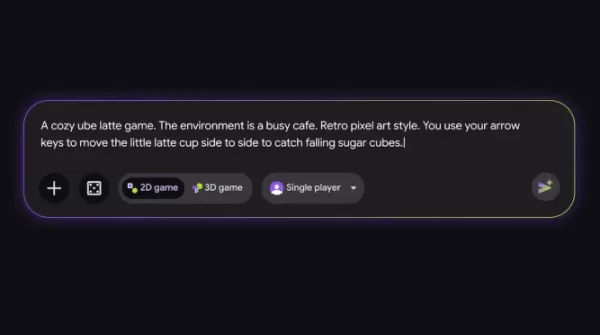 Google tests AI-driven gaming platform
Game creation barriers are falling fast as AI opens development to those without coding, design, or art backgrounds. Google Labs recently demonstrated this with a new experiment.On Wednesday, Google’s experimental platform launched Playground, an AI-
Google tests AI-driven gaming platform
Game creation barriers are falling fast as AI opens development to those without coding, design, or art backgrounds. Google Labs recently demonstrated this with a new experiment.On Wednesday, Google’s experimental platform launched Playground, an AI-
2026 Latest Best Top-Rated AI Editing Tools for ESL Writers are here on XIX.AI! This curated list features powerful game-changing tools that go through real-world tests to ensure accuracy. You can find a free vs paid comparison alongside detailed rankings to help you pick the must-try solution that boosts your writing tone, grammar, and flow perfectly. Explore now to Unlock your AI edge!
9 tools
xix.ai

2026 Latest Best Top-Rated AI Bug Triage Tools for Engineering Teams! XIX.AI has curated a powerful, game-changing collection of must-try tools that go through rigorous real-world tests to deliver accurate issue analysis and efficient resolution. Get a free vs paid comparison along with detailed rankings to help you find the perfect solution that boosts your team’s productivity significantly. Explore now to unlock your AI edge!
9 tools
xix.ai

2026 Latest Best Top-rated AI Portrait Enhancers curated for ultimate image quality. These powerful tools deliver game-changing results by boosting lighting, skin tone, and sharpness effortlessly, perfect for creators needing to enhance photos quickly. XIX.AI provides a free vs paid comparison along with real-world tests and weekly updated rankings. Discover your perfect tool to unlock your AI edge today. Explore now!
7 tools
xix.ai
2026 Latest Best Top-rated AI Technical Documentation Tools for API Guides Release Notes and Onboarding Docs. This curated list features powerful game-changing solutions that streamline content creation boost writing efficiency and save time across all project phases. XIX.AI provides weekly updated rankings along with free vs paid comparison results from real-world tests. Explore now to Discover your perfect tool and Unlock your AI edge.
10 tools
xix.ai

2026 Latest Best AI Dashboard Wireframing Tools for B2B Product Teams! XIX.AI has curated a top-rated list of powerful, game-changing tools that go through rigorous real-world tests to deliver exceptional results. You’ll find detailed free vs paid comparison insights and updated weekly rankings showing which options offer the most value for streamlining product design workflows and boosting overall productivity. Must-try choices are clearly highlighted to help you unlock your AI edge. Explore now!
11 tools
xix.ai

2026 Latest Best AI Proposal Writing Assistants for Agencies: XIX.AI curates a top-rated list of powerful tools that go through rigorous real-world tests to deliver game-changing results. These must-try solutions help agencies craft highly persuasive client pitches faster, boosting productivity significantly. Get a free vs paid comparison and see the rankings for yourself before exploring now to find your perfect tool.
8 tools
xix.ai












