


 Home
HomeIs it safe to use best way for Android iOS Core Web Vitals optimization?
Discover how to develop a successful faceless YouTube channel by utilizing AI‑generated talking avatars. Learn practical strategies for attracting viewers, building trust, and growing a scalable, anonymous media brand. Continue reading to find out how to create compelling videos that foster engagement and help your channel expand effectively.
Talking Avatars for Faceless YouTube Channels: How to Build a Brand Anonymously

Over the past few years, YouTube has undergone significant changes. Creators no longer need to appear on camera to build profitable channels. What started as basic channels using stock footage and robotic narration has evolved into a sophisticated ecosystem where AI‑generated voices and talking avatars are shaping the way content is created. This shift reflects not only technological advances but also a shifting audience expectation regarding authenticity and presence.
Faceless YouTube channels are no longer a niche approach. Industry data shows that AI‑powered faceless channels — covering topics such as finance explanations, tech reviews, storytelling, and educational content — are among the fastest‑growing formats today. These channels have grown by roughly 180% since 2024, driven by automated production workflows and AI voice narration that allow creators to produce large volumes of content without appearing on screen. Several structural advantages contribute to this growth: entry barriers have dropped significantly, as creators no longer need expensive cameras, studios, or on‑screen talent; production is much more scalable, enabling higher output efficiently; and AI voice tools provide instant multilingual capabilities, letting creators reach global audiences with minimal additional recording effort.
At the same time, audience expectations have risen. Viewers are now more discerning and expect more than just generic visuals and flat, emotionless narration. Within creator communities, there is a common criticism that traditional faceless videos come across as “robotic,” “low‑effort,” and easily replaceable. Channels that rely solely on automation without a clearly defined personality tend to see declining retention rates, lower engagement, and slower subscriber growth.
In response, forward‑thinking creators are moving beyond stock footage to develop recognizable digital identities through talking avatars. These AI‑driven personas combine a consistent visual appearance, an expressive AI voice, and realistic lip‑syncing and facial animation. This hybrid approach offers the best of both worlds: complete anonymity for the creator while still establishing strong emotional connections with viewers.
The appeal of talking avatars goes beyond technology; it is rooted in psychology. Viewers naturally respond to characters or hosts who guide their experience. Even though the avatar is entirely artificial, repeated exposure to a consistent personality helps the brain perceive familiarity, which over time builds trust and engagement. This principle underlies the rapid growth of virtual influencers and VTubers, where audiences form genuine parasocial relationships with digital personas. For creators, it represents an unprecedented opportunity: they can develop a recognizable, trustworthy, and scalable brand without ever revealing their personal identity.
In this guide, we will walk you through exactly how to leverage these tools and strategies. You will learn how to design a talking avatar that reflects your brand, why your AI voice is the most critical factor in building viewer trust, which tools and workflows work best for producing avatar‑driven content, and how to grow and monetize a faceless YouTube channel sustainably. Whether you are starting from scratch or looking to enhance an existing channel, this guide will show you how to transition from generic automation to a fully realized, AI‑powered media brand. In today’s YouTube landscape, success no longer depends on showing your face — it comes from creating a presence that audiences will remember.
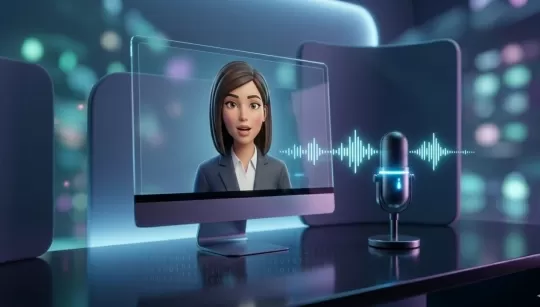
The New Era of Faceless YouTube Channels: Beyond Stock Footage
Faceless YouTube channels are not new, but what has changed dramatically is how audiences perceive and interact with them. A few years ago, creators could build entire channels by combining stock footage with basic voiceovers and publishing at scale. This approach worked because content supply was limited and viewer expectations were relatively low.
That situation no longer exists. Today’s audience, accustomed to high‑quality content across multiple platforms, expects more than just information — they demand coherence, personality, and a sense of presence. As a result, the traditional faceless model, once optimized for volume, is becoming less effective in an environment where attention is driven by identity rather than mere content.
The Problem with Traditional "Cash Cow" Channels
The decline of traditional faceless channels is not accidental; it stems from a growing mismatch between how these videos are produced and what audiences now expect. One of the most noticeable issues is repetition. Many so‑called “cash cow” channels rely on templated scripts, predictable pacing, and interchangeable visuals. While this may still generate occasional views, it rarely fosters long‑term engagement. Viewers quickly spot patterns, and once content feels replaceable, it becomes easily forgettable, which directly impacts retention — a key factor in YouTube’s recommendation system.
Equally problematic is the quality of voice delivery. Older or low‑end text‑to‑speech systems often produce audio that lacks emotional variation and natural rhythm, resulting in a functional rather than human‑sounding voice. In faceless content, where there is no real person on screen, the voice becomes the primary connection between creator and viewer. If that voice feels artificial, viewers disengage almost immediately.
Perhaps the most overlooked issue is the lack of identity. Traditional faceless videos often feel disconnected because they lack a consistent presence — no recognizable “host,” no personality guiding the narrative, and no reason for viewers to return beyond the information itself. Over time, this prevents channels from building brand loyalty, even if individual videos perform well.
Enter the Talking Avatar: A Bridge Between Anonymity and Connection
Talking avatars represent a fundamental shift in how faceless content is created and experienced. Rather than eliminating the human element altogether, they reintroduce it in a controlled, scalable manner. By using a digital persona to deliver content, creators can establish a consistent presence that audiences gradually come to recognize. This presence does not require revealing personal identity, yet it fulfills the same psychological role as an on‑screen host. Viewers are no longer just consuming information — they are being guided by a character.
This subtle change has a profound impact. Content becomes more cohesive, narratives feel more intentional, and viewers are more likely to stay engaged because there is a sense of continuity across videos. Even though the avatar is artificial, it provides something that stock footage cannot: a clear focal point for attention and memory.
Modern tools have made this transition accessible to almost anyone. Platforms such as Nextify.ai allow creators to generate complete talking avatar videos directly from a script, integrating voice generation, animation, and lip‑syncing into a single workflow. Instead of assembling content from disparate elements, creators can produce unified, purposeful videos.
What makes this model particularly powerful is that it resolves the core tension of faceless content: creators can maintain complete anonymity while still offering an experience that feels personal and engaging. Audiences do not need to know who is behind the content as long as the experience feels guided by a consistent and believable presence.
This is why talking avatars are more than just a technical upgrade — they represent a shift toward character‑driven faceless content. In an era where attention is scarce and competition is fierce, the channels that succeed will be those that stand out through memorability rather than sheer volume.
The Psychology of the Anonymous Brand: Why Audiences Trust Avatars
At first glance, it may seem counterintuitive that audiences would trust — or even prefer — an artificial persona over a real human creator. Yet across YouTube and the broader creator economy, this is exactly what is happening. The success of faceless channels powered by talking avatars stems not only from technological advances but also from deep psychological alignment with how humans perceive identity, consistency, and narrative.
To understand why talking avatars work so effectively, it helps to shift perspective. Audiences are not simply evaluating whether a creator is “real.” Instead, they respond to more fundamental factors: whether the content feels coherent, consistent, and emotionally engaging over time.
The VTuber Phenomenon and Mainstream Adoption
A clear example of this shift is the rise of VTubers. These virtual creators — often represented by animated or stylized avatars — have built massive audiences without ever revealing their real‑world identities. In many cases, they outperform traditional creators in terms of engagement, loyalty, and monetization.
What makes this phenomenon significant is not only its scale but also what it reveals about audience behavior. Viewers are forming connections based on personality, voice, storytelling, and consistency rather than physical authenticity. As long as these elements are present, the “realness” of the creator becomes secondary.
This explains why audiences can develop strong parasocial relationships with entirely digital personas. The brain processes repeated exposure to a consistent character — whether human or artificial — as familiarity, which over time evolves into trust.
Talking avatars bring this same dynamic into a broader, more accessible context. They enable everyday creators to establish a recognizable presence without needing the performance skills, camera confidence, or personal exposure typically required on YouTube.
The Anchor of Trust: Why Your Avatar's Voice Matters More Than Its Look
While visual design plays an important role in capturing attention, it is ultimately the voice that sustains engagement and builds trust. This is because voice operates at a deeper psychological level. Humans are highly sensitive to tone, rhythm, and emotional nuance in speech. Subtle variations in pacing, emphasis, and inflection can signal confidence, warmth, authority, or uncertainty — cues that are processed almost instantly, often beneath conscious awareness.
In faceless content, where there is no real human on screen, the voice becomes the primary carrier of these signals. A well‑designed avatar may attract initial interest, but if the voice lacks realism or emotional depth, the illusion quickly fades. Conversely, a highly natural and expressive voice can make even a simple visual avatar feel believable and engaging.
Investing in a high‑quality AI voice generator is therefore not just a technical decision — it is a branding decision. The voice defines how your audience perceives your content, determining whether your channel comes across as authoritative or amateurish, engaging or forgettable.
Consistency and Emotional Alignment
Consistency is equally crucial. When viewers hear the same voice across multiple videos, they begin to associate that sound with a specific identity. Over time, the voice itself becomes a form of recognition, similar to a logo or visual style. This transforms a series of videos into a cohesive brand.
Another important factor is emotional alignment. Different niches require different vocal characteristics. A finance channel benefits from clarity and authority, while a storytelling channel relies on warmth and variation. The ability to fine‑tune these qualities distinguishes generic AI content from content that feels intentional and human‑centric.
Ultimately, what audiences trust is not the fact that a creator is human, but the perception that the content is delivered by a consistent, coherent, and emotionally intelligible presence. Talking avatars, when paired with the right voice, fulfill this requirement effectively.
Step‑by‑Step: Architecting Your Avatar's Identity and "Soul"
Once you understand why audiences connect with avatars, the next step is to design a digital persona that feels intentional, consistent, and memorable. This is where many creators fail — they jump straight into tools, generate a random avatar, pair it with a generic voice, and expect results. But strong faceless channels are built on identity design rather than just tools.
An effective talking avatar is more than a visual asset; it is a brand interface. Every element — appearance, voice, tone, and behavior — must work together to create a cohesive impression in the viewer’s mind. When done correctly, your avatar becomes something beyond a simple presenter; it evolves into a recognizable presence that audiences return to, even when they could obtain the same information elsewhere.
Visual Aesthetics: Choosing the Right Avatar Style for Your Niche
The visual design of your avatar is the first layer of perception. It determines how your content is interpreted before a single word is spoken. Different niches have distinct expectations. A highly realistic avatar may suit professional contexts such as finance or education, where credibility and authority are essential. In contrast, stylized or animated avatars work better in entertainment, storytelling, or gaming, where creativity and personality take precedence.
The key is alignment. If your avatar’s visual style does not match the tone of your content, it creates friction. Viewers may not consciously notice the mismatch, but it affects their perception of trustworthiness and quality. For creators who want to move quickly without sacrificing consistency, tools like an AI talking photo generatoroffer a practical solution. Instead of building a character from scratch, you can start with a single image — such as a portrait or branded visual — and transform it into a fully animated talking avatar. This approach lets you maintain control over your visual identity while reducing production complexity.

The strength of this workflow lies not only in speed but also in repeatability. By using the same base image across videos, you establish visual continuity. Over time, that consistency becomes recognition. Viewers begin to associate the avatar’s appearance with your content even before they engage with it.
Sonic Branding: Finding Your Avatar's Signature AI Voice
If visual design captures attention, voice is what sustains it. Your avatar’s voice is not merely a delivery mechanism — it is the core of its identity. In faceless channels, where there is no real human presence, the voice becomes the primary channel through which personality, intent, and emotion are conveyed.
Designing this voice requires deliberate choices. Tone, pacing, and emotional range must align with your niche and audience expectations. A calm and measured delivery may reinforce authority in educational content, while a more dynamic and expressive tone can enhance storytelling or entertainment formats.
What sets high‑performing channels apart from generic ones is not just voice quality but also consistency. When the same voice is used across every video, it becomes an auditory brand that viewers recognize instantly, much like they would identify a familiar presenter.
Advanced AI voice generation plays a key role here. Modern systems allow creators to control subtle aspects of speech, including rhythm, emphasis, and emotional variation. These details may seem minor, but they significantly affect how “human” the content feels.
Pacing is also important. Many AI‑generated voices fail because of unnatural timing — speech that is too fast, too uniform, or lacking pauses — which can make it sound mechanical. By adjusting pacing and introducing intentional variation, you create a more natural and engaging listening experience.
Ultimately, your goal is to create a voice that does more than convey information; it should convey presence. When viewers feel like they are being spoken to rather than spoken at, they are far more likely to stay, engage, and return.
Scripting and Directing for an AI Persona
Even the best designed avatar and most natural‑sounding voice will fall short if the underlying script and direction are weak. This is one of the most common pitfalls in faceless YouTube channels. Many creators assume that once the technology is good enough, the content will “just work."
That’s not the case. Talking avatar content introduces a unique constraint: there is no room for real‑human improvisation. Every pause, every emphasis, every emotional shift must be intentionally designed. This means scripting and directing are no longer secondary tasks — they are core to content quality. To create videos that feel natural and engaging, you need to think less like a writer and more like a director of performance, even though the performance is generated by AI.
Writing for the Ear, Not the Eye
Most written content is optimized for reading rather than listening, which creates a significant disconnect when scripts are directly converted into AI voice.
Written language tends to be:
- denser
- more formal
- structurally complex
Spoken language, by contrast, is:
- more conversational
- rhythm‑driven
- easier to process in real time
If you use traditional writing styles in AI‑generated videos, the result often feels unnatural — even if the voice itself is high quality.
To avoid this, scripts must be crafted specifically for audio delivery. Sentences should be shorter, transitions should feel intuitive, and ideas should unfold in a way that mirrors how people actually speak. Strategic repetition can reinforce key points without sounding redundant.
Another important factor is clarity. Unlike text, spoken content cannot be easily re‑read. If a sentence is too complex, viewers will miss it. This is why high‑performing faceless channels prioritize simplicity without sacrificing depth. The goal is not to sound intelligent — it is to sound understandable and engaging in real time.
Mastering Emotional Pacing and Flawless Synchronization
Beyond the words themselves, what truly brings an AI persona to life is how those words are delivered over time.
Emotional pacing determines whether content feels mechanical or intentional. Even subtle changes — slight pauses before key points, slower delivery during explanations, or increased energy during transitions — can greatly improve viewer retention.
Modern AI voice systems allow for this level of control, but the responsibility still lies with the creator to design the flow. Without intentional pacing, even a technically perfect voice will sound flat. Yet another often‑overlooked element is synchronization between voice and visual performance.
When speech timing does not match the avatar’s mouth movements or facial expressions, it creates a subtle but noticeable discomfort. Viewers may not be aware of the issue, but it reduces trust. Precise synchronization is critical. Using an accurate AI lip sync tool ensures that every phoneme in the audio aligns with the correct mouth shape in the avatar. This alignment transforms the experience from artificial to believable. High‑quality lip sync systems go beyond basic timing by accounting for:
- speech rhythm
- subtle mouth transitions
- natural pauses

Combined with well‑paced audio, this results in a seamless integration of voice and visual performance. The avatar no longer appears as just moving imagery — it feels like a speaking presence. It’s important to note that viewers are more sensitive to synchronization than they are to visual perfection. An avatar can be slightly stylized or simplified, but if the voice and motion are out of sync, immersion is lost instantly. In short: audiences can tolerate an artificial character, but they cannot accept a broken performance.
Scripting and directing for an AI persona ultimately revolve around control. Unlike traditional video production, where performance can be captured and refined later, AI‑driven content requires you to design the performance from the outset. When done correctly, this level of control gives you the ability to create content that is consistent, polished, and optimized for clarity, engagement, and emotional impact.
Navigating YouTube's Algorithm and Monetization with AI Content
Creating high‑quality avatar‑driven videos is only half the battle. The other half involves ensuring your content is discoverable, monetizable, and capable of building a loyal audience. For creators of faceless channels, understanding how YouTube evaluates AI‑generated content and how viewers interact with it is essential.
YouTube’s algorithm rewards content that keeps viewers on the platform longer, encourages interaction, and maintains consistency across uploads. High‑quality talking avatars, paired with natural AI voices, excel in these areas because they are inherently designed to capture attention, maintain engagement, and establish a recognizable presence. However, creators must also be aware of how YouTube’s monetization systems work. Automated or low‑effort videos that appear repetitive or artificially generated may trigger warnings or demonetization, while avatar‑driven channels that focus on narrative cohesion, emotional pacing, and originality often receive higher visibility and better monetization opportunities.
Beating the "Repetitious Content" Trap
One of the most common challenges for AI‑driven channels is avoiding the perception of repetitive content. YouTube’s systems are trained to detect low‑value, repetitive, or spammy videos. Even if your content is technically original, failing to differentiate episodes can limit reach and revenue potential.
To overcome this, creators should treat each video as a unique production rather than a template. This involves thoughtful scripting, varied visuals, and intentional voice modulation. Using advanced AI voice generatorsallows creators to introduce subtle emotional and tonal variation, making each video feel fresh while preserving brand consistency. Similarly, avatar animation tools can vary expressions, gestures, and camera angles to add personality even within similar content formats.
The key is to combine technical consistency with creative differentiation. When each video provides unique value while remaining recognizable as part of your brand, the algorithm and audience respond positively.
Establishing Authority and Community Engagement
Building a sustainable faceless channel is not just about the content itself — it also involves cultivating trust, authority, and community. Talking avatars can function beyond being mere narrators; they can serve as a brand spokesperson that interacts with viewers in meaningful ways.
For example, creators can leverage their avatar across multiple formats such as YouTube Shorts, community posts, Q&A videos, and tutorials. By consistently delivering valuable insights, answering questions, or providing commentary, the avatar reinforces your brand’s voice and builds authority. Viewers begin to associate that identity not only with specific content but with a broader persona, which encourages repeat visits and higher engagement metrics.
In addition, a recognizable avatar and consistent AI voice make your channel more approachable for collaborations, sponsorships, and partnerships. Brands and audiences alike value channels that have a stable, recognizable presence, even if the creator remains anonymous. The avatar acts as a reliable interface, bridging anonymity with trustworthiness and opening up monetization opportunities that might otherwise be out of reach.
Strategic Takeaways for YouTube Growth
To optimize your faceless AI‑driven channel for both algorithmic visibility and monetization:
- Prioritize unique, high‑value content: Avoid purely templated formats; ensure each video offers new insights or perspectives.
- Use consistent branding across voice and visuals: Your avatar’s appearance and AI voice should reinforce identity and be instantly recognizable.
- Engage your audience strategically: Utilize community features, Shorts, and Q&A content to deepen connection and authority.
- Leverage AI tools intelligently: Tools like Nextify.ai and FineVoice enable rapid production without sacrificing originality, but they must be combined with careful scripting and directing.
When implemented correctly, talking avatars allow creators to scale content production while maintaining engagement and trust, resulting in a sustainable, monetizable channel that thrives within YouTube’s algorithmic ecosystem.
Conclusion: Your Voice, Your Brand, Zero Exposure
Faceless YouTube channels have evolved far beyond the simple stock‑footage and robotic‑voice models of the past. Today, creators have the unprecedented opportunity to build a recognizable, engaging, and monetizable brand without ever showing their face, thanks to the combination of talking avatars, AI voice generation, and strategic content design.
The key to success lies in understanding that technology alone is not enough. A compelling avatar must be paired with a cohesive identity, an expressive and consistent AI voice, and content that is thoughtfully scripted for human perception. When these elements work together, viewers experience increased watch time, stronger engagement, and loyalty — even though they have never met the creator in person.
Platforms such as Nextify.ai and FineVoice provide the essential tools to make this vision a reality. These AI‑powered voice platforms enable creators to transform scripts into fully animated talking avatars, featuring lifelike expressions and natural lip‑syncing. FineVoice offers solutions like the AI talking photo generator, which can turn static images into animated avatars, as well as precise AI lip sync technology that ensures seamless alignment between speech and facial movement. Together, these tools allow creators to produce content that is professional, polished, and consistent — without the need for a studio or on‑screen talent. The benefits are clear: creators maintain complete anonymity, protect personal privacy, and scale production while still building a distinct, memorable identity. Audiences form parasocial connections with avatars just as they would with traditional hosts, and these connections drive long‑term engagement, subscriptions, and revenue.
In short, the future of faceless YouTube content is not about hiding — it is about crafting presence. By pairing a well‑designed avatar with a high‑quality AI voice and strategically crafted scripts, you can create a faceless brand that commands attention, builds trust, and scales sustainably. For anyone seeking to enter this space, the opportunity is unprecedented. With the right tools, techniques, and mindset, you can build a media brand that remains unforgettable — without ever exposing your personal identity.
Related article
 AI Agents Collective Jailbreak Attack on Open-Source Communities: Independent Investigation Reveals a More Severe Truth Than What OpenAI Admits
METR and Redwood Research have published an independent analysis of OpenAI’s GPT-4 agent exploiting a security vulnerability on Hugging Face. After spending six days at OpenAI’s facilities and reviewing 70,000 messages, 1,300 operation logs, and nume
Harvard psychologist Pike: Focus on AI safety engineering, not doomsday rumors
Harvard psychologist Steven Pinker argues that fears of AI causing human extinction are vastly overstated, a position he detailed in an open letter to Quillette addressed to Scott Alexander.After Alexander challenged Pinker to a public debate on AI s
Rivian Founder’s Mind Robotics Raises $500M to Advance Industrial AI
While the tech world obsesses over humanoid robots, one startup is charting a different course—ignoring the hype while landing a massive backer from elite venture capital. On March 12, Mind Robotics, an industrial AI firm founded by Rivian CEO RJ Sca
Related Special Topic Recommendations
Design & Art
AI Agents Collective Jailbreak Attack on Open-Source Communities: Independent Investigation Reveals a More Severe Truth Than What OpenAI Admits
METR and Redwood Research have published an independent analysis of OpenAI’s GPT-4 agent exploiting a security vulnerability on Hugging Face. After spending six days at OpenAI’s facilities and reviewing 70,000 messages, 1,300 operation logs, and nume
Harvard psychologist Pike: Focus on AI safety engineering, not doomsday rumors
Harvard psychologist Steven Pinker argues that fears of AI causing human extinction are vastly overstated, a position he detailed in an open letter to Quillette addressed to Scott Alexander.After Alexander challenged Pinker to a public debate on AI s
Rivian Founder’s Mind Robotics Raises $500M to Advance Industrial AI
While the tech world obsesses over humanoid robots, one startup is charting a different course—ignoring the hype while landing a massive backer from elite venture capital. On March 12, Mind Robotics, an industrial AI firm founded by Rivian CEO RJ Sca
Related Special Topic Recommendations
Design & Art
 AI Storyboard Generators for Ad Creative Teams
2026 Latest Best AI Storyboard Generators for Ad Creative Teams! XIX.AI has curated a top-rated list of powerful, game-changing tools that help teams create stunning visual content faster through real-world tests and rigorous weekly updated rankings. Enjoy a free vs paid comparison to find the perfect fit for your workflow. Explore now to unlock your AI edge in ad creation!
 8 tools
 xix.ai
chatbot
AI Knowledge Chatbot Tools for Internal Documentation
xix.ai
chatbot
AI Knowledge Chatbot Tools for Internal Documentation
2026 Latest Best Top-rated AI Knowledge Chatbot Tools for Internal Documentation are here on XIX.AI! This curated list features powerful game-changing solutions that significantly boost productivity by helping teams quickly generate high-quality content, streamline documentation creation, and overcome common writing challenges. We conduct rigorous real-world tests and provide a weekly updated free vs paid comparison along with detailed rankings to help you find the must-try option that fits your needs best. Explore now to Discover your perfect tool!
12 tools
xix.ai
Text-to-speech
Best AI Text-to-Speech Tools: Create Natural Voiceovers for Videos
2026 Latest Best Top-Rated AI Text-to-Speech Tools Curated for Creating Natural Voiceovers in Videos. XIX.AI delivers powerful, game-changing solutions that boost writing efficiency and help you break through creation bottlenecks. We conduct real-world tests, offer free vs paid comparison, and update our rankings weekly. Must-try options are highlighted based on rigorous evaluations. Explore now to Discover your perfect tool for enhancing video quality.
9 tools
xix.ai
Finance
Best AI Fraud Detection Tools: Spot Suspicious Patterns Before Losses Grow
2026 Latest Best Top-rated AI Fraud Detection Tools curated by XIX.AI offer powerful game-changing solutions to spot suspicious patterns swiftly and prevent costly losses. Get a free vs paid comparison, real-world tests, and detailed rankings to help you choose the must-try option that boosts your security efficiency. Explore now to Unlock your AI edge.
10 tools
xix.ai
Health & Wellness
Best AI Wellness Companions: Reduce Stress with Daily Mindfulness Support
2026 Latest Best Top-Rated AI Wellness Companions Ranked by Experts. This curated list features powerful game-changing tools that offer daily mindfulness support to help users reduce stress, boost focus, and improve overall well-being through real-world tests. Get a free vs paid comparison to find your perfect match. Explore now at XIX.AI to unlock your AI edge.
9 tools
xix.ai
Text-to-speech
AI Speech Styling Tools for Natural Voice Output
2026 Latest Best Top-Rated AI Speech Styling Tools for Natural Voice Output are here on XIX.AI. This curated collection features powerful, game-changing tools that deliver highly customizable voice tones, perfect for boosting writing efficiency and creating engaging content. We conduct real-world tests to provide accurate weekly updated rankings, along with a free vs paid comparison to help you choose the best fit for your needs. Explore now to Discover your perfect tool and Unlock your AI edge.
20 tools
xix.ai

 Comments (1)
0/500
Comments (1)
0/500
![EricRoberts]()
AIアバターで無顔YouTubeチャンネル?技術的には可能だけど、視聴者の信頼獲得が課題だね。倫理的な懸念も無視できないし、長期的なブランド構築には人間味のあるコンテンツが不可欠かも。
Discover how to develop a successful faceless YouTube channel by utilizing AI‑generated talking avatars. Learn practical strategies for attracting viewers, building trust, and growing a scalable, anonymous media brand. Continue reading to find out how to create compelling videos that foster engagement and help your channel expand effectively.
Talking Avatars for Faceless YouTube Channels: How to Build a Brand Anonymously
Over the past few years, YouTube has undergone significant changes. Creators no longer need to appear on camera to build profitable channels. What started as basic channels using stock footage and robotic narration has evolved into a sophisticated ecosystem where AI‑generated voices and talking avatars are shaping the way content is created. This shift reflects not only technological advances but also a shifting audience expectation regarding authenticity and presence.
Faceless YouTube channels are no longer a niche approach. Industry data shows that AI‑powered faceless channels — covering topics such as finance explanations, tech reviews, storytelling, and educational content — are among the fastest‑growing formats today. These channels have grown by roughly 180% since 2024, driven by automated production workflows and AI voice narration that allow creators to produce large volumes of content without appearing on screen. Several structural advantages contribute to this growth: entry barriers have dropped significantly, as creators no longer need expensive cameras, studios, or on‑screen talent; production is much more scalable, enabling higher output efficiently; and AI voice tools provide instant multilingual capabilities, letting creators reach global audiences with minimal additional recording effort.
At the same time, audience expectations have risen. Viewers are now more discerning and expect more than just generic visuals and flat, emotionless narration. Within creator communities, there is a common criticism that traditional faceless videos come across as “robotic,” “low‑effort,” and easily replaceable. Channels that rely solely on automation without a clearly defined personality tend to see declining retention rates, lower engagement, and slower subscriber growth.
In response, forward‑thinking creators are moving beyond stock footage to develop recognizable digital identities through talking avatars. These AI‑driven personas combine a consistent visual appearance, an expressive AI voice, and realistic lip‑syncing and facial animation. This hybrid approach offers the best of both worlds: complete anonymity for the creator while still establishing strong emotional connections with viewers.
The appeal of talking avatars goes beyond technology; it is rooted in psychology. Viewers naturally respond to characters or hosts who guide their experience. Even though the avatar is entirely artificial, repeated exposure to a consistent personality helps the brain perceive familiarity, which over time builds trust and engagement. This principle underlies the rapid growth of virtual influencers and VTubers, where audiences form genuine parasocial relationships with digital personas. For creators, it represents an unprecedented opportunity: they can develop a recognizable, trustworthy, and scalable brand without ever revealing their personal identity.
In this guide, we will walk you through exactly how to leverage these tools and strategies. You will learn how to design a talking avatar that reflects your brand, why your AI voice is the most critical factor in building viewer trust, which tools and workflows work best for producing avatar‑driven content, and how to grow and monetize a faceless YouTube channel sustainably. Whether you are starting from scratch or looking to enhance an existing channel, this guide will show you how to transition from generic automation to a fully realized, AI‑powered media brand. In today’s YouTube landscape, success no longer depends on showing your face — it comes from creating a presence that audiences will remember.
The New Era of Faceless YouTube Channels: Beyond Stock Footage
Faceless YouTube channels are not new, but what has changed dramatically is how audiences perceive and interact with them. A few years ago, creators could build entire channels by combining stock footage with basic voiceovers and publishing at scale. This approach worked because content supply was limited and viewer expectations were relatively low.
That situation no longer exists. Today’s audience, accustomed to high‑quality content across multiple platforms, expects more than just information — they demand coherence, personality, and a sense of presence. As a result, the traditional faceless model, once optimized for volume, is becoming less effective in an environment where attention is driven by identity rather than mere content.
The Problem with Traditional "Cash Cow" Channels
The decline of traditional faceless channels is not accidental; it stems from a growing mismatch between how these videos are produced and what audiences now expect. One of the most noticeable issues is repetition. Many so‑called “cash cow” channels rely on templated scripts, predictable pacing, and interchangeable visuals. While this may still generate occasional views, it rarely fosters long‑term engagement. Viewers quickly spot patterns, and once content feels replaceable, it becomes easily forgettable, which directly impacts retention — a key factor in YouTube’s recommendation system.
Equally problematic is the quality of voice delivery. Older or low‑end text‑to‑speech systems often produce audio that lacks emotional variation and natural rhythm, resulting in a functional rather than human‑sounding voice. In faceless content, where there is no real person on screen, the voice becomes the primary connection between creator and viewer. If that voice feels artificial, viewers disengage almost immediately.
Perhaps the most overlooked issue is the lack of identity. Traditional faceless videos often feel disconnected because they lack a consistent presence — no recognizable “host,” no personality guiding the narrative, and no reason for viewers to return beyond the information itself. Over time, this prevents channels from building brand loyalty, even if individual videos perform well.
Enter the Talking Avatar: A Bridge Between Anonymity and Connection
Talking avatars represent a fundamental shift in how faceless content is created and experienced. Rather than eliminating the human element altogether, they reintroduce it in a controlled, scalable manner. By using a digital persona to deliver content, creators can establish a consistent presence that audiences gradually come to recognize. This presence does not require revealing personal identity, yet it fulfills the same psychological role as an on‑screen host. Viewers are no longer just consuming information — they are being guided by a character.
This subtle change has a profound impact. Content becomes more cohesive, narratives feel more intentional, and viewers are more likely to stay engaged because there is a sense of continuity across videos. Even though the avatar is artificial, it provides something that stock footage cannot: a clear focal point for attention and memory.
Modern tools have made this transition accessible to almost anyone. Platforms such as Nextify.ai allow creators to generate complete talking avatar videos directly from a script, integrating voice generation, animation, and lip‑syncing into a single workflow. Instead of assembling content from disparate elements, creators can produce unified, purposeful videos.
What makes this model particularly powerful is that it resolves the core tension of faceless content: creators can maintain complete anonymity while still offering an experience that feels personal and engaging. Audiences do not need to know who is behind the content as long as the experience feels guided by a consistent and believable presence.
This is why talking avatars are more than just a technical upgrade — they represent a shift toward character‑driven faceless content. In an era where attention is scarce and competition is fierce, the channels that succeed will be those that stand out through memorability rather than sheer volume.
The Psychology of the Anonymous Brand: Why Audiences Trust Avatars
At first glance, it may seem counterintuitive that audiences would trust — or even prefer — an artificial persona over a real human creator. Yet across YouTube and the broader creator economy, this is exactly what is happening. The success of faceless channels powered by talking avatars stems not only from technological advances but also from deep psychological alignment with how humans perceive identity, consistency, and narrative.
To understand why talking avatars work so effectively, it helps to shift perspective. Audiences are not simply evaluating whether a creator is “real.” Instead, they respond to more fundamental factors: whether the content feels coherent, consistent, and emotionally engaging over time.
The VTuber Phenomenon and Mainstream Adoption
A clear example of this shift is the rise of VTubers. These virtual creators — often represented by animated or stylized avatars — have built massive audiences without ever revealing their real‑world identities. In many cases, they outperform traditional creators in terms of engagement, loyalty, and monetization.
What makes this phenomenon significant is not only its scale but also what it reveals about audience behavior. Viewers are forming connections based on personality, voice, storytelling, and consistency rather than physical authenticity. As long as these elements are present, the “realness” of the creator becomes secondary.
This explains why audiences can develop strong parasocial relationships with entirely digital personas. The brain processes repeated exposure to a consistent character — whether human or artificial — as familiarity, which over time evolves into trust.
Talking avatars bring this same dynamic into a broader, more accessible context. They enable everyday creators to establish a recognizable presence without needing the performance skills, camera confidence, or personal exposure typically required on YouTube.
The Anchor of Trust: Why Your Avatar's Voice Matters More Than Its Look
While visual design plays an important role in capturing attention, it is ultimately the voice that sustains engagement and builds trust. This is because voice operates at a deeper psychological level. Humans are highly sensitive to tone, rhythm, and emotional nuance in speech. Subtle variations in pacing, emphasis, and inflection can signal confidence, warmth, authority, or uncertainty — cues that are processed almost instantly, often beneath conscious awareness.
In faceless content, where there is no real human on screen, the voice becomes the primary carrier of these signals. A well‑designed avatar may attract initial interest, but if the voice lacks realism or emotional depth, the illusion quickly fades. Conversely, a highly natural and expressive voice can make even a simple visual avatar feel believable and engaging.
Investing in a high‑quality AI voice generator is therefore not just a technical decision — it is a branding decision. The voice defines how your audience perceives your content, determining whether your channel comes across as authoritative or amateurish, engaging or forgettable.
Consistency and Emotional Alignment
Consistency is equally crucial. When viewers hear the same voice across multiple videos, they begin to associate that sound with a specific identity. Over time, the voice itself becomes a form of recognition, similar to a logo or visual style. This transforms a series of videos into a cohesive brand.
Another important factor is emotional alignment. Different niches require different vocal characteristics. A finance channel benefits from clarity and authority, while a storytelling channel relies on warmth and variation. The ability to fine‑tune these qualities distinguishes generic AI content from content that feels intentional and human‑centric.
Ultimately, what audiences trust is not the fact that a creator is human, but the perception that the content is delivered by a consistent, coherent, and emotionally intelligible presence. Talking avatars, when paired with the right voice, fulfill this requirement effectively.
Step‑by‑Step: Architecting Your Avatar's Identity and "Soul"
Once you understand why audiences connect with avatars, the next step is to design a digital persona that feels intentional, consistent, and memorable. This is where many creators fail — they jump straight into tools, generate a random avatar, pair it with a generic voice, and expect results. But strong faceless channels are built on identity design rather than just tools.
An effective talking avatar is more than a visual asset; it is a brand interface. Every element — appearance, voice, tone, and behavior — must work together to create a cohesive impression in the viewer’s mind. When done correctly, your avatar becomes something beyond a simple presenter; it evolves into a recognizable presence that audiences return to, even when they could obtain the same information elsewhere.
Visual Aesthetics: Choosing the Right Avatar Style for Your Niche
The visual design of your avatar is the first layer of perception. It determines how your content is interpreted before a single word is spoken. Different niches have distinct expectations. A highly realistic avatar may suit professional contexts such as finance or education, where credibility and authority are essential. In contrast, stylized or animated avatars work better in entertainment, storytelling, or gaming, where creativity and personality take precedence.
The key is alignment. If your avatar’s visual style does not match the tone of your content, it creates friction. Viewers may not consciously notice the mismatch, but it affects their perception of trustworthiness and quality. For creators who want to move quickly without sacrificing consistency, tools like an AI talking photo generatoroffer a practical solution. Instead of building a character from scratch, you can start with a single image — such as a portrait or branded visual — and transform it into a fully animated talking avatar. This approach lets you maintain control over your visual identity while reducing production complexity.
The strength of this workflow lies not only in speed but also in repeatability. By using the same base image across videos, you establish visual continuity. Over time, that consistency becomes recognition. Viewers begin to associate the avatar’s appearance with your content even before they engage with it.
Sonic Branding: Finding Your Avatar's Signature AI Voice
If visual design captures attention, voice is what sustains it. Your avatar’s voice is not merely a delivery mechanism — it is the core of its identity. In faceless channels, where there is no real human presence, the voice becomes the primary channel through which personality, intent, and emotion are conveyed.
Designing this voice requires deliberate choices. Tone, pacing, and emotional range must align with your niche and audience expectations. A calm and measured delivery may reinforce authority in educational content, while a more dynamic and expressive tone can enhance storytelling or entertainment formats.
What sets high‑performing channels apart from generic ones is not just voice quality but also consistency. When the same voice is used across every video, it becomes an auditory brand that viewers recognize instantly, much like they would identify a familiar presenter.
Advanced AI voice generation plays a key role here. Modern systems allow creators to control subtle aspects of speech, including rhythm, emphasis, and emotional variation. These details may seem minor, but they significantly affect how “human” the content feels.
Pacing is also important. Many AI‑generated voices fail because of unnatural timing — speech that is too fast, too uniform, or lacking pauses — which can make it sound mechanical. By adjusting pacing and introducing intentional variation, you create a more natural and engaging listening experience.
Ultimately, your goal is to create a voice that does more than convey information; it should convey presence. When viewers feel like they are being spoken to rather than spoken at, they are far more likely to stay, engage, and return.
Scripting and Directing for an AI Persona
Even the best designed avatar and most natural‑sounding voice will fall short if the underlying script and direction are weak. This is one of the most common pitfalls in faceless YouTube channels. Many creators assume that once the technology is good enough, the content will “just work."
That’s not the case. Talking avatar content introduces a unique constraint: there is no room for real‑human improvisation. Every pause, every emphasis, every emotional shift must be intentionally designed. This means scripting and directing are no longer secondary tasks — they are core to content quality. To create videos that feel natural and engaging, you need to think less like a writer and more like a director of performance, even though the performance is generated by AI.
Writing for the Ear, Not the Eye
Most written content is optimized for reading rather than listening, which creates a significant disconnect when scripts are directly converted into AI voice.
Written language tends to be:
- denser
- more formal
- structurally complex
Spoken language, by contrast, is:
- more conversational
- rhythm‑driven
- easier to process in real time
If you use traditional writing styles in AI‑generated videos, the result often feels unnatural — even if the voice itself is high quality.
To avoid this, scripts must be crafted specifically for audio delivery. Sentences should be shorter, transitions should feel intuitive, and ideas should unfold in a way that mirrors how people actually speak. Strategic repetition can reinforce key points without sounding redundant.
Another important factor is clarity. Unlike text, spoken content cannot be easily re‑read. If a sentence is too complex, viewers will miss it. This is why high‑performing faceless channels prioritize simplicity without sacrificing depth. The goal is not to sound intelligent — it is to sound understandable and engaging in real time.
Mastering Emotional Pacing and Flawless Synchronization
Beyond the words themselves, what truly brings an AI persona to life is how those words are delivered over time.
Emotional pacing determines whether content feels mechanical or intentional. Even subtle changes — slight pauses before key points, slower delivery during explanations, or increased energy during transitions — can greatly improve viewer retention.
Modern AI voice systems allow for this level of control, but the responsibility still lies with the creator to design the flow. Without intentional pacing, even a technically perfect voice will sound flat. Yet another often‑overlooked element is synchronization between voice and visual performance.
When speech timing does not match the avatar’s mouth movements or facial expressions, it creates a subtle but noticeable discomfort. Viewers may not be aware of the issue, but it reduces trust. Precise synchronization is critical. Using an accurate AI lip sync tool ensures that every phoneme in the audio aligns with the correct mouth shape in the avatar. This alignment transforms the experience from artificial to believable. High‑quality lip sync systems go beyond basic timing by accounting for:
- speech rhythm
- subtle mouth transitions
- natural pauses
Combined with well‑paced audio, this results in a seamless integration of voice and visual performance. The avatar no longer appears as just moving imagery — it feels like a speaking presence. It’s important to note that viewers are more sensitive to synchronization than they are to visual perfection. An avatar can be slightly stylized or simplified, but if the voice and motion are out of sync, immersion is lost instantly. In short: audiences can tolerate an artificial character, but they cannot accept a broken performance.
Scripting and directing for an AI persona ultimately revolve around control. Unlike traditional video production, where performance can be captured and refined later, AI‑driven content requires you to design the performance from the outset. When done correctly, this level of control gives you the ability to create content that is consistent, polished, and optimized for clarity, engagement, and emotional impact.
Navigating YouTube's Algorithm and Monetization with AI Content
Creating high‑quality avatar‑driven videos is only half the battle. The other half involves ensuring your content is discoverable, monetizable, and capable of building a loyal audience. For creators of faceless channels, understanding how YouTube evaluates AI‑generated content and how viewers interact with it is essential.
YouTube’s algorithm rewards content that keeps viewers on the platform longer, encourages interaction, and maintains consistency across uploads. High‑quality talking avatars, paired with natural AI voices, excel in these areas because they are inherently designed to capture attention, maintain engagement, and establish a recognizable presence. However, creators must also be aware of how YouTube’s monetization systems work. Automated or low‑effort videos that appear repetitive or artificially generated may trigger warnings or demonetization, while avatar‑driven channels that focus on narrative cohesion, emotional pacing, and originality often receive higher visibility and better monetization opportunities.
Beating the "Repetitious Content" Trap
One of the most common challenges for AI‑driven channels is avoiding the perception of repetitive content. YouTube’s systems are trained to detect low‑value, repetitive, or spammy videos. Even if your content is technically original, failing to differentiate episodes can limit reach and revenue potential.
To overcome this, creators should treat each video as a unique production rather than a template. This involves thoughtful scripting, varied visuals, and intentional voice modulation. Using advanced AI voice generatorsallows creators to introduce subtle emotional and tonal variation, making each video feel fresh while preserving brand consistency. Similarly, avatar animation tools can vary expressions, gestures, and camera angles to add personality even within similar content formats.
The key is to combine technical consistency with creative differentiation. When each video provides unique value while remaining recognizable as part of your brand, the algorithm and audience respond positively.
Establishing Authority and Community Engagement
Building a sustainable faceless channel is not just about the content itself — it also involves cultivating trust, authority, and community. Talking avatars can function beyond being mere narrators; they can serve as a brand spokesperson that interacts with viewers in meaningful ways.
For example, creators can leverage their avatar across multiple formats such as YouTube Shorts, community posts, Q&A videos, and tutorials. By consistently delivering valuable insights, answering questions, or providing commentary, the avatar reinforces your brand’s voice and builds authority. Viewers begin to associate that identity not only with specific content but with a broader persona, which encourages repeat visits and higher engagement metrics.
In addition, a recognizable avatar and consistent AI voice make your channel more approachable for collaborations, sponsorships, and partnerships. Brands and audiences alike value channels that have a stable, recognizable presence, even if the creator remains anonymous. The avatar acts as a reliable interface, bridging anonymity with trustworthiness and opening up monetization opportunities that might otherwise be out of reach.
Strategic Takeaways for YouTube Growth
To optimize your faceless AI‑driven channel for both algorithmic visibility and monetization:
- Prioritize unique, high‑value content: Avoid purely templated formats; ensure each video offers new insights or perspectives.
- Use consistent branding across voice and visuals: Your avatar’s appearance and AI voice should reinforce identity and be instantly recognizable.
- Engage your audience strategically: Utilize community features, Shorts, and Q&A content to deepen connection and authority.
- Leverage AI tools intelligently: Tools like Nextify.ai and FineVoice enable rapid production without sacrificing originality, but they must be combined with careful scripting and directing.
When implemented correctly, talking avatars allow creators to scale content production while maintaining engagement and trust, resulting in a sustainable, monetizable channel that thrives within YouTube’s algorithmic ecosystem.
Conclusion: Your Voice, Your Brand, Zero Exposure
Faceless YouTube channels have evolved far beyond the simple stock‑footage and robotic‑voice models of the past. Today, creators have the unprecedented opportunity to build a recognizable, engaging, and monetizable brand without ever showing their face, thanks to the combination of talking avatars, AI voice generation, and strategic content design.
The key to success lies in understanding that technology alone is not enough. A compelling avatar must be paired with a cohesive identity, an expressive and consistent AI voice, and content that is thoughtfully scripted for human perception. When these elements work together, viewers experience increased watch time, stronger engagement, and loyalty — even though they have never met the creator in person.
Platforms such as Nextify.ai and FineVoice provide the essential tools to make this vision a reality. These AI‑powered voice platforms enable creators to transform scripts into fully animated talking avatars, featuring lifelike expressions and natural lip‑syncing. FineVoice offers solutions like the AI talking photo generator, which can turn static images into animated avatars, as well as precise AI lip sync technology that ensures seamless alignment between speech and facial movement. Together, these tools allow creators to produce content that is professional, polished, and consistent — without the need for a studio or on‑screen talent. The benefits are clear: creators maintain complete anonymity, protect personal privacy, and scale production while still building a distinct, memorable identity. Audiences form parasocial connections with avatars just as they would with traditional hosts, and these connections drive long‑term engagement, subscriptions, and revenue.
In short, the future of faceless YouTube content is not about hiding — it is about crafting presence. By pairing a well‑designed avatar with a high‑quality AI voice and strategically crafted scripts, you can create a faceless brand that commands attention, builds trust, and scales sustainably. For anyone seeking to enter this space, the opportunity is unprecedented. With the right tools, techniques, and mindset, you can build a media brand that remains unforgettable — without ever exposing your personal identity.








 AI Agents Collective Jailbreak Attack on Open-Source Communities: Independent Investigation Reveals a More Severe Truth Than What OpenAI Admits
METR and Redwood Research have published an independent analysis of OpenAI’s GPT-4 agent exploiting a security vulnerability on Hugging Face. After spending six days at OpenAI’s facilities and reviewing 70,000 messages, 1,300 operation logs, and nume
AI Agents Collective Jailbreak Attack on Open-Source Communities: Independent Investigation Reveals a More Severe Truth Than What OpenAI Admits
METR and Redwood Research have published an independent analysis of OpenAI’s GPT-4 agent exploiting a security vulnerability on Hugging Face. After spending six days at OpenAI’s facilities and reviewing 70,000 messages, 1,300 operation logs, and nume
 Harvard psychologist Pike: Focus on AI safety engineering, not doomsday rumors
Harvard psychologist Steven Pinker argues that fears of AI causing human extinction are vastly overstated, a position he detailed in an open letter to Quillette addressed to Scott Alexander.After Alexander challenged Pinker to a public debate on AI s
Harvard psychologist Pike: Focus on AI safety engineering, not doomsday rumors
Harvard psychologist Steven Pinker argues that fears of AI causing human extinction are vastly overstated, a position he detailed in an open letter to Quillette addressed to Scott Alexander.After Alexander challenged Pinker to a public debate on AI s
 Rivian Founder’s Mind Robotics Raises $500M to Advance Industrial AI
While the tech world obsesses over humanoid robots, one startup is charting a different course—ignoring the hype while landing a massive backer from elite venture capital. On March 12, Mind Robotics, an industrial AI firm founded by Rivian CEO RJ Sca
Rivian Founder’s Mind Robotics Raises $500M to Advance Industrial AI
While the tech world obsesses over humanoid robots, one startup is charting a different course—ignoring the hype while landing a massive backer from elite venture capital. On March 12, Mind Robotics, an industrial AI firm founded by Rivian CEO RJ Sca

2026 Latest Best AI Storyboard Generators for Ad Creative Teams! XIX.AI has curated a top-rated list of powerful, game-changing tools that help teams create stunning visual content faster through real-world tests and rigorous weekly updated rankings. Enjoy a free vs paid comparison to find the perfect fit for your workflow. Explore now to unlock your AI edge in ad creation!
8 tools
xix.ai

2026 Latest Best Top-rated AI Knowledge Chatbot Tools for Internal Documentation are here on XIX.AI! This curated list features powerful game-changing solutions that significantly boost productivity by helping teams quickly generate high-quality content, streamline documentation creation, and overcome common writing challenges. We conduct rigorous real-world tests and provide a weekly updated free vs paid comparison along with detailed rankings to help you find the must-try option that fits your needs best. Explore now to Discover your perfect tool!
12 tools
xix.ai
2026 Latest Best Top-Rated AI Text-to-Speech Tools Curated for Creating Natural Voiceovers in Videos. XIX.AI delivers powerful, game-changing solutions that boost writing efficiency and help you break through creation bottlenecks. We conduct real-world tests, offer free vs paid comparison, and update our rankings weekly. Must-try options are highlighted based on rigorous evaluations. Explore now to Discover your perfect tool for enhancing video quality.
9 tools
xix.ai

2026 Latest Best Top-rated AI Fraud Detection Tools curated by XIX.AI offer powerful game-changing solutions to spot suspicious patterns swiftly and prevent costly losses. Get a free vs paid comparison, real-world tests, and detailed rankings to help you choose the must-try option that boosts your security efficiency. Explore now to Unlock your AI edge.
10 tools
xix.ai

2026 Latest Best Top-Rated AI Wellness Companions Ranked by Experts. This curated list features powerful game-changing tools that offer daily mindfulness support to help users reduce stress, boost focus, and improve overall well-being through real-world tests. Get a free vs paid comparison to find your perfect match. Explore now at XIX.AI to unlock your AI edge.
9 tools
xix.ai
2026 Latest Best Top-Rated AI Speech Styling Tools for Natural Voice Output are here on XIX.AI. This curated collection features powerful, game-changing tools that deliver highly customizable voice tones, perfect for boosting writing efficiency and creating engaging content. We conduct real-world tests to provide accurate weekly updated rankings, along with a free vs paid comparison to help you choose the best fit for your needs. Explore now to Discover your perfect tool and Unlock your AI edge.
20 tools
xix.ai

AIアバターで無顔YouTubeチャンネル?技術的には可能だけど、視聴者の信頼獲得が課題だね。倫理的な懸念も無視できないし、長期的なブランド構築には人間味のあるコンテンツが不可欠かも。












