


 Home
HomeSemiconductor and AI Stock Projections for 2027: Key Investment Outlook
Succeeding in the stock market demands careful planning and strategic thinking. Investors should aim to establish dependable methods for anticipating future stock values. This examination concentrates on semiconductor and artificial intelligence industries, leveraging price-to-earnings ratios (P/E) and earnings per share metrics to project stock valuations for early 2027. Our comprehensive study delivers practical analysis to support well-researched investment choices.
Key Points
Building predictive models for stock valuation represents a fundamental investing skill.
The semiconductor, big data, and AI industries present exceptional expansion potential.
Stock valuations primarily derive from P/E multiples and EPS calculations.
The P/E multiple reflects investor willingness to prepay for future earnings.
Accurate forecasting requires simultaneous analysis of P/E trends and EPS growth.
Sector leaders include corporations like Apple, AMD, and Amazon.
ROIC serves as a vital gauge for assessing corporate profitability efficiency.
Financial spreadsheets enable efficient data organization and analysis.
Potential returns and target pricing help identify lucrative opportunities.
Successful investing necessitates understanding corporate financial stability and expansion capacity.
Understanding Stock Price Prediction
The Investor's Objective: Creating a Predictive Algorithm
Investment professionals focus on developing systematic methodologies that reliably estimate future equity valuations.
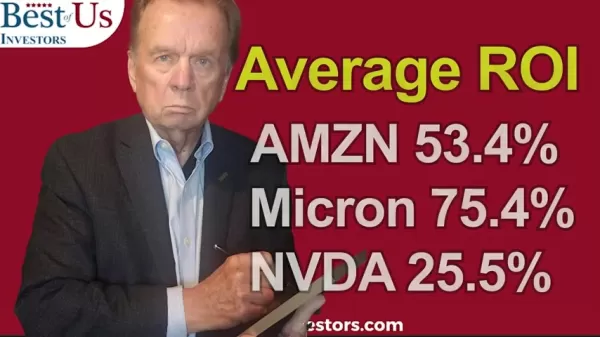
This comprehensive approach involves evaluating multiple financial indicators and industry patterns to enhance market positioning. Predictive capability enables optimized portfolio construction and return maximization. The analytical process incorporates extensive financial tracking to project valuations for specific future dates.
Why Prediction is Important
- Data-Driven Choices: Accurate forecasts enable evidence-based investment selections.
- Portfolio Enhancement: Identification of high-potential assets improves investment mix.
- Risk Mitigation: Forward projections help anticipate and minimize potential losses.
- Return Optimization: Recognizing appreciation opportunities maximizes profit potential.
Developing predictive models involves:
- Data Aggregation: Collecting comprehensive financial reports and market intelligence.
- Metric Evaluation: Assessing P/E multiples, EPS, revenue expansion, and ROIC.
- Pattern Recognition: Identifying influential valuation trends.
- Model Construction: Integrating factors into cohesive predictive frameworks.
A disciplined, data-supported methodology reduces speculation while enhancing profitability prospects.
Focusing on Semiconductor, Big Data, and AI Stocks
Semiconductor, big data, and artificial intelligence sectors represent today's most dynamic growth markets.

Innovation leaders in these fields demonstrate substantial appreciation potential due to technological convergence.
Sector Interdependencies
Semiconductors enable modern computing infrastructure, while big data fuels AI training and AI enhances analytical capabilities. This technological synergy drives cross-sector advancement.
Investment Evaluation Criteria
- Industry Developments: Monitoring sector-specific innovations.
- Technical Progress: Assessing corporate R&D capabilities.
- Competitive Positioning: Identifying market leaders.
- Regulatory Impacts: Tracking policy changes.
Industry Leaders
- Semiconductors: NVIDIA, AMD, TSMC
- Big Data: Amazon, Microsoft, Alphabet
- AI: IBM, Salesforce, Oracle
Regular sector monitoring helps investors capitalize on these rapidly evolving markets.
Key Metrics: P/E Ratio and Earnings Per Share (EPS)
Stock valuation analysis requires understanding critical financial indicators.

P/E ratios indicate valuation multiples, while EPS measures per-share profitability.
P/E Ratio Analysis
This valuation multiple divides share price by EPS, reflecting earnings prepayment periods. Elevated multiples may signal growth expectations, while lower multiples suggest undervaluation.
EPS Fundamentals
Derived from net income divided by outstanding shares, EPS facilitates cross-company comparisons. Higher EPS typically indicates stronger profitability.
Metric Significance
- Valuation Benchmarking
- Growth Potential Indicator
- Profitability Measurement
- Comparative Analysis Tool
Accurate forecasting requires projecting both metrics based on historical data and forward-looking analysis.
Analyzing Return on Invested Capital (ROIC)
The Significance of Return on Invested Capital (ROIC)
ROIC measures capital allocation efficiency, indicating high-potential investment targets.
Calculation Methodology
ROIC divides NOPAT by invested capital (equity + debt - non-operating assets).
Strategic Importance
- Capital Efficiency Measurement
- Profitability Assessment
- Sustainable Growth Indicator
- Competitive Advantage Signal
Complementing traditional metrics, ROIC provides deeper financial health insights.
Practical Application: Using Spreadsheets for Investment Analysis
Spreadsheets offer powerful financial modeling capabilities for investors.
Effective Spreadsheet Implementation
- Data Compilation
- Structured Organization
- Automated Calculations
- Visual Representation
- Forward Projections
Ticker Company Name Stock Price P/E Ratio EPS ROIC Revenue Growth Debt-to-Equity Target Price AAPL Apple Inc. $150 25 $6 15% 10% 0.5 $180 AMD Advanced Micro Devices $80 40 $2 20% 20% 0.8 $100 NVDA NVIDIA Corp. $200 50 $4 25% 30% 0.6 $250
Spreadsheet Benefits
- Data Organization
- Analytical Capabilities
- Visual Clarity
- Decision Support
Step-by-Step Guide: Predicting Stock Prices for 2027
Step 1: Select Target Stocks
Identify semiconductor, big data, and AI sector leaders demonstrating stability and growth potential.
Step 2: Gather Historical Data
Compile five years of pricing, EPS, and P/E data from financial sources.
Step 3: Calculate Key Metrics
- P/E Ratio: Current Price ÷ EPS
- EPS Growth: ((Current EPS - Prior EPS) ÷ Prior EPS) x 100
Step 4: Forecast Future EPS
Project EPS growth using historical trends and conservative estimates.
Step 5: Estimate Future P/E Ratios
Evaluate macroeconomic factors influencing valuation multiples.
Step 6: Calculate Target Stock Prices
Multiply projected EPS by estimated P/E multiples.
Step 7: Evaluate Investment Potential
Calculate potential ROI and assess risk-reward profiles.
Investment Considerations and Capital Allocation
Cost of Investment Analysis Tools
Financial analysis resources range from free platforms to premium services requiring budget allocation.
Capital Allocation Strategies
Portfolio diversification across sectors balances risk while targeting growth opportunities.
Advantages and Disadvantages of Using P/E Ratio and EPS for Stock Prediction
Pros
Straightforward calculation using accessible data
Provides valuation and profitability indicators
Enables sector benchmarking
Identifies potential mispricing
Cons
Volatile earnings distort accuracy
Excludes qualitative growth factors
Potential accounting manipulation
Limited application for negative earnings
Key Indicators of Strong Stock Performance
Revenue Growth
Sustained top-line expansion demonstrates market traction.
Profit Margins
Operational efficiency translates to bottom-line results.
Debt-to-Equity Ratio
Appropriate leverage indicates financial health.
Cash Flow
Operating cash generation funds growth initiatives.
Real-World Examples of Stock Investment Success
Investing in Apple (AAPL)
Apple's innovation leadership and financial strength delivered exceptional returns.
Investing in NVIDIA (NVDA)
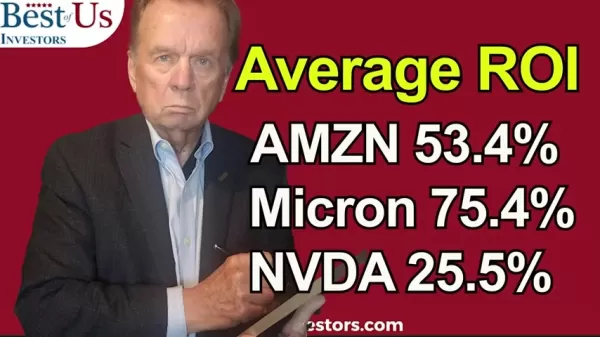
NVIDIA's GPU technology leadership generated substantial appreciation.
Investing in Amazon (AMZN)
Amazon's market dominance drove significant investor returns.
Frequently Asked Questions
What is the P/E ratio?
The price-to-earnings ratio compares share price to earnings per share, indicating valuation multiples.
What is EPS?
Earnings per share divides net income by outstanding shares, measuring per-share profitability.
How can I predict future stock prices?
Comprehensive analysis incorporating financial metrics, industry trends, and statistical projections enables price estimation.
Related Questions
What are the risks of investing in stocks?
Equity investments face market volatility, company-specific challenges, and macroeconomic influences.
How can I diversify my stock portfolio?
Sector allocation, market capitalization blending, geographical distribution, and index products enhance diversification.
Related article
 iFLYTEK Unveils Spark X2.5 General Large Model
On September 1, iFlytek will open-source two edge-focused large language models, Xinghuo X2.5-4B and Xinghuo X2.5-1.7B, according to the latest official announcement. Both models natively support a context window of up to 1 million tokens. They deliv
Meta Removes AI Photo Editing Feature Following User Backlash
Meta, the social media giant, is once again embroiled in a public debate regarding the delicate balance between artificial intelligence and user privacy. According to TechCrunch, Meta’s Superintelligence Labs introduced a new AI image generator, Muse
DeepMind CEO Hassabis: I sleep six hours a day, usually feel energetic around 1 a.m.
Fortune recently featured an interview with Demis Hassabis, CEO of Google DeepMind, revealing his unconventional approach to rest and productivity. Hassabis disclosed that he sleeps very little, structuring his waking hours into two distinct work blo
Related Special Topic Recommendations
Animation Creation
iFLYTEK Unveils Spark X2.5 General Large Model
On September 1, iFlytek will open-source two edge-focused large language models, Xinghuo X2.5-4B and Xinghuo X2.5-1.7B, according to the latest official announcement. Both models natively support a context window of up to 1 million tokens. They deliv
Meta Removes AI Photo Editing Feature Following User Backlash
Meta, the social media giant, is once again embroiled in a public debate regarding the delicate balance between artificial intelligence and user privacy. According to TechCrunch, Meta’s Superintelligence Labs introduced a new AI image generator, Muse
DeepMind CEO Hassabis: I sleep six hours a day, usually feel energetic around 1 a.m.
Fortune recently featured an interview with Demis Hassabis, CEO of Google DeepMind, revealing his unconventional approach to rest and productivity. Hassabis disclosed that he sleeps very little, structuring his waking hours into two distinct work blo
Related Special Topic Recommendations
Animation Creation
 AI Scene Animation Tools for Social Media Content
2026 Latest Best Top-rated AI Scene Animation Tools for Social Media Content are curated here by XIX.AI. These powerful game-changing tools offer real-world tests and detailed free vs paid comparison, helping creators boost productivity significantly. Explore now to unlock your AI edge.
 9 tools
 xix.ai
Video creation
AI Short-Form Video Hook Generators for Reels, Shorts, and Product Launch Campaigns
xix.ai
Video creation
AI Short-Form Video Hook Generators for Reels, Shorts, and Product Launch Campaigns
2026 Latest Best AI Short-Form Video Hook Generators for Reels Shorts and Product Launch Campaigns! XIX.AI curates top-rated powerful game-changing tools that deliver must-try results through real-world tests. This weekly updated page offers free vs paid comparison rankings to help you find the perfect solution for boosting content creativity and productivity. Explore now to Unlock your AI edge!
11 tools
xix.ai
writing
AI Article Outline Tools for Long Form Writing
2026 Latest Best Top-Rated AI Article Outline Tools for Long Form Writing! This curated collection features powerful, game-changing tools that deliver accurate, structured outlines with real-world tests to boost writing efficiency significantly. XIX.AI is part of this elite selection. Get a free vs paid comparison to help you choose the perfect tool. Explore now and Unlock your AI edge!
9 tools
xix.ai
chatbot
Best AI Roleplay Chat Apps for Language Practice, Interview Prep, and Daily Fluency
2026 Latest Best Top-rated AI Roleplay Chat Apps for Language Practice, Interview Prep, and Daily Fluency! XIX.AI curates a powerful game-changing collection that offers free vs paid comparison, real-world tests, and updated rankings weekly. These must-try tools help you boost writing skills, overcome fluency challenges, and improve communication efficiency across all daily scenarios. Explore now to discover your perfect tool for language growth!
10 tools
xix.ai
Music composition
AI Stem Separation Tools for Remix Production, Sampling Prep, and Karaoke Masters
2026 Latest Best Top-rated AI Stem Separation Tools Curated for Remix Production, Sampling Prep, and Karaoke Masters. These powerful game-changing tools offer real-world tests to deliver precise audio isolation, boosting productivity significantly. XIX.AI provides a weekly updated free vs paid comparison guide to help you find the must-try solution that suits your needs. Explore now to unlock your AI edge.
8 tools
xix.ai
Data Analysis
AI SQL Copilots for Revenue Dashboards, Funnel Analysis, and Product Metrics
2026 Latest Best AI SQL Copilots Ranked Top-Rated! XIX.AI curates a powerful game-changing collection for weekly updated real-world tests. These must-try tools help you generate accurate revenue dashboards, analyze sales funnels, and track product metrics swiftly, boosting productivity massively. Explore now to Discover your perfect tool for data-driven decision making! 238 characters
9 tools
xix.ai

 Comments (0)
0/500
Comments (0)
0/500
Succeeding in the stock market demands careful planning and strategic thinking. Investors should aim to establish dependable methods for anticipating future stock values. This examination concentrates on semiconductor and artificial intelligence industries, leveraging price-to-earnings ratios (P/E) and earnings per share metrics to project stock valuations for early 2027. Our comprehensive study delivers practical analysis to support well-researched investment choices.
Key Points
Building predictive models for stock valuation represents a fundamental investing skill.
The semiconductor, big data, and AI industries present exceptional expansion potential.
Stock valuations primarily derive from P/E multiples and EPS calculations.
The P/E multiple reflects investor willingness to prepay for future earnings.
Accurate forecasting requires simultaneous analysis of P/E trends and EPS growth.
Sector leaders include corporations like Apple, AMD, and Amazon.
ROIC serves as a vital gauge for assessing corporate profitability efficiency.
Financial spreadsheets enable efficient data organization and analysis.
Potential returns and target pricing help identify lucrative opportunities.
Successful investing necessitates understanding corporate financial stability and expansion capacity.
Understanding Stock Price Prediction
The Investor's Objective: Creating a Predictive Algorithm
Investment professionals focus on developing systematic methodologies that reliably estimate future equity valuations.
This comprehensive approach involves evaluating multiple financial indicators and industry patterns to enhance market positioning. Predictive capability enables optimized portfolio construction and return maximization. The analytical process incorporates extensive financial tracking to project valuations for specific future dates.
Why Prediction is Important
- Data-Driven Choices: Accurate forecasts enable evidence-based investment selections.
- Portfolio Enhancement: Identification of high-potential assets improves investment mix.
- Risk Mitigation: Forward projections help anticipate and minimize potential losses.
- Return Optimization: Recognizing appreciation opportunities maximizes profit potential.
Developing predictive models involves:
- Data Aggregation: Collecting comprehensive financial reports and market intelligence.
- Metric Evaluation: Assessing P/E multiples, EPS, revenue expansion, and ROIC.
- Pattern Recognition: Identifying influential valuation trends.
- Model Construction: Integrating factors into cohesive predictive frameworks.
A disciplined, data-supported methodology reduces speculation while enhancing profitability prospects.
Focusing on Semiconductor, Big Data, and AI Stocks
Semiconductor, big data, and artificial intelligence sectors represent today's most dynamic growth markets.
Innovation leaders in these fields demonstrate substantial appreciation potential due to technological convergence.
Sector Interdependencies
Semiconductors enable modern computing infrastructure, while big data fuels AI training and AI enhances analytical capabilities. This technological synergy drives cross-sector advancement.
Investment Evaluation Criteria
- Industry Developments: Monitoring sector-specific innovations.
- Technical Progress: Assessing corporate R&D capabilities.
- Competitive Positioning: Identifying market leaders.
- Regulatory Impacts: Tracking policy changes.
Industry Leaders
- Semiconductors: NVIDIA, AMD, TSMC
- Big Data: Amazon, Microsoft, Alphabet
- AI: IBM, Salesforce, Oracle
Regular sector monitoring helps investors capitalize on these rapidly evolving markets.
Key Metrics: P/E Ratio and Earnings Per Share (EPS)
Stock valuation analysis requires understanding critical financial indicators.
P/E ratios indicate valuation multiples, while EPS measures per-share profitability.
P/E Ratio Analysis
This valuation multiple divides share price by EPS, reflecting earnings prepayment periods. Elevated multiples may signal growth expectations, while lower multiples suggest undervaluation.
EPS Fundamentals
Derived from net income divided by outstanding shares, EPS facilitates cross-company comparisons. Higher EPS typically indicates stronger profitability.
Metric Significance
- Valuation Benchmarking
- Growth Potential Indicator
- Profitability Measurement
- Comparative Analysis Tool
Accurate forecasting requires projecting both metrics based on historical data and forward-looking analysis.
Analyzing Return on Invested Capital (ROIC)
The Significance of Return on Invested Capital (ROIC)
ROIC measures capital allocation efficiency, indicating high-potential investment targets.
Calculation Methodology
ROIC divides NOPAT by invested capital (equity + debt - non-operating assets).
Strategic Importance
- Capital Efficiency Measurement
- Profitability Assessment
- Sustainable Growth Indicator
- Competitive Advantage Signal
Complementing traditional metrics, ROIC provides deeper financial health insights.
Practical Application: Using Spreadsheets for Investment Analysis
Spreadsheets offer powerful financial modeling capabilities for investors.
Effective Spreadsheet Implementation
- Data Compilation
- Structured Organization
- Automated Calculations
- Visual Representation
- Forward Projections
| Ticker | Company Name | Stock Price | P/E Ratio | EPS | ROIC | Revenue Growth | Debt-to-Equity | Target Price |
|---|---|---|---|---|---|---|---|---|
| AAPL | Apple Inc. | $150 | 25 | $6 | 15% | 10% | 0.5 | $180 |
| AMD | Advanced Micro Devices | $80 | 40 | $2 | 20% | 20% | 0.8 | $100 |
| NVDA | NVIDIA Corp. | $200 | 50 | $4 | 25% | 30% | 0.6 | $250 |
Spreadsheet Benefits
- Data Organization
- Analytical Capabilities
- Visual Clarity
- Decision Support
Step-by-Step Guide: Predicting Stock Prices for 2027
Step 1: Select Target Stocks
Identify semiconductor, big data, and AI sector leaders demonstrating stability and growth potential.
Step 2: Gather Historical Data
Compile five years of pricing, EPS, and P/E data from financial sources.
Step 3: Calculate Key Metrics
- P/E Ratio: Current Price ÷ EPS
- EPS Growth: ((Current EPS - Prior EPS) ÷ Prior EPS) x 100
Step 4: Forecast Future EPS
Project EPS growth using historical trends and conservative estimates.
Step 5: Estimate Future P/E Ratios
Evaluate macroeconomic factors influencing valuation multiples.
Step 6: Calculate Target Stock Prices
Multiply projected EPS by estimated P/E multiples.
Step 7: Evaluate Investment Potential
Calculate potential ROI and assess risk-reward profiles.
Investment Considerations and Capital Allocation
Cost of Investment Analysis Tools
Financial analysis resources range from free platforms to premium services requiring budget allocation.
Capital Allocation Strategies
Portfolio diversification across sectors balances risk while targeting growth opportunities.
Advantages and Disadvantages of Using P/E Ratio and EPS for Stock Prediction
Pros
Straightforward calculation using accessible data
Provides valuation and profitability indicators
Enables sector benchmarking
Identifies potential mispricing
Cons
Volatile earnings distort accuracy
Excludes qualitative growth factors
Potential accounting manipulation
Limited application for negative earnings
Key Indicators of Strong Stock Performance
Revenue Growth
Sustained top-line expansion demonstrates market traction.
Profit Margins
Operational efficiency translates to bottom-line results.
Debt-to-Equity Ratio
Appropriate leverage indicates financial health.
Cash Flow
Operating cash generation funds growth initiatives.
Real-World Examples of Stock Investment Success
Investing in Apple (AAPL)
Apple's innovation leadership and financial strength delivered exceptional returns.
Investing in NVIDIA (NVDA)
NVIDIA's GPU technology leadership generated substantial appreciation.
Investing in Amazon (AMZN)
Amazon's market dominance drove significant investor returns.
Frequently Asked Questions
What is the P/E ratio?
The price-to-earnings ratio compares share price to earnings per share, indicating valuation multiples.
What is EPS?
Earnings per share divides net income by outstanding shares, measuring per-share profitability.
How can I predict future stock prices?
Comprehensive analysis incorporating financial metrics, industry trends, and statistical projections enables price estimation.
Related Questions
What are the risks of investing in stocks?
Equity investments face market volatility, company-specific challenges, and macroeconomic influences.
How can I diversify my stock portfolio?
Sector allocation, market capitalization blending, geographical distribution, and index products enhance diversification.








 iFLYTEK Unveils Spark X2.5 General Large Model
On September 1, iFlytek will open-source two edge-focused large language models, Xinghuo X2.5-4B and Xinghuo X2.5-1.7B, according to the latest official announcement. Both models natively support a context window of up to 1 million tokens. They deliv
iFLYTEK Unveils Spark X2.5 General Large Model
On September 1, iFlytek will open-source two edge-focused large language models, Xinghuo X2.5-4B and Xinghuo X2.5-1.7B, according to the latest official announcement. Both models natively support a context window of up to 1 million tokens. They deliv
 Meta Removes AI Photo Editing Feature Following User Backlash
Meta, the social media giant, is once again embroiled in a public debate regarding the delicate balance between artificial intelligence and user privacy. According to TechCrunch, Meta’s Superintelligence Labs introduced a new AI image generator, Muse
Meta Removes AI Photo Editing Feature Following User Backlash
Meta, the social media giant, is once again embroiled in a public debate regarding the delicate balance between artificial intelligence and user privacy. According to TechCrunch, Meta’s Superintelligence Labs introduced a new AI image generator, Muse
 DeepMind CEO Hassabis: I sleep six hours a day, usually feel energetic around 1 a.m.
Fortune recently featured an interview with Demis Hassabis, CEO of Google DeepMind, revealing his unconventional approach to rest and productivity. Hassabis disclosed that he sleeps very little, structuring his waking hours into two distinct work blo
DeepMind CEO Hassabis: I sleep six hours a day, usually feel energetic around 1 a.m.
Fortune recently featured an interview with Demis Hassabis, CEO of Google DeepMind, revealing his unconventional approach to rest and productivity. Hassabis disclosed that he sleeps very little, structuring his waking hours into two distinct work blo

2026 Latest Best Top-rated AI Scene Animation Tools for Social Media Content are curated here by XIX.AI. These powerful game-changing tools offer real-world tests and detailed free vs paid comparison, helping creators boost productivity significantly. Explore now to unlock your AI edge.
9 tools
xix.ai

2026 Latest Best AI Short-Form Video Hook Generators for Reels Shorts and Product Launch Campaigns! XIX.AI curates top-rated powerful game-changing tools that deliver must-try results through real-world tests. This weekly updated page offers free vs paid comparison rankings to help you find the perfect solution for boosting content creativity and productivity. Explore now to Unlock your AI edge!
11 tools
xix.ai

2026 Latest Best Top-Rated AI Article Outline Tools for Long Form Writing! This curated collection features powerful, game-changing tools that deliver accurate, structured outlines with real-world tests to boost writing efficiency significantly. XIX.AI is part of this elite selection. Get a free vs paid comparison to help you choose the perfect tool. Explore now and Unlock your AI edge!
9 tools
xix.ai

2026 Latest Best Top-rated AI Roleplay Chat Apps for Language Practice, Interview Prep, and Daily Fluency! XIX.AI curates a powerful game-changing collection that offers free vs paid comparison, real-world tests, and updated rankings weekly. These must-try tools help you boost writing skills, overcome fluency challenges, and improve communication efficiency across all daily scenarios. Explore now to discover your perfect tool for language growth!
10 tools
xix.ai

2026 Latest Best Top-rated AI Stem Separation Tools Curated for Remix Production, Sampling Prep, and Karaoke Masters. These powerful game-changing tools offer real-world tests to deliver precise audio isolation, boosting productivity significantly. XIX.AI provides a weekly updated free vs paid comparison guide to help you find the must-try solution that suits your needs. Explore now to unlock your AI edge.
8 tools
xix.ai
2026 Latest Best AI SQL Copilots Ranked Top-Rated! XIX.AI curates a powerful game-changing collection for weekly updated real-world tests. These must-try tools help you generate accurate revenue dashboards, analyze sales funnels, and track product metrics swiftly, boosting productivity massively. Explore now to Discover your perfect tool for data-driven decision making! 238 characters
9 tools
xix.ai












