


 Home
HomeChina Accelerates AI Integration Across Its National Energy Grid
As China accelerates its energy transition, artificial intelligence is beginning to transform the actual generation, distribution, and consumption of electricity, moving beyond policy frameworks to impact daily operations.
A facility in Chifeng, northern China, demonstrates this shift. This plant manufactures hydrogen and ammonia using power sourced exclusively from adjacent wind and solar installations. Operating on an isolated microgrid rather than the main network presents a unique challenge alongside its clean energy benefit: renewable output fluctuates with weather conditions.
To maintain consistent production, the facility employs an AI-powered control platform developed by Envision. This system dynamically modulates operations in response to shifting wind and solar generation, abandoning fixed production schedules. As Reuters detailed, Envision's chief hydrogen engineer, Zhang Jian, likened the AI to an orchestra conductor, seamlessly synchronizing power supply with industrial demand.
The platform automatically increases production during periods of high wind speed to utilize surplus power, and scales back during lulls to prevent grid stress. According to Zhang, this enables highly efficient plant operation despite the inherent variability of renewables.
Such initiatives are pivotal to China's strategy for hydrogen and ammonia, fuels considered crucial for decarbonizing hard-to-abate sectors like steel and shipping. They also reflect a wider ambition: leveraging AI to handle the growing complexity of integrating vast amounts of renewable energy into the national grid.
Academics highlight AI's potential role in achieving climate targets. Zheng Saina, an associate professor at Southeast University specializing in low-carbon transitions, notes AI's applications span emissions monitoring to supply-demand forecasting. However, she also warns of AI's own substantial energy footprint, driven largely by power-intensive data centers.
While China leads the world in new wind and solar installations, efficiently integrating this capacity is difficult. Cory Combs of Trivium China observes that AI is now widely viewed as a critical tool for enhancing grid flexibility and responsiveness.
This perspective was cemented in a national "AI + Energy" strategy unveiled last September. The policy fosters tighter integration between AI and the energy sector, advocating for specialized large models dedicated to grid management, power generation, and industrial applications. By 2027, authorities plan to launch numerous pilot projects and test AI in over 100 scenarios, targeting world-leading AI-energy integration by 2030.
Combs notes the emphasis is on specialized tools for specific tasks—like optimizing wind farms or balancing grid loads—rather than general-purpose AI. This focus diverges from the U.S. approach, which, according to Shanghai's CEIBS professor Hu Guangzhou, has channeled more investment into foundational large-language models.
Demand forecasting is one immediate application. Fang Lurui of Xi’an Jiaotong-Liverpool University explains that grids require perfect real-time balance to prevent blackouts. Precise AI forecasts for renewable output and consumption let grid operators plan effectively, storing energy or reducing dependence on coal-fired peaker plants.
Early implementations are underway. Shanghai's citywide virtual power plant aggregates dozens of distributed assets—including data centers, building management systems, and EV chargers—into a coordinated network. In an August trial, the system successfully shaved over 160 megawatts from peak demand, comparable to the output of a small coal plant.
Combs stresses that such systems are vital as power generation becomes more decentralized and variable. "You need a robust system capable of predictive analytics and rapid adaptation to new data," he stated.
Beyond the grid, China is exploring AI for its national carbon market, which regulates over 3,000 firms in high-emission industries like power, steel, cement, and aluminum—collectively responsible for over 60% of the country's emissions. Chen Zhibin of adelphi suggests AI could aid regulators in verifying emissions data, optimizing allowance distribution, and helping firms better understand their carbon-related costs.
Yet opportunities are matched by growing risks. Research indicates that by 2030, electricity consumption by China's AI data centers could exceed 1,000 terawatt-hours annually—rivaling Japan's current total usage. The sector's lifecycle emissions are projected to rise sharply, peaking after China's 2030 carbon target.
Xiong Qiyang, a doctoral researcher at Renmin University involved in such a study, attributes this to China's ongoing reliance on coal power. He cautions that unchecked AI growth could undermine climate goals without a faster shift to clean energy.
Regulators are responding. A 2024 action plan mandates data centers to boost energy efficiency and increase renewable consumption by 10% annually. Further policies encourage building new facilities in western regions with abundant wind and solar resources.
Operators are innovating too. Off the coast of Shanghai, an underwater data center is preparing to launch, using seawater for cooling to reduce energy and freshwater use. Developer Hailanyun states the facility will primarily draw power from an offshore wind farm, with potential for replication if successful.
Despite AI's soaring energy demand, Xiong contends its net impact on emissions could still be positive if strategically deployed. By optimizing heavy industry, power systems, and carbon markets, AI could remain an indispensable tool for China's decarbonization—even as it introduces new complexities for policymakers to navigate.
See also: Can China’s chip stacking strategy really challenge Nvidia’s AI dominance?
Want to learn more about AI and big data from industry leaders? Check out AI & Big Data Expo taking place in Amsterdam, California, and London. The comprehensive event is part of TechEx and is co-located with other leading technology events, click here for more information.
AI News is powered by TechForge Media. Explore other upcoming enterprise technology events and webinars here.
Related article
 How AI and Robotics Are Transforming bp’s Oil Production
Digital twin technology enables bp to simulate energy asset operations, identifying improvement opportunities and predicting failures before they occur. Credit: bpRicky Burns, Transformation & Technology Manager at bp, explains how digital tools help
NY to Cap Power for 50M AI Data Centers
New York’s actions illustrate how governments globally might manage, tax, and regulate the physical footprint of the AI boom. Credit: Luca Bravo/UnsplashNew York Governor Kathy Hochul signs a historic executive order halting data centres, while state
Smart Money Places AI Bets on Energy Technology
Venture capitalists are placing increasingly large bets on AI startups, having poured over half a trillion dollars into the sector in the past five years.However, a recent report from Sightline Climate suggests the most strategic investment opportuni
Related Special Topic Recommendations
Design & Art
How AI and Robotics Are Transforming bp’s Oil Production
Digital twin technology enables bp to simulate energy asset operations, identifying improvement opportunities and predicting failures before they occur. Credit: bpRicky Burns, Transformation & Technology Manager at bp, explains how digital tools help
NY to Cap Power for 50M AI Data Centers
New York’s actions illustrate how governments globally might manage, tax, and regulate the physical footprint of the AI boom. Credit: Luca Bravo/UnsplashNew York Governor Kathy Hochul signs a historic executive order halting data centres, while state
Smart Money Places AI Bets on Energy Technology
Venture capitalists are placing increasingly large bets on AI startups, having poured over half a trillion dollars into the sector in the past five years.However, a recent report from Sightline Climate suggests the most strategic investment opportuni
Related Special Topic Recommendations
Design & Art
 Top AI Illustration Tools: Create Editorial Scenes and Cover Art Faster
2026 Latest Top-rated AI Illustration Tools: Our curated list features the best powerfully designed tools for creating stunning editorial scenes and eye-catching cover art quickly. Each option has gone through rigorous real-world tests, offering a free vs paid comparison to help you find the perfect match for your workflow. Try these must-try solutions today to unlock your AI edge and boost your creative productivity. Explore now at XIX.AI.
 10 tools
 xix.ai
Education and Learning
Top AI Tutors for Exam Prep: Practice Math, Science, and English
xix.ai
Education and Learning
Top AI Tutors for Exam Prep: Practice Math, Science, and English
2026 Latest Top-Rated Best AI Tutors for Exam Prep are here on XIX.AI! Our curated list features powerful game-changing tools that offer free vs paid comparison, real-world tests, and weekly updated rankings. They help boost your writing efficiency, simplify complex topic learning, and unlock your academic potential. Explore now to Discover your perfect exam prep tool and Start creating today to Unlock your AI edge!
10 tools
xix.ai
Finance
AI Budget Planning Tools for Personal Money Management
2026 Latest Best Top-Rated AI Budget Planning Tools for Personal Money Management are here on XIX.AI! This curated collection features powerful, game-changing solutions that help you conduct real-world tests, understand spending habits, and create personalized plans to boost productivity. Enjoy a free vs paid comparison along with detailed rankings. Must-try tools designed to simplify money management and unlock your AI edge. Explore now!
11 tools
xix.ai
Health & Wellness
AI Sleep Tracking Assistants: Improve Recovery with Better Bedtime Habits
2026 Latest Best Top-Rated AI Sleep Tracking Assistants curated for ultimate recovery. This fully updated weekly guide features powerful tools that deliver real-world tests, free vs paid comparison, and detailed rankings to help you find the must-try solution that boosts sleep quality and supports better bedtime habits. Explore now at XIX.AI to Unlock your AI edge.
10 tools
xix.ai
Data Analysis
AI SQL Copilots for Product and Revenue Analytics
2026 Latest Best Top-Rated AI SQL Copilots for Product and Revenue Analytics! XIX.AI has curated a powerful, game-changing collection of must-try tools that undergo real-world tests through weekly updated rankings. These tools help users boost productivity significantly by accelerating data analysis, streamlining complex queries, and generating accurate insights to drive smarter business decisions. Explore now to Discover your perfect tool for unlocking your AI edge!
14 tools
xix.ai
Education and Learning
Best AI Homework Helpers That Teach: Learn Concepts, Not Just Answers
2026 Latest Best Top-Rated AI Homework Helpers That Teach Core Concepts Not Just Answers Powerful Tools for Students Must-Try Curated List Weekly Updated Free vs Paid Comparison Real-World Tests Accurate Rankings to Help You Unlock Your Full Learning Potential Explore now to Discover your perfect tool for smarter studying.
10 tools
xix.ai

 Comments (1)
0/500
Comments (1)
0/500
![JohnYoung]()
AI가 전력망 관리까지 확대되고 있다니.. 한국도 빨리 따라야 할 텐데. 중국의 에너지 전환 속도가 정말 인상적이네요 ㅠㅠ 스마트그리드 기술 경쟁이 점점 치열해지는 것 같아요. 태양광, 풍력 같은 재생에너지 예측에 AI가 정말 큰 도움이 될 거예요! 🔋
As China accelerates its energy transition, artificial intelligence is beginning to transform the actual generation, distribution, and consumption of electricity, moving beyond policy frameworks to impact daily operations.
A facility in Chifeng, northern China, demonstrates this shift. This plant manufactures hydrogen and ammonia using power sourced exclusively from adjacent wind and solar installations. Operating on an isolated microgrid rather than the main network presents a unique challenge alongside its clean energy benefit: renewable output fluctuates with weather conditions.
To maintain consistent production, the facility employs an AI-powered control platform developed by Envision. This system dynamically modulates operations in response to shifting wind and solar generation, abandoning fixed production schedules. As Reuters detailed, Envision's chief hydrogen engineer, Zhang Jian, likened the AI to an orchestra conductor, seamlessly synchronizing power supply with industrial demand.
The platform automatically increases production during periods of high wind speed to utilize surplus power, and scales back during lulls to prevent grid stress. According to Zhang, this enables highly efficient plant operation despite the inherent variability of renewables.
Such initiatives are pivotal to China's strategy for hydrogen and ammonia, fuels considered crucial for decarbonizing hard-to-abate sectors like steel and shipping. They also reflect a wider ambition: leveraging AI to handle the growing complexity of integrating vast amounts of renewable energy into the national grid.
Academics highlight AI's potential role in achieving climate targets. Zheng Saina, an associate professor at Southeast University specializing in low-carbon transitions, notes AI's applications span emissions monitoring to supply-demand forecasting. However, she also warns of AI's own substantial energy footprint, driven largely by power-intensive data centers.
While China leads the world in new wind and solar installations, efficiently integrating this capacity is difficult. Cory Combs of Trivium China observes that AI is now widely viewed as a critical tool for enhancing grid flexibility and responsiveness.
This perspective was cemented in a national "AI + Energy" strategy unveiled last September. The policy fosters tighter integration between AI and the energy sector, advocating for specialized large models dedicated to grid management, power generation, and industrial applications. By 2027, authorities plan to launch numerous pilot projects and test AI in over 100 scenarios, targeting world-leading AI-energy integration by 2030.
Combs notes the emphasis is on specialized tools for specific tasks—like optimizing wind farms or balancing grid loads—rather than general-purpose AI. This focus diverges from the U.S. approach, which, according to Shanghai's CEIBS professor Hu Guangzhou, has channeled more investment into foundational large-language models.
Demand forecasting is one immediate application. Fang Lurui of Xi’an Jiaotong-Liverpool University explains that grids require perfect real-time balance to prevent blackouts. Precise AI forecasts for renewable output and consumption let grid operators plan effectively, storing energy or reducing dependence on coal-fired peaker plants.
Early implementations are underway. Shanghai's citywide virtual power plant aggregates dozens of distributed assets—including data centers, building management systems, and EV chargers—into a coordinated network. In an August trial, the system successfully shaved over 160 megawatts from peak demand, comparable to the output of a small coal plant.
Combs stresses that such systems are vital as power generation becomes more decentralized and variable. "You need a robust system capable of predictive analytics and rapid adaptation to new data," he stated.
Beyond the grid, China is exploring AI for its national carbon market, which regulates over 3,000 firms in high-emission industries like power, steel, cement, and aluminum—collectively responsible for over 60% of the country's emissions. Chen Zhibin of adelphi suggests AI could aid regulators in verifying emissions data, optimizing allowance distribution, and helping firms better understand their carbon-related costs.
Yet opportunities are matched by growing risks. Research indicates that by 2030, electricity consumption by China's AI data centers could exceed 1,000 terawatt-hours annually—rivaling Japan's current total usage. The sector's lifecycle emissions are projected to rise sharply, peaking after China's 2030 carbon target.
Xiong Qiyang, a doctoral researcher at Renmin University involved in such a study, attributes this to China's ongoing reliance on coal power. He cautions that unchecked AI growth could undermine climate goals without a faster shift to clean energy.
Regulators are responding. A 2024 action plan mandates data centers to boost energy efficiency and increase renewable consumption by 10% annually. Further policies encourage building new facilities in western regions with abundant wind and solar resources.
Operators are innovating too. Off the coast of Shanghai, an underwater data center is preparing to launch, using seawater for cooling to reduce energy and freshwater use. Developer Hailanyun states the facility will primarily draw power from an offshore wind farm, with potential for replication if successful.
Despite AI's soaring energy demand, Xiong contends its net impact on emissions could still be positive if strategically deployed. By optimizing heavy industry, power systems, and carbon markets, AI could remain an indispensable tool for China's decarbonization—even as it introduces new complexities for policymakers to navigate.
See also: Can China’s chip stacking strategy really challenge Nvidia’s AI dominance?
Want to learn more about AI and big data from industry leaders? Check out AI & Big Data Expo taking place in Amsterdam, California, and London. The comprehensive event is part of TechEx and is co-located with other leading technology events, click here for more information.
AI News is powered by TechForge Media. Explore other upcoming enterprise technology events and webinars here.








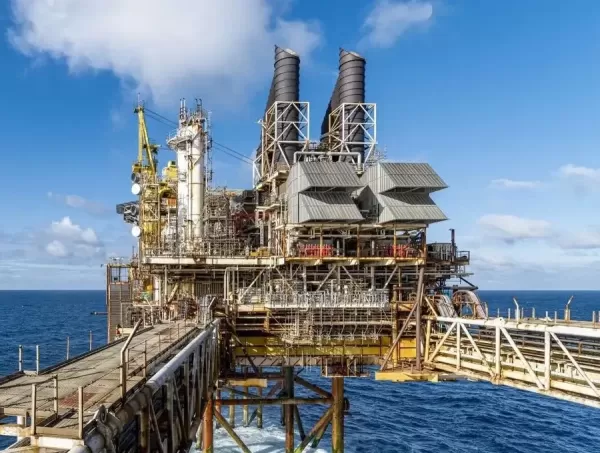 How AI and Robotics Are Transforming bp’s Oil Production
Digital twin technology enables bp to simulate energy asset operations, identifying improvement opportunities and predicting failures before they occur. Credit: bpRicky Burns, Transformation & Technology Manager at bp, explains how digital tools help
How AI and Robotics Are Transforming bp’s Oil Production
Digital twin technology enables bp to simulate energy asset operations, identifying improvement opportunities and predicting failures before they occur. Credit: bpRicky Burns, Transformation & Technology Manager at bp, explains how digital tools help
 NY to Cap Power for 50M AI Data Centers
New York’s actions illustrate how governments globally might manage, tax, and regulate the physical footprint of the AI boom. Credit: Luca Bravo/UnsplashNew York Governor Kathy Hochul signs a historic executive order halting data centres, while state
NY to Cap Power for 50M AI Data Centers
New York’s actions illustrate how governments globally might manage, tax, and regulate the physical footprint of the AI boom. Credit: Luca Bravo/UnsplashNew York Governor Kathy Hochul signs a historic executive order halting data centres, while state
 Smart Money Places AI Bets on Energy Technology
Venture capitalists are placing increasingly large bets on AI startups, having poured over half a trillion dollars into the sector in the past five years.However, a recent report from Sightline Climate suggests the most strategic investment opportuni
Smart Money Places AI Bets on Energy Technology
Venture capitalists are placing increasingly large bets on AI startups, having poured over half a trillion dollars into the sector in the past five years.However, a recent report from Sightline Climate suggests the most strategic investment opportuni

2026 Latest Top-rated AI Illustration Tools: Our curated list features the best powerfully designed tools for creating stunning editorial scenes and eye-catching cover art quickly. Each option has gone through rigorous real-world tests, offering a free vs paid comparison to help you find the perfect match for your workflow. Try these must-try solutions today to unlock your AI edge and boost your creative productivity. Explore now at XIX.AI.
10 tools
xix.ai

2026 Latest Top-Rated Best AI Tutors for Exam Prep are here on XIX.AI! Our curated list features powerful game-changing tools that offer free vs paid comparison, real-world tests, and weekly updated rankings. They help boost your writing efficiency, simplify complex topic learning, and unlock your academic potential. Explore now to Discover your perfect exam prep tool and Start creating today to Unlock your AI edge!
10 tools
xix.ai

2026 Latest Best Top-Rated AI Budget Planning Tools for Personal Money Management are here on XIX.AI! This curated collection features powerful, game-changing solutions that help you conduct real-world tests, understand spending habits, and create personalized plans to boost productivity. Enjoy a free vs paid comparison along with detailed rankings. Must-try tools designed to simplify money management and unlock your AI edge. Explore now!
11 tools
xix.ai

2026 Latest Best Top-Rated AI Sleep Tracking Assistants curated for ultimate recovery. This fully updated weekly guide features powerful tools that deliver real-world tests, free vs paid comparison, and detailed rankings to help you find the must-try solution that boosts sleep quality and supports better bedtime habits. Explore now at XIX.AI to Unlock your AI edge.
10 tools
xix.ai

2026 Latest Best Top-Rated AI SQL Copilots for Product and Revenue Analytics! XIX.AI has curated a powerful, game-changing collection of must-try tools that undergo real-world tests through weekly updated rankings. These tools help users boost productivity significantly by accelerating data analysis, streamlining complex queries, and generating accurate insights to drive smarter business decisions. Explore now to Discover your perfect tool for unlocking your AI edge!
14 tools
xix.ai

2026 Latest Best Top-Rated AI Homework Helpers That Teach Core Concepts Not Just Answers Powerful Tools for Students Must-Try Curated List Weekly Updated Free vs Paid Comparison Real-World Tests Accurate Rankings to Help You Unlock Your Full Learning Potential Explore now to Discover your perfect tool for smarter studying.
10 tools
xix.ai

AI가 전력망 관리까지 확대되고 있다니.. 한국도 빨리 따라야 할 텐데. 중국의 에너지 전환 속도가 정말 인상적이네요 ㅠㅠ 스마트그리드 기술 경쟁이 점점 치열해지는 것 같아요. 태양광, 풍력 같은 재생에너지 예측에 AI가 정말 큰 도움이 될 거예요! 🔋












