


 Home
HomeHow to optimize core web vitals for mobile?
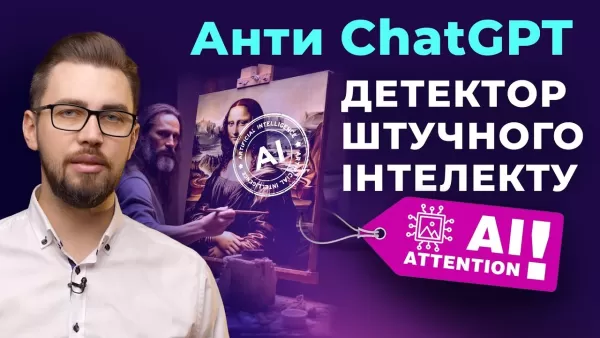
How to Verify Whether Text Is Human-Written: Services and Tips
Table of Contents
- Introduction
- How to Verify if Text Is Human-Written
- Importance of Using AI Responsibly
- Services for Checking Text Authenticity 4.1 GPT-4: Advanced Text Generation 4.2 Custom GPT Models 4.3 GPT Kit: Authenticity Check 4.4 Winston AI: Plagiarism Detection
- Understanding AI-Generated Text 5.1 Limitations of AI-Generated Text 5.2 Evaluating the Quality of AI-Generated Text
- Leveraging AI in Various Fields 6.1 Sales and Marketing 6.2 Research and Academia 6.3 Business Applications
- The Role of Human Comprehension
- Enhancing Efficiency and Competitiveness
- Conclusion
- Resources
In today’s digital world, distinguishing between AI-generated text and human-written content can be challenging. Using AI for text generation is not inherently wrong, but it requires careful and thoughtful application. This article explores several services that help verify text authenticity and differentiate between human and AI-generated content.
Why Responsible AI Use Matters
Before diving into methods for verifying text authenticity, it’s important to understand why responsible AI usage is crucial. AI can be a powerful tool, but generating content mindlessly without purpose risks losing credibility and relevance. Intelligent, purposeful application of AI in various areas is key.
Services for Checking Text Authenticity
Several AI detection tools can help determine whether a piece of text was generated by AI or written by a human. Here’s a look at some of these services.
4.1 GPT-4: Advanced Text Generation
GPT-4 is an advanced text generation model capable of producing high-quality content. By providing prompts or topics, GPT-4 can generate coherent and meaningful text. However, it may not always produce research-oriented or investigative content. Custom GPT models can address this limitation.
4.2 Custom GPT Models
Custom GPT models allow users to design text generation models tailored to specific requirements. These models are especially useful for academic research or creating content with a particular style or tone. Fine-tuning the model leads to more accurate and targeted results.
4.3 GPT Kit: Authenticity Check
GPT Kit is a service that helps verify whether a text is human-written or AI-generated. By inputting the text into GPT Kit, users can evaluate its authenticity. Note that GPT Kit specializes in English, Spanish, and French text, so it may not be suitable for other languages.
4.4 Winston AI: Plagiarism Detection
Winston AI is a semi-paid service focused on plagiarism detection. It can determine whether a text is plagiarized or originally written. While useful, this service does not specifically identify AI-generated content, so additional fact-checking may be needed.
Understanding AI-Generated Text
AI-generated text offers advantages, but it also has limitations. It may lack personal touch, creativity, or critical thinking. Evaluating the quality of AI-generated text is essential, and it should be used alongside human comprehension and expertise.
5.1 Limitations of AI-Generated Text
AI-generated text often lacks nuanced insights, emotional depth, and true contextual understanding. Its output is based solely on patterns and training data, without genuine creativity or originality. Therefore, a critical approach and human perspective are necessary.
5.2 Evaluating the Quality of AI-Generated Text
When using AI-generated text, assessing its quality and suitability for the intended purpose is important. Factors like coherence, accuracy, and relevance help determine its effectiveness and credibility. The goal is to ensure AI-generated text adds value and enhances the user experience.
Leveraging AI in Various Fields
AI can be a valuable asset across many fields, boosting efficiency and competitiveness. Here are some areas where AI can be effectively applied:
6.1 Sales and Marketing
AI in sales and marketing streamlines processes, automates tasks, and delivers personalized customer experiences. AI-powered chatbots and recommendation systems improve engagement and increase conversion rates.
6.2 Research and Academia
AI helps researchers and academics analyze large datasets, generate insights, and accelerate research. However, AI-generated content must align with ethical and academic standards.
6.3 Business Applications
AI automates repetitive tasks, optimizes operations, and supports data-driven decisions. From predictive analytics to intelligent process automation, AI unlocks opportunities for growth and innovation.
The Role of Human Comprehension
Despite AI’s advantages, human comprehension and expertise remain irreplaceable. Humans can think critically, consider diverse perspectives, and exercise judgment. Combining AI with human intelligence yields the best results across various endeavors.
Enhancing Efficiency and Competitiveness
Integrating AI into workflows and business processes improves efficiency, productivity, and competitiveness. By understanding AI’s capabilities and limitations, individuals can strategically use it to augment their skills and stay ahead in the rapidly evolving digital landscape.
Conclusion
Artificial intelligence is a remarkable tool with immense value across many domains. However, responsible use and informed decisions about text generation are essential. Evaluating content authenticity and combining AI with human comprehension leads to better outcomes and sustainable success.
Resources
- GPT-4: exampleURL1.com
- Custom GPT Models: exampleURL2.com
- GPT Kit: exampleURL3.com
- Winston AI: exampleURL4.com
FAQ
Q: Can AI-generated text completely replace human-written content? A: No. AI can generate text, but it lacks the creativity, critical thinking, and nuanced insights that humans bring. Combining AI with human expertise is essential for high-quality content.
Q: How can AI be effectively used in academia? A: AI assists researchers in analyzing large volumes of data and generating insights. However, AI-generated content must adhere to ethical and academic standards.
Q: Are AI-generated texts always accurate and reliable? A: AI-generated texts are based on patterns and training data. While useful, their quality should be evaluated and accuracy verified through additional fact-checking.
Q: Can AI-generated content be used ethically in business? A: Yes. AI can be integrated into business processes to automate tasks, optimize operations, and make data-driven decisions. Ethical considerations must always guide its use.
Related article
 Meta Open-Sources 30B-Parameter Muse Glimmer for Local AI Agent on Consumer Hardware
On August 10, Meta launched Muse Glimmer, an open-source model designed to empower local AI agents on consumer hardware, marking a key step in its "Personal Superintelligence" strategy. With 30 billion parameters, this model is the open-source counte
GPT-5.6 May Launch Next Week, Focusing on Agent-Level Operational Capabilities
The competitive landscape of artificial intelligence is intensifying rapidly. Recent leaks regarding test updates have brought the new flagship model, GPT-5.6, into the spotlight. Market consensus suggests an official launch in the latter half of Jun
Cloudflare: Modernising Apps Triples Odds of AI Returns
For many organisations, the AI debate has moved on from whether to adopt the technology to a harder question: why do the results feel uneven? New tools are in place, pilots are running, and budgets are rising, yet clear AI returns remain elusive. Acc
Related Special Topic Recommendations
chatbot
Meta Open-Sources 30B-Parameter Muse Glimmer for Local AI Agent on Consumer Hardware
On August 10, Meta launched Muse Glimmer, an open-source model designed to empower local AI agents on consumer hardware, marking a key step in its "Personal Superintelligence" strategy. With 30 billion parameters, this model is the open-source counte
GPT-5.6 May Launch Next Week, Focusing on Agent-Level Operational Capabilities
The competitive landscape of artificial intelligence is intensifying rapidly. Recent leaks regarding test updates have brought the new flagship model, GPT-5.6, into the spotlight. Market consensus suggests an official launch in the latter half of Jun
Cloudflare: Modernising Apps Triples Odds of AI Returns
For many organisations, the AI debate has moved on from whether to adopt the technology to a harder question: why do the results feel uneven? New tools are in place, pilots are running, and budgets are rising, yet clear AI returns remain elusive. Acc
Related Special Topic Recommendations
chatbot
 Top AI Customer Chatbots: Answer FAQs and Qualify Leads 24/7
2026 Latest Top-rated AI Customer Chatbots featured on this curated list are the best solutions for answering customer FAQs instantly and qualifying leads around the clock. XIX.AI has conducted rigorous real-world tests to deliver a detailed free vs paid comparison along with up-to-date rankings, helping you find a powerful game-changing tool that boosts productivity significantly. Explore now to Discover your perfect AI chatbot solution!
 9 tools
 xix.ai
Design & Art
AI Storyboard Generators for Ad Creative Teams
xix.ai
Design & Art
AI Storyboard Generators for Ad Creative Teams
2026 Latest Best AI Storyboard Generators for Ad Creative Teams! XIX.AI has curated a top-rated list of powerful, game-changing tools that help teams create stunning visual content faster through real-world tests and rigorous weekly updated rankings. Enjoy a free vs paid comparison to find the perfect fit for your workflow. Explore now to unlock your AI edge in ad creation!
8 tools
xix.ai
chatbot
AI Knowledge Chatbot Tools for Internal Documentation
2026 Latest Best Top-rated AI Knowledge Chatbot Tools for Internal Documentation are here on XIX.AI! This curated list features powerful game-changing solutions that significantly boost productivity by helping teams quickly generate high-quality content, streamline documentation creation, and overcome common writing challenges. We conduct rigorous real-world tests and provide a weekly updated free vs paid comparison along with detailed rankings to help you find the must-try option that fits your needs best. Explore now to Discover your perfect tool!
12 tools
xix.ai
Text-to-speech
Best AI Text-to-Speech Tools: Create Natural Voiceovers for Videos
2026 Latest Best Top-Rated AI Text-to-Speech Tools Curated for Creating Natural Voiceovers in Videos. XIX.AI delivers powerful, game-changing solutions that boost writing efficiency and help you break through creation bottlenecks. We conduct real-world tests, offer free vs paid comparison, and update our rankings weekly. Must-try options are highlighted based on rigorous evaluations. Explore now to Discover your perfect tool for enhancing video quality.
9 tools
xix.ai
Finance
Best AI Fraud Detection Tools: Spot Suspicious Patterns Before Losses Grow
2026 Latest Best Top-rated AI Fraud Detection Tools curated by XIX.AI offer powerful game-changing solutions to spot suspicious patterns swiftly and prevent costly losses. Get a free vs paid comparison, real-world tests, and detailed rankings to help you choose the must-try option that boosts your security efficiency. Explore now to Unlock your AI edge.
10 tools
xix.ai
Health & Wellness
Best AI Wellness Companions: Reduce Stress with Daily Mindfulness Support
2026 Latest Best Top-Rated AI Wellness Companions Ranked by Experts. This curated list features powerful game-changing tools that offer daily mindfulness support to help users reduce stress, boost focus, and improve overall well-being through real-world tests. Get a free vs paid comparison to find your perfect match. Explore now at XIX.AI to unlock your AI edge.
9 tools
xix.ai

 Comments (0)
0/500
Comments (0)
0/500
How to Verify Whether Text Is Human-Written: Services and Tips
Table of Contents
- Introduction
- How to Verify if Text Is Human-Written
- Importance of Using AI Responsibly
- Services for Checking Text Authenticity 4.1 GPT-4: Advanced Text Generation 4.2 Custom GPT Models 4.3 GPT Kit: Authenticity Check 4.4 Winston AI: Plagiarism Detection
- Understanding AI-Generated Text 5.1 Limitations of AI-Generated Text 5.2 Evaluating the Quality of AI-Generated Text
- Leveraging AI in Various Fields 6.1 Sales and Marketing 6.2 Research and Academia 6.3 Business Applications
- The Role of Human Comprehension
- Enhancing Efficiency and Competitiveness
- Conclusion
- Resources
In today’s digital world, distinguishing between AI-generated text and human-written content can be challenging. Using AI for text generation is not inherently wrong, but it requires careful and thoughtful application. This article explores several services that help verify text authenticity and differentiate between human and AI-generated content.
Why Responsible AI Use Matters
Before diving into methods for verifying text authenticity, it’s important to understand why responsible AI usage is crucial. AI can be a powerful tool, but generating content mindlessly without purpose risks losing credibility and relevance. Intelligent, purposeful application of AI in various areas is key.
Services for Checking Text Authenticity
Several AI detection tools can help determine whether a piece of text was generated by AI or written by a human. Here’s a look at some of these services.
4.1 GPT-4: Advanced Text Generation
GPT-4 is an advanced text generation model capable of producing high-quality content. By providing prompts or topics, GPT-4 can generate coherent and meaningful text. However, it may not always produce research-oriented or investigative content. Custom GPT models can address this limitation.
4.2 Custom GPT Models
Custom GPT models allow users to design text generation models tailored to specific requirements. These models are especially useful for academic research or creating content with a particular style or tone. Fine-tuning the model leads to more accurate and targeted results.
4.3 GPT Kit: Authenticity Check
GPT Kit is a service that helps verify whether a text is human-written or AI-generated. By inputting the text into GPT Kit, users can evaluate its authenticity. Note that GPT Kit specializes in English, Spanish, and French text, so it may not be suitable for other languages.
4.4 Winston AI: Plagiarism Detection
Winston AI is a semi-paid service focused on plagiarism detection. It can determine whether a text is plagiarized or originally written. While useful, this service does not specifically identify AI-generated content, so additional fact-checking may be needed.
Understanding AI-Generated Text
AI-generated text offers advantages, but it also has limitations. It may lack personal touch, creativity, or critical thinking. Evaluating the quality of AI-generated text is essential, and it should be used alongside human comprehension and expertise.
5.1 Limitations of AI-Generated Text
AI-generated text often lacks nuanced insights, emotional depth, and true contextual understanding. Its output is based solely on patterns and training data, without genuine creativity or originality. Therefore, a critical approach and human perspective are necessary.
5.2 Evaluating the Quality of AI-Generated Text
When using AI-generated text, assessing its quality and suitability for the intended purpose is important. Factors like coherence, accuracy, and relevance help determine its effectiveness and credibility. The goal is to ensure AI-generated text adds value and enhances the user experience.
Leveraging AI in Various Fields
AI can be a valuable asset across many fields, boosting efficiency and competitiveness. Here are some areas where AI can be effectively applied:
6.1 Sales and Marketing
AI in sales and marketing streamlines processes, automates tasks, and delivers personalized customer experiences. AI-powered chatbots and recommendation systems improve engagement and increase conversion rates.
6.2 Research and Academia
AI helps researchers and academics analyze large datasets, generate insights, and accelerate research. However, AI-generated content must align with ethical and academic standards.
6.3 Business Applications
AI automates repetitive tasks, optimizes operations, and supports data-driven decisions. From predictive analytics to intelligent process automation, AI unlocks opportunities for growth and innovation.
The Role of Human Comprehension
Despite AI’s advantages, human comprehension and expertise remain irreplaceable. Humans can think critically, consider diverse perspectives, and exercise judgment. Combining AI with human intelligence yields the best results across various endeavors.
Enhancing Efficiency and Competitiveness
Integrating AI into workflows and business processes improves efficiency, productivity, and competitiveness. By understanding AI’s capabilities and limitations, individuals can strategically use it to augment their skills and stay ahead in the rapidly evolving digital landscape.
Conclusion
Artificial intelligence is a remarkable tool with immense value across many domains. However, responsible use and informed decisions about text generation are essential. Evaluating content authenticity and combining AI with human comprehension leads to better outcomes and sustainable success.
Resources
- GPT-4: exampleURL1.com
- Custom GPT Models: exampleURL2.com
- GPT Kit: exampleURL3.com
- Winston AI: exampleURL4.com
FAQ
Q: Can AI-generated text completely replace human-written content? A: No. AI can generate text, but it lacks the creativity, critical thinking, and nuanced insights that humans bring. Combining AI with human expertise is essential for high-quality content.
Q: How can AI be effectively used in academia? A: AI assists researchers in analyzing large volumes of data and generating insights. However, AI-generated content must adhere to ethical and academic standards.
Q: Are AI-generated texts always accurate and reliable? A: AI-generated texts are based on patterns and training data. While useful, their quality should be evaluated and accuracy verified through additional fact-checking.
Q: Can AI-generated content be used ethically in business? A: Yes. AI can be integrated into business processes to automate tasks, optimize operations, and make data-driven decisions. Ethical considerations must always guide its use.








 Meta Open-Sources 30B-Parameter Muse Glimmer for Local AI Agent on Consumer Hardware
On August 10, Meta launched Muse Glimmer, an open-source model designed to empower local AI agents on consumer hardware, marking a key step in its "Personal Superintelligence" strategy. With 30 billion parameters, this model is the open-source counte
Meta Open-Sources 30B-Parameter Muse Glimmer for Local AI Agent on Consumer Hardware
On August 10, Meta launched Muse Glimmer, an open-source model designed to empower local AI agents on consumer hardware, marking a key step in its "Personal Superintelligence" strategy. With 30 billion parameters, this model is the open-source counte
 GPT-5.6 May Launch Next Week, Focusing on Agent-Level Operational Capabilities
The competitive landscape of artificial intelligence is intensifying rapidly. Recent leaks regarding test updates have brought the new flagship model, GPT-5.6, into the spotlight. Market consensus suggests an official launch in the latter half of Jun
GPT-5.6 May Launch Next Week, Focusing on Agent-Level Operational Capabilities
The competitive landscape of artificial intelligence is intensifying rapidly. Recent leaks regarding test updates have brought the new flagship model, GPT-5.6, into the spotlight. Market consensus suggests an official launch in the latter half of Jun
 Cloudflare: Modernising Apps Triples Odds of AI Returns
For many organisations, the AI debate has moved on from whether to adopt the technology to a harder question: why do the results feel uneven? New tools are in place, pilots are running, and budgets are rising, yet clear AI returns remain elusive. Acc
Cloudflare: Modernising Apps Triples Odds of AI Returns
For many organisations, the AI debate has moved on from whether to adopt the technology to a harder question: why do the results feel uneven? New tools are in place, pilots are running, and budgets are rising, yet clear AI returns remain elusive. Acc
2026 Latest Top-rated AI Customer Chatbots featured on this curated list are the best solutions for answering customer FAQs instantly and qualifying leads around the clock. XIX.AI has conducted rigorous real-world tests to deliver a detailed free vs paid comparison along with up-to-date rankings, helping you find a powerful game-changing tool that boosts productivity significantly. Explore now to Discover your perfect AI chatbot solution!
9 tools
xix.ai
2026 Latest Best AI Storyboard Generators for Ad Creative Teams! XIX.AI has curated a top-rated list of powerful, game-changing tools that help teams create stunning visual content faster through real-world tests and rigorous weekly updated rankings. Enjoy a free vs paid comparison to find the perfect fit for your workflow. Explore now to unlock your AI edge in ad creation!
8 tools
xix.ai
2026 Latest Best Top-rated AI Knowledge Chatbot Tools for Internal Documentation are here on XIX.AI! This curated list features powerful game-changing solutions that significantly boost productivity by helping teams quickly generate high-quality content, streamline documentation creation, and overcome common writing challenges. We conduct rigorous real-world tests and provide a weekly updated free vs paid comparison along with detailed rankings to help you find the must-try option that fits your needs best. Explore now to Discover your perfect tool!
12 tools
xix.ai
2026 Latest Best Top-Rated AI Text-to-Speech Tools Curated for Creating Natural Voiceovers in Videos. XIX.AI delivers powerful, game-changing solutions that boost writing efficiency and help you break through creation bottlenecks. We conduct real-world tests, offer free vs paid comparison, and update our rankings weekly. Must-try options are highlighted based on rigorous evaluations. Explore now to Discover your perfect tool for enhancing video quality.
9 tools
xix.ai
2026 Latest Best Top-rated AI Fraud Detection Tools curated by XIX.AI offer powerful game-changing solutions to spot suspicious patterns swiftly and prevent costly losses. Get a free vs paid comparison, real-world tests, and detailed rankings to help you choose the must-try option that boosts your security efficiency. Explore now to Unlock your AI edge.
10 tools
xix.ai

2026 Latest Best Top-Rated AI Wellness Companions Ranked by Experts. This curated list features powerful game-changing tools that offer daily mindfulness support to help users reduce stress, boost focus, and improve overall well-being through real-world tests. Get a free vs paid comparison to find your perfect match. Explore now at XIX.AI to unlock your AI edge.
9 tools
xix.ai












