


 Home
HomeGovernment mandates fast-track grid access for AI data centers
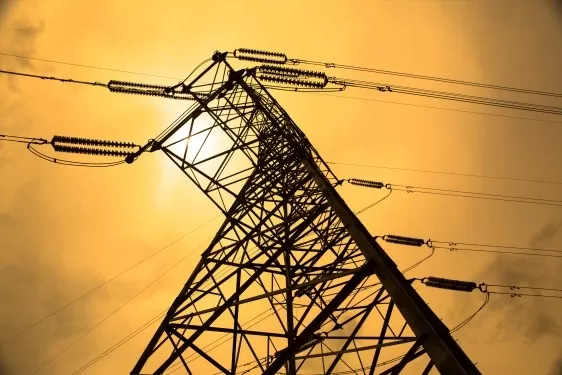
The Federal Energy Regulatory Commission (FERC) instructed grid operators on Thursday to expedite interconnection requests from data centers and other large electricity users.
Under the new directives, six major grid operators must demonstrate that data centers are “able to connect to the transmission system in a timely and orderly manner.” Data centers will bear the costs of interconnection. Commissioners approved the orders unanimously.
FERC also opened the door for grid tech startups by directing grid operators to consider “alternative transmission technologies.” The commission did not specify particular technologies, but the directive could include innovations such as solid-state transformers or superconducting transmission lines.
Grid operators now have 30 days to submit a report detailing how much generating capacity they have available, if any. They also have 60 days to “defend or revise” electricity rates within their regions. FERC also instructed grid operators to be more accommodating toward behind-the-meter power for data centers.
While FERC’s directives gave data centers a fast track to connect, they did not address the shortage of generating capacity.
Grid connections have been slow to materialize, partly because new power plants are also struggling to connect. By the end of 2023, interconnection requests for power plants exceeded the total capacity of the existing fleet, meaning the queue to get on the grid was longer than the grid itself could theoretically handle.
Against this backdrop, electricity demand from data centers is expected to nearly triple by 2035. Grid operators, accustomed to near-zero demand growth over the past two decades, have been strained under the load. Some, like PJM, the nation’s largest grid operator, have descended into something resembling chaos, with major utilities threatening to withdraw.
Tech companies and developers, unable to connect to the grid in a timely manner in many locations, have turned to on-site, or behind-the-meter, power (which is typically more expensive and complicated) out of desperation.
Still, enough projects have been able to connect that electricity prices have soared in many regions. Wholesale electricity rates are up as much as 267% compared with five years ago, according to Bloomberg.
FERC was prompted to address the issue by Secretary of Energy Chris Wright, who in October said delays in data center grid connections had threatened to undermine U.S. competitiveness in AI. Since then, public sentiment toward AI and data centers has soured considerably.
Meanwhile, the Trump administration on Wednesday said it would pay $765 million to wind developer Invenergy to cancel offshore wind leases near California, Maine, and New York. The company said it would use the money to build natural gas plants in the Midwest and geothermal projects in the West. One of Invenergy’s wind projects would have generated as much as 2.4 gigawatts of power — enough, at peak output, to supply roughly 1.8 million homes.
Altogether, the Trump administration has now spent about $2.6 billion to scuttle offshore wind developments.
Related article
 Relativity Networks Secures $22M to Deploy High-Speed Fiber for Data Centers
Industry forecasts project data center developers will invest up to $4 trillion by decade’s end, yet site selection remains heavily restricted by political factors and power-grid limitations. While fiber speed is typically taken for granted, one firm
Senate Demands Data Centers Reveal Power Bills
Two U.S. senators have escalated their campaign against data centers and their energy consumption, sending a letter to the U.S. Energy Information Administration (EIA) on Thursday. Senators Josh Hawley and Elizabeth Warren requested that the agency g
Does Mark Zuckerberg Really Believe AI Is for Everyone?
Loading the player…Meta introduced Glimmer this week, an open-weight AI model that anyone can download and run on personal hardware—a sharp contrast to Muse Spark, the company’s more powerful model, which remains locked behind its own APIs. The relea
Related Special Topic Recommendations
Prompt
Relativity Networks Secures $22M to Deploy High-Speed Fiber for Data Centers
Industry forecasts project data center developers will invest up to $4 trillion by decade’s end, yet site selection remains heavily restricted by political factors and power-grid limitations. While fiber speed is typically taken for granted, one firm
Senate Demands Data Centers Reveal Power Bills
Two U.S. senators have escalated their campaign against data centers and their energy consumption, sending a letter to the U.S. Energy Information Administration (EIA) on Thursday. Senators Josh Hawley and Elizabeth Warren requested that the agency g
Does Mark Zuckerberg Really Believe AI Is for Everyone?
Loading the player…Meta introduced Glimmer this week, an open-weight AI model that anyone can download and run on personal hardware—a sharp contrast to Muse Spark, the company’s more powerful model, which remains locked behind its own APIs. The relea
Related Special Topic Recommendations
Prompt
 AI Prompt Optimizers for Marketing and Support
2026 Latest Best Top-rated AI Prompt Optimizers for Marketing and Support! XIX.AI curates a powerful game-changing collection of must-try tools, regularly updated weekly. These tools help you boost writing efficiency, create high-quality content faster, and streamline marketing campaigns as well as customer support tasks. Get a free vs paid comparison along with real-world tests and detailed rankings. Explore now to Discover your perfect tool for boosting productivity!
 9 tools
 xix.ai
Text-to-speech
AI YouTube Voiceover Generators for Tutorials, Shorts, and Faceless Channels
xix.ai
Text-to-speech
AI YouTube Voiceover Generators for Tutorials, Shorts, and Faceless Channels
2026 Latest Best Top-rated AI YouTube Voiceover Generators for Tutorials, Shorts, and Faceless Channels are here on XIX.AI. Our curated list includes powerful game-changing tools that deliver professional-quality voiceovers quickly, helping creators boost productivity and save time. Enjoy a free vs paid comparison along with real-world tests and weekly updated rankings. Discover your perfect tool to unlock your AI edge today. Explore now!
16 tools
xix.ai
Software Development
Best AI Release Note Generators for SaaS Engineering Teams
2026 Latest Best Top-rated AI Release Note Generators for SaaS Engineering Teams, carefully curated by XIX.AI. These powerful tools help teams create clear, concise updates fast, boost writing efficiency significantly, and avoid common mistakes. Enjoy a free vs paid comparison along with real-world tests and weekly updated rankings. Discover your perfect tool to unlock your AI edge today. Explore now!
10 tools
xix.ai
chatbot
Best AI Chatbot Tools for Customer Support
2026 Latest Best Top-Rated AI Chatbot Tools for Customer Support are here on XIX.AI! This curated list features powerful, game-changing solutions that boost efficiency across all customer service tasks. We conduct real-world tests and provide a weekly updated free vs paid comparison along with detailed rankings to help you find the must-try tool that matches your needs perfectly. Explore now to unlock your AI edge!
13 tools
xix.ai
SEO
AI Topic Cluster Tools for SEO Content Planning
2026 Latest Best Top-Rated AI Topic Cluster Tools for SEO Content Planning! XIX.AI curates a powerful game-changing collection that has undergone rigorous real-world tests and weekly updated rankings. These must-try tools help you plan high-quality content efficiently, boost writing productivity, and overcome creativity bottlenecks. Explore now to discover your perfect tool and unlock your AI edge in SEO work!
8 tools
xix.ai
writing
AI Editing Tools for Business and Academic Writing
2026 Latest Best Top-Rated AI Editing Tools for Business and Academic Writing! XIX.AI has curated a powerful, game-changing collection of must-try tools that go through rigorous real-world tests. You’ll find detailed free vs paid comparison, accurate rankings, and insights to help you boost writing efficiency, produce high-quality content faster, and meet tight deadlines. Explore now to unlock your AI edge!
9 tools
xix.ai

 Comments (0)
0/500
Comments (0)
0/500
The Federal Energy Regulatory Commission (FERC) instructed grid operators on Thursday to expedite interconnection requests from data centers and other large electricity users.
Under the new directives, six major grid operators must demonstrate that data centers are “able to connect to the transmission system in a timely and orderly manner.” Data centers will bear the costs of interconnection. Commissioners approved the orders unanimously.
FERC also opened the door for grid tech startups by directing grid operators to consider “alternative transmission technologies.” The commission did not specify particular technologies, but the directive could include innovations such as solid-state transformers or superconducting transmission lines.
Grid operators now have 30 days to submit a report detailing how much generating capacity they have available, if any. They also have 60 days to “defend or revise” electricity rates within their regions. FERC also instructed grid operators to be more accommodating toward behind-the-meter power for data centers.
While FERC’s directives gave data centers a fast track to connect, they did not address the shortage of generating capacity.
Grid connections have been slow to materialize, partly because new power plants are also struggling to connect. By the end of 2023, interconnection requests for power plants exceeded the total capacity of the existing fleet, meaning the queue to get on the grid was longer than the grid itself could theoretically handle.
Against this backdrop, electricity demand from data centers is expected to nearly triple by 2035. Grid operators, accustomed to near-zero demand growth over the past two decades, have been strained under the load. Some, like PJM, the nation’s largest grid operator, have descended into something resembling chaos, with major utilities threatening to withdraw.
Tech companies and developers, unable to connect to the grid in a timely manner in many locations, have turned to on-site, or behind-the-meter, power (which is typically more expensive and complicated) out of desperation.
Still, enough projects have been able to connect that electricity prices have soared in many regions. Wholesale electricity rates are up as much as 267% compared with five years ago, according to Bloomberg.
FERC was prompted to address the issue by Secretary of Energy Chris Wright, who in October said delays in data center grid connections had threatened to undermine U.S. competitiveness in AI. Since then, public sentiment toward AI and data centers has soured considerably.
Meanwhile, the Trump administration on Wednesday said it would pay $765 million to wind developer Invenergy to cancel offshore wind leases near California, Maine, and New York. The company said it would use the money to build natural gas plants in the Midwest and geothermal projects in the West. One of Invenergy’s wind projects would have generated as much as 2.4 gigawatts of power — enough, at peak output, to supply roughly 1.8 million homes.
Altogether, the Trump administration has now spent about $2.6 billion to scuttle offshore wind developments.








 Relativity Networks Secures $22M to Deploy High-Speed Fiber for Data Centers
Industry forecasts project data center developers will invest up to $4 trillion by decade’s end, yet site selection remains heavily restricted by political factors and power-grid limitations. While fiber speed is typically taken for granted, one firm
Relativity Networks Secures $22M to Deploy High-Speed Fiber for Data Centers
Industry forecasts project data center developers will invest up to $4 trillion by decade’s end, yet site selection remains heavily restricted by political factors and power-grid limitations. While fiber speed is typically taken for granted, one firm
 Senate Demands Data Centers Reveal Power Bills
Two U.S. senators have escalated their campaign against data centers and their energy consumption, sending a letter to the U.S. Energy Information Administration (EIA) on Thursday. Senators Josh Hawley and Elizabeth Warren requested that the agency g
Senate Demands Data Centers Reveal Power Bills
Two U.S. senators have escalated their campaign against data centers and their energy consumption, sending a letter to the U.S. Energy Information Administration (EIA) on Thursday. Senators Josh Hawley and Elizabeth Warren requested that the agency g
 Does Mark Zuckerberg Really Believe AI Is for Everyone?
Loading the player…Meta introduced Glimmer this week, an open-weight AI model that anyone can download and run on personal hardware—a sharp contrast to Muse Spark, the company’s more powerful model, which remains locked behind its own APIs. The relea
Does Mark Zuckerberg Really Believe AI Is for Everyone?
Loading the player…Meta introduced Glimmer this week, an open-weight AI model that anyone can download and run on personal hardware—a sharp contrast to Muse Spark, the company’s more powerful model, which remains locked behind its own APIs. The relea

2026 Latest Best Top-rated AI Prompt Optimizers for Marketing and Support! XIX.AI curates a powerful game-changing collection of must-try tools, regularly updated weekly. These tools help you boost writing efficiency, create high-quality content faster, and streamline marketing campaigns as well as customer support tasks. Get a free vs paid comparison along with real-world tests and detailed rankings. Explore now to Discover your perfect tool for boosting productivity!
9 tools
xix.ai

2026 Latest Best Top-rated AI YouTube Voiceover Generators for Tutorials, Shorts, and Faceless Channels are here on XIX.AI. Our curated list includes powerful game-changing tools that deliver professional-quality voiceovers quickly, helping creators boost productivity and save time. Enjoy a free vs paid comparison along with real-world tests and weekly updated rankings. Discover your perfect tool to unlock your AI edge today. Explore now!
16 tools
xix.ai

2026 Latest Best Top-rated AI Release Note Generators for SaaS Engineering Teams, carefully curated by XIX.AI. These powerful tools help teams create clear, concise updates fast, boost writing efficiency significantly, and avoid common mistakes. Enjoy a free vs paid comparison along with real-world tests and weekly updated rankings. Discover your perfect tool to unlock your AI edge today. Explore now!
10 tools
xix.ai

2026 Latest Best Top-Rated AI Chatbot Tools for Customer Support are here on XIX.AI! This curated list features powerful, game-changing solutions that boost efficiency across all customer service tasks. We conduct real-world tests and provide a weekly updated free vs paid comparison along with detailed rankings to help you find the must-try tool that matches your needs perfectly. Explore now to unlock your AI edge!
13 tools
xix.ai

2026 Latest Best Top-Rated AI Topic Cluster Tools for SEO Content Planning! XIX.AI curates a powerful game-changing collection that has undergone rigorous real-world tests and weekly updated rankings. These must-try tools help you plan high-quality content efficiently, boost writing productivity, and overcome creativity bottlenecks. Explore now to discover your perfect tool and unlock your AI edge in SEO work!
8 tools
xix.ai

2026 Latest Best Top-Rated AI Editing Tools for Business and Academic Writing! XIX.AI has curated a powerful, game-changing collection of must-try tools that go through rigorous real-world tests. You’ll find detailed free vs paid comparison, accurate rankings, and insights to help you boost writing efficiency, produce high-quality content faster, and meet tight deadlines. Explore now to unlock your AI edge!
9 tools
xix.ai












