


 Home
Home
Google Unveils Nano Banana 2 Lite: New Model Sets New Efficiency Benchmarks in Image Generation Field
The competition in the field of AI-powered image generation is growing increasingly fierce. On July 1st, Google officially introduced its newly developed AI image and video generation model, Nano Banana2Lite. As an improved version of the previous model, it retains strong image generation capabilities while simultaneously reducing usage costs and improving response times.
Performance improvements form the cornerstone of this update. Official data shows that generating a single image with Nano Banana2Lite now takes just under 4 seconds, representing a significant reduction in latency compared to its predecessor. This faster processing speed not only meets the demands of quick image creation on a daily basis but also proves highly effective in industrial applications where frequent edits or large-scale image production are required.
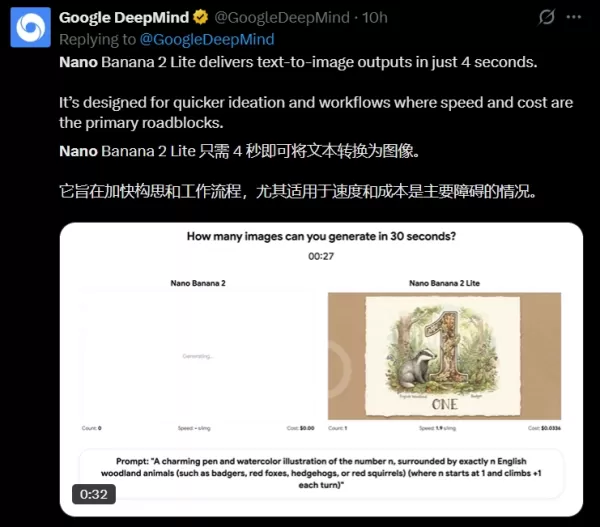
When it comes to commercial use, the model also offers attractive pricing. Google has set its pricing at a highly competitive level, charging only $0.034 per 1000 generated images, which is roughly equivalent to RMB 0.23. Such a low cost per image will undoubtedly ease budget constraints for businesses and independent developers working on large-scale visual projects.
At present, Nano Banana2Lite is available on several key platforms, including Google AI Studio, Gemini API, and Gemini Enterprise Agent Platform. With the successful rollout of this new model, Google has officially categorized the original Nano Banana model as part of its legacy series, having fully adopted a more streamlined and efficient technical design.
Industry experts note that, based on the iterative development approach of the underlying model, Google is accelerating the integration of generative AI into practical, high-value application ecosystems. For content creators, the release of Nano Banana2Lite not only provides a more cost-effective solution but also signals that AI-driven creative tools are moving toward greater real-time functionality and broader accessibility.
Related article
 Yanyu Technology Eyes Hong Kong IPO After 3-Year, 3B USD Valuation
As global enthusiasm for large AI models intensifies, can an "intermediary" bridging models and end-users sustain a massive capital narrative without building foundational models themselves? Recent media reports indicate that Evoken has begun prepari
Google restricts Gemini access amid power shortages while Meta’s development stalls
As generative AI adoption accelerates, computing power has emerged as the critical asset driving competition among major technology firms. Recently, Google has had to restrict resource allocation due to surging demand for its Gemini AI platform, resp
What 3 Top VCs Really Think About the AI Frenzy
During TechCrunch’s StrictlyVC event in Athens, part of the Panathēnea festival, I spoke with Niko Bonatsos of Verdict Capital, Andreas Stavropoulos of Threshold Ventures, and Ben Blume of Atomico about the current venture landscape, the impending Sp
Related Special Topic Recommendations
Education and Learning
Yanyu Technology Eyes Hong Kong IPO After 3-Year, 3B USD Valuation
As global enthusiasm for large AI models intensifies, can an "intermediary" bridging models and end-users sustain a massive capital narrative without building foundational models themselves? Recent media reports indicate that Evoken has begun prepari
Google restricts Gemini access amid power shortages while Meta’s development stalls
As generative AI adoption accelerates, computing power has emerged as the critical asset driving competition among major technology firms. Recently, Google has had to restrict resource allocation due to surging demand for its Gemini AI platform, resp
What 3 Top VCs Really Think About the AI Frenzy
During TechCrunch’s StrictlyVC event in Athens, part of the Panathēnea festival, I spoke with Niko Bonatsos of Verdict Capital, Andreas Stavropoulos of Threshold Ventures, and Ben Blume of Atomico about the current venture landscape, the impending Sp
Related Special Topic Recommendations
Education and Learning
 Top AI Tutors for Exam Prep: Practice Math, Science, and English
2026 Latest Top-Rated Best AI Tutors for Exam Prep are here on XIX.AI! Our curated list features powerful game-changing tools that offer free vs paid comparison, real-world tests, and weekly updated rankings. They help boost your writing efficiency, simplify complex topic learning, and unlock your academic potential. Explore now to Discover your perfect exam prep tool and Start creating today to Unlock your AI edge!
 10 tools
 xix.ai
Finance
AI Budget Planning Tools for Personal Money Management
xix.ai
Finance
AI Budget Planning Tools for Personal Money Management
2026 Latest Best Top-Rated AI Budget Planning Tools for Personal Money Management are here on XIX.AI! This curated collection features powerful, game-changing solutions that help you conduct real-world tests, understand spending habits, and create personalized plans to boost productivity. Enjoy a free vs paid comparison along with detailed rankings. Must-try tools designed to simplify money management and unlock your AI edge. Explore now!
11 tools
xix.ai
Health & Wellness
AI Sleep Tracking Assistants: Improve Recovery with Better Bedtime Habits
2026 Latest Best Top-Rated AI Sleep Tracking Assistants curated for ultimate recovery. This fully updated weekly guide features powerful tools that deliver real-world tests, free vs paid comparison, and detailed rankings to help you find the must-try solution that boosts sleep quality and supports better bedtime habits. Explore now at XIX.AI to Unlock your AI edge.
10 tools
xix.ai
Data Analysis
AI SQL Copilots for Product and Revenue Analytics
2026 Latest Best Top-Rated AI SQL Copilots for Product and Revenue Analytics! XIX.AI has curated a powerful, game-changing collection of must-try tools that undergo real-world tests through weekly updated rankings. These tools help users boost productivity significantly by accelerating data analysis, streamlining complex queries, and generating accurate insights to drive smarter business decisions. Explore now to Discover your perfect tool for unlocking your AI edge!
14 tools
xix.ai
Education and Learning
Best AI Homework Helpers That Teach: Learn Concepts, Not Just Answers
2026 Latest Best Top-Rated AI Homework Helpers That Teach Core Concepts Not Just Answers Powerful Tools for Students Must-Try Curated List Weekly Updated Free vs Paid Comparison Real-World Tests Accurate Rankings to Help You Unlock Your Full Learning Potential Explore now to Discover your perfect tool for smarter studying.
10 tools
xix.ai
Marketing
ChatGPT Ad Copy Tools for Meta Campaigns, Landing Pages, and Creative Testing
2026 Latest Best ChatGPT Ad Copy Tools Reviewed! This curated top-rated list offers powerful game-changing solutions to help you craft high-converting copy for Meta campaigns, landing pages, and creative testing. Get a free vs paid comparison along with real-world tests and detailed rankings to find the must-try tool that boosts your productivity significantly. Explore now at XIX.AI to unlock your AI edge!
11 tools
xix.ai

 Comments (0)
0/500
Comments (0)
0/500
The competition in the field of AI-powered image generation is growing increasingly fierce. On July 1st, Google officially introduced its newly developed AI image and video generation model, Nano Banana2Lite. As an improved version of the previous model, it retains strong image generation capabilities while simultaneously reducing usage costs and improving response times.
Performance improvements form the cornerstone of this update. Official data shows that generating a single image with Nano Banana2Lite now takes just under 4 seconds, representing a significant reduction in latency compared to its predecessor. This faster processing speed not only meets the demands of quick image creation on a daily basis but also proves highly effective in industrial applications where frequent edits or large-scale image production are required.
When it comes to commercial use, the model also offers attractive pricing. Google has set its pricing at a highly competitive level, charging only $0.034 per 1000 generated images, which is roughly equivalent to RMB 0.23. Such a low cost per image will undoubtedly ease budget constraints for businesses and independent developers working on large-scale visual projects.
At present, Nano Banana2Lite is available on several key platforms, including Google AI Studio, Gemini API, and Gemini Enterprise Agent Platform. With the successful rollout of this new model, Google has officially categorized the original Nano Banana model as part of its legacy series, having fully adopted a more streamlined and efficient technical design.
Industry experts note that, based on the iterative development approach of the underlying model, Google is accelerating the integration of generative AI into practical, high-value application ecosystems. For content creators, the release of Nano Banana2Lite not only provides a more cost-effective solution but also signals that AI-driven creative tools are moving toward greater real-time functionality and broader accessibility.








 Yanyu Technology Eyes Hong Kong IPO After 3-Year, 3B USD Valuation
As global enthusiasm for large AI models intensifies, can an "intermediary" bridging models and end-users sustain a massive capital narrative without building foundational models themselves? Recent media reports indicate that Evoken has begun prepari
Yanyu Technology Eyes Hong Kong IPO After 3-Year, 3B USD Valuation
As global enthusiasm for large AI models intensifies, can an "intermediary" bridging models and end-users sustain a massive capital narrative without building foundational models themselves? Recent media reports indicate that Evoken has begun prepari
 Google restricts Gemini access amid power shortages while Meta’s development stalls
As generative AI adoption accelerates, computing power has emerged as the critical asset driving competition among major technology firms. Recently, Google has had to restrict resource allocation due to surging demand for its Gemini AI platform, resp
Google restricts Gemini access amid power shortages while Meta’s development stalls
As generative AI adoption accelerates, computing power has emerged as the critical asset driving competition among major technology firms. Recently, Google has had to restrict resource allocation due to surging demand for its Gemini AI platform, resp
 What 3 Top VCs Really Think About the AI Frenzy
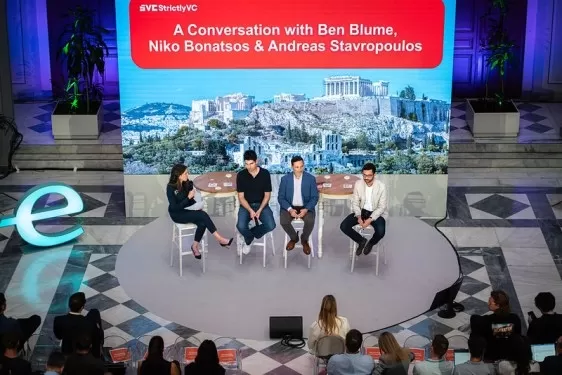
During TechCrunch’s StrictlyVC event in Athens, part of the Panathēnea festival, I spoke with Niko Bonatsos of Verdict Capital, Andreas Stavropoulos of Threshold Ventures, and Ben Blume of Atomico about the current venture landscape, the impending Sp
What 3 Top VCs Really Think About the AI Frenzy
During TechCrunch’s StrictlyVC event in Athens, part of the Panathēnea festival, I spoke with Niko Bonatsos of Verdict Capital, Andreas Stavropoulos of Threshold Ventures, and Ben Blume of Atomico about the current venture landscape, the impending Sp

2026 Latest Top-Rated Best AI Tutors for Exam Prep are here on XIX.AI! Our curated list features powerful game-changing tools that offer free vs paid comparison, real-world tests, and weekly updated rankings. They help boost your writing efficiency, simplify complex topic learning, and unlock your academic potential. Explore now to Discover your perfect exam prep tool and Start creating today to Unlock your AI edge!
10 tools
xix.ai

2026 Latest Best Top-Rated AI Budget Planning Tools for Personal Money Management are here on XIX.AI! This curated collection features powerful, game-changing solutions that help you conduct real-world tests, understand spending habits, and create personalized plans to boost productivity. Enjoy a free vs paid comparison along with detailed rankings. Must-try tools designed to simplify money management and unlock your AI edge. Explore now!
11 tools
xix.ai

2026 Latest Best Top-Rated AI Sleep Tracking Assistants curated for ultimate recovery. This fully updated weekly guide features powerful tools that deliver real-world tests, free vs paid comparison, and detailed rankings to help you find the must-try solution that boosts sleep quality and supports better bedtime habits. Explore now at XIX.AI to Unlock your AI edge.
10 tools
xix.ai

2026 Latest Best Top-Rated AI SQL Copilots for Product and Revenue Analytics! XIX.AI has curated a powerful, game-changing collection of must-try tools that undergo real-world tests through weekly updated rankings. These tools help users boost productivity significantly by accelerating data analysis, streamlining complex queries, and generating accurate insights to drive smarter business decisions. Explore now to Discover your perfect tool for unlocking your AI edge!
14 tools
xix.ai

2026 Latest Best Top-Rated AI Homework Helpers That Teach Core Concepts Not Just Answers Powerful Tools for Students Must-Try Curated List Weekly Updated Free vs Paid Comparison Real-World Tests Accurate Rankings to Help You Unlock Your Full Learning Potential Explore now to Discover your perfect tool for smarter studying.
10 tools
xix.ai

2026 Latest Best ChatGPT Ad Copy Tools Reviewed! This curated top-rated list offers powerful game-changing solutions to help you craft high-converting copy for Meta campaigns, landing pages, and creative testing. Get a free vs paid comparison along with real-world tests and detailed rankings to find the must-try tool that boosts your productivity significantly. Explore now at XIX.AI to unlock your AI edge!
11 tools
xix.ai












