


 Home
Google Launches Deep Research Agent for Autonomous Driving Era
Google recently introduced two research-focused AI agents, Deep Research and Deep Research Max, built on the Gemini 3.1 Pro model. These tools automate intensive information gathering and analysis, moving AI assistants beyond simple Q&A toward complex task execution.
Currently, developers can preview both agents through the paid tier of the Gemini API. They pull data from public websites as well as internal company databases, delivering detailed analysis reports with full source citations.
Flexible Dual Versions Balance Speed and Depth in Research
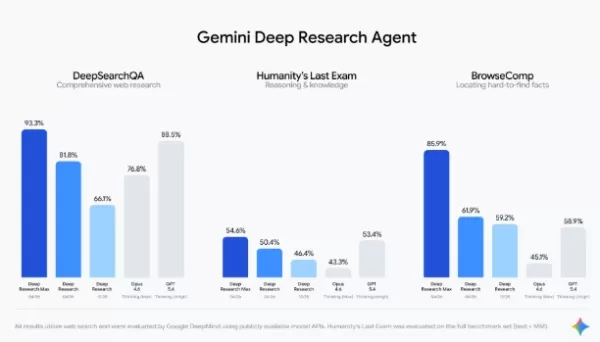
To accommodate various workplace requirements, Google offers two versions. The standard Deep Research emphasizes low latency and fast responses, ideal for conversational interfaces needing real-time answers. The Max version, on the other hand, prioritizes depth, using extended compute time for logical reasoning and iterative analysis.
In practice, Deep Research Max functions like an overnight digital analyst. It handles complex due diligence tasks in the background asynchronously and delivers a well-organized, evidence-backed final report to the analysis team by the next morning, significantly freeing up human effort.
MCP Protocol Support Breaks Down Private Data Silos
A key highlight of this update is support for the Model Context Protocol (MCP). Developers can now link the agents to specialized financial, market, or industry databases. By independently querying professional data sources, the agents evolve from simple search engines into digital employees that handle vertical domain expertise.
The system also offers robust visualization features, producing native charts and infographics within reports. Users can work with the AI to create a research plan before starting, ensuring the right direction. These combined capabilities suggest that barriers to professional research will continue to lower in the future.
Related article
 Stripe to Acquire OpenRouter as AI Model Routing Gains Momentum
Stripe has agreed to acquire OpenRouter, an AI model-routing platform that gives developers access to hundreds of models through a single interface. The deal adds model selection and routing to Stripe’s existing work around AI usage and token-based b
Former OpenAI Researcher Barrett Zoph Returns to Google to Support Gemini Development
Barret Zoph, who previously abruptly left and joined OpenAI due to a disagreement with Thinking Machines Lab CEO Miriam Mularati, has once again changed employers. Alphabet's Google announced that Zoph will return as Vice President of Research, bring
How Recursive Intelligence Raised $335M at $4B Valuation in 4 Months
The co-founders of startup Ricursive Intelligence seemed destined to be co-founders.Anna Goldie, CEO, and Azalia Mirhoseini, CTO, are so well-known in the AI community that they were among those AI engineers who “got those weird emails from Zuckerber
Related Special Topic Recommendations
Design & Art
 Top AI Illustration Tools: Create Editorial Scenes and Cover Art Faster
2026 Latest Top-rated AI Illustration Tools: Our curated list features the best powerfully designed tools for creating stunning editorial scenes and eye-catching cover art quickly. Each option has gone through rigorous real-world tests, offering a free vs paid comparison to help you find the perfect match for your workflow. Try these must-try solutions today to unlock your AI edge and boost your creative productivity. Explore now at XIX.AI.
 10 tools
 xix.ai
Education and Learning
Top AI Tutors for Exam Prep: Practice Math, Science, and English
2026 Latest Top-Rated Best AI Tutors for Exam Prep are here on XIX.AI! Our curated list features powerful game-changing tools that offer free vs paid comparison, real-world tests, and weekly updated rankings. They help boost your writing efficiency, simplify complex topic learning, and unlock your academic potential. Explore now to Discover your perfect exam prep tool and Start creating today to Unlock your AI edge!
10 tools
xix.ai
Finance
AI Budget Planning Tools for Personal Money Management
2026 Latest Best Top-Rated AI Budget Planning Tools for Personal Money Management are here on XIX.AI! This curated collection features powerful, game-changing solutions that help you conduct real-world tests, understand spending habits, and create personalized plans to boost productivity. Enjoy a free vs paid comparison along with detailed rankings. Must-try tools designed to simplify money management and unlock your AI edge. Explore now!
11 tools
xix.ai
Health & Wellness
AI Sleep Tracking Assistants: Improve Recovery with Better Bedtime Habits
2026 Latest Best Top-Rated AI Sleep Tracking Assistants curated for ultimate recovery. This fully updated weekly guide features powerful tools that deliver real-world tests, free vs paid comparison, and detailed rankings to help you find the must-try solution that boosts sleep quality and supports better bedtime habits. Explore now at XIX.AI to Unlock your AI edge.
10 tools
xix.ai
Data Analysis
AI SQL Copilots for Product and Revenue Analytics
2026 Latest Best Top-Rated AI SQL Copilots for Product and Revenue Analytics! XIX.AI has curated a powerful, game-changing collection of must-try tools that undergo real-world tests through weekly updated rankings. These tools help users boost productivity significantly by accelerating data analysis, streamlining complex queries, and generating accurate insights to drive smarter business decisions. Explore now to Discover your perfect tool for unlocking your AI edge!
14 tools
xix.ai
Education and Learning
Best AI Homework Helpers That Teach: Learn Concepts, Not Just Answers
2026 Latest Best Top-Rated AI Homework Helpers That Teach Core Concepts Not Just Answers Powerful Tools for Students Must-Try Curated List Weekly Updated Free vs Paid Comparison Real-World Tests Accurate Rankings to Help You Unlock Your Full Learning Potential Explore now to Discover your perfect tool for smarter studying.
10 tools
xix.ai

 Comments (1)
0/500
![KennethLee]()
Finally, an AI that does the heavy lifting for me! 🤖 Deep Research sounds like a game-changer for keeping up with tech news without drowning in tabs. Can't wait to test if it actually saves time or just adds more noise. #AI #Productivity
Google recently introduced two research-focused AI agents, Deep Research and Deep Research Max, built on the Gemini 3.1 Pro model. These tools automate intensive information gathering and analysis, moving AI assistants beyond simple Q&A toward complex task execution.
Currently, developers can preview both agents through the paid tier of the Gemini API. They pull data from public websites as well as internal company databases, delivering detailed analysis reports with full source citations.
Flexible Dual Versions Balance Speed and Depth in Research
To accommodate various workplace requirements, Google offers two versions. The standard Deep Research emphasizes low latency and fast responses, ideal for conversational interfaces needing real-time answers. The Max version, on the other hand, prioritizes depth, using extended compute time for logical reasoning and iterative analysis.
In practice, Deep Research Max functions like an overnight digital analyst. It handles complex due diligence tasks in the background asynchronously and delivers a well-organized, evidence-backed final report to the analysis team by the next morning, significantly freeing up human effort.
MCP Protocol Support Breaks Down Private Data Silos
A key highlight of this update is support for the Model Context Protocol (MCP). Developers can now link the agents to specialized financial, market, or industry databases. By independently querying professional data sources, the agents evolve from simple search engines into digital employees that handle vertical domain expertise.
The system also offers robust visualization features, producing native charts and infographics within reports. Users can work with the AI to create a research plan before starting, ensuring the right direction. These combined capabilities suggest that barriers to professional research will continue to lower in the future.








 Stripe to Acquire OpenRouter as AI Model Routing Gains Momentum
Stripe has agreed to acquire OpenRouter, an AI model-routing platform that gives developers access to hundreds of models through a single interface. The deal adds model selection and routing to Stripe’s existing work around AI usage and token-based b
 Former OpenAI Researcher Barrett Zoph Returns to Google to Support Gemini Development
Barret Zoph, who previously abruptly left and joined OpenAI due to a disagreement with Thinking Machines Lab CEO Miriam Mularati, has once again changed employers. Alphabet's Google announced that Zoph will return as Vice President of Research, bring
 How Recursive Intelligence Raised $335M at $4B Valuation in 4 Months
The co-founders of startup Ricursive Intelligence seemed destined to be co-founders.Anna Goldie, CEO, and Azalia Mirhoseini, CTO, are so well-known in the AI community that they were among those AI engineers who “got those weird emails from Zuckerber

2026 Latest Top-rated AI Illustration Tools: Our curated list features the best powerfully designed tools for creating stunning editorial scenes and eye-catching cover art quickly. Each option has gone through rigorous real-world tests, offering a free vs paid comparison to help you find the perfect match for your workflow. Try these must-try solutions today to unlock your AI edge and boost your creative productivity. Explore now at XIX.AI.
10 tools
xix.ai

2026 Latest Top-Rated Best AI Tutors for Exam Prep are here on XIX.AI! Our curated list features powerful game-changing tools that offer free vs paid comparison, real-world tests, and weekly updated rankings. They help boost your writing efficiency, simplify complex topic learning, and unlock your academic potential. Explore now to Discover your perfect exam prep tool and Start creating today to Unlock your AI edge!
10 tools
xix.ai

2026 Latest Best Top-Rated AI Budget Planning Tools for Personal Money Management are here on XIX.AI! This curated collection features powerful, game-changing solutions that help you conduct real-world tests, understand spending habits, and create personalized plans to boost productivity. Enjoy a free vs paid comparison along with detailed rankings. Must-try tools designed to simplify money management and unlock your AI edge. Explore now!
11 tools
xix.ai

2026 Latest Best Top-Rated AI Sleep Tracking Assistants curated for ultimate recovery. This fully updated weekly guide features powerful tools that deliver real-world tests, free vs paid comparison, and detailed rankings to help you find the must-try solution that boosts sleep quality and supports better bedtime habits. Explore now at XIX.AI to Unlock your AI edge.
10 tools
xix.ai

2026 Latest Best Top-Rated AI SQL Copilots for Product and Revenue Analytics! XIX.AI has curated a powerful, game-changing collection of must-try tools that undergo real-world tests through weekly updated rankings. These tools help users boost productivity significantly by accelerating data analysis, streamlining complex queries, and generating accurate insights to drive smarter business decisions. Explore now to Discover your perfect tool for unlocking your AI edge!
14 tools
xix.ai

2026 Latest Best Top-Rated AI Homework Helpers That Teach Core Concepts Not Just Answers Powerful Tools for Students Must-Try Curated List Weekly Updated Free vs Paid Comparison Real-World Tests Accurate Rankings to Help You Unlock Your Full Learning Potential Explore now to Discover your perfect tool for smarter studying.
10 tools
xix.ai

Finally, an AI that does the heavy lifting for me! 🤖 Deep Research sounds like a game-changer for keeping up with tech news without drowning in tabs. Can't wait to test if it actually saves time or just adds more noise. #AI #Productivity












