


 Home
HomeGLM-5.2 Fully Open Sourced to Advance AI Access for All

As AI competition intensifies, global artificial intelligence development is showing clear divergence. The US recently imposed strict export controls on two cutting-edge AI models from Anthropic, explicitly restricting access for non-US users. This "closed-door" approach not only heightens competitive tensions but also raises concerns among developers worldwide about the expansion of technological monopolies.
Facing this industry challenge, China's AI community has chosen to respond with openness. On June 13, Zhipu officially fully open-sourced its strongest model, GLM-5.2. The core philosophy behind this decision: cutting-edge intelligent technology should not be confined by a handful of rules and powers—it should belong to every innovative developer.
As Zhipu's most advanced open-source release, GLM-5.2 delivers impressive performance. It features a genuinely usable 1M-token long-context window and maintains industry-leading logical reasoning for long-sequence tasks. For programming assistance, a top concern for developers, the model has undergone deep optimization, making it a key benchmark in code generation for domestic AI.
According to the official schedule, GLM-5.2 is already available for pre-release experience through the GLM Coding Plan. The API and complete open-source code will launch next week under the MIT license, significantly lowering technical barriers.
Zhipu is not alone. Recently, Xiyu Technology open-sourced the MiniMax M3 model, while Moonshot AI continued the open-source approach with Kimi K2.7. DeepSeek has also firmly set AGI as its top priority, steadily fostering an open-source ecosystem.
While there is still room for improvement in some performance indicators compared to international top-tier models, domestic large models are offering developers a more inclusive and competitive technical foundation through a steadfast open-source strategy and cost-effective pricing. As more high-quality domestic models move toward open source, AI development is gradually shifting away from reliance on a single closed-source system toward a more vibrant era of mass innovation.
Related article
 Tmall Supermarket Marks 15th Anniversary With AI Agent Chao Miao
Tmall Supermarket unveiled its AI-powered intelligent agent, "Chao Miao 1.0," during its 15th Anniversary Merchant Conference, signaling a shift toward intelligent scheduling in online retail. This advanced solution features 16 specialized sub-agents
Tencent Launches China AI Community with 13,000 Skills
Tencent has officially launched SkillHub, an AI Skills community that signals its continued expansion into AI autonomous execution (AI Agents). Designed as a localized solution for Chinese developers and users, it addresses the specific challenges en
Flock CEO urges compromise amid mounting backlash
Flock Safety CEO Garrett Langley argues that the nation must strike a “compromise” between privacy and safety.“Focusing solely on either privacy or safety prioritizes the wrong aspect. As a country, we must prioritize compromise,” Langley stated in a
Related Special Topic Recommendations
Social Media
Tmall Supermarket Marks 15th Anniversary With AI Agent Chao Miao
Tmall Supermarket unveiled its AI-powered intelligent agent, "Chao Miao 1.0," during its 15th Anniversary Merchant Conference, signaling a shift toward intelligent scheduling in online retail. This advanced solution features 16 specialized sub-agents
Tencent Launches China AI Community with 13,000 Skills
Tencent has officially launched SkillHub, an AI Skills community that signals its continued expansion into AI autonomous execution (AI Agents). Designed as a localized solution for Chinese developers and users, it addresses the specific challenges en
Flock CEO urges compromise amid mounting backlash
Flock Safety CEO Garrett Langley argues that the nation must strike a “compromise” between privacy and safety.“Focusing solely on either privacy or safety prioritizes the wrong aspect. As a country, we must prioritize compromise,” Langley stated in a
Related Special Topic Recommendations
Social Media
 Best AI Hashtag Tools for Instagram and TikTok Growth
2026 Latest Best AI Hashtag Tools for Instagram and TikTok Growth! XIX.AI has curated a top-rated list of must-try powerful tools that deliver game-changing results through real-world tests. You’ll find detailed rankings, free vs paid comparison info, and insights to help you boost content reach efficiently. Explore now to discover your perfect tool and unlock your AI edge!
 8 tools
 xix.ai
Finance
AI Financial Analysis Tools for Small Businesses
xix.ai
Finance
AI Financial Analysis Tools for Small Businesses
2026 Latest Best Top-Rated AI Financial Analysis Tools for Small Businesses! XIX.AI has curated a powerful, game-changing collection of must-try solutions designed to streamline financial tasks, boost productivity, and help you make smarter business decisions. Each tool goes through rigorous real-world tests, with weekly updated rankings and a detailed free vs paid comparison to help you find the perfect fit. Explore now to unlock your AI edge!
15 tools
xix.ai
Animation Creation
AI Motion Capture Cleanup Tools for Character Animation
2026 Latest Best Top-rated AI Motion Capture Cleanup Tools for Character Animation are here on XIX.AI! This curated list includes powerful, game-changing solutions that go through real-world tests to deliver flawless results. Get a free vs paid comparison and see how they boost your animation workflow efficiency. Explore now to discover your perfect tool for smoother character creation!
10 tools
xix.ai
design
AI Layout Review Tools for Faster Interface Design
2026 Latest Best Top-rated AI Layout Review Tools for Faster Interface Design are here on XIX.AI. This curated list features powerful game-changing options that go through real-world tests to deliver accurate feedback, helping you boost productivity and overcome design challenges. Get a free vs paid comparison and discover your perfect tool to streamline workflow today. Explore now!
9 tools
xix.ai
SEO
Best AI Internal Link Auditors for Large Editorial Sites and Programmatic SEO Pages
2026 Latest Best Top-rated AI Internal Link Auditors for Large Editorial Sites and Programmatic SEO Pages, curated by XIX.AI. These powerful tools offer game-changing efficiency to identify weak links, boost content rankings, and streamline SEO workflows. Get a free vs paid comparison along with real-world tests and weekly updated rankings. Explore now to Unlock your AI edge.
10 tools
xix.ai
Comic Creation
AI Comic Coloring Tools for Fast Episode Production
2026 Latest Best Top-Rated AI Comic Coloring Tools Curated for Fast Episode Production! XIX.AI provides powerful game-changing solutions that boost creativity and streamline workflows significantly. Get a free vs paid comparison, see real-world tests, and access weekly updated rankings to help you find the perfect must-try tool. Explore now to unlock your AI edge in comic production.
9 tools
xix.ai

 Comments (0)
0/500
Comments (0)
0/500
As AI competition intensifies, global artificial intelligence development is showing clear divergence. The US recently imposed strict export controls on two cutting-edge AI models from Anthropic, explicitly restricting access for non-US users. This "closed-door" approach not only heightens competitive tensions but also raises concerns among developers worldwide about the expansion of technological monopolies.
Facing this industry challenge, China's AI community has chosen to respond with openness. On June 13, Zhipu officially fully open-sourced its strongest model, GLM-5.2. The core philosophy behind this decision: cutting-edge intelligent technology should not be confined by a handful of rules and powers—it should belong to every innovative developer.
As Zhipu's most advanced open-source release, GLM-5.2 delivers impressive performance. It features a genuinely usable 1M-token long-context window and maintains industry-leading logical reasoning for long-sequence tasks. For programming assistance, a top concern for developers, the model has undergone deep optimization, making it a key benchmark in code generation for domestic AI.
According to the official schedule, GLM-5.2 is already available for pre-release experience through the GLM Coding Plan. The API and complete open-source code will launch next week under the MIT license, significantly lowering technical barriers.
Zhipu is not alone. Recently, Xiyu Technology open-sourced the MiniMax M3 model, while Moonshot AI continued the open-source approach with Kimi K2.7. DeepSeek has also firmly set AGI as its top priority, steadily fostering an open-source ecosystem.
While there is still room for improvement in some performance indicators compared to international top-tier models, domestic large models are offering developers a more inclusive and competitive technical foundation through a steadfast open-source strategy and cost-effective pricing. As more high-quality domestic models move toward open source, AI development is gradually shifting away from reliance on a single closed-source system toward a more vibrant era of mass innovation.








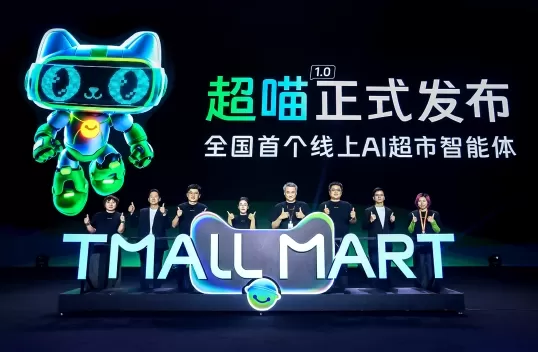 Tmall Supermarket Marks 15th Anniversary With AI Agent Chao Miao
Tmall Supermarket unveiled its AI-powered intelligent agent, "Chao Miao 1.0," during its 15th Anniversary Merchant Conference, signaling a shift toward intelligent scheduling in online retail. This advanced solution features 16 specialized sub-agents
Tmall Supermarket Marks 15th Anniversary With AI Agent Chao Miao
Tmall Supermarket unveiled its AI-powered intelligent agent, "Chao Miao 1.0," during its 15th Anniversary Merchant Conference, signaling a shift toward intelligent scheduling in online retail. This advanced solution features 16 specialized sub-agents
 Tencent Launches China AI Community with 13,000 Skills
Tencent has officially launched SkillHub, an AI Skills community that signals its continued expansion into AI autonomous execution (AI Agents). Designed as a localized solution for Chinese developers and users, it addresses the specific challenges en
Tencent Launches China AI Community with 13,000 Skills
Tencent has officially launched SkillHub, an AI Skills community that signals its continued expansion into AI autonomous execution (AI Agents). Designed as a localized solution for Chinese developers and users, it addresses the specific challenges en
 Flock CEO urges compromise amid mounting backlash
Flock Safety CEO Garrett Langley argues that the nation must strike a “compromise” between privacy and safety.“Focusing solely on either privacy or safety prioritizes the wrong aspect. As a country, we must prioritize compromise,” Langley stated in a
Flock CEO urges compromise amid mounting backlash
Flock Safety CEO Garrett Langley argues that the nation must strike a “compromise” between privacy and safety.“Focusing solely on either privacy or safety prioritizes the wrong aspect. As a country, we must prioritize compromise,” Langley stated in a

2026 Latest Best AI Hashtag Tools for Instagram and TikTok Growth! XIX.AI has curated a top-rated list of must-try powerful tools that deliver game-changing results through real-world tests. You’ll find detailed rankings, free vs paid comparison info, and insights to help you boost content reach efficiently. Explore now to discover your perfect tool and unlock your AI edge!
8 tools
xix.ai

2026 Latest Best Top-Rated AI Financial Analysis Tools for Small Businesses! XIX.AI has curated a powerful, game-changing collection of must-try solutions designed to streamline financial tasks, boost productivity, and help you make smarter business decisions. Each tool goes through rigorous real-world tests, with weekly updated rankings and a detailed free vs paid comparison to help you find the perfect fit. Explore now to unlock your AI edge!
15 tools
xix.ai

2026 Latest Best Top-rated AI Motion Capture Cleanup Tools for Character Animation are here on XIX.AI! This curated list includes powerful, game-changing solutions that go through real-world tests to deliver flawless results. Get a free vs paid comparison and see how they boost your animation workflow efficiency. Explore now to discover your perfect tool for smoother character creation!
10 tools
xix.ai

2026 Latest Best Top-rated AI Layout Review Tools for Faster Interface Design are here on XIX.AI. This curated list features powerful game-changing options that go through real-world tests to deliver accurate feedback, helping you boost productivity and overcome design challenges. Get a free vs paid comparison and discover your perfect tool to streamline workflow today. Explore now!
9 tools
xix.ai

2026 Latest Best Top-rated AI Internal Link Auditors for Large Editorial Sites and Programmatic SEO Pages, curated by XIX.AI. These powerful tools offer game-changing efficiency to identify weak links, boost content rankings, and streamline SEO workflows. Get a free vs paid comparison along with real-world tests and weekly updated rankings. Explore now to Unlock your AI edge.
10 tools
xix.ai

2026 Latest Best Top-Rated AI Comic Coloring Tools Curated for Fast Episode Production! XIX.AI provides powerful game-changing solutions that boost creativity and streamline workflows significantly. Get a free vs paid comparison, see real-world tests, and access weekly updated rankings to help you find the perfect must-try tool. Explore now to unlock your AI edge in comic production.
9 tools
xix.ai












