


 Home
General Intuition targets $300M raise at $2B valuation

General Intuition, the New York-based startup developing a foundation model that trains AI agents to navigate space and time, is in discussions to raise roughly $300 million, sources familiar with the matter told TechCrunch.
The funding round comes eight months after General Intuition spun out of Medal, a platform for uploading and sharing video game clips, with a $134 million seed round. The new investment would push the startup’s valuation to just over $2 billion, sources say.
Sources tell TechCrunch that General Intuition has secured commitments from backers including Jeff Bezos and Eric Schmidt, as well as existing investors Khosla Ventures and General Catalyst.
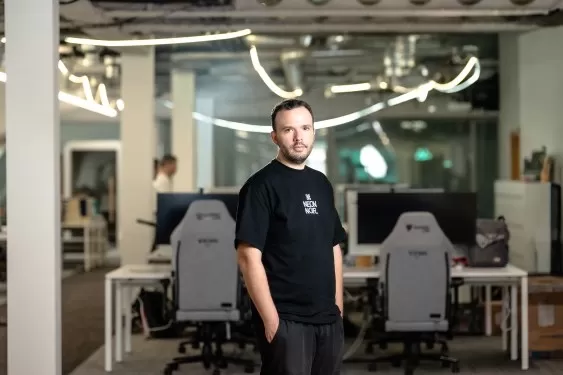
Pim de Witte, who co-founded Medal, founded and leads General Intuition alongside co-founders Eloi Alonso, Adam Jelley, and Vincent Micheli — researchers with expertise in world modeling and simulation.
The startup trains embodied AI and world models using Medal’s dataset, which generates 2 billion videos per year from 10 million monthly active users. The startup’s pitch is that this dataset — unique because it allows AI to learn from interactive, first-person gameplay — serves as an ideal foundation for teaching machines deep spatial-temporal reasoning, enabling them to perceive, anticipate, and interact in real-time within simulations.
That dataset has reportedly drawn attention from OpenAI, which previously attempted to acquire Medal. And sources say OpenAI is not the only major AI lab that has expressed interest.
The world model space General Intuition is operating in is heating up. Startups like Runway, Decart, and World Labs have all recently released world models, and Google’s Genie 3 recently began integrating Google Maps data for more realistic simulation capabilities.
All these companies see gaming and robotics training as near-term commercial use cases, but General Intuition takes a different approach: it builds world models to train agents, not to sell them. The agents are the product, and the startup’s unique dataset gives it a viable path forward.
General Intuition plans to use the funds to scale its compute capacity, aiming to release a new product by the end of summer or early fall, according to a source familiar with the matter.
Related article
 QueryStory urges caution on AI-generated content
In 2009, Shapor Naghibzadeh discovered the power of compelling storytelling while working as a Google sysops engineer. During Operation Aurora, when state-sponsored hackers targeted the tech giant, he was summoned to a crisis room to clarify server a
French Startup ZML Unveils Free Tool to Accelerate AI Inference Across Multiple Chips
Nvidia’s era of unchecked market supremacy may be winding down, yet competitors and alternatives are emerging from every angle.ZML, a prominent French AI startup backed by Turing Award laureate Yann LeCun, has unveiled inference-performance software
Anthropic Unveils Opus 4.6, a Controversial Content Generator
Anthropic’s universal usage standards for Claude prohibit the model from generating sexually explicit content, including depicting or requesting sexual intercourse or sex acts, generating content related to sexual fetishes or fantasies, or engaging i
Related Special Topic Recommendations
Design & Art
 Top AI Illustration Tools: Create Editorial Scenes and Cover Art Faster
2026 Latest Top-rated AI Illustration Tools: Our curated list features the best powerfully designed tools for creating stunning editorial scenes and eye-catching cover art quickly. Each option has gone through rigorous real-world tests, offering a free vs paid comparison to help you find the perfect match for your workflow. Try these must-try solutions today to unlock your AI edge and boost your creative productivity. Explore now at XIX.AI.
 10 tools
 xix.ai
Education and Learning
Top AI Tutors for Exam Prep: Practice Math, Science, and English
2026 Latest Top-Rated Best AI Tutors for Exam Prep are here on XIX.AI! Our curated list features powerful game-changing tools that offer free vs paid comparison, real-world tests, and weekly updated rankings. They help boost your writing efficiency, simplify complex topic learning, and unlock your academic potential. Explore now to Discover your perfect exam prep tool and Start creating today to Unlock your AI edge!
10 tools
xix.ai
Finance
AI Budget Planning Tools for Personal Money Management
2026 Latest Best Top-Rated AI Budget Planning Tools for Personal Money Management are here on XIX.AI! This curated collection features powerful, game-changing solutions that help you conduct real-world tests, understand spending habits, and create personalized plans to boost productivity. Enjoy a free vs paid comparison along with detailed rankings. Must-try tools designed to simplify money management and unlock your AI edge. Explore now!
11 tools
xix.ai
Health & Wellness
AI Sleep Tracking Assistants: Improve Recovery with Better Bedtime Habits
2026 Latest Best Top-Rated AI Sleep Tracking Assistants curated for ultimate recovery. This fully updated weekly guide features powerful tools that deliver real-world tests, free vs paid comparison, and detailed rankings to help you find the must-try solution that boosts sleep quality and supports better bedtime habits. Explore now at XIX.AI to Unlock your AI edge.
10 tools
xix.ai
Data Analysis
AI SQL Copilots for Product and Revenue Analytics
2026 Latest Best Top-Rated AI SQL Copilots for Product and Revenue Analytics! XIX.AI has curated a powerful, game-changing collection of must-try tools that undergo real-world tests through weekly updated rankings. These tools help users boost productivity significantly by accelerating data analysis, streamlining complex queries, and generating accurate insights to drive smarter business decisions. Explore now to Discover your perfect tool for unlocking your AI edge!
14 tools
xix.ai
Education and Learning
Best AI Homework Helpers That Teach: Learn Concepts, Not Just Answers
2026 Latest Best Top-Rated AI Homework Helpers That Teach Core Concepts Not Just Answers Powerful Tools for Students Must-Try Curated List Weekly Updated Free vs Paid Comparison Real-World Tests Accurate Rankings to Help You Unlock Your Full Learning Potential Explore now to Discover your perfect tool for smarter studying.
10 tools
xix.ai

 Comments (0)
0/500
General Intuition, the New York-based startup developing a foundation model that trains AI agents to navigate space and time, is in discussions to raise roughly $300 million, sources familiar with the matter told TechCrunch.
The funding round comes eight months after General Intuition spun out of Medal, a platform for uploading and sharing video game clips, with a $134 million seed round. The new investment would push the startup’s valuation to just over $2 billion, sources say.
Sources tell TechCrunch that General Intuition has secured commitments from backers including Jeff Bezos and Eric Schmidt, as well as existing investors Khosla Ventures and General Catalyst.
Pim de Witte, who co-founded Medal, founded and leads General Intuition alongside co-founders Eloi Alonso, Adam Jelley, and Vincent Micheli — researchers with expertise in world modeling and simulation.
The startup trains embodied AI and world models using Medal’s dataset, which generates 2 billion videos per year from 10 million monthly active users. The startup’s pitch is that this dataset — unique because it allows AI to learn from interactive, first-person gameplay — serves as an ideal foundation for teaching machines deep spatial-temporal reasoning, enabling them to perceive, anticipate, and interact in real-time within simulations.
That dataset has reportedly drawn attention from OpenAI, which previously attempted to acquire Medal. And sources say OpenAI is not the only major AI lab that has expressed interest.
The world model space General Intuition is operating in is heating up. Startups like Runway, Decart, and World Labs have all recently released world models, and Google’s Genie 3 recently began integrating Google Maps data for more realistic simulation capabilities.
All these companies see gaming and robotics training as near-term commercial use cases, but General Intuition takes a different approach: it builds world models to train agents, not to sell them. The agents are the product, and the startup’s unique dataset gives it a viable path forward.
General Intuition plans to use the funds to scale its compute capacity, aiming to release a new product by the end of summer or early fall, according to a source familiar with the matter.








 QueryStory urges caution on AI-generated content
In 2009, Shapor Naghibzadeh discovered the power of compelling storytelling while working as a Google sysops engineer. During Operation Aurora, when state-sponsored hackers targeted the tech giant, he was summoned to a crisis room to clarify server a
 French Startup ZML Unveils Free Tool to Accelerate AI Inference Across Multiple Chips
Nvidia’s era of unchecked market supremacy may be winding down, yet competitors and alternatives are emerging from every angle.ZML, a prominent French AI startup backed by Turing Award laureate Yann LeCun, has unveiled inference-performance software
 Anthropic Unveils Opus 4.6, a Controversial Content Generator
Anthropic’s universal usage standards for Claude prohibit the model from generating sexually explicit content, including depicting or requesting sexual intercourse or sex acts, generating content related to sexual fetishes or fantasies, or engaging i

2026 Latest Top-rated AI Illustration Tools: Our curated list features the best powerfully designed tools for creating stunning editorial scenes and eye-catching cover art quickly. Each option has gone through rigorous real-world tests, offering a free vs paid comparison to help you find the perfect match for your workflow. Try these must-try solutions today to unlock your AI edge and boost your creative productivity. Explore now at XIX.AI.
10 tools
xix.ai

2026 Latest Top-Rated Best AI Tutors for Exam Prep are here on XIX.AI! Our curated list features powerful game-changing tools that offer free vs paid comparison, real-world tests, and weekly updated rankings. They help boost your writing efficiency, simplify complex topic learning, and unlock your academic potential. Explore now to Discover your perfect exam prep tool and Start creating today to Unlock your AI edge!
10 tools
xix.ai

2026 Latest Best Top-Rated AI Budget Planning Tools for Personal Money Management are here on XIX.AI! This curated collection features powerful, game-changing solutions that help you conduct real-world tests, understand spending habits, and create personalized plans to boost productivity. Enjoy a free vs paid comparison along with detailed rankings. Must-try tools designed to simplify money management and unlock your AI edge. Explore now!
11 tools
xix.ai

2026 Latest Best Top-Rated AI Sleep Tracking Assistants curated for ultimate recovery. This fully updated weekly guide features powerful tools that deliver real-world tests, free vs paid comparison, and detailed rankings to help you find the must-try solution that boosts sleep quality and supports better bedtime habits. Explore now at XIX.AI to Unlock your AI edge.
10 tools
xix.ai

2026 Latest Best Top-Rated AI SQL Copilots for Product and Revenue Analytics! XIX.AI has curated a powerful, game-changing collection of must-try tools that undergo real-world tests through weekly updated rankings. These tools help users boost productivity significantly by accelerating data analysis, streamlining complex queries, and generating accurate insights to drive smarter business decisions. Explore now to Discover your perfect tool for unlocking your AI edge!
14 tools
xix.ai

2026 Latest Best Top-Rated AI Homework Helpers That Teach Core Concepts Not Just Answers Powerful Tools for Students Must-Try Curated List Weekly Updated Free vs Paid Comparison Real-World Tests Accurate Rankings to Help You Unlock Your Full Learning Potential Explore now to Discover your perfect tool for smarter studying.
10 tools
xix.ai












