


 Home
HomeExplaining the Executive Exodus at OpenAI
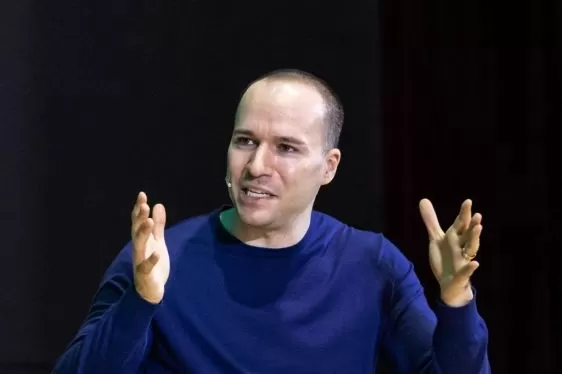
OpenAI remains the pioneer in frontier AI development. Its latest public model, GPT-5.6, stands out for its exceptional capability and efficiency. The company’s desktop application, designed for agentic coding and workplace productivity, has attracted approximately 15 million new subscribers over the past two months.
Despite OpenAI’s recent filing for an initial public offering, a wave of executive departures has raised questions about the company’s internal stability.
Since January, more than a dozen senior leaders have left, including Sam Altman’s chief operating officer, the chief revenue officer, the chief marketing officer, and several team leads. Recently, it was reported that Chris Malone, head of data centers, departed last week, shortly after joining in March 2025.
While some exits were attributed to health concerns or restructuring efforts to eliminate costly side projects in favor of revenue-generating initiatives, Malone’s exit remains notable.
OpenAI’s competitive edge over rivals like Anthropic and SpaceX lies heavily in its compute infrastructure. The company clarified to TechCrunch that Malone’s departure coincides with a restructuring of its infrastructure team, now led by Vice President Sachin Katti, who replaced Malone’s previous reporting line to President Greg Brockman. Such a demotion often prompts senior executives to seek opportunities elsewhere.
OpenAI declined to discuss broader organizational changes, but it appears Greg Brockman is reclaiming his leadership role. As co-founder and president, Brockman was instrumental in building OpenAI’s early infrastructure before stepping back from management duties in 2019 when Altman assumed the CEO role.
According to Karen Hao’s book “Empire of AI,” Brockman played a disruptive role in the company’s history. While his contributions to projects like GPT-4 were significant, he also fueled internal rivalries that contributed to the 2023 “Blip,” during which the board briefly removed Altman as CEO. Brockman took a sabbatical in 2024 before returning to the company.
Currently, both infrastructure and product teams report directly to him. “I like to say that everyone reports to Greg at the end of the day,” Thibault Sottiaux, who oversees the company’s API and app offerings, told TechCrunch last week.
The looming IPO casts a shadow over these developments. In June, OpenAI confidentially filed for public listing with the SEC. Access to public markets would provide crucial capital for this resource-intensive lab, but it also requires financial transparency around the same time as rival Anthropic, which is also preparing for its public debut. Reports suggest Anthropic is already profitable, whereas OpenAI’s losses are growing alongside its revenue. Consequently, OpenAI’s IPO is now projected for 2027, significantly later than the typical five-month timeline for confidential filings, and much slower than SpaceX’s sub-two-year process.
Altman’s recent comments regarding a challenging past year and the ongoing restructuring align with the narrative that OpenAI overextended itself with its IPO filing and is now streamlining operations to boost revenue and reduce inefficiencies.
This situation mirrors a common pattern in tech startups: visionary founders create the product, then hire experienced CEOs to scale operations and prepare for an IPO. This dynamic was evident when OpenAI recruited seasoned executives like Fidji Simo and Kevin Weil, who brought extensive tech industry experience. Now, as Brockman’s influence expands, this pattern is repeating itself. Before OpenAI, Brockman was renowned for scaling Stripe’s business and championing go-to-market strategies internally.
Amidst high-level turnover, OpenAI needs strong leadership to fill the resulting vacuum. The company must also optimize its operations ahead of the IPO by increasing revenue and minimizing costs. In this context, Brockman’s growing influence may be arriving at the ideal time.
Related article
 Anthropic now has more business customers than OpenAI, according to Ramp data
Anthropic has surpassed OpenAI in verified business customers for the first time, according to this month’s AI Index from fintech firm Ramp.Data from Ramp’s client expenses reveals that 34.4% of participating businesses pay for Anthropic services, ou
OpenAI faces probe by state attorneys general
A group of state attorneys general has reportedly launched an inquiry into OpenAI.According to The Wall Street Journal, the company received a subpoena from New York’s attorney general on Friday. The request covers documents regarding various issues,
OpenAI reportedly exploring smartphone with AI agents replacing traditional apps
Speculation regarding OpenAI’s hardware strategy has intensified, with recent reports pointing toward the development of a dedicated smartphone. Industry analyst Ming-Chi Kuo indicates that the AI firm is collaborating with chipmakers MediaTek and Qu
Related Special Topic Recommendations
Design & Art
Anthropic now has more business customers than OpenAI, according to Ramp data
Anthropic has surpassed OpenAI in verified business customers for the first time, according to this month’s AI Index from fintech firm Ramp.Data from Ramp’s client expenses reveals that 34.4% of participating businesses pay for Anthropic services, ou
OpenAI faces probe by state attorneys general
A group of state attorneys general has reportedly launched an inquiry into OpenAI.According to The Wall Street Journal, the company received a subpoena from New York’s attorney general on Friday. The request covers documents regarding various issues,
OpenAI reportedly exploring smartphone with AI agents replacing traditional apps
Speculation regarding OpenAI’s hardware strategy has intensified, with recent reports pointing toward the development of a dedicated smartphone. Industry analyst Ming-Chi Kuo indicates that the AI firm is collaborating with chipmakers MediaTek and Qu
Related Special Topic Recommendations
Design & Art
 Top AI Illustration Tools: Create Editorial Scenes and Cover Art Faster
2026 Latest Top-rated AI Illustration Tools: Our curated list features the best powerfully designed tools for creating stunning editorial scenes and eye-catching cover art quickly. Each option has gone through rigorous real-world tests, offering a free vs paid comparison to help you find the perfect match for your workflow. Try these must-try solutions today to unlock your AI edge and boost your creative productivity. Explore now at XIX.AI.
 10 tools
 xix.ai
Education and Learning
Top AI Tutors for Exam Prep: Practice Math, Science, and English
xix.ai
Education and Learning
Top AI Tutors for Exam Prep: Practice Math, Science, and English
2026 Latest Top-Rated Best AI Tutors for Exam Prep are here on XIX.AI! Our curated list features powerful game-changing tools that offer free vs paid comparison, real-world tests, and weekly updated rankings. They help boost your writing efficiency, simplify complex topic learning, and unlock your academic potential. Explore now to Discover your perfect exam prep tool and Start creating today to Unlock your AI edge!
10 tools
xix.ai
Finance
AI Budget Planning Tools for Personal Money Management
2026 Latest Best Top-Rated AI Budget Planning Tools for Personal Money Management are here on XIX.AI! This curated collection features powerful, game-changing solutions that help you conduct real-world tests, understand spending habits, and create personalized plans to boost productivity. Enjoy a free vs paid comparison along with detailed rankings. Must-try tools designed to simplify money management and unlock your AI edge. Explore now!
11 tools
xix.ai
Health & Wellness
AI Sleep Tracking Assistants: Improve Recovery with Better Bedtime Habits
2026 Latest Best Top-Rated AI Sleep Tracking Assistants curated for ultimate recovery. This fully updated weekly guide features powerful tools that deliver real-world tests, free vs paid comparison, and detailed rankings to help you find the must-try solution that boosts sleep quality and supports better bedtime habits. Explore now at XIX.AI to Unlock your AI edge.
10 tools
xix.ai
Data Analysis
AI SQL Copilots for Product and Revenue Analytics
2026 Latest Best Top-Rated AI SQL Copilots for Product and Revenue Analytics! XIX.AI has curated a powerful, game-changing collection of must-try tools that undergo real-world tests through weekly updated rankings. These tools help users boost productivity significantly by accelerating data analysis, streamlining complex queries, and generating accurate insights to drive smarter business decisions. Explore now to Discover your perfect tool for unlocking your AI edge!
14 tools
xix.ai
Education and Learning
Best AI Homework Helpers That Teach: Learn Concepts, Not Just Answers
2026 Latest Best Top-Rated AI Homework Helpers That Teach Core Concepts Not Just Answers Powerful Tools for Students Must-Try Curated List Weekly Updated Free vs Paid Comparison Real-World Tests Accurate Rankings to Help You Unlock Your Full Learning Potential Explore now to Discover your perfect tool for smarter studying.
10 tools
xix.ai

 Comments (0)
0/500
Comments (0)
0/500
OpenAI remains the pioneer in frontier AI development. Its latest public model, GPT-5.6, stands out for its exceptional capability and efficiency. The company’s desktop application, designed for agentic coding and workplace productivity, has attracted approximately 15 million new subscribers over the past two months.
Despite OpenAI’s recent filing for an initial public offering, a wave of executive departures has raised questions about the company’s internal stability.
Since January, more than a dozen senior leaders have left, including Sam Altman’s chief operating officer, the chief revenue officer, the chief marketing officer, and several team leads. Recently, it was reported that Chris Malone, head of data centers, departed last week, shortly after joining in March 2025.
While some exits were attributed to health concerns or restructuring efforts to eliminate costly side projects in favor of revenue-generating initiatives, Malone’s exit remains notable.
OpenAI’s competitive edge over rivals like Anthropic and SpaceX lies heavily in its compute infrastructure. The company clarified to TechCrunch that Malone’s departure coincides with a restructuring of its infrastructure team, now led by Vice President Sachin Katti, who replaced Malone’s previous reporting line to President Greg Brockman. Such a demotion often prompts senior executives to seek opportunities elsewhere.
OpenAI declined to discuss broader organizational changes, but it appears Greg Brockman is reclaiming his leadership role. As co-founder and president, Brockman was instrumental in building OpenAI’s early infrastructure before stepping back from management duties in 2019 when Altman assumed the CEO role.
According to Karen Hao’s book “Empire of AI,” Brockman played a disruptive role in the company’s history. While his contributions to projects like GPT-4 were significant, he also fueled internal rivalries that contributed to the 2023 “Blip,” during which the board briefly removed Altman as CEO. Brockman took a sabbatical in 2024 before returning to the company.
Currently, both infrastructure and product teams report directly to him. “I like to say that everyone reports to Greg at the end of the day,” Thibault Sottiaux, who oversees the company’s API and app offerings, told TechCrunch last week.
The looming IPO casts a shadow over these developments. In June, OpenAI confidentially filed for public listing with the SEC. Access to public markets would provide crucial capital for this resource-intensive lab, but it also requires financial transparency around the same time as rival Anthropic, which is also preparing for its public debut. Reports suggest Anthropic is already profitable, whereas OpenAI’s losses are growing alongside its revenue. Consequently, OpenAI’s IPO is now projected for 2027, significantly later than the typical five-month timeline for confidential filings, and much slower than SpaceX’s sub-two-year process.
Altman’s recent comments regarding a challenging past year and the ongoing restructuring align with the narrative that OpenAI overextended itself with its IPO filing and is now streamlining operations to boost revenue and reduce inefficiencies.
This situation mirrors a common pattern in tech startups: visionary founders create the product, then hire experienced CEOs to scale operations and prepare for an IPO. This dynamic was evident when OpenAI recruited seasoned executives like Fidji Simo and Kevin Weil, who brought extensive tech industry experience. Now, as Brockman’s influence expands, this pattern is repeating itself. Before OpenAI, Brockman was renowned for scaling Stripe’s business and championing go-to-market strategies internally.
Amidst high-level turnover, OpenAI needs strong leadership to fill the resulting vacuum. The company must also optimize its operations ahead of the IPO by increasing revenue and minimizing costs. In this context, Brockman’s growing influence may be arriving at the ideal time.








 Anthropic now has more business customers than OpenAI, according to Ramp data
Anthropic has surpassed OpenAI in verified business customers for the first time, according to this month’s AI Index from fintech firm Ramp.Data from Ramp’s client expenses reveals that 34.4% of participating businesses pay for Anthropic services, ou
Anthropic now has more business customers than OpenAI, according to Ramp data
Anthropic has surpassed OpenAI in verified business customers for the first time, according to this month’s AI Index from fintech firm Ramp.Data from Ramp’s client expenses reveals that 34.4% of participating businesses pay for Anthropic services, ou
 OpenAI faces probe by state attorneys general
A group of state attorneys general has reportedly launched an inquiry into OpenAI.According to The Wall Street Journal, the company received a subpoena from New York’s attorney general on Friday. The request covers documents regarding various issues,
OpenAI faces probe by state attorneys general
A group of state attorneys general has reportedly launched an inquiry into OpenAI.According to The Wall Street Journal, the company received a subpoena from New York’s attorney general on Friday. The request covers documents regarding various issues,
 OpenAI reportedly exploring smartphone with AI agents replacing traditional apps
Speculation regarding OpenAI’s hardware strategy has intensified, with recent reports pointing toward the development of a dedicated smartphone. Industry analyst Ming-Chi Kuo indicates that the AI firm is collaborating with chipmakers MediaTek and Qu
OpenAI reportedly exploring smartphone with AI agents replacing traditional apps
Speculation regarding OpenAI’s hardware strategy has intensified, with recent reports pointing toward the development of a dedicated smartphone. Industry analyst Ming-Chi Kuo indicates that the AI firm is collaborating with chipmakers MediaTek and Qu

2026 Latest Top-rated AI Illustration Tools: Our curated list features the best powerfully designed tools for creating stunning editorial scenes and eye-catching cover art quickly. Each option has gone through rigorous real-world tests, offering a free vs paid comparison to help you find the perfect match for your workflow. Try these must-try solutions today to unlock your AI edge and boost your creative productivity. Explore now at XIX.AI.
10 tools
xix.ai

2026 Latest Top-Rated Best AI Tutors for Exam Prep are here on XIX.AI! Our curated list features powerful game-changing tools that offer free vs paid comparison, real-world tests, and weekly updated rankings. They help boost your writing efficiency, simplify complex topic learning, and unlock your academic potential. Explore now to Discover your perfect exam prep tool and Start creating today to Unlock your AI edge!
10 tools
xix.ai

2026 Latest Best Top-Rated AI Budget Planning Tools for Personal Money Management are here on XIX.AI! This curated collection features powerful, game-changing solutions that help you conduct real-world tests, understand spending habits, and create personalized plans to boost productivity. Enjoy a free vs paid comparison along with detailed rankings. Must-try tools designed to simplify money management and unlock your AI edge. Explore now!
11 tools
xix.ai

2026 Latest Best Top-Rated AI Sleep Tracking Assistants curated for ultimate recovery. This fully updated weekly guide features powerful tools that deliver real-world tests, free vs paid comparison, and detailed rankings to help you find the must-try solution that boosts sleep quality and supports better bedtime habits. Explore now at XIX.AI to Unlock your AI edge.
10 tools
xix.ai

2026 Latest Best Top-Rated AI SQL Copilots for Product and Revenue Analytics! XIX.AI has curated a powerful, game-changing collection of must-try tools that undergo real-world tests through weekly updated rankings. These tools help users boost productivity significantly by accelerating data analysis, streamlining complex queries, and generating accurate insights to drive smarter business decisions. Explore now to Discover your perfect tool for unlocking your AI edge!
14 tools
xix.ai

2026 Latest Best Top-Rated AI Homework Helpers That Teach Core Concepts Not Just Answers Powerful Tools for Students Must-Try Curated List Weekly Updated Free vs Paid Comparison Real-World Tests Accurate Rankings to Help You Unlock Your Full Learning Potential Explore now to Discover your perfect tool for smarter studying.
10 tools
xix.ai












