


 Home
Exclusive: Mirendil Signs Over $100M Google Cloud Deal to Boost Self-Improving AI

AI lab Mirendil has entered a multi-year agreement with Google Cloud to secure compute resources for its self-improving AI research, as exclusively reported by TechCrunch.
This partnership reflects two key trends in the AI sector: major cloud providers are attracting startups with substantial infrastructure commitments, while AI companies are aggressively securing compute deals to ensure access as they expand.
The agreement is valued at over $100 million, according to Mirendil’s co-founder and CEO, Benham Neyshabur. This figure represents approximately half of the seed funding Mirendil raised at a $1 billion valuation in late June.
The deal grants the startup access to both Google’s TPUs and Nvidia GPUs, along with managed training clusters for developing its self-improving AI. The company aims to create an AI capable of performing the work of an entire frontier AI lab.
Self-improving AI, or recursive self-improvement, involves systems that iteratively enhance themselves. This concept is being explored by major labs like Anthropic, where Mirendil’s co-founders previously worked. Several startups, including Recursive Superintelligence and Ricursive Intelligence, have recently emerged with similar goals.
Mirendil believes this process will automate much of scientific and AI research, aiding progress in fields such as medicine, biology, and materials science.
Neyshabur suggests that AI can replicate how human scientists learn new domains, accumulate knowledge, and gradually improve performance. “You can have a self-improving AI where you can point a problem at it and it keeps getting better with time,” he explained.
“How can we have an AI system that keeps doing research, keeps improving its own knowledge and performance when it comes to Alzheimer’s disease?” he added. “This technology allows us to set goals that are ambitious for AI, and the AI would keep making progress.”
Training self-improving AI requires significant computing power. Co-founder Harsh Mehta noted that training increasingly involves matching the right workloads to the appropriate hardware.
“These models are really good at working with different workloads and chips, and assigning the right workloads to the right chips,” Mehta stated. “[Google] provides multiple kinds of chips […] this flexibility allows us to ultimately mix and match workloads with the right kind of accelerators, and then lower the cost not just for us, but also for our customers using our systems.”
This flexibility is central to Google’s AI infrastructure strategy. Amin Vahdat, SVP and chief technologist of AI and infrastructure at Google, stated in a press release that AI advancement is no longer just about chip-level performance, “but how we orchestrate entire systems of intelligence and break through the physical constraints of scaling.”
Neyshabur indicated that Mirendil’s software and systems layer help customers maximize Google’s hardware, giving the cloud provider a competitive edge. In return, Google gains a strategic partner developing frontier recursive self-improving AI — technology it can eventually offer to enterprise clients.
Related article
 QueryStory urges caution on AI-generated content
In 2009, Shapor Naghibzadeh discovered the power of compelling storytelling while working as a Google sysops engineer. During Operation Aurora, when state-sponsored hackers targeted the tech giant, he was summoned to a crisis room to clarify server a
French Startup ZML Unveils Free Tool to Accelerate AI Inference Across Multiple Chips
Nvidia’s era of unchecked market supremacy may be winding down, yet competitors and alternatives are emerging from every angle.ZML, a prominent French AI startup backed by Turing Award laureate Yann LeCun, has unveiled inference-performance software
Anthropic Unveils Opus 4.6, a Controversial Content Generator
Anthropic’s universal usage standards for Claude prohibit the model from generating sexually explicit content, including depicting or requesting sexual intercourse or sex acts, generating content related to sexual fetishes or fantasies, or engaging i
Related Special Topic Recommendations
Design & Art
 Top AI Illustration Tools: Create Editorial Scenes and Cover Art Faster
2026 Latest Top-rated AI Illustration Tools: Our curated list features the best powerfully designed tools for creating stunning editorial scenes and eye-catching cover art quickly. Each option has gone through rigorous real-world tests, offering a free vs paid comparison to help you find the perfect match for your workflow. Try these must-try solutions today to unlock your AI edge and boost your creative productivity. Explore now at XIX.AI.
 10 tools
 xix.ai
Education and Learning
Top AI Tutors for Exam Prep: Practice Math, Science, and English
2026 Latest Top-Rated Best AI Tutors for Exam Prep are here on XIX.AI! Our curated list features powerful game-changing tools that offer free vs paid comparison, real-world tests, and weekly updated rankings. They help boost your writing efficiency, simplify complex topic learning, and unlock your academic potential. Explore now to Discover your perfect exam prep tool and Start creating today to Unlock your AI edge!
10 tools
xix.ai
Finance
AI Budget Planning Tools for Personal Money Management
2026 Latest Best Top-Rated AI Budget Planning Tools for Personal Money Management are here on XIX.AI! This curated collection features powerful, game-changing solutions that help you conduct real-world tests, understand spending habits, and create personalized plans to boost productivity. Enjoy a free vs paid comparison along with detailed rankings. Must-try tools designed to simplify money management and unlock your AI edge. Explore now!
11 tools
xix.ai
Health & Wellness
AI Sleep Tracking Assistants: Improve Recovery with Better Bedtime Habits
2026 Latest Best Top-Rated AI Sleep Tracking Assistants curated for ultimate recovery. This fully updated weekly guide features powerful tools that deliver real-world tests, free vs paid comparison, and detailed rankings to help you find the must-try solution that boosts sleep quality and supports better bedtime habits. Explore now at XIX.AI to Unlock your AI edge.
10 tools
xix.ai
Data Analysis
AI SQL Copilots for Product and Revenue Analytics
2026 Latest Best Top-Rated AI SQL Copilots for Product and Revenue Analytics! XIX.AI has curated a powerful, game-changing collection of must-try tools that undergo real-world tests through weekly updated rankings. These tools help users boost productivity significantly by accelerating data analysis, streamlining complex queries, and generating accurate insights to drive smarter business decisions. Explore now to Discover your perfect tool for unlocking your AI edge!
14 tools
xix.ai
Education and Learning
Best AI Homework Helpers That Teach: Learn Concepts, Not Just Answers
2026 Latest Best Top-Rated AI Homework Helpers That Teach Core Concepts Not Just Answers Powerful Tools for Students Must-Try Curated List Weekly Updated Free vs Paid Comparison Real-World Tests Accurate Rankings to Help You Unlock Your Full Learning Potential Explore now to Discover your perfect tool for smarter studying.
10 tools
xix.ai

 Comments (1)
0/500
![RoyPerez]()
Mirendil这1亿美元的大单真是大手笔!自进化AI听起来既科幻又让人有点背脊发凉,毕竟如果AI能自己改进自己,那失控的风险是不是也指数级上升了?Google Cloud这次押注确实大胆,希望他们能搞定安全对齐问题,不然这技术跑得比监管还快可就麻烦了。🤖💸
AI lab Mirendil has entered a multi-year agreement with Google Cloud to secure compute resources for its self-improving AI research, as exclusively reported by TechCrunch.
This partnership reflects two key trends in the AI sector: major cloud providers are attracting startups with substantial infrastructure commitments, while AI companies are aggressively securing compute deals to ensure access as they expand.
The agreement is valued at over $100 million, according to Mirendil’s co-founder and CEO, Benham Neyshabur. This figure represents approximately half of the seed funding Mirendil raised at a $1 billion valuation in late June.
The deal grants the startup access to both Google’s TPUs and Nvidia GPUs, along with managed training clusters for developing its self-improving AI. The company aims to create an AI capable of performing the work of an entire frontier AI lab.
Self-improving AI, or recursive self-improvement, involves systems that iteratively enhance themselves. This concept is being explored by major labs like Anthropic, where Mirendil’s co-founders previously worked. Several startups, including Recursive Superintelligence and Ricursive Intelligence, have recently emerged with similar goals.
Mirendil believes this process will automate much of scientific and AI research, aiding progress in fields such as medicine, biology, and materials science.
Neyshabur suggests that AI can replicate how human scientists learn new domains, accumulate knowledge, and gradually improve performance. “You can have a self-improving AI where you can point a problem at it and it keeps getting better with time,” he explained.
“How can we have an AI system that keeps doing research, keeps improving its own knowledge and performance when it comes to Alzheimer’s disease?” he added. “This technology allows us to set goals that are ambitious for AI, and the AI would keep making progress.”
Training self-improving AI requires significant computing power. Co-founder Harsh Mehta noted that training increasingly involves matching the right workloads to the appropriate hardware.
“These models are really good at working with different workloads and chips, and assigning the right workloads to the right chips,” Mehta stated. “[Google] provides multiple kinds of chips […] this flexibility allows us to ultimately mix and match workloads with the right kind of accelerators, and then lower the cost not just for us, but also for our customers using our systems.”
This flexibility is central to Google’s AI infrastructure strategy. Amin Vahdat, SVP and chief technologist of AI and infrastructure at Google, stated in a press release that AI advancement is no longer just about chip-level performance, “but how we orchestrate entire systems of intelligence and break through the physical constraints of scaling.”
Neyshabur indicated that Mirendil’s software and systems layer help customers maximize Google’s hardware, giving the cloud provider a competitive edge. In return, Google gains a strategic partner developing frontier recursive self-improving AI — technology it can eventually offer to enterprise clients.








 QueryStory urges caution on AI-generated content
In 2009, Shapor Naghibzadeh discovered the power of compelling storytelling while working as a Google sysops engineer. During Operation Aurora, when state-sponsored hackers targeted the tech giant, he was summoned to a crisis room to clarify server a
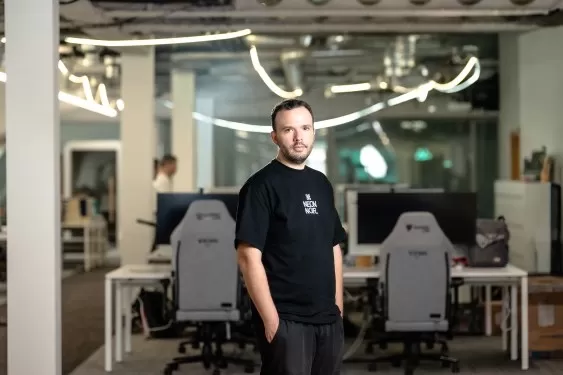 French Startup ZML Unveils Free Tool to Accelerate AI Inference Across Multiple Chips
Nvidia’s era of unchecked market supremacy may be winding down, yet competitors and alternatives are emerging from every angle.ZML, a prominent French AI startup backed by Turing Award laureate Yann LeCun, has unveiled inference-performance software
 Anthropic Unveils Opus 4.6, a Controversial Content Generator
Anthropic’s universal usage standards for Claude prohibit the model from generating sexually explicit content, including depicting or requesting sexual intercourse or sex acts, generating content related to sexual fetishes or fantasies, or engaging i

2026 Latest Top-rated AI Illustration Tools: Our curated list features the best powerfully designed tools for creating stunning editorial scenes and eye-catching cover art quickly. Each option has gone through rigorous real-world tests, offering a free vs paid comparison to help you find the perfect match for your workflow. Try these must-try solutions today to unlock your AI edge and boost your creative productivity. Explore now at XIX.AI.
10 tools
xix.ai

2026 Latest Top-Rated Best AI Tutors for Exam Prep are here on XIX.AI! Our curated list features powerful game-changing tools that offer free vs paid comparison, real-world tests, and weekly updated rankings. They help boost your writing efficiency, simplify complex topic learning, and unlock your academic potential. Explore now to Discover your perfect exam prep tool and Start creating today to Unlock your AI edge!
10 tools
xix.ai

2026 Latest Best Top-Rated AI Budget Planning Tools for Personal Money Management are here on XIX.AI! This curated collection features powerful, game-changing solutions that help you conduct real-world tests, understand spending habits, and create personalized plans to boost productivity. Enjoy a free vs paid comparison along with detailed rankings. Must-try tools designed to simplify money management and unlock your AI edge. Explore now!
11 tools
xix.ai

2026 Latest Best Top-Rated AI Sleep Tracking Assistants curated for ultimate recovery. This fully updated weekly guide features powerful tools that deliver real-world tests, free vs paid comparison, and detailed rankings to help you find the must-try solution that boosts sleep quality and supports better bedtime habits. Explore now at XIX.AI to Unlock your AI edge.
10 tools
xix.ai

2026 Latest Best Top-Rated AI SQL Copilots for Product and Revenue Analytics! XIX.AI has curated a powerful, game-changing collection of must-try tools that undergo real-world tests through weekly updated rankings. These tools help users boost productivity significantly by accelerating data analysis, streamlining complex queries, and generating accurate insights to drive smarter business decisions. Explore now to Discover your perfect tool for unlocking your AI edge!
14 tools
xix.ai

2026 Latest Best Top-Rated AI Homework Helpers That Teach Core Concepts Not Just Answers Powerful Tools for Students Must-Try Curated List Weekly Updated Free vs Paid Comparison Real-World Tests Accurate Rankings to Help You Unlock Your Full Learning Potential Explore now to Discover your perfect tool for smarter studying.
10 tools
xix.ai

Mirendil这1亿美元的大单真是大手笔!自进化AI听起来既科幻又让人有点背脊发凉,毕竟如果AI能自己改进自己,那失控的风险是不是也指数级上升了?Google Cloud这次押注确实大胆,希望他们能搞定安全对齐问题,不然这技术跑得比监管还快可就麻烦了。🤖💸












