


 Home
Exclusive: Luma AI Debuts Creative Agents Fueled by 'Unified Intelligence' Models
On Thursday, AI video generation startup Luma introduced Luma Agents, a system built to manage complete creative workflows spanning text, images, video, and audio. These agents are driven by Luma’s Unified Intelligence model family, featuring an architecture trained as a single multimodal reasoning engine.
Luma is positioning its agents as a transformative tool for advertising agencies, marketing departments, design studios, and enterprises. According to Luma, the agents can plan and produce text, images, video, and audio, while also coordinating with other AI models such as Luma’s Ray 3.14, Google’s Veo 3, Nano Banana Pro, ByteDance’s Seedream, and ElevenLabs’ voice models.
The foundation of Luma’s agents is the company’s Uni-1 model, the inaugural member of its Unified Intelligence AI model series. Amit Jain, CEO and co-founder of Luma, explained that Uni-1 has been trained across audio, video, imagery, language, and spatial reasoning.
Jain shared with TechCrunch that the Uni-1 model can "think using language and visualize and render in pixels or images…we refer to this as 'intelligence in pixels.'" He noted that additional output formats, such as audio and video, will be introduced in future model versions.
“Our clients aren’t just purchasing a tool—they’re reimagining their entire business process,” Jain stated.

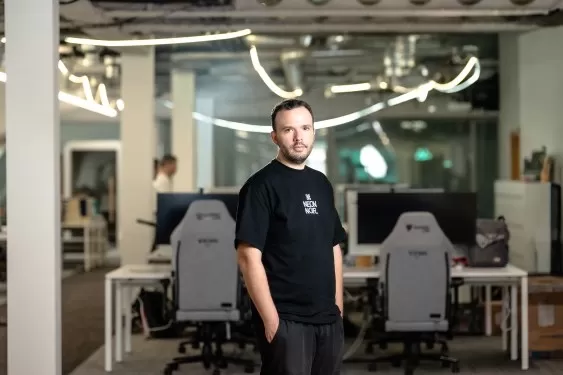
Image Credits:Luma AI
Luma has already begun deploying its new agentic platform with current clients, which include global ad firms Publicis Groupe and Serviceplan, as well as brands like Adidas, Mazda, and the Saudi AI firm Humain.
Jain emphasized that Luma Agents represent a breakthrough because they preserve ongoing context across assets, team members, and creative revisions. He added that the agents can assess and enhance their outputs, refining results through repeated self-evaluation.
This self-checking ability, Jain noted, is what has made coding agents so effective. “You need that capacity to review your work, correct it, and repeat the cycle until the outcome meets quality and accuracy standards.”
Jain observed that the current approach to using AI tools in creative settings doesn’t deliver the productivity gains the industry anticipates. Instead, it often feels like: “Here are 100 models—now learn how to prompt each one.”
He explained that Luma Agents stand apart because users aren’t required to repeatedly prompt for each iteration of an image or concept. Instead, the system generates extensive variations and allows users to guide the creative direction through conversational input.
“Thanks to Unified Intelligence, our models not only generate but also comprehend, enabling us to construct a system capable of managing complete end-to-end tasks,” Jain said.
He drew a comparison to a human architect designing a building. As the architect sketches, they form a mental representation of the structure, lighting, spatial relationships, and real-world experience. Jain explained that Unified Intelligence operates on a similar principle.
According to Jain, the system can dramatically accelerate creative processes. In one demo, he illustrated how a 200-word brief and a product image (a lipstick) enabled the system to produce multiple concepts for ad campaign settings, models, and color palettes.
In another case, Luma Agents converted a brand’s year-long, $15 million ad campaign into multiple localized advertisements for various countries—accomplishing the task in 40 hours for under $20,000, while meeting the brand’s internal quality and accuracy standards.
Although Luma Agents is now accessible via a public API, Jain mentioned that the startup intends to phase in access gradually to ensure dependable service and prevent workflow interruptions.
Related article
 QueryStory urges caution on AI-generated content
In 2009, Shapor Naghibzadeh discovered the power of compelling storytelling while working as a Google sysops engineer. During Operation Aurora, when state-sponsored hackers targeted the tech giant, he was summoned to a crisis room to clarify server a
French Startup ZML Unveils Free Tool to Accelerate AI Inference Across Multiple Chips
Nvidia’s era of unchecked market supremacy may be winding down, yet competitors and alternatives are emerging from every angle.ZML, a prominent French AI startup backed by Turing Award laureate Yann LeCun, has unveiled inference-performance software
Anthropic Unveils Opus 4.6, a Controversial Content Generator
Anthropic’s universal usage standards for Claude prohibit the model from generating sexually explicit content, including depicting or requesting sexual intercourse or sex acts, generating content related to sexual fetishes or fantasies, or engaging i
Related Special Topic Recommendations
Design & Art
 Top AI Illustration Tools: Create Editorial Scenes and Cover Art Faster
2026 Latest Top-rated AI Illustration Tools: Our curated list features the best powerfully designed tools for creating stunning editorial scenes and eye-catching cover art quickly. Each option has gone through rigorous real-world tests, offering a free vs paid comparison to help you find the perfect match for your workflow. Try these must-try solutions today to unlock your AI edge and boost your creative productivity. Explore now at XIX.AI.
 10 tools
 xix.ai
Education and Learning
Top AI Tutors for Exam Prep: Practice Math, Science, and English
2026 Latest Top-Rated Best AI Tutors for Exam Prep are here on XIX.AI! Our curated list features powerful game-changing tools that offer free vs paid comparison, real-world tests, and weekly updated rankings. They help boost your writing efficiency, simplify complex topic learning, and unlock your academic potential. Explore now to Discover your perfect exam prep tool and Start creating today to Unlock your AI edge!
10 tools
xix.ai
Finance
AI Budget Planning Tools for Personal Money Management
2026 Latest Best Top-Rated AI Budget Planning Tools for Personal Money Management are here on XIX.AI! This curated collection features powerful, game-changing solutions that help you conduct real-world tests, understand spending habits, and create personalized plans to boost productivity. Enjoy a free vs paid comparison along with detailed rankings. Must-try tools designed to simplify money management and unlock your AI edge. Explore now!
11 tools
xix.ai
Health & Wellness
AI Sleep Tracking Assistants: Improve Recovery with Better Bedtime Habits
2026 Latest Best Top-Rated AI Sleep Tracking Assistants curated for ultimate recovery. This fully updated weekly guide features powerful tools that deliver real-world tests, free vs paid comparison, and detailed rankings to help you find the must-try solution that boosts sleep quality and supports better bedtime habits. Explore now at XIX.AI to Unlock your AI edge.
10 tools
xix.ai
Data Analysis
AI SQL Copilots for Product and Revenue Analytics
2026 Latest Best Top-Rated AI SQL Copilots for Product and Revenue Analytics! XIX.AI has curated a powerful, game-changing collection of must-try tools that undergo real-world tests through weekly updated rankings. These tools help users boost productivity significantly by accelerating data analysis, streamlining complex queries, and generating accurate insights to drive smarter business decisions. Explore now to Discover your perfect tool for unlocking your AI edge!
14 tools
xix.ai
Education and Learning
Best AI Homework Helpers That Teach: Learn Concepts, Not Just Answers
2026 Latest Best Top-Rated AI Homework Helpers That Teach Core Concepts Not Just Answers Powerful Tools for Students Must-Try Curated List Weekly Updated Free vs Paid Comparison Real-World Tests Accurate Rankings to Help You Unlock Your Full Learning Potential Explore now to Discover your perfect tool for smarter studying.
10 tools
xix.ai

 Comments (1)
0/500
![JustinLewis]()
This sounds impressive but I'm also a bit worried about what happens when AI agents start handling entire creative workflows. Will human creators become obsolete? 🤔 Or will it just free us up to do more interesting stuff? Time will tell.
On Thursday, AI video generation startup Luma introduced Luma Agents, a system built to manage complete creative workflows spanning text, images, video, and audio. These agents are driven by Luma’s Unified Intelligence model family, featuring an architecture trained as a single multimodal reasoning engine.
Luma is positioning its agents as a transformative tool for advertising agencies, marketing departments, design studios, and enterprises. According to Luma, the agents can plan and produce text, images, video, and audio, while also coordinating with other AI models such as Luma’s Ray 3.14, Google’s Veo 3, Nano Banana Pro, ByteDance’s Seedream, and ElevenLabs’ voice models.
The foundation of Luma’s agents is the company’s Uni-1 model, the inaugural member of its Unified Intelligence AI model series. Amit Jain, CEO and co-founder of Luma, explained that Uni-1 has been trained across audio, video, imagery, language, and spatial reasoning.
Jain shared with TechCrunch that the Uni-1 model can "think using language and visualize and render in pixels or images…we refer to this as 'intelligence in pixels.'" He noted that additional output formats, such as audio and video, will be introduced in future model versions.
“Our clients aren’t just purchasing a tool—they’re reimagining their entire business process,” Jain stated.
Image Credits:Luma AI
Luma has already begun deploying its new agentic platform with current clients, which include global ad firms Publicis Groupe and Serviceplan, as well as brands like Adidas, Mazda, and the Saudi AI firm Humain.
Jain emphasized that Luma Agents represent a breakthrough because they preserve ongoing context across assets, team members, and creative revisions. He added that the agents can assess and enhance their outputs, refining results through repeated self-evaluation.
This self-checking ability, Jain noted, is what has made coding agents so effective. “You need that capacity to review your work, correct it, and repeat the cycle until the outcome meets quality and accuracy standards.”
Jain observed that the current approach to using AI tools in creative settings doesn’t deliver the productivity gains the industry anticipates. Instead, it often feels like: “Here are 100 models—now learn how to prompt each one.”
He explained that Luma Agents stand apart because users aren’t required to repeatedly prompt for each iteration of an image or concept. Instead, the system generates extensive variations and allows users to guide the creative direction through conversational input.
“Thanks to Unified Intelligence, our models not only generate but also comprehend, enabling us to construct a system capable of managing complete end-to-end tasks,” Jain said.
He drew a comparison to a human architect designing a building. As the architect sketches, they form a mental representation of the structure, lighting, spatial relationships, and real-world experience. Jain explained that Unified Intelligence operates on a similar principle.
According to Jain, the system can dramatically accelerate creative processes. In one demo, he illustrated how a 200-word brief and a product image (a lipstick) enabled the system to produce multiple concepts for ad campaign settings, models, and color palettes.
In another case, Luma Agents converted a brand’s year-long, $15 million ad campaign into multiple localized advertisements for various countries—accomplishing the task in 40 hours for under $20,000, while meeting the brand’s internal quality and accuracy standards.
Although Luma Agents is now accessible via a public API, Jain mentioned that the startup intends to phase in access gradually to ensure dependable service and prevent workflow interruptions.








 QueryStory urges caution on AI-generated content
In 2009, Shapor Naghibzadeh discovered the power of compelling storytelling while working as a Google sysops engineer. During Operation Aurora, when state-sponsored hackers targeted the tech giant, he was summoned to a crisis room to clarify server a
 French Startup ZML Unveils Free Tool to Accelerate AI Inference Across Multiple Chips
Nvidia’s era of unchecked market supremacy may be winding down, yet competitors and alternatives are emerging from every angle.ZML, a prominent French AI startup backed by Turing Award laureate Yann LeCun, has unveiled inference-performance software
 Anthropic Unveils Opus 4.6, a Controversial Content Generator
Anthropic’s universal usage standards for Claude prohibit the model from generating sexually explicit content, including depicting or requesting sexual intercourse or sex acts, generating content related to sexual fetishes or fantasies, or engaging i

2026 Latest Top-rated AI Illustration Tools: Our curated list features the best powerfully designed tools for creating stunning editorial scenes and eye-catching cover art quickly. Each option has gone through rigorous real-world tests, offering a free vs paid comparison to help you find the perfect match for your workflow. Try these must-try solutions today to unlock your AI edge and boost your creative productivity. Explore now at XIX.AI.
10 tools
xix.ai

2026 Latest Top-Rated Best AI Tutors for Exam Prep are here on XIX.AI! Our curated list features powerful game-changing tools that offer free vs paid comparison, real-world tests, and weekly updated rankings. They help boost your writing efficiency, simplify complex topic learning, and unlock your academic potential. Explore now to Discover your perfect exam prep tool and Start creating today to Unlock your AI edge!
10 tools
xix.ai

2026 Latest Best Top-Rated AI Budget Planning Tools for Personal Money Management are here on XIX.AI! This curated collection features powerful, game-changing solutions that help you conduct real-world tests, understand spending habits, and create personalized plans to boost productivity. Enjoy a free vs paid comparison along with detailed rankings. Must-try tools designed to simplify money management and unlock your AI edge. Explore now!
11 tools
xix.ai

2026 Latest Best Top-Rated AI Sleep Tracking Assistants curated for ultimate recovery. This fully updated weekly guide features powerful tools that deliver real-world tests, free vs paid comparison, and detailed rankings to help you find the must-try solution that boosts sleep quality and supports better bedtime habits. Explore now at XIX.AI to Unlock your AI edge.
10 tools
xix.ai

2026 Latest Best Top-Rated AI SQL Copilots for Product and Revenue Analytics! XIX.AI has curated a powerful, game-changing collection of must-try tools that undergo real-world tests through weekly updated rankings. These tools help users boost productivity significantly by accelerating data analysis, streamlining complex queries, and generating accurate insights to drive smarter business decisions. Explore now to Discover your perfect tool for unlocking your AI edge!
14 tools
xix.ai

2026 Latest Best Top-Rated AI Homework Helpers That Teach Core Concepts Not Just Answers Powerful Tools for Students Must-Try Curated List Weekly Updated Free vs Paid Comparison Real-World Tests Accurate Rankings to Help You Unlock Your Full Learning Potential Explore now to Discover your perfect tool for smarter studying.
10 tools
xix.ai

This sounds impressive but I'm also a bit worried about what happens when AI agents start handling entire creative workflows. Will human creators become obsolete? 🤔 Or will it just free us up to do more interesting stuff? Time will tell.












