


 Home
HomeFrom Manual Review to AI: The Evolution of Harmful Content Detection
The ongoing effort to create safe and inclusive online environments is constantly advancing.
As digital platforms proliferate and user-generated content grows exponentially, the demand for effective detection of harmful material has never been greater. The era of relying exclusively on human moderator vigilance is transitioning to one powered by agile AI tools, fundamentally reshaping how communities and organizations address toxic behavior in both text and imagery.
From human oversight to automated systems: A historical overview
The initial phase of content moderation depended on human teams sifting through enormous volumes of user submissions to identify hate speech, misinformation, explicit material, and altered images.
While human judgment provided crucial context and empathy, the overwhelming scale of content quickly surpassed the limits of manual review. Moderator burnout also became a significant issue, leading to delayed responses, inconsistent decisions, and a proliferation of harmful content going unaddressed.
The emergence of automated detection
To tackle challenges of scale and consistency, the first wave of automated detection software appeared, primarily using basic keyword filters and simple algorithms. These systems could rapidly scan for specific banned terms or suspicious phrases, providing some relief for moderation staff.
Yet, this context-blind automation introduced new problems. Innocuous messages were often incorrectly flagged due to simplistic word matching, while evolving slang and coded language easily circumvented these rudimentary protections.
AI and the new era of content detection
Artificial intelligence has revolutionized this domain. Leveraging deep learning, machine learning, and neural networks, AI-driven systems can now analyze immense and varied data streams with a level of nuance previously unattainable.
Moving beyond mere keyword spotting, modern algorithms can interpret intent, tone, and emerging patterns of abuse.
Detecting harmful text content
Abusive and harmful messages on social networks, forums, and chat platforms remain a critical concern.
Contemporary solutions, such as the AI-powered hate speech detector created by Vinish Kapoor, illustrate how free, accessible online tools have made reliable content moderation available to all.
This platform enables anyone to instantly analyze text for hate speech, harassment, violent rhetoric, and other forms of online toxicity—no technical expertise, subscription, or privacy concerns required. Such detectors advance past obsolete keyword alarms by assessing semantic meaning and context, significantly reducing false positives and identifying sophisticated or veiled abusive language. The detection process continuously adapts to the evolving landscape of online communication.
Ensuring visual integrity: AI-powered image analysis
Vigilance is required beyond text. Images, ubiquitous across news feeds and messaging apps, present distinct risks, as manipulated visuals are often used to mislead audiences or escalate conflicts.
AI developers now provide robust tools for detecting image anomalies. These algorithms scan for inconsistencies such as irregular noise patterns, implausible shadows, distorted perspectives, or mismatches between image layers—common indicators of digital alteration or fabrication.
These tools are notable not only for their accuracy but also for their accessibility. As completely free resources with no technical barriers and a privacy-first design, they allow journalists, educators, analysts, and everyday users to verify image authenticity with remarkable ease.
Advantages of modern AI detection tools
Current AI solutions bring essential benefits to content safety:
- Rapid, large-scale analysis: Millions of messages and media files can be evaluated in seconds, far exceeding human moderation capacity.
- Context-aware accuracy: By understanding intent and underlying meaning, AI moderation drastically cuts down on incorrect flags and keeps pace with changing online discourse.
- Strong data privacy: Tools that guarantee user data is not stored allow for the confident checking of sensitive material.
- Ease of use: Many platforms require only visiting a website and pasting text or uploading an image.
The ongoing evolution: Future directions for content detection
The future of digital safety will likely depend on deeper synergy between intelligent automation and expert human judgment.
As AI models learn from more subtle and diverse examples, their capability to counter new forms of harm will grow. However, human oversight will remain vital for complex cases requiring ethical reasoning, empathy, and cultural understanding.
With open, free solutions now widely accessible and built on privacy-centric principles, everyone from educators to business leaders has the power to protect digital interactions at scale—whether in group chats, user forums, comment sections, or email correspondence.
Conclusion
Harmful content detection has undergone a dramatic transformation—from slow, inconsistent manual reviews to instant, sophisticated, and privacy-aware AI systems.
Today's advancements achieve a balance between comprehensive coverage, real-time action, and universal accessibility, reinforcing the principle that safer, more positive digital spaces are achievable for everyone, regardless of technical skill or financial resources.
Related article
 Apple Watch’s New AI Features Normalize Always-Listening Tech
Apple is pushing consumers to embrace a new norm: your devices are constantly listening.During Wednesday’s “Surprise and Shine” iPhone launch, which unveiled the latest hardware, the true revelation wasn’t the rumored foldable iPhone, but rather how
Deezer reports over half of daily music uploads are AI-generated
Deezer, a major music streaming service, has monitored the surge in AI-generated uploads since last year, with figures climbing steadily. The platform now reports that AI-produced content accounts for over half of all downloads.According to Deezer, A
Instinct launches AI agent in group chats, including those with non-users
Instinct, the AI agent now valued at $10 billion following its latest funding round, is expanding into group chats. The startup announced on Monday that users can add the agent to conversations with friends, offering assistance in scenarios such as t
Related Special Topic Recommendations
Design & Art
Apple Watch’s New AI Features Normalize Always-Listening Tech
Apple is pushing consumers to embrace a new norm: your devices are constantly listening.During Wednesday’s “Surprise and Shine” iPhone launch, which unveiled the latest hardware, the true revelation wasn’t the rumored foldable iPhone, but rather how
Deezer reports over half of daily music uploads are AI-generated
Deezer, a major music streaming service, has monitored the surge in AI-generated uploads since last year, with figures climbing steadily. The platform now reports that AI-produced content accounts for over half of all downloads.According to Deezer, A
Instinct launches AI agent in group chats, including those with non-users
Instinct, the AI agent now valued at $10 billion following its latest funding round, is expanding into group chats. The startup announced on Monday that users can add the agent to conversations with friends, offering assistance in scenarios such as t
Related Special Topic Recommendations
Design & Art
 Top AI Illustration Tools: Create Editorial Scenes and Cover Art Faster
2026 Latest Top-rated AI Illustration Tools: Our curated list features the best powerfully designed tools for creating stunning editorial scenes and eye-catching cover art quickly. Each option has gone through rigorous real-world tests, offering a free vs paid comparison to help you find the perfect match for your workflow. Try these must-try solutions today to unlock your AI edge and boost your creative productivity. Explore now at XIX.AI.
 10 tools
 xix.ai
Education and Learning
Top AI Tutors for Exam Prep: Practice Math, Science, and English
xix.ai
Education and Learning
Top AI Tutors for Exam Prep: Practice Math, Science, and English
2026 Latest Top-Rated Best AI Tutors for Exam Prep are here on XIX.AI! Our curated list features powerful game-changing tools that offer free vs paid comparison, real-world tests, and weekly updated rankings. They help boost your writing efficiency, simplify complex topic learning, and unlock your academic potential. Explore now to Discover your perfect exam prep tool and Start creating today to Unlock your AI edge!
10 tools
xix.ai
Finance
AI Budget Planning Tools for Personal Money Management
2026 Latest Best Top-Rated AI Budget Planning Tools for Personal Money Management are here on XIX.AI! This curated collection features powerful, game-changing solutions that help you conduct real-world tests, understand spending habits, and create personalized plans to boost productivity. Enjoy a free vs paid comparison along with detailed rankings. Must-try tools designed to simplify money management and unlock your AI edge. Explore now!
11 tools
xix.ai
Health & Wellness
AI Sleep Tracking Assistants: Improve Recovery with Better Bedtime Habits
2026 Latest Best Top-Rated AI Sleep Tracking Assistants curated for ultimate recovery. This fully updated weekly guide features powerful tools that deliver real-world tests, free vs paid comparison, and detailed rankings to help you find the must-try solution that boosts sleep quality and supports better bedtime habits. Explore now at XIX.AI to Unlock your AI edge.
10 tools
xix.ai
Data Analysis
AI SQL Copilots for Product and Revenue Analytics
2026 Latest Best Top-Rated AI SQL Copilots for Product and Revenue Analytics! XIX.AI has curated a powerful, game-changing collection of must-try tools that undergo real-world tests through weekly updated rankings. These tools help users boost productivity significantly by accelerating data analysis, streamlining complex queries, and generating accurate insights to drive smarter business decisions. Explore now to Discover your perfect tool for unlocking your AI edge!
14 tools
xix.ai
Education and Learning
Best AI Homework Helpers That Teach: Learn Concepts, Not Just Answers
2026 Latest Best Top-Rated AI Homework Helpers That Teach Core Concepts Not Just Answers Powerful Tools for Students Must-Try Curated List Weekly Updated Free vs Paid Comparison Real-World Tests Accurate Rankings to Help You Unlock Your Full Learning Potential Explore now to Discover your perfect tool for smarter studying.
10 tools
xix.ai

 Comments (1)
0/500
Comments (1)
0/500
![PaulMartínez]()
Die KI-Entwicklung bei Content-Moderation ist echt beeindruckend, aber ich frage mich, ob Algorithmen kulturelle Nuancen wirklich erfassen können. Letztens wurde mein Kochvideo fälschlich als 'gefährlich' eingestuft - dabei war nur eine scharfe Chili zu sehen! 🌶️
The ongoing effort to create safe and inclusive online environments is constantly advancing.
As digital platforms proliferate and user-generated content grows exponentially, the demand for effective detection of harmful material has never been greater. The era of relying exclusively on human moderator vigilance is transitioning to one powered by agile AI tools, fundamentally reshaping how communities and organizations address toxic behavior in both text and imagery.
From human oversight to automated systems: A historical overview
The initial phase of content moderation depended on human teams sifting through enormous volumes of user submissions to identify hate speech, misinformation, explicit material, and altered images.
While human judgment provided crucial context and empathy, the overwhelming scale of content quickly surpassed the limits of manual review. Moderator burnout also became a significant issue, leading to delayed responses, inconsistent decisions, and a proliferation of harmful content going unaddressed.
The emergence of automated detection
To tackle challenges of scale and consistency, the first wave of automated detection software appeared, primarily using basic keyword filters and simple algorithms. These systems could rapidly scan for specific banned terms or suspicious phrases, providing some relief for moderation staff.
Yet, this context-blind automation introduced new problems. Innocuous messages were often incorrectly flagged due to simplistic word matching, while evolving slang and coded language easily circumvented these rudimentary protections.
AI and the new era of content detection
Artificial intelligence has revolutionized this domain. Leveraging deep learning, machine learning, and neural networks, AI-driven systems can now analyze immense and varied data streams with a level of nuance previously unattainable.
Moving beyond mere keyword spotting, modern algorithms can interpret intent, tone, and emerging patterns of abuse.
Detecting harmful text content
Abusive and harmful messages on social networks, forums, and chat platforms remain a critical concern.
Contemporary solutions, such as the AI-powered hate speech detector created by Vinish Kapoor, illustrate how free, accessible online tools have made reliable content moderation available to all.
This platform enables anyone to instantly analyze text for hate speech, harassment, violent rhetoric, and other forms of online toxicity—no technical expertise, subscription, or privacy concerns required. Such detectors advance past obsolete keyword alarms by assessing semantic meaning and context, significantly reducing false positives and identifying sophisticated or veiled abusive language. The detection process continuously adapts to the evolving landscape of online communication.
Ensuring visual integrity: AI-powered image analysis
Vigilance is required beyond text. Images, ubiquitous across news feeds and messaging apps, present distinct risks, as manipulated visuals are often used to mislead audiences or escalate conflicts.
AI developers now provide robust tools for detecting image anomalies. These algorithms scan for inconsistencies such as irregular noise patterns, implausible shadows, distorted perspectives, or mismatches between image layers—common indicators of digital alteration or fabrication.
These tools are notable not only for their accuracy but also for their accessibility. As completely free resources with no technical barriers and a privacy-first design, they allow journalists, educators, analysts, and everyday users to verify image authenticity with remarkable ease.
Advantages of modern AI detection tools
Current AI solutions bring essential benefits to content safety:
- Rapid, large-scale analysis: Millions of messages and media files can be evaluated in seconds, far exceeding human moderation capacity.
- Context-aware accuracy: By understanding intent and underlying meaning, AI moderation drastically cuts down on incorrect flags and keeps pace with changing online discourse.
- Strong data privacy: Tools that guarantee user data is not stored allow for the confident checking of sensitive material.
- Ease of use: Many platforms require only visiting a website and pasting text or uploading an image.
The ongoing evolution: Future directions for content detection
The future of digital safety will likely depend on deeper synergy between intelligent automation and expert human judgment.
As AI models learn from more subtle and diverse examples, their capability to counter new forms of harm will grow. However, human oversight will remain vital for complex cases requiring ethical reasoning, empathy, and cultural understanding.
With open, free solutions now widely accessible and built on privacy-centric principles, everyone from educators to business leaders has the power to protect digital interactions at scale—whether in group chats, user forums, comment sections, or email correspondence.
Conclusion
Harmful content detection has undergone a dramatic transformation—from slow, inconsistent manual reviews to instant, sophisticated, and privacy-aware AI systems.
Today's advancements achieve a balance between comprehensive coverage, real-time action, and universal accessibility, reinforcing the principle that safer, more positive digital spaces are achievable for everyone, regardless of technical skill or financial resources.








 Apple Watch’s New AI Features Normalize Always-Listening Tech
Apple is pushing consumers to embrace a new norm: your devices are constantly listening.During Wednesday’s “Surprise and Shine” iPhone launch, which unveiled the latest hardware, the true revelation wasn’t the rumored foldable iPhone, but rather how
Apple Watch’s New AI Features Normalize Always-Listening Tech
Apple is pushing consumers to embrace a new norm: your devices are constantly listening.During Wednesday’s “Surprise and Shine” iPhone launch, which unveiled the latest hardware, the true revelation wasn’t the rumored foldable iPhone, but rather how
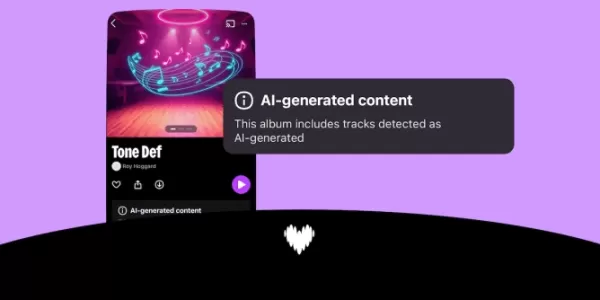 Deezer reports over half of daily music uploads are AI-generated
Deezer, a major music streaming service, has monitored the surge in AI-generated uploads since last year, with figures climbing steadily. The platform now reports that AI-produced content accounts for over half of all downloads.According to Deezer, A
Deezer reports over half of daily music uploads are AI-generated
Deezer, a major music streaming service, has monitored the surge in AI-generated uploads since last year, with figures climbing steadily. The platform now reports that AI-produced content accounts for over half of all downloads.According to Deezer, A
 Instinct launches AI agent in group chats, including those with non-users
Instinct, the AI agent now valued at $10 billion following its latest funding round, is expanding into group chats. The startup announced on Monday that users can add the agent to conversations with friends, offering assistance in scenarios such as t
Instinct launches AI agent in group chats, including those with non-users
Instinct, the AI agent now valued at $10 billion following its latest funding round, is expanding into group chats. The startup announced on Monday that users can add the agent to conversations with friends, offering assistance in scenarios such as t

2026 Latest Top-rated AI Illustration Tools: Our curated list features the best powerfully designed tools for creating stunning editorial scenes and eye-catching cover art quickly. Each option has gone through rigorous real-world tests, offering a free vs paid comparison to help you find the perfect match for your workflow. Try these must-try solutions today to unlock your AI edge and boost your creative productivity. Explore now at XIX.AI.
10 tools
xix.ai

2026 Latest Top-Rated Best AI Tutors for Exam Prep are here on XIX.AI! Our curated list features powerful game-changing tools that offer free vs paid comparison, real-world tests, and weekly updated rankings. They help boost your writing efficiency, simplify complex topic learning, and unlock your academic potential. Explore now to Discover your perfect exam prep tool and Start creating today to Unlock your AI edge!
10 tools
xix.ai

2026 Latest Best Top-Rated AI Budget Planning Tools for Personal Money Management are here on XIX.AI! This curated collection features powerful, game-changing solutions that help you conduct real-world tests, understand spending habits, and create personalized plans to boost productivity. Enjoy a free vs paid comparison along with detailed rankings. Must-try tools designed to simplify money management and unlock your AI edge. Explore now!
11 tools
xix.ai

2026 Latest Best Top-Rated AI Sleep Tracking Assistants curated for ultimate recovery. This fully updated weekly guide features powerful tools that deliver real-world tests, free vs paid comparison, and detailed rankings to help you find the must-try solution that boosts sleep quality and supports better bedtime habits. Explore now at XIX.AI to Unlock your AI edge.
10 tools
xix.ai

2026 Latest Best Top-Rated AI SQL Copilots for Product and Revenue Analytics! XIX.AI has curated a powerful, game-changing collection of must-try tools that undergo real-world tests through weekly updated rankings. These tools help users boost productivity significantly by accelerating data analysis, streamlining complex queries, and generating accurate insights to drive smarter business decisions. Explore now to Discover your perfect tool for unlocking your AI edge!
14 tools
xix.ai

2026 Latest Best Top-Rated AI Homework Helpers That Teach Core Concepts Not Just Answers Powerful Tools for Students Must-Try Curated List Weekly Updated Free vs Paid Comparison Real-World Tests Accurate Rankings to Help You Unlock Your Full Learning Potential Explore now to Discover your perfect tool for smarter studying.
10 tools
xix.ai

Die KI-Entwicklung bei Content-Moderation ist echt beeindruckend, aber ich frage mich, ob Algorithmen kulturelle Nuancen wirklich erfassen können. Letztens wurde mein Kochvideo fälschlich als 'gefährlich' eingestuft - dabei war nur eine scharfe Chili zu sehen! 🌶️












