


 Home
HomeAI symptom checkers: how accurate are they compared to doctors in 2025?
In today's fast-paced healthcare environment, innovative tools like AI symptom checkers are often touted as revolutionary for personal health management. Yet, amidst this wealth of information, a fundamental question arises: how can we actively contribute to helping medical professionals reach precise diagnoses? This article delves into the intricacies of medical diagnosis, comparing the potential of AI symptom checkers with the irreplaceable judgment of seasoned physicians.
Key Points
Diagnostic errors are more common than many think, highlighting a clear need for process enhancement.
AI-driven symptom checkers present useful possibilities but are constrained by notable limitations and the risk of error.
A synergistic model, blending AI's data-processing power with clinical human expertise, is key to improved diagnostic outcomes.
Accurate diagnosis depends on meticulous data gathering, extensive medical knowledge, and ongoing analysis.
Patients can adopt proactive measures to support their doctors in identifying the correct condition.
The Diagnostic Accuracy Landscape
Why Doctor Diagnoses Are Challenging
Diagnostic accuracy in medicine falls short of ideal levels. Research indicates initial diagnoses are correct only around half the time, revealing significant room for improvement. As a patient, you are a vital partner in guiding your doctor toward an accurate conclusion. Discussing diagnostic accuracy isn't about fault-finding; it's a pragmatic look at systemic challenges and opportunities for betterment. The goal is to underscore the critical role each participant plays in the clinical encounter.
What makes diagnosis so difficult? Each individual presents a unique health profile. Every case has subtle nuances, making direct comparisons rare. Compounding this, physicians often operate under severe time pressure. Picture a chess grandmaster in a speed game—there's no time to ponder every possibility. Similarly, doctors must frequently make critical decisions efficiently, which can impact the depth of investigation possible for each patient.
The Role of AI Symptom Checkers
AI Symptom Checkers are designed to streamline healthcare access, so why haven't they replaced doctor visits? In our digital era, these tools garner significant interest, and for good reason: they provide instant, on-demand access to health information right from your smartphone.

Much like the Deep Blue program that defeated chess champion Garry Kasparov in 1997, these AIs utilize vast datasets and complex algorithms.
However, symptom checkers have serious limitations. Their logic is based on existing programming, which may not swiftly adapt to emerging medical trends. Their development typically involves a limited panel of medical professionals, which can hinder their ability to accurately diagnose rare or complex conditions. They may default to common conclusions that don't fit the specific case or fail to integrate the latest medical research.
Two studies show that AI Symptom Checkers Are Inaccurate
A 2015 study published in the British Medical Journal by Dr. Mahrata evaluated the performance of online symptom checkers. The findings were disappointing.
The research concluded these tools showed deficiencies in both triage (assessing urgency) and diagnostic accuracy. Often, the checkers were overly cautious. For non-urgent or self-care situations, their triage advice tended to be excessively risk-averse. The study suggests that when relying solely on a symptom checker, users are working with a restricted information set curated by the tool itself.

A separate study in JAMA explored physician confidence in diagnosis. Not only was diagnostic accuracy found to be limited, but a more concerning trend emerged: doctors' confidence in their diagnoses frequently exceeded their actual accuracy.
The Analogy of Medicine and Chess
Medicine As An If-Then Scenario
Drawing parallels between a doctor's diagnostic process and an AI program's logic is instructive. Medical diagnosis is not merely recalling facts; it's applying knowledge to solve a complex puzzle. Framing medicine as a series of "if-then" decisions helps visualize symptom analysis and reveals the logical boundaries of AI tools, which are confined to their programmed parameters. For instance:
- If a patient is over sixty, then a range of age-related conditions must be considered.
- If a patient is male, then gender-specific health factors come into play.
- If there is a relevant family history, then genetic predispositions require evaluation.
This mirrors the strategic reasoning in chess, where each move involves calculated "if-then" scenarios—a similarity that explains why AI has been pursued in both fields.
Deep Blue, AI, and the End of Human Dominance in the Field of Chess
The match between Garry Kasparov and Deep Blue serves as a landmark example.

Deep Blue, a chess-playing AI from the mid-1990s, established itself as a formidable force, winning numerous high-profile games. Kasparov ultimately lost to its evolving capabilities, as its programming was continuously refined based on对手's moves. This highlights how AI's adaptive power can surpass individual human calculation.
How Can Patients Improve The Diagnostic Process?
The Power of Active Listening
Effective diagnosis begins with attentive communication. Doctors pressed for time may inadvertently prioritize tests over patient narrative. It's crucial for clinicians to actively listen, as a patient's story can be as revealing as any lab result. Patients, in turn, should be open, honest, and detailed. Providing a thorough account of symptoms, lifestyle, and past treatments gives doctors a clearer picture, leading to more accurate assessments.
K Health
Some organizations are adopting a collaborative, team-based model to enhance diagnosis.
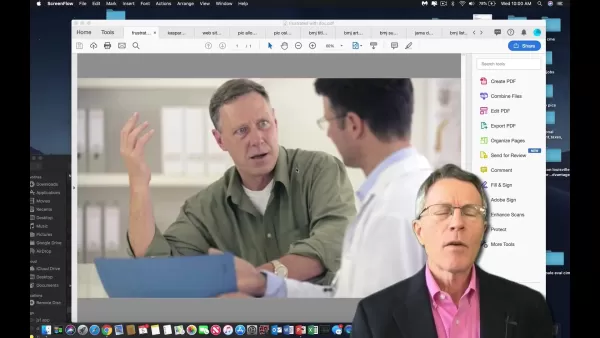
K Health is a healthcare organization focused on improving diagnostic accuracy through data. Its mission is to leverage information for consistently correct diagnoses. The "K" represents "thousands," reflecting insights drawn from millions of real cases handled by thousands of doctors. You can access their services online. While no solution guarantees perfection, this collective intelligence approach holds considerable promise.
Examining the Use of AI Diagnosis Tools
Pros
Offer convenient, immediate access to healthcare guidance.
Typically low-cost or free, providing an affordable starting point.
Can support rapid initial assessment and triage decisions.
Cons
Require constant updates to algorithms to stay current.
Prone to significant inaccuracies, especially for complex cases.
Knowledge is limited to pre-programmed parameters, lacking human intuition.
Frequently Asked Questions
How frequently should AI diagnostic technologies be updated to remain reliable?
AI diagnostic tools need near-continuous updates to maintain reliability and integrate new medical knowledge. The ideal is real-time updating to keep pace with the dynamic healthcare landscape. This necessity for rigorous, ongoing safety validation is a primary reason these tools complement, rather than replace, clinical practice.
What role does a patient’s detailed medical history play in reaching an accurate diagnosis?
A comprehensive medical history is foundational for diagnostic accuracy. It provides essential context, helping healthcare providers connect symptoms to potential causes. This requires patients to communicate their experiences thoroughly, and clinicians to listen attentively and analyze the information carefully.
Delving Deeper: Related Questions
Are online medical resources inherently unreliable?
Not all online medical resources are unreliable, but discerning evaluation is essential. Prioritize information from established medical institutions, peer-reviewed journals, and government health agencies. Be cautious of sites with commercial motives or those that are not transparent about their sources and medical review. Checking credentials, editorial policies, and funding disclosed on "About Us" pages is wise. Reputable sites also feature clear disclaimers. Cross-referencing information across multiple trusted sources is a good practice. Remember, while online tools can provide useful preliminary information, they are not a substitute for professional medical consultation, diagnosis, or treatment.
What practical steps can patients take to facilitate effective communication with their healthcare providers?
Effective communication with healthcare providers is crucial for quality care. Prepare for appointments by noting your symptoms—their start time, frequency, triggers, and severity. List current and past medications, allergies, major health conditions, and relevant life changes. During the visit, describe symptoms clearly, lead with your chief concern, and use specific descriptions. Don't hesitate to ask questions to fully understand diagnoses, treatment plans, and medication instructions. Engage actively by summarizing what you've heard to confirm understanding. Respect your provider's expertise while ensuring your voice is heard. These steps foster a collaborative partnership and a more accurate grasp of your health situation.
Related article
 Ctrip Business Travel Unveils AI Ecosystem with 7 Industry Agents and 17 Core Capabilities
Ctrip Business Travel has officially unveiled the "Ctrip Business Travel AI Ecosystem," leveraging large language models to fundamentally restructure corporate travel management. This comprehensive ecosystem addresses four core scenarios: travel arra
Stripe to Acquire OpenRouter as AI Model Routing Gains Momentum
Stripe has agreed to acquire OpenRouter, an AI model-routing platform that gives developers access to hundreds of models through a single interface. The deal adds model selection and routing to Stripe’s existing work around AI usage and token-based b
Former OpenAI Researcher Barrett Zoph Returns to Google to Support Gemini Development
Barret Zoph, who previously abruptly left and joined OpenAI due to a disagreement with Thinking Machines Lab CEO Miriam Mularati, has once again changed employers. Alphabet's Google announced that Zoph will return as Vice President of Research, bring
Related Special Topic Recommendations
Design & Art
Ctrip Business Travel Unveils AI Ecosystem with 7 Industry Agents and 17 Core Capabilities
Ctrip Business Travel has officially unveiled the "Ctrip Business Travel AI Ecosystem," leveraging large language models to fundamentally restructure corporate travel management. This comprehensive ecosystem addresses four core scenarios: travel arra
Stripe to Acquire OpenRouter as AI Model Routing Gains Momentum
Stripe has agreed to acquire OpenRouter, an AI model-routing platform that gives developers access to hundreds of models through a single interface. The deal adds model selection and routing to Stripe’s existing work around AI usage and token-based b
Former OpenAI Researcher Barrett Zoph Returns to Google to Support Gemini Development
Barret Zoph, who previously abruptly left and joined OpenAI due to a disagreement with Thinking Machines Lab CEO Miriam Mularati, has once again changed employers. Alphabet's Google announced that Zoph will return as Vice President of Research, bring
Related Special Topic Recommendations
Design & Art
 Top AI Illustration Tools: Create Editorial Scenes and Cover Art Faster
2026 Latest Top-rated AI Illustration Tools: Our curated list features the best powerfully designed tools for creating stunning editorial scenes and eye-catching cover art quickly. Each option has gone through rigorous real-world tests, offering a free vs paid comparison to help you find the perfect match for your workflow. Try these must-try solutions today to unlock your AI edge and boost your creative productivity. Explore now at XIX.AI.
 10 tools
 xix.ai
Education and Learning
Top AI Tutors for Exam Prep: Practice Math, Science, and English
xix.ai
Education and Learning
Top AI Tutors for Exam Prep: Practice Math, Science, and English
2026 Latest Top-Rated Best AI Tutors for Exam Prep are here on XIX.AI! Our curated list features powerful game-changing tools that offer free vs paid comparison, real-world tests, and weekly updated rankings. They help boost your writing efficiency, simplify complex topic learning, and unlock your academic potential. Explore now to Discover your perfect exam prep tool and Start creating today to Unlock your AI edge!
10 tools
xix.ai
Finance
AI Budget Planning Tools for Personal Money Management
2026 Latest Best Top-Rated AI Budget Planning Tools for Personal Money Management are here on XIX.AI! This curated collection features powerful, game-changing solutions that help you conduct real-world tests, understand spending habits, and create personalized plans to boost productivity. Enjoy a free vs paid comparison along with detailed rankings. Must-try tools designed to simplify money management and unlock your AI edge. Explore now!
11 tools
xix.ai
Health & Wellness
AI Sleep Tracking Assistants: Improve Recovery with Better Bedtime Habits
2026 Latest Best Top-Rated AI Sleep Tracking Assistants curated for ultimate recovery. This fully updated weekly guide features powerful tools that deliver real-world tests, free vs paid comparison, and detailed rankings to help you find the must-try solution that boosts sleep quality and supports better bedtime habits. Explore now at XIX.AI to Unlock your AI edge.
10 tools
xix.ai
Data Analysis
AI SQL Copilots for Product and Revenue Analytics
2026 Latest Best Top-Rated AI SQL Copilots for Product and Revenue Analytics! XIX.AI has curated a powerful, game-changing collection of must-try tools that undergo real-world tests through weekly updated rankings. These tools help users boost productivity significantly by accelerating data analysis, streamlining complex queries, and generating accurate insights to drive smarter business decisions. Explore now to Discover your perfect tool for unlocking your AI edge!
14 tools
xix.ai
Education and Learning
Best AI Homework Helpers That Teach: Learn Concepts, Not Just Answers
2026 Latest Best Top-Rated AI Homework Helpers That Teach Core Concepts Not Just Answers Powerful Tools for Students Must-Try Curated List Weekly Updated Free vs Paid Comparison Real-World Tests Accurate Rankings to Help You Unlock Your Full Learning Potential Explore now to Discover your perfect tool for smarter studying.
10 tools
xix.ai

 Comments (5)
0/500
Comments (5)
0/500
![JerryLopez]()
现在的AI症状检查器确实挺火的,但说实话,我还是更信任医生的专业判断。毕竟机器没法做体格检查,有些细微的症状可能就被忽略了。不过作为初步筛查工具,它们确实能节省不少时间,只是别完全依赖它们哦!😅
![JamesCarter]()
Honestly, I've tried a few of these AI symptom checkers and they're hit or miss. One time it told me my headache was a brain tumor (spoiler: it was just a sinus infection). Doctors still win for nuance, but for quick triage? Maybe useful. 😅
![MarkGarcia]()
Honestly, I'm a bit skeptical. While AI tools are convenient for initial symptom checks, they can't replace a doctor's nuanced understanding and physical exam. I'd still book an appointment for anything serious. The 'human touch' in medicine is irreplaceable, especially for complex cases. 🤔
![RichardGonzález]()
So we're trusting algorithms to diagnose us now? That's the real symptom of our times: convenience over caution. Sure, it's probably fine 90% of the time, but is anyone really thinking about liability when the AI misses the one rare disease? 🤔
![BillyThomas]()
¿AI comparándose con doctores en 2025? Suena a película de ciencia ficción 🚀 La verdad, me da un poco de miedo confiar tanto en una máquina para síntomas serios. ¿Y si pasa algo raro y el algoritmo no lo capta? Prefiero una segunda opinión humana, la verdad. Aunque para cosas menores como un resfriado, sí ahorra tiempo.
In today's fast-paced healthcare environment, innovative tools like AI symptom checkers are often touted as revolutionary for personal health management. Yet, amidst this wealth of information, a fundamental question arises: how can we actively contribute to helping medical professionals reach precise diagnoses? This article delves into the intricacies of medical diagnosis, comparing the potential of AI symptom checkers with the irreplaceable judgment of seasoned physicians.
Key Points
Diagnostic errors are more common than many think, highlighting a clear need for process enhancement.
AI-driven symptom checkers present useful possibilities but are constrained by notable limitations and the risk of error.
A synergistic model, blending AI's data-processing power with clinical human expertise, is key to improved diagnostic outcomes.
Accurate diagnosis depends on meticulous data gathering, extensive medical knowledge, and ongoing analysis.
Patients can adopt proactive measures to support their doctors in identifying the correct condition.
The Diagnostic Accuracy Landscape
Why Doctor Diagnoses Are Challenging
Diagnostic accuracy in medicine falls short of ideal levels. Research indicates initial diagnoses are correct only around half the time, revealing significant room for improvement. As a patient, you are a vital partner in guiding your doctor toward an accurate conclusion. Discussing diagnostic accuracy isn't about fault-finding; it's a pragmatic look at systemic challenges and opportunities for betterment. The goal is to underscore the critical role each participant plays in the clinical encounter.
What makes diagnosis so difficult? Each individual presents a unique health profile. Every case has subtle nuances, making direct comparisons rare. Compounding this, physicians often operate under severe time pressure. Picture a chess grandmaster in a speed game—there's no time to ponder every possibility. Similarly, doctors must frequently make critical decisions efficiently, which can impact the depth of investigation possible for each patient.
The Role of AI Symptom Checkers
AI Symptom Checkers are designed to streamline healthcare access, so why haven't they replaced doctor visits? In our digital era, these tools garner significant interest, and for good reason: they provide instant, on-demand access to health information right from your smartphone.
Much like the Deep Blue program that defeated chess champion Garry Kasparov in 1997, these AIs utilize vast datasets and complex algorithms.
However, symptom checkers have serious limitations. Their logic is based on existing programming, which may not swiftly adapt to emerging medical trends. Their development typically involves a limited panel of medical professionals, which can hinder their ability to accurately diagnose rare or complex conditions. They may default to common conclusions that don't fit the specific case or fail to integrate the latest medical research.
Two studies show that AI Symptom Checkers Are Inaccurate
A 2015 study published in the British Medical Journal by Dr. Mahrata evaluated the performance of online symptom checkers. The findings were disappointing.
The research concluded these tools showed deficiencies in both triage (assessing urgency) and diagnostic accuracy. Often, the checkers were overly cautious. For non-urgent or self-care situations, their triage advice tended to be excessively risk-averse. The study suggests that when relying solely on a symptom checker, users are working with a restricted information set curated by the tool itself.
A separate study in JAMA explored physician confidence in diagnosis. Not only was diagnostic accuracy found to be limited, but a more concerning trend emerged: doctors' confidence in their diagnoses frequently exceeded their actual accuracy.
The Analogy of Medicine and Chess
Medicine As An If-Then Scenario
Drawing parallels between a doctor's diagnostic process and an AI program's logic is instructive. Medical diagnosis is not merely recalling facts; it's applying knowledge to solve a complex puzzle. Framing medicine as a series of "if-then" decisions helps visualize symptom analysis and reveals the logical boundaries of AI tools, which are confined to their programmed parameters. For instance:
- If a patient is over sixty, then a range of age-related conditions must be considered.
- If a patient is male, then gender-specific health factors come into play.
- If there is a relevant family history, then genetic predispositions require evaluation.
This mirrors the strategic reasoning in chess, where each move involves calculated "if-then" scenarios—a similarity that explains why AI has been pursued in both fields.
Deep Blue, AI, and the End of Human Dominance in the Field of Chess
The match between Garry Kasparov and Deep Blue serves as a landmark example.
Deep Blue, a chess-playing AI from the mid-1990s, established itself as a formidable force, winning numerous high-profile games. Kasparov ultimately lost to its evolving capabilities, as its programming was continuously refined based on对手's moves. This highlights how AI's adaptive power can surpass individual human calculation.
How Can Patients Improve The Diagnostic Process?
The Power of Active Listening
Effective diagnosis begins with attentive communication. Doctors pressed for time may inadvertently prioritize tests over patient narrative. It's crucial for clinicians to actively listen, as a patient's story can be as revealing as any lab result. Patients, in turn, should be open, honest, and detailed. Providing a thorough account of symptoms, lifestyle, and past treatments gives doctors a clearer picture, leading to more accurate assessments.
K Health
Some organizations are adopting a collaborative, team-based model to enhance diagnosis.
K Health is a healthcare organization focused on improving diagnostic accuracy through data. Its mission is to leverage information for consistently correct diagnoses. The "K" represents "thousands," reflecting insights drawn from millions of real cases handled by thousands of doctors. You can access their services online. While no solution guarantees perfection, this collective intelligence approach holds considerable promise.
Examining the Use of AI Diagnosis Tools
Pros
Offer convenient, immediate access to healthcare guidance.
Typically low-cost or free, providing an affordable starting point.
Can support rapid initial assessment and triage decisions.
Cons
Require constant updates to algorithms to stay current.
Prone to significant inaccuracies, especially for complex cases.
Knowledge is limited to pre-programmed parameters, lacking human intuition.
Frequently Asked Questions
How frequently should AI diagnostic technologies be updated to remain reliable?
AI diagnostic tools need near-continuous updates to maintain reliability and integrate new medical knowledge. The ideal is real-time updating to keep pace with the dynamic healthcare landscape. This necessity for rigorous, ongoing safety validation is a primary reason these tools complement, rather than replace, clinical practice.
What role does a patient’s detailed medical history play in reaching an accurate diagnosis?
A comprehensive medical history is foundational for diagnostic accuracy. It provides essential context, helping healthcare providers connect symptoms to potential causes. This requires patients to communicate their experiences thoroughly, and clinicians to listen attentively and analyze the information carefully.
Delving Deeper: Related Questions
Are online medical resources inherently unreliable?
Not all online medical resources are unreliable, but discerning evaluation is essential. Prioritize information from established medical institutions, peer-reviewed journals, and government health agencies. Be cautious of sites with commercial motives or those that are not transparent about their sources and medical review. Checking credentials, editorial policies, and funding disclosed on "About Us" pages is wise. Reputable sites also feature clear disclaimers. Cross-referencing information across multiple trusted sources is a good practice. Remember, while online tools can provide useful preliminary information, they are not a substitute for professional medical consultation, diagnosis, or treatment.
What practical steps can patients take to facilitate effective communication with their healthcare providers?
Effective communication with healthcare providers is crucial for quality care. Prepare for appointments by noting your symptoms—their start time, frequency, triggers, and severity. List current and past medications, allergies, major health conditions, and relevant life changes. During the visit, describe symptoms clearly, lead with your chief concern, and use specific descriptions. Don't hesitate to ask questions to fully understand diagnoses, treatment plans, and medication instructions. Engage actively by summarizing what you've heard to confirm understanding. Respect your provider's expertise while ensuring your voice is heard. These steps foster a collaborative partnership and a more accurate grasp of your health situation.








 Ctrip Business Travel Unveils AI Ecosystem with 7 Industry Agents and 17 Core Capabilities
Ctrip Business Travel has officially unveiled the "Ctrip Business Travel AI Ecosystem," leveraging large language models to fundamentally restructure corporate travel management. This comprehensive ecosystem addresses four core scenarios: travel arra
Ctrip Business Travel Unveils AI Ecosystem with 7 Industry Agents and 17 Core Capabilities
Ctrip Business Travel has officially unveiled the "Ctrip Business Travel AI Ecosystem," leveraging large language models to fundamentally restructure corporate travel management. This comprehensive ecosystem addresses four core scenarios: travel arra
 Stripe to Acquire OpenRouter as AI Model Routing Gains Momentum
Stripe has agreed to acquire OpenRouter, an AI model-routing platform that gives developers access to hundreds of models through a single interface. The deal adds model selection and routing to Stripe’s existing work around AI usage and token-based b
Stripe to Acquire OpenRouter as AI Model Routing Gains Momentum
Stripe has agreed to acquire OpenRouter, an AI model-routing platform that gives developers access to hundreds of models through a single interface. The deal adds model selection and routing to Stripe’s existing work around AI usage and token-based b
 Former OpenAI Researcher Barrett Zoph Returns to Google to Support Gemini Development
Barret Zoph, who previously abruptly left and joined OpenAI due to a disagreement with Thinking Machines Lab CEO Miriam Mularati, has once again changed employers. Alphabet's Google announced that Zoph will return as Vice President of Research, bring
Former OpenAI Researcher Barrett Zoph Returns to Google to Support Gemini Development
Barret Zoph, who previously abruptly left and joined OpenAI due to a disagreement with Thinking Machines Lab CEO Miriam Mularati, has once again changed employers. Alphabet's Google announced that Zoph will return as Vice President of Research, bring

2026 Latest Top-rated AI Illustration Tools: Our curated list features the best powerfully designed tools for creating stunning editorial scenes and eye-catching cover art quickly. Each option has gone through rigorous real-world tests, offering a free vs paid comparison to help you find the perfect match for your workflow. Try these must-try solutions today to unlock your AI edge and boost your creative productivity. Explore now at XIX.AI.
10 tools
xix.ai

2026 Latest Top-Rated Best AI Tutors for Exam Prep are here on XIX.AI! Our curated list features powerful game-changing tools that offer free vs paid comparison, real-world tests, and weekly updated rankings. They help boost your writing efficiency, simplify complex topic learning, and unlock your academic potential. Explore now to Discover your perfect exam prep tool and Start creating today to Unlock your AI edge!
10 tools
xix.ai

2026 Latest Best Top-Rated AI Budget Planning Tools for Personal Money Management are here on XIX.AI! This curated collection features powerful, game-changing solutions that help you conduct real-world tests, understand spending habits, and create personalized plans to boost productivity. Enjoy a free vs paid comparison along with detailed rankings. Must-try tools designed to simplify money management and unlock your AI edge. Explore now!
11 tools
xix.ai
2026 Latest Best Top-Rated AI Sleep Tracking Assistants curated for ultimate recovery. This fully updated weekly guide features powerful tools that deliver real-world tests, free vs paid comparison, and detailed rankings to help you find the must-try solution that boosts sleep quality and supports better bedtime habits. Explore now at XIX.AI to Unlock your AI edge.
10 tools
xix.ai

2026 Latest Best Top-Rated AI SQL Copilots for Product and Revenue Analytics! XIX.AI has curated a powerful, game-changing collection of must-try tools that undergo real-world tests through weekly updated rankings. These tools help users boost productivity significantly by accelerating data analysis, streamlining complex queries, and generating accurate insights to drive smarter business decisions. Explore now to Discover your perfect tool for unlocking your AI edge!
14 tools
xix.ai

2026 Latest Best Top-Rated AI Homework Helpers That Teach Core Concepts Not Just Answers Powerful Tools for Students Must-Try Curated List Weekly Updated Free vs Paid Comparison Real-World Tests Accurate Rankings to Help You Unlock Your Full Learning Potential Explore now to Discover your perfect tool for smarter studying.
10 tools
xix.ai

现在的AI症状检查器确实挺火的,但说实话,我还是更信任医生的专业判断。毕竟机器没法做体格检查,有些细微的症状可能就被忽略了。不过作为初步筛查工具,它们确实能节省不少时间,只是别完全依赖它们哦!😅
Honestly, I've tried a few of these AI symptom checkers and they're hit or miss. One time it told me my headache was a brain tumor (spoiler: it was just a sinus infection). Doctors still win for nuance, but for quick triage? Maybe useful. 😅
Honestly, I'm a bit skeptical. While AI tools are convenient for initial symptom checks, they can't replace a doctor's nuanced understanding and physical exam. I'd still book an appointment for anything serious. The 'human touch' in medicine is irreplaceable, especially for complex cases. 🤔
So we're trusting algorithms to diagnose us now? That's the real symptom of our times: convenience over caution. Sure, it's probably fine 90% of the time, but is anyone really thinking about liability when the AI misses the one rare disease? 🤔
¿AI comparándose con doctores en 2025? Suena a película de ciencia ficción 🚀 La verdad, me da un poco de miedo confiar tanto en una máquina para síntomas serios. ¿Y si pasa algo raro y el algoritmo no lo capta? Prefiero una segunda opinión humana, la verdad. Aunque para cosas menores como un resfriado, sí ahorra tiempo.












