


 Home
Cloudflare CEO: Robot Traffic Outpaces Humans, Internet May Shift to Fully Paid Crawling
Cloudflare CEO Matthew Prince, a prominent figure in cybersecurity and cloud services, recently highlighted that the internet has reached a pivotal historical moment. New data shows that automated bot traffic has officially overtaken human-generated traffic, now making up the majority of web activity. Prince admitted that this shift is happening far sooner than industry expectations—the reversal was originally projected for late 2027, but is now occurring early, driven by the rise of AI agents.
AI Agents Fuel a Major Shift in Web Traffic
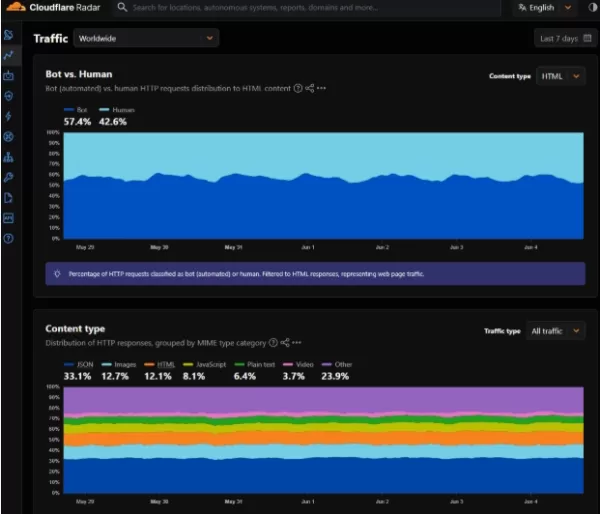
Based on Cloudflare's global HTTP request data, automated requests from bots, crawlers, and AI agents now represent 57.4% of all web traffic, while human-initiated requests have fallen to 42.6%. While the data may still be preliminary, the trend of automated traffic overtaking human traffic is clear and irreversible. Prince believes the rules of the internet ecosystem will inevitably undergo disruptive changes, making the era of "pay-to-scrape" unavoidable.
In response, Cloudflare introduced a service platform last summer that enables website owners to block AI crawlers and charge for data scraping. However, due to a lack of ecosystem support, the initiative initially failed to attract widespread adoption or market traction.
Building Infrastructure for a New Web Ecosystem
To handle the surge in AI-driven traffic, Cloudflare is developing new protocols and underlying infrastructure to support the high-frequency settlements and traffic management needed for a future paid scraping marketplace. Prince argues that whether labeled as bots, crawlers, or agents, they are fundamentally the same type of automated tool. Website owners should shift their mindset from resistance to seeing this as a new monetization opportunity.
Meanwhile, traditional internet giants are accelerating the shift of users toward AI-driven interaction models. For instance, Google's AI summaries and AI mode features have already drawn billions of users globally, underscoring that information consumption is rapidly moving from traditional web browsing to AI-generated summaries.
Related article
 Ctrip Business Travel Unveils AI Ecosystem with 7 Industry Agents and 17 Core Capabilities
Ctrip Business Travel has officially unveiled the "Ctrip Business Travel AI Ecosystem," leveraging large language models to fundamentally restructure corporate travel management. This comprehensive ecosystem addresses four core scenarios: travel arra
Stripe to Acquire OpenRouter as AI Model Routing Gains Momentum
Stripe has agreed to acquire OpenRouter, an AI model-routing platform that gives developers access to hundreds of models through a single interface. The deal adds model selection and routing to Stripe’s existing work around AI usage and token-based b
Former OpenAI Researcher Barrett Zoph Returns to Google to Support Gemini Development
Barret Zoph, who previously abruptly left and joined OpenAI due to a disagreement with Thinking Machines Lab CEO Miriam Mularati, has once again changed employers. Alphabet's Google announced that Zoph will return as Vice President of Research, bring
Related Special Topic Recommendations
Design & Art
 Top AI Illustration Tools: Create Editorial Scenes and Cover Art Faster
2026 Latest Top-rated AI Illustration Tools: Our curated list features the best powerfully designed tools for creating stunning editorial scenes and eye-catching cover art quickly. Each option has gone through rigorous real-world tests, offering a free vs paid comparison to help you find the perfect match for your workflow. Try these must-try solutions today to unlock your AI edge and boost your creative productivity. Explore now at XIX.AI.
 10 tools
 xix.ai
Education and Learning
Top AI Tutors for Exam Prep: Practice Math, Science, and English
2026 Latest Top-Rated Best AI Tutors for Exam Prep are here on XIX.AI! Our curated list features powerful game-changing tools that offer free vs paid comparison, real-world tests, and weekly updated rankings. They help boost your writing efficiency, simplify complex topic learning, and unlock your academic potential. Explore now to Discover your perfect exam prep tool and Start creating today to Unlock your AI edge!
10 tools
xix.ai
Finance
AI Budget Planning Tools for Personal Money Management
2026 Latest Best Top-Rated AI Budget Planning Tools for Personal Money Management are here on XIX.AI! This curated collection features powerful, game-changing solutions that help you conduct real-world tests, understand spending habits, and create personalized plans to boost productivity. Enjoy a free vs paid comparison along with detailed rankings. Must-try tools designed to simplify money management and unlock your AI edge. Explore now!
11 tools
xix.ai
Health & Wellness
AI Sleep Tracking Assistants: Improve Recovery with Better Bedtime Habits
2026 Latest Best Top-Rated AI Sleep Tracking Assistants curated for ultimate recovery. This fully updated weekly guide features powerful tools that deliver real-world tests, free vs paid comparison, and detailed rankings to help you find the must-try solution that boosts sleep quality and supports better bedtime habits. Explore now at XIX.AI to Unlock your AI edge.
10 tools
xix.ai
Data Analysis
AI SQL Copilots for Product and Revenue Analytics
2026 Latest Best Top-Rated AI SQL Copilots for Product and Revenue Analytics! XIX.AI has curated a powerful, game-changing collection of must-try tools that undergo real-world tests through weekly updated rankings. These tools help users boost productivity significantly by accelerating data analysis, streamlining complex queries, and generating accurate insights to drive smarter business decisions. Explore now to Discover your perfect tool for unlocking your AI edge!
14 tools
xix.ai
Education and Learning
Best AI Homework Helpers That Teach: Learn Concepts, Not Just Answers
2026 Latest Best Top-Rated AI Homework Helpers That Teach Core Concepts Not Just Answers Powerful Tools for Students Must-Try Curated List Weekly Updated Free vs Paid Comparison Real-World Tests Accurate Rankings to Help You Unlock Your Full Learning Potential Explore now to Discover your perfect tool for smarter studying.
10 tools
xix.ai

 Comments (0)
0/500
Cloudflare CEO Matthew Prince, a prominent figure in cybersecurity and cloud services, recently highlighted that the internet has reached a pivotal historical moment. New data shows that automated bot traffic has officially overtaken human-generated traffic, now making up the majority of web activity. Prince admitted that this shift is happening far sooner than industry expectations—the reversal was originally projected for late 2027, but is now occurring early, driven by the rise of AI agents.
AI Agents Fuel a Major Shift in Web Traffic
Based on Cloudflare's global HTTP request data, automated requests from bots, crawlers, and AI agents now represent 57.4% of all web traffic, while human-initiated requests have fallen to 42.6%. While the data may still be preliminary, the trend of automated traffic overtaking human traffic is clear and irreversible. Prince believes the rules of the internet ecosystem will inevitably undergo disruptive changes, making the era of "pay-to-scrape" unavoidable.
In response, Cloudflare introduced a service platform last summer that enables website owners to block AI crawlers and charge for data scraping. However, due to a lack of ecosystem support, the initiative initially failed to attract widespread adoption or market traction.
Building Infrastructure for a New Web Ecosystem
To handle the surge in AI-driven traffic, Cloudflare is developing new protocols and underlying infrastructure to support the high-frequency settlements and traffic management needed for a future paid scraping marketplace. Prince argues that whether labeled as bots, crawlers, or agents, they are fundamentally the same type of automated tool. Website owners should shift their mindset from resistance to seeing this as a new monetization opportunity.
Meanwhile, traditional internet giants are accelerating the shift of users toward AI-driven interaction models. For instance, Google's AI summaries and AI mode features have already drawn billions of users globally, underscoring that information consumption is rapidly moving from traditional web browsing to AI-generated summaries.








 Ctrip Business Travel Unveils AI Ecosystem with 7 Industry Agents and 17 Core Capabilities
Ctrip Business Travel has officially unveiled the "Ctrip Business Travel AI Ecosystem," leveraging large language models to fundamentally restructure corporate travel management. This comprehensive ecosystem addresses four core scenarios: travel arra
 Stripe to Acquire OpenRouter as AI Model Routing Gains Momentum
Stripe has agreed to acquire OpenRouter, an AI model-routing platform that gives developers access to hundreds of models through a single interface. The deal adds model selection and routing to Stripe’s existing work around AI usage and token-based b
 Former OpenAI Researcher Barrett Zoph Returns to Google to Support Gemini Development
Barret Zoph, who previously abruptly left and joined OpenAI due to a disagreement with Thinking Machines Lab CEO Miriam Mularati, has once again changed employers. Alphabet's Google announced that Zoph will return as Vice President of Research, bring

2026 Latest Top-rated AI Illustration Tools: Our curated list features the best powerfully designed tools for creating stunning editorial scenes and eye-catching cover art quickly. Each option has gone through rigorous real-world tests, offering a free vs paid comparison to help you find the perfect match for your workflow. Try these must-try solutions today to unlock your AI edge and boost your creative productivity. Explore now at XIX.AI.
10 tools
xix.ai

2026 Latest Top-Rated Best AI Tutors for Exam Prep are here on XIX.AI! Our curated list features powerful game-changing tools that offer free vs paid comparison, real-world tests, and weekly updated rankings. They help boost your writing efficiency, simplify complex topic learning, and unlock your academic potential. Explore now to Discover your perfect exam prep tool and Start creating today to Unlock your AI edge!
10 tools
xix.ai

2026 Latest Best Top-Rated AI Budget Planning Tools for Personal Money Management are here on XIX.AI! This curated collection features powerful, game-changing solutions that help you conduct real-world tests, understand spending habits, and create personalized plans to boost productivity. Enjoy a free vs paid comparison along with detailed rankings. Must-try tools designed to simplify money management and unlock your AI edge. Explore now!
11 tools
xix.ai

2026 Latest Best Top-Rated AI Sleep Tracking Assistants curated for ultimate recovery. This fully updated weekly guide features powerful tools that deliver real-world tests, free vs paid comparison, and detailed rankings to help you find the must-try solution that boosts sleep quality and supports better bedtime habits. Explore now at XIX.AI to Unlock your AI edge.
10 tools
xix.ai

2026 Latest Best Top-Rated AI SQL Copilots for Product and Revenue Analytics! XIX.AI has curated a powerful, game-changing collection of must-try tools that undergo real-world tests through weekly updated rankings. These tools help users boost productivity significantly by accelerating data analysis, streamlining complex queries, and generating accurate insights to drive smarter business decisions. Explore now to Discover your perfect tool for unlocking your AI edge!
14 tools
xix.ai

2026 Latest Best Top-Rated AI Homework Helpers That Teach Core Concepts Not Just Answers Powerful Tools for Students Must-Try Curated List Weekly Updated Free vs Paid Comparison Real-World Tests Accurate Rankings to Help You Unlock Your Full Learning Potential Explore now to Discover your perfect tool for smarter studying.
10 tools
xix.ai












