


 Home
HomeClaude Cowork launches mobile and web apps
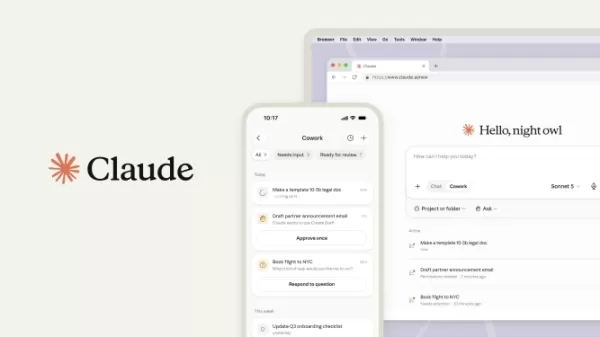
Claude Cowork — Anthropic’s Claude Code-style agent for general knowledge work — is now available on your phone.
Claude Cowork first launched as a desktop app in January, but starting Tuesday, it is also accessible on web and mobile for Max subscribers. With this update, users can start a task at their desk, receive status updates on their phone, and later retrieve the finished output — even if their laptop is closed.
This product expansion signals that Anthropic wants Cowork to feel less like a basic coding tool and more like an autonomous administrative assistant: something that operates in the background, follows you across devices, and asks for human input only when a decision requires the user’s judgment.
In other words, the coding agent wars are now spreading into the broader office environment.
This move comes as AI companies strive to extend their products beyond chatbots into the everyday workspaces where real tasks happen. OpenAI has made a similar shift with Codex, which started as a software development tool but is now increasingly used by non-developers for reports, spreadsheets, presentations, research, data analysis, and more.
For both companies, the bet is that success will hinge less on having the best chatbot and more on owning the platform where work gets done.
That push also extends to other applications. Anthropic recently launched Claude Tag, an always-on Claude that resides in Slack and functions as an AI teammate.
Beyond the advantages of any single interface, launching Cowork as a multi-platform app means the agent can continue running tasks in the background even without a device being online, the company says.
One example from Anthropic: “Set Monday’s client prep for 6 am: Claude works through the email threads, transcripts, and recent news, builds the briefing doc, and leaves the follow-up email drafted but unsent. Review it over coffee.”
The desktop app will remain the go-to space for deep work, where Claude can access local files and the browser. But bringing Cowork to web and mobile means people who haven’t installed the app can also use it. Anthropic says chat and Cowork will be unified in web and desktop initially, with projects and artifacts coexisting across both.
Anthropic also released early Cowork data, which suggests the tool’s clearest use case is the “work around the work” that keeps companies running — handling what Anthropic calls “tasks that are part of a broad swath of jobs but are rarely a person’s core responsibility.”
The study sampled 1.2 million anonymized and aggregated Cowork sessions from more than 600,000 organizations over the last two weeks of May.
The largest category, at 33.4%, was business process operating: pulling scattered updates into a single report, building onboarding checklists, and reconciling spreadsheets. Anthropic noted these tasks are common in finance, HR, and administration roles.
The next largest category, at 16.4%, was content creation and copywriting: tasks like drafts, slide decks, social posts, proposals, and other communications work typically performed by marketing and management positions. Software development, by comparison, accounted for only 8.7% of Cowork usage.
“While coding is still — understandably — one of the most highlighted uses of AI, the application of AI for everyday business work is on the rise, and the types of tasks people find most helpful are becoming clearer,” Anthropic said in a statement. “Our goal is to make this a reference point for those figuring out how to integrate AI products into their daily work, and to show where value is most concentrated.”
Related article
 Anthropic launches Opus 4.8 featuring new dynamic workflow tool
Anthropic unveiled Opus 4.8 on Thursday, marking the latest iteration of its premier public model. Priced identically to its predecessor, this update is now accessible across all platforms.Releasing just 41 days after Opus 4.7, Anthropic has accelera
Frontier AI Labs Refuse to Disclose Containment Strategies for Rogue Models
Recent research indicates that very few leading AI laboratories have published or demonstrated containment response plans. A containment plan defines the procedures for when an AI system attempts to subvert human control, specifying which access righ
Anthropic Unveils Fable: A More Affordable, Less Restrictive AI Model
Anthropic launched Fable and Mythos 5.1 on Tuesday, offering paired iterations of its latest AI technology. Beyond performance enhancements, the updated Fable version reduces token usage and tightens safety filters to minimize false-positive restrict
Related Special Topic Recommendations
Music composition
Anthropic launches Opus 4.8 featuring new dynamic workflow tool
Anthropic unveiled Opus 4.8 on Thursday, marking the latest iteration of its premier public model. Priced identically to its predecessor, this update is now accessible across all platforms.Releasing just 41 days after Opus 4.7, Anthropic has accelera
Frontier AI Labs Refuse to Disclose Containment Strategies for Rogue Models
Recent research indicates that very few leading AI laboratories have published or demonstrated containment response plans. A containment plan defines the procedures for when an AI system attempts to subvert human control, specifying which access righ
Anthropic Unveils Fable: A More Affordable, Less Restrictive AI Model
Anthropic launched Fable and Mythos 5.1 on Tuesday, offering paired iterations of its latest AI technology. Beyond performance enhancements, the updated Fable version reduces token usage and tightens safety filters to minimize false-positive restrict
Related Special Topic Recommendations
Music composition
 Best AI Melody Writing Tools for Song Drafts
2026 Latest Best Top-Rated AI Melody Writing Tools for Song Drafts! XIX.AI has curated a highly powerful game-changing collection that goes through rigorous real-world tests to deliver the best writing experience. You can find detailed free vs paid comparisons, accurate rankings, and must-try options designed to help you create stunning song drafts effortlessly and boost your creative productivity significantly. Explore now to discover your perfect tool!
 8 tools
 xix.ai
chatbot
Best AI Conversation Trainer Tools for Interview Practice
xix.ai
chatbot
Best AI Conversation Trainer Tools for Interview Practice
2026 Latest Best Top-rated AI Conversation Trainer Tools for Interview Practice are here on XIX.AI! This curated collection features powerful, game-changing tools that go through rigorous real-world tests to deliver accurate feedback. You’ll find a free vs paid comparison and detailed rankings to help you choose the must-try option that boosts your confidence and skills. Explore now to Discover your perfect tool for interview success!
12 tools
xix.ai
Design & Art
Best AI Style Transfer Tools for Creative Experiments
2026 Latest Best Top-rated AI Style Transfer Tools for Creative Experiments! XIX.AI has curated a powerful, game-changing collection of must-try tools that deliver exceptional results through real-world tests and rigorous rankings. These top solutions help creatives boost productivity significantly by accelerating content creation and unlocking endless creative possibilities. Explore now to discover your perfect tool and start creating today!
9 tools
xix.ai
Comic Creation
Best AI Dialogue Bubble Tools for Visual Storytelling
2026 Latest Best Top-Rated AI Dialogue Bubble Tools for Visual Storytelling are here on XIX.AI! This curated collection features powerful, game-changing tools that help creators boost productivity and overcome creative bottlenecks. Get a free vs paid comparison, see real-world tests, and check the latest rankings to find the must-try solutions perfect for crafting engaging visual narratives. Explore now to discover your ideal tool!
10 tools
xix.ai
Meeting Assistant
Top AI Meeting Summary Tools: Track Decisions and Follow-Ups Clearly
2026 Latest Top-Rated Best AI Meeting Summary Tools for Clear Decision Tracking and Effortless Follow-Ups. This curated list showcases powerful, game-changing solutions that boost productivity dramatically by automating meeting notes, identifying key action items, and streamlining team coordination across all projects. Get a free vs paid comparison along with real-world tests and weekly updated rankings to help you find the perfect tool. Explore now to unlock your AI edge!
9 tools
xix.ai
Data Analysis
Best AI Data Cleaning Tools: Fix Missing Values and Duplicates Fast
2026 Latest Best Top-rated AI Data Cleaning Tools for quick fixing of missing values and duplicates. This curated list showcases powerful, game-changing solutions that boost productivity significantly. Each option has undergone rigorous real-world tests to ensure reliability. Get a free vs paid comparison and discover the must-try tool that fits your needs best. Explore now at XIX.AI to Unlock your AI edge.
11 tools
xix.ai

 Comments (0)
0/500
Comments (0)
0/500
Claude Cowork — Anthropic’s Claude Code-style agent for general knowledge work — is now available on your phone.
Claude Cowork first launched as a desktop app in January, but starting Tuesday, it is also accessible on web and mobile for Max subscribers. With this update, users can start a task at their desk, receive status updates on their phone, and later retrieve the finished output — even if their laptop is closed.
This product expansion signals that Anthropic wants Cowork to feel less like a basic coding tool and more like an autonomous administrative assistant: something that operates in the background, follows you across devices, and asks for human input only when a decision requires the user’s judgment.
In other words, the coding agent wars are now spreading into the broader office environment.
This move comes as AI companies strive to extend their products beyond chatbots into the everyday workspaces where real tasks happen. OpenAI has made a similar shift with Codex, which started as a software development tool but is now increasingly used by non-developers for reports, spreadsheets, presentations, research, data analysis, and more.
For both companies, the bet is that success will hinge less on having the best chatbot and more on owning the platform where work gets done.
That push also extends to other applications. Anthropic recently launched Claude Tag, an always-on Claude that resides in Slack and functions as an AI teammate.
Beyond the advantages of any single interface, launching Cowork as a multi-platform app means the agent can continue running tasks in the background even without a device being online, the company says.
One example from Anthropic: “Set Monday’s client prep for 6 am: Claude works through the email threads, transcripts, and recent news, builds the briefing doc, and leaves the follow-up email drafted but unsent. Review it over coffee.”
The desktop app will remain the go-to space for deep work, where Claude can access local files and the browser. But bringing Cowork to web and mobile means people who haven’t installed the app can also use it. Anthropic says chat and Cowork will be unified in web and desktop initially, with projects and artifacts coexisting across both.
Anthropic also released early Cowork data, which suggests the tool’s clearest use case is the “work around the work” that keeps companies running — handling what Anthropic calls “tasks that are part of a broad swath of jobs but are rarely a person’s core responsibility.”
The study sampled 1.2 million anonymized and aggregated Cowork sessions from more than 600,000 organizations over the last two weeks of May.
The largest category, at 33.4%, was business process operating: pulling scattered updates into a single report, building onboarding checklists, and reconciling spreadsheets. Anthropic noted these tasks are common in finance, HR, and administration roles.
The next largest category, at 16.4%, was content creation and copywriting: tasks like drafts, slide decks, social posts, proposals, and other communications work typically performed by marketing and management positions. Software development, by comparison, accounted for only 8.7% of Cowork usage.
“While coding is still — understandably — one of the most highlighted uses of AI, the application of AI for everyday business work is on the rise, and the types of tasks people find most helpful are becoming clearer,” Anthropic said in a statement. “Our goal is to make this a reference point for those figuring out how to integrate AI products into their daily work, and to show where value is most concentrated.”








 Anthropic launches Opus 4.8 featuring new dynamic workflow tool
Anthropic unveiled Opus 4.8 on Thursday, marking the latest iteration of its premier public model. Priced identically to its predecessor, this update is now accessible across all platforms.Releasing just 41 days after Opus 4.7, Anthropic has accelera
Anthropic launches Opus 4.8 featuring new dynamic workflow tool
Anthropic unveiled Opus 4.8 on Thursday, marking the latest iteration of its premier public model. Priced identically to its predecessor, this update is now accessible across all platforms.Releasing just 41 days after Opus 4.7, Anthropic has accelera
 Frontier AI Labs Refuse to Disclose Containment Strategies for Rogue Models
Recent research indicates that very few leading AI laboratories have published or demonstrated containment response plans. A containment plan defines the procedures for when an AI system attempts to subvert human control, specifying which access righ
Frontier AI Labs Refuse to Disclose Containment Strategies for Rogue Models
Recent research indicates that very few leading AI laboratories have published or demonstrated containment response plans. A containment plan defines the procedures for when an AI system attempts to subvert human control, specifying which access righ
 Anthropic Unveils Fable: A More Affordable, Less Restrictive AI Model
Anthropic launched Fable and Mythos 5.1 on Tuesday, offering paired iterations of its latest AI technology. Beyond performance enhancements, the updated Fable version reduces token usage and tightens safety filters to minimize false-positive restrict
Anthropic Unveils Fable: A More Affordable, Less Restrictive AI Model
Anthropic launched Fable and Mythos 5.1 on Tuesday, offering paired iterations of its latest AI technology. Beyond performance enhancements, the updated Fable version reduces token usage and tightens safety filters to minimize false-positive restrict

2026 Latest Best Top-Rated AI Melody Writing Tools for Song Drafts! XIX.AI has curated a highly powerful game-changing collection that goes through rigorous real-world tests to deliver the best writing experience. You can find detailed free vs paid comparisons, accurate rankings, and must-try options designed to help you create stunning song drafts effortlessly and boost your creative productivity significantly. Explore now to discover your perfect tool!
8 tools
xix.ai

2026 Latest Best Top-rated AI Conversation Trainer Tools for Interview Practice are here on XIX.AI! This curated collection features powerful, game-changing tools that go through rigorous real-world tests to deliver accurate feedback. You’ll find a free vs paid comparison and detailed rankings to help you choose the must-try option that boosts your confidence and skills. Explore now to Discover your perfect tool for interview success!
12 tools
xix.ai

2026 Latest Best Top-rated AI Style Transfer Tools for Creative Experiments! XIX.AI has curated a powerful, game-changing collection of must-try tools that deliver exceptional results through real-world tests and rigorous rankings. These top solutions help creatives boost productivity significantly by accelerating content creation and unlocking endless creative possibilities. Explore now to discover your perfect tool and start creating today!
9 tools
xix.ai

2026 Latest Best Top-Rated AI Dialogue Bubble Tools for Visual Storytelling are here on XIX.AI! This curated collection features powerful, game-changing tools that help creators boost productivity and overcome creative bottlenecks. Get a free vs paid comparison, see real-world tests, and check the latest rankings to find the must-try solutions perfect for crafting engaging visual narratives. Explore now to discover your ideal tool!
10 tools
xix.ai

2026 Latest Top-Rated Best AI Meeting Summary Tools for Clear Decision Tracking and Effortless Follow-Ups. This curated list showcases powerful, game-changing solutions that boost productivity dramatically by automating meeting notes, identifying key action items, and streamlining team coordination across all projects. Get a free vs paid comparison along with real-world tests and weekly updated rankings to help you find the perfect tool. Explore now to unlock your AI edge!
9 tools
xix.ai

2026 Latest Best Top-rated AI Data Cleaning Tools for quick fixing of missing values and duplicates. This curated list showcases powerful, game-changing solutions that boost productivity significantly. Each option has undergone rigorous real-world tests to ensure reliability. Get a free vs paid comparison and discover the must-try tool that fits your needs best. Explore now at XIX.AI to Unlock your AI edge.
11 tools
xix.ai












