


 Home
HomeChatGPT Images 2.0 Gains Traction in India Amid Global Slow Start
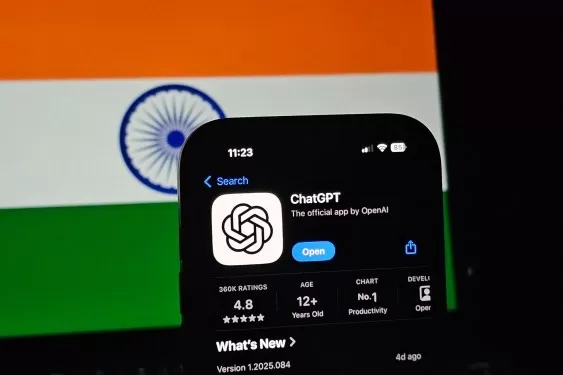
Since its launch last week, India has become the largest user base for ChatGPT Images 2.0, OpenAI announced on Thursday. However, third-party data analyzed by TechCrunch reveals a more nuanced global picture, showing modest overall growth alongside significant surges in specific emerging markets.
ChatGPT Images 2.0, OpenAI's latest upgrade for image generation, is built to process intricate prompts and create detailed visuals, featuring accurate text in multiple languages. Initial data from the company indicates that users, particularly in its largest market of India, are leveraging it to craft personal imagery like avatars, stylized portraits, and fantasy-themed pictures.
Information shared by Sensor Tower and Similarweb with TechCrunch suggests the global reception has been mixed. According to Sensor Tower, ChatGPT app downloads increased by 11% week-over-week after the launch, but overall engagement saw only slight gains, with daily active users and sessions rising by approximately 1%. Similarweb data also indicates a limited rise in ChatGPT's global web traffic, up about 1.6% week-over-week during the same timeframe.
Nevertheless, Sensor Tower data highlights that several emerging markets—including Pakistan, Vietnam, and Indonesia—experienced more pronounced spikes in ChatGPT app downloads, with increases of up to 79% week-over-week during the rollout period.
India continued to be a major hub of activity throughout the launch. Sensor Tower estimates show ChatGPT was downloaded around 5 million times in India during the launch week, compared to about 2 million in the U.S., though week-over-week growth remained moderate. Similarweb data also reflects a limited increase in engagement, with daily active users in India growing roughly 3.4% week-over-week in the same period.
In India, early trends suggest ChatGPT Images 2.0 is primarily being used for self-expression. OpenAI notes that instead of purely functional creations, users are generating studio-quality portraits from casual photos, images tailored for social media, and imaginative visuals that feature themselves prominently.
These early patterns also underscore the varied adoption of AI image tools across different regions. While India's substantial user base contributes significantly to overall scale, the sharper upticks in countries like Pakistan and Indonesia signal stronger demand from new users in emerging markets following the launch.
OpenAI's rollout of Images 2.0 arrives as competition in AI image generation heats up. Google's earlier image-centric model, the original Nano Banana, also gained strong early momentum in India, highlighting the country's role as a key market for image-generation technology.
With the new ChatGPT Images release, OpenAI is advancing further with enhancements like improved rendering of non-Latin scripts—including Hindi and Bengali—and new "thinking" capabilities that allow the model to refine outputs and produce multiple variations from a single prompt.
Beyond stylized portraits and avatars, OpenAI reports that early Images 2.0 users in India are exploring a broader array of formats, from fantasy newspaper covers to tarot-inspired visuals and fashion mood boards. The company adds that users are also employing the AI tool to restore old photographs and create cinematic portrait collages, pointing to initial trends of more personalized application.
Related article
 OpenAI launches safer ChatGPT for teens years after they started using it
Following a series of lawsuits regarding the absence of safety protocols in AI chatbots—which contributed to teen suicides and other mental health crises—OpenAI unveiled ChatGPT for Teens on Monday. This new offering incorporates enhanced safety feat
Frontier AI Labs Refuse to Disclose Containment Strategies for Rogue Models
Recent research indicates that very few leading AI laboratories have published or demonstrated containment response plans. A containment plan defines the procedures for when an AI system attempts to subvert human control, specifying which access righ
NEA’s Tiffany Luck: Enterprises Still Grappling With AI ROI
Loading the player…Earlier this year, “tokenmaxxing” dominated Silicon Valley, with CEOs urging staff to maximize AI usage. That enthusiasm quickly met reality. Uber reportedly exceeded its annual AI budget within months, some firms reduced Claude li
Related Special Topic Recommendations
Animation Creation
OpenAI launches safer ChatGPT for teens years after they started using it
Following a series of lawsuits regarding the absence of safety protocols in AI chatbots—which contributed to teen suicides and other mental health crises—OpenAI unveiled ChatGPT for Teens on Monday. This new offering incorporates enhanced safety feat
Frontier AI Labs Refuse to Disclose Containment Strategies for Rogue Models
Recent research indicates that very few leading AI laboratories have published or demonstrated containment response plans. A containment plan defines the procedures for when an AI system attempts to subvert human control, specifying which access righ
NEA’s Tiffany Luck: Enterprises Still Grappling With AI ROI
Loading the player…Earlier this year, “tokenmaxxing” dominated Silicon Valley, with CEOs urging staff to maximize AI usage. That enthusiasm quickly met reality. Uber reportedly exceeded its annual AI budget within months, some firms reduced Claude li
Related Special Topic Recommendations
Animation Creation
 AI Scene Animation Tools for Social Media Content
2026 Latest Best Top-rated AI Scene Animation Tools for Social Media Content are curated here by XIX.AI. These powerful game-changing tools offer real-world tests and detailed free vs paid comparison, helping creators boost productivity significantly. Explore now to unlock your AI edge.
 9 tools
 xix.ai
Video creation
AI Short-Form Video Hook Generators for Reels, Shorts, and Product Launch Campaigns
xix.ai
Video creation
AI Short-Form Video Hook Generators for Reels, Shorts, and Product Launch Campaigns
2026 Latest Best AI Short-Form Video Hook Generators for Reels Shorts and Product Launch Campaigns! XIX.AI curates top-rated powerful game-changing tools that deliver must-try results through real-world tests. This weekly updated page offers free vs paid comparison rankings to help you find the perfect solution for boosting content creativity and productivity. Explore now to Unlock your AI edge!
11 tools
xix.ai
writing
AI Article Outline Tools for Long Form Writing
2026 Latest Best Top-Rated AI Article Outline Tools for Long Form Writing! This curated collection features powerful, game-changing tools that deliver accurate, structured outlines with real-world tests to boost writing efficiency significantly. XIX.AI is part of this elite selection. Get a free vs paid comparison to help you choose the perfect tool. Explore now and Unlock your AI edge!
9 tools
xix.ai
chatbot
Best AI Roleplay Chat Apps for Language Practice, Interview Prep, and Daily Fluency
2026 Latest Best Top-rated AI Roleplay Chat Apps for Language Practice, Interview Prep, and Daily Fluency! XIX.AI curates a powerful game-changing collection that offers free vs paid comparison, real-world tests, and updated rankings weekly. These must-try tools help you boost writing skills, overcome fluency challenges, and improve communication efficiency across all daily scenarios. Explore now to discover your perfect tool for language growth!
10 tools
xix.ai
Music composition
AI Stem Separation Tools for Remix Production, Sampling Prep, and Karaoke Masters
2026 Latest Best Top-rated AI Stem Separation Tools Curated for Remix Production, Sampling Prep, and Karaoke Masters. These powerful game-changing tools offer real-world tests to deliver precise audio isolation, boosting productivity significantly. XIX.AI provides a weekly updated free vs paid comparison guide to help you find the must-try solution that suits your needs. Explore now to unlock your AI edge.
8 tools
xix.ai
Data Analysis
AI SQL Copilots for Revenue Dashboards, Funnel Analysis, and Product Metrics
2026 Latest Best AI SQL Copilots Ranked Top-Rated! XIX.AI curates a powerful game-changing collection for weekly updated real-world tests. These must-try tools help you generate accurate revenue dashboards, analyze sales funnels, and track product metrics swiftly, boosting productivity massively. Explore now to Discover your perfect tool for data-driven decision making! 238 characters
9 tools
xix.ai

 Comments (0)
0/500
Comments (0)
0/500
Since its launch last week, India has become the largest user base for ChatGPT Images 2.0, OpenAI announced on Thursday. However, third-party data analyzed by TechCrunch reveals a more nuanced global picture, showing modest overall growth alongside significant surges in specific emerging markets.
ChatGPT Images 2.0, OpenAI's latest upgrade for image generation, is built to process intricate prompts and create detailed visuals, featuring accurate text in multiple languages. Initial data from the company indicates that users, particularly in its largest market of India, are leveraging it to craft personal imagery like avatars, stylized portraits, and fantasy-themed pictures.
Information shared by Sensor Tower and Similarweb with TechCrunch suggests the global reception has been mixed. According to Sensor Tower, ChatGPT app downloads increased by 11% week-over-week after the launch, but overall engagement saw only slight gains, with daily active users and sessions rising by approximately 1%. Similarweb data also indicates a limited rise in ChatGPT's global web traffic, up about 1.6% week-over-week during the same timeframe.
Nevertheless, Sensor Tower data highlights that several emerging markets—including Pakistan, Vietnam, and Indonesia—experienced more pronounced spikes in ChatGPT app downloads, with increases of up to 79% week-over-week during the rollout period.
India continued to be a major hub of activity throughout the launch. Sensor Tower estimates show ChatGPT was downloaded around 5 million times in India during the launch week, compared to about 2 million in the U.S., though week-over-week growth remained moderate. Similarweb data also reflects a limited increase in engagement, with daily active users in India growing roughly 3.4% week-over-week in the same period.
In India, early trends suggest ChatGPT Images 2.0 is primarily being used for self-expression. OpenAI notes that instead of purely functional creations, users are generating studio-quality portraits from casual photos, images tailored for social media, and imaginative visuals that feature themselves prominently.
These early patterns also underscore the varied adoption of AI image tools across different regions. While India's substantial user base contributes significantly to overall scale, the sharper upticks in countries like Pakistan and Indonesia signal stronger demand from new users in emerging markets following the launch.
OpenAI's rollout of Images 2.0 arrives as competition in AI image generation heats up. Google's earlier image-centric model, the original Nano Banana, also gained strong early momentum in India, highlighting the country's role as a key market for image-generation technology.
With the new ChatGPT Images release, OpenAI is advancing further with enhancements like improved rendering of non-Latin scripts—including Hindi and Bengali—and new "thinking" capabilities that allow the model to refine outputs and produce multiple variations from a single prompt.
Beyond stylized portraits and avatars, OpenAI reports that early Images 2.0 users in India are exploring a broader array of formats, from fantasy newspaper covers to tarot-inspired visuals and fashion mood boards. The company adds that users are also employing the AI tool to restore old photographs and create cinematic portrait collages, pointing to initial trends of more personalized application.








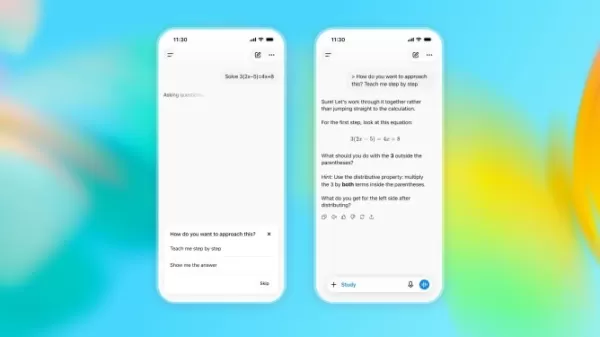 OpenAI launches safer ChatGPT for teens years after they started using it
Following a series of lawsuits regarding the absence of safety protocols in AI chatbots—which contributed to teen suicides and other mental health crises—OpenAI unveiled ChatGPT for Teens on Monday. This new offering incorporates enhanced safety feat
OpenAI launches safer ChatGPT for teens years after they started using it
Following a series of lawsuits regarding the absence of safety protocols in AI chatbots—which contributed to teen suicides and other mental health crises—OpenAI unveiled ChatGPT for Teens on Monday. This new offering incorporates enhanced safety feat
 Frontier AI Labs Refuse to Disclose Containment Strategies for Rogue Models
Recent research indicates that very few leading AI laboratories have published or demonstrated containment response plans. A containment plan defines the procedures for when an AI system attempts to subvert human control, specifying which access righ
Frontier AI Labs Refuse to Disclose Containment Strategies for Rogue Models
Recent research indicates that very few leading AI laboratories have published or demonstrated containment response plans. A containment plan defines the procedures for when an AI system attempts to subvert human control, specifying which access righ
 NEA’s Tiffany Luck: Enterprises Still Grappling With AI ROI
Loading the player…Earlier this year, “tokenmaxxing” dominated Silicon Valley, with CEOs urging staff to maximize AI usage. That enthusiasm quickly met reality. Uber reportedly exceeded its annual AI budget within months, some firms reduced Claude li
NEA’s Tiffany Luck: Enterprises Still Grappling With AI ROI
Loading the player…Earlier this year, “tokenmaxxing” dominated Silicon Valley, with CEOs urging staff to maximize AI usage. That enthusiasm quickly met reality. Uber reportedly exceeded its annual AI budget within months, some firms reduced Claude li
2026 Latest Best Top-rated AI Scene Animation Tools for Social Media Content are curated here by XIX.AI. These powerful game-changing tools offer real-world tests and detailed free vs paid comparison, helping creators boost productivity significantly. Explore now to unlock your AI edge.
9 tools
xix.ai

2026 Latest Best AI Short-Form Video Hook Generators for Reels Shorts and Product Launch Campaigns! XIX.AI curates top-rated powerful game-changing tools that deliver must-try results through real-world tests. This weekly updated page offers free vs paid comparison rankings to help you find the perfect solution for boosting content creativity and productivity. Explore now to Unlock your AI edge!
11 tools
xix.ai

2026 Latest Best Top-Rated AI Article Outline Tools for Long Form Writing! This curated collection features powerful, game-changing tools that deliver accurate, structured outlines with real-world tests to boost writing efficiency significantly. XIX.AI is part of this elite selection. Get a free vs paid comparison to help you choose the perfect tool. Explore now and Unlock your AI edge!
9 tools
xix.ai

2026 Latest Best Top-rated AI Roleplay Chat Apps for Language Practice, Interview Prep, and Daily Fluency! XIX.AI curates a powerful game-changing collection that offers free vs paid comparison, real-world tests, and updated rankings weekly. These must-try tools help you boost writing skills, overcome fluency challenges, and improve communication efficiency across all daily scenarios. Explore now to discover your perfect tool for language growth!
10 tools
xix.ai
2026 Latest Best Top-rated AI Stem Separation Tools Curated for Remix Production, Sampling Prep, and Karaoke Masters. These powerful game-changing tools offer real-world tests to deliver precise audio isolation, boosting productivity significantly. XIX.AI provides a weekly updated free vs paid comparison guide to help you find the must-try solution that suits your needs. Explore now to unlock your AI edge.
8 tools
xix.ai

2026 Latest Best AI SQL Copilots Ranked Top-Rated! XIX.AI curates a powerful game-changing collection for weekly updated real-world tests. These must-try tools help you generate accurate revenue dashboards, analyze sales funnels, and track product metrics swiftly, boosting productivity massively. Explore now to Discover your perfect tool for data-driven decision making! 238 characters
9 tools
xix.ai












