


 Home
HomeLegal AI on Trial: ChatGPT's Ethical and Practical Challenges in Court
The rapid advancement of artificial intelligence, particularly large language models like ChatGPT, is transforming numerous industries, with the legal sector being no exception. While AI promises greater efficiency and broader access to justice, it simultaneously introduces significant ethical and practical challenges for lawyers and legal practitioners. This blog post explores a recent courtroom incident involving ChatGPT, analyzing its wider implications and providing actionable advice for the responsible integration of AI into legal work.
Key Points
A recent case involving a New York lawyer who used ChatGPT for legal arguments underscores the growing intersection of AI and the legal field.
Concerns about ChatGPT's reliability and lack of fact-checking raise serious questions about its appropriateness for legal research and courtroom argumentation.
Transparency is non-negotiable: legal professionals must clearly disclose any use of AI in generating legal content.
AI tools like ChatGPT should be employed with caution and must always be supplemented by human expertise and rigorous verification.
To use AI effectively, legal practitioners must develop a robust understanding of both its capabilities and its inherent limitations.
Continuing legal education programs must evolve to address the ethical implications of AI in law and establish best practices for its responsible use.
Over-reliance on AI tools without adequate human oversight can result in inaccurate or misleading legal advice.
The ChatGPT Court Case and Its Repercussions
Lawyer Caught Using ChatGPT in Court
A recent news story from New York revealed that a lawyer used ChatGPT during court proceedings, apparently relying on the AI to help formulate legal arguments. This act of outsourcing a core component of legal reasoning to a chatbot highlights a growing trend of AI integration in the profession, but it also stands as a stark warning.
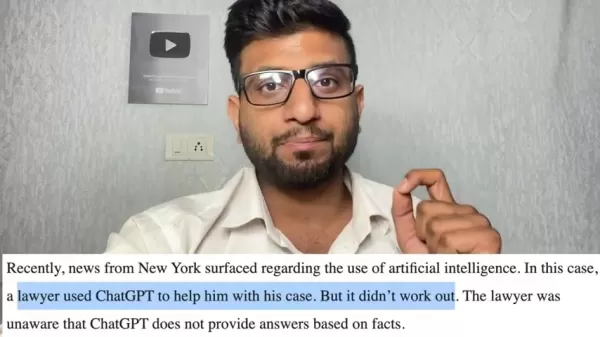
While the lawyer's intent may have been to streamline the process and uncover novel perspectives, the outcome sparked intense ethical debate. The lawyer was seemingly unaware that ChatGPT does not provide answers based on verified facts. This reliance on AI to build a case ultimately damaged its credibility and called into question the lawyer's understanding of the technology. The incident illustrates that using such tools is not merely a matter of convenience; it requires a deep comprehension of their limitations and a commitment to ethical application.
This case serves as a critical reminder of the indispensable role of critical thinking and due diligence in legal practice. The law demands precision, accuracy, and a thorough command of case law and statutes. Relying on an AI chatbot that cannot guarantee the truthfulness of its output is a substantial risk. As AI becomes more commonplace, legal professionals must deepen their understanding of these technologies to prevent similar missteps.
The Unreliability of AI in Legal Contexts
A central issue exposed by this case is the fundamental unreliability of current AI systems in legal applications. While models like ChatGPT are trained on massive datasets, they are prone to generating inaccurate, misleading, or entirely fabricated information.
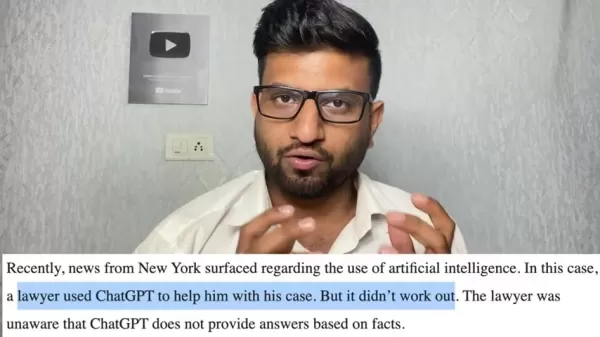
This is especially dangerous in law, where factual accuracy is paramount. The chatbot provides generalized responses to queries. ChatGPT's inability to differentiate between verified facts and plausible fiction makes it a questionable resource for legal research. For AI technology to be implemented effectively in law, its limitations must be acknowledged. Unlike a human researcher, the AI cannot cross-reference sources in real-time, and its output is not fact-checked. Legal practitioners must exercise extreme caution and never substitute their own legal judgment for unverified AI-generated content.
Transparency and Disclosure are Key
Another major ethical consideration arising from this case is the imperative of transparency. Lawyers have a duty to be honest with the court about the tools and methods used to develop their cases. Concealing the use of AI in generating arguments violates ethical standards. The use of such tools constitutes a material fact that should be disclosed to the court.
Failure to disclose not only damages the lawyer's credibility but also erodes trust in the judicial process itself. In an age of increasing AI integration, transparency is essential for maintaining integrity and enabling all parties to properly evaluate the reliability of presented information. This disclosure should be explicitly noted in relevant court documents.
Lessons Learned and Recommendations for Legal Professionals
Develop a Robust Understanding of AI
Legal professionals must cultivate a solid, working knowledge of AI technologies. This involves understanding what these systems can and cannot do, as well as their potential risks and biases. The goal is not to become an AI expert, but to gain enough knowledge to make informed decisions about when and how to use AI tools responsibly.
Knowing the specific capabilities and limitations of tools like ChatGPT is vital to avoid critical errors that could adversely affect a case.
AI holds significant potential to benefit society and the legal field. To ensure its effective and accurate use, those employing AI must understand how it works and critically evaluate the data it presents. It is imperative for lawyers to not only know how to operate AI systems but to use them correctly, always scrutinizing the information provided.
Lawyers using AI must fully comprehend its nature and its capacity—or lack thereof—to present factual data. This understanding enables more effective use of the technology and allows lawyers to present information in an honest and trustworthy manner.
Supplement AI With Human Expertise
AI should be viewed as a tool to enhance human capabilities, not to replace them. It is crucial to always supplement AI-generated information with human expertise and critical analysis.

This means meticulously reviewing, verifying, and validating all AI output to ensure accuracy and alignment with legal principles. Remember, AI is only as good as its training data and cannot replicate the nuanced judgment and ethical reasoning that are central to legal practice. For instance, if a lawyer uses AI to generate a list of potential defense sources, they must personally review each one for relevance and applicability. Blindly using AI output without review is dangerous and raises serious ethical concerns about relying on an unverifiable system.
While AI systems can assist lawyers in case preparation, similar to human experts, it is essential to maintain a critical stance. Lawyers may need to interrogate the AI's reasoning to understand how it reached a particular conclusion.
Focus on Continuous Learning
AI is a fast-moving field, and legal professionals must commit to ongoing education to stay current with advancements and evolving ethical standards. Participate in Continuing Legal Education (CLE) programs focused on AI's impact on law and seek knowledge from experts in the field.

This proactive approach ensures you are equipped to use AI tools both effectively and ethically. While many believe AI will become highly useful in law—for instance, in drafting legal briefs—its outputs are often generalizations and should not be treated as completely factual or based on correct data. Practitioners must constantly question whether the information provided by AI is genuinely useful or potentially obstructive.
Be Aware of AI's Limitations
While AI can offer valuable insights, recognizing its limitations is key. AI often struggles with novel or ambiguous situations that require creativity, empathy, or subjective judgment. Furthermore, AI systems can inherit and amplify biases present in their training data, potentially leading to unfair or discriminatory outcomes.

Always critically evaluate AI-generated content and be ready to apply your own expertise to address complex or sensitive legal issues. For example, asking an AI for a generic defense strategy is ill-advised, as every case is unique and requires a human perspective. Such queries are unlikely to yield useful, case-specific results.
Know Your Facts
A solid grasp of the case facts is fundamental. Without it, constructing a reasonable defense is exceedingly difficult. An AI system may falter at this task precisely because it lacks this foundational understanding. This is where your knowledge is irreplaceable, as AI software typically provides only general data.
If working on a robbery case, for instance, you must collect and know key facts. Examples include:
- Did the suspect commit the crime?
- When did the crime occur?
- What was the suspect's state of mind and intent?
- Did the defendant understand they were committing a crime?
- What property was taken?
Understanding these details is essential for analyzing any criminal case under statutes like the Indian Penal Code (IPC). Given the highly specific nature of each case, an AI system is unlikely to provide genuinely helpful information on its own.

It is important to remember that some questions posed to a chatbot are simply inappropriate for gathering reliable legal information.
Best Practices for Utilizing ChatGPT Effectively
Draft Preparation Tips
- Start with a Clear Objective: Precisely define what you want to create. Are you outlining a complaint, drafting a legal brief, or summarizing case law?
- Provide Specific Information: The more detail and context you give ChatGPT, the more accurate and relevant its draft will be. Include key facts, legal concepts, and desired outcomes.
- Review and Edit: Always conduct a thorough review of the AI-generated draft to ensure accuracy, completeness, and adherence to legal standards. Revise as necessary to align the draft with your specific case and professional requirements.
- Supplement with Human Expertise: Use your legal knowledge to add essential context, nuance, and ethical considerations that AI may miss. AI should augment, not replace, your professional judgment.
- Comply with Legal and Ethical Standards: Ensure your use of ChatGPT adheres to all relevant legal and ethical obligations, including rules on transparency and client confidentiality.

Pros and Cons of Using ChatGPT in Legal Practices
Pros
Increased Efficiency: AI can automate routine tasks and streamline workflows, saving valuable time and resources.
Improved Access to Justice: AI can offer more affordable legal assistance, potentially expanding access for those who cannot afford traditional legal services.
Data Analysis: AI can analyze enormous volumes of legal data to identify patterns and insights that might elude human researchers.
Drafting Assistance: AI can aid legal professionals in drafting various documents, such as contracts and legal briefs.
Cons
Inaccuracy: AI can produce incorrect or misleading information, leading to potential errors and legal risks.
Bias: AI systems may reflect and amplify biases present in their training data, resulting in discriminatory outcomes.
Lack of Empathy: AI cannot replicate the empathy, moral reasoning, and nuanced judgment inherent to human lawyers.
Ethical Concerns: AI use raises complex ethical questions regarding transparency, accountability, and the unauthorized practice of law.
Job Displacement: The automation of certain legal tasks through AI could lead to displacement within the profession.
Frequently Asked Questions
Can ChatGPT replace lawyers?
No, ChatGPT cannot replace lawyers. It is an assistive tool, not a substitute for the critical thinking, ethical judgment, and specialized expertise that lawyers provide. AI is best utilized to augment human capabilities, not replace them. As noted, AI is a tool that can be usefully implemented in law, but it should never serve as a person's sole defense. All evidence must be reviewed by a lawyer who determines the legal strategy. Courtroom procedures and rules are complex and specific; an AI system, which may be unreliable or inaccurate, cannot navigate them alone. Human intervention is essential to ensure factual accuracy and ethical advocacy.
Is it ethical to use ChatGPT in legal research?
Using ChatGPT for legal research can be ethical if done with transparency and caution. Always disclose the use of AI in generating content and rigorously verify the accuracy of its information. Never rely on AI output without supplementing it with human expertise and verification. Multiple traditional sources are also needed to substantiate any legal claim. Since AI output is not inherently verified, it cannot be considered reliable on its own. Keep these principles in mind: maintain awareness, proceed with caution, adhere to legal and ethical standards, and know your facts. AI is a powerful tool, but it requires oversight by an educated lawyer to ensure the information presented is proper and correct.
What are the risks of using ChatGPT in court?
Several significant risks exist. ChatGPT can provide inaccurate or misleading information, compromising the integrity of legal arguments. Over-reliance on AI without human oversight can lead to unjust or discriminatory results. Furthermore, failing to disclose the use of AI can erode trust in the legal process and damage the credibility of the legal professional. It is therefore extremely important to fully understand the information involved before using AI and to maintain the highest ethical standards in all interactions, both with technology and in practice.
Related Questions
How can legal professionals prepare for the increasing use of AI in law?
To prepare, legal professionals should prioritize continuous learning about AI technologies, focusing on their capabilities, limitations, and ethical implications. Staying updated through legal education on this topic is crucial for understanding how to navigate this issue effectively. It may also be necessary to explore various ways to implement AI that genuinely benefit their practice. Given that legal professionals handle sensitive and unique situations, any integration of AI must be carefully considered. Actions to take include: completing CLE courses on AI in law, gaining insights from technology and legal leaders, becoming familiar with different AI technologies, and exercising caution when selecting and applying AI systems.
What kind of AI to expect in the coming years?
We can anticipate more sophisticated and accurate AI systems in the years ahead. Artificial intelligence is poised to become an increasingly integral part of the legal information landscape as the technology matures. Future AI systems will still require consistent human oversight from legal professionals. Concurrently, it is vital that lawyers and paralegals receive proper education on these tools. These developments will help build a more informed and trustworthy legal community, aware of both the information and the technology at its disposal. The integration of AI promises to be a dynamic and evolving focus in the legal field for the foreseeable future.
Related article
 Florida sues OpenAI, Sam Altman over violent incidents
Florida’s Attorney General filed a first-of-its-kind state lawsuit against OpenAI and CEO Sam Altman on Monday, alleging the company’s ChatGPT is linked to multiple violent incidents.The complaint argues that OpenAI prioritized winning “the AI arms r
OpenAI unveils advanced voice models for more natural real-time conversations
OpenAI has launched new conversational models, GPT-Live-1 and GPT-Live-1 mini, designed to sound more natural and manage turn-taking more effectively. These full-duplex models can speak and listen simultaneously, allowing users to interrupt naturally
OpenAI unveils GPT-5.6, the newest addition to its model family
OpenAI launched its latest model family on Thursday, introducing powerful new options into an increasingly competitive AI landscape.GPT-5.6 comes in three variants: Sol (designed as the primary workhorse), Terra (a mid-range option), and Luna (the bu
Related Special Topic Recommendations
Design & Art
Florida sues OpenAI, Sam Altman over violent incidents
Florida’s Attorney General filed a first-of-its-kind state lawsuit against OpenAI and CEO Sam Altman on Monday, alleging the company’s ChatGPT is linked to multiple violent incidents.The complaint argues that OpenAI prioritized winning “the AI arms r
OpenAI unveils advanced voice models for more natural real-time conversations
OpenAI has launched new conversational models, GPT-Live-1 and GPT-Live-1 mini, designed to sound more natural and manage turn-taking more effectively. These full-duplex models can speak and listen simultaneously, allowing users to interrupt naturally
OpenAI unveils GPT-5.6, the newest addition to its model family
OpenAI launched its latest model family on Thursday, introducing powerful new options into an increasingly competitive AI landscape.GPT-5.6 comes in three variants: Sol (designed as the primary workhorse), Terra (a mid-range option), and Luna (the bu
Related Special Topic Recommendations
Design & Art
 Best AI Style Transfer Tools for Creative Experiments
2026 Latest Best Top-rated AI Style Transfer Tools for Creative Experiments! XIX.AI has curated a powerful, game-changing collection of must-try tools that deliver exceptional results through real-world tests and rigorous rankings. These top solutions help creatives boost productivity significantly by accelerating content creation and unlocking endless creative possibilities. Explore now to discover your perfect tool and start creating today!
 9 tools
 xix.ai
Comic Creation
Best AI Dialogue Bubble Tools for Visual Storytelling
xix.ai
Comic Creation
Best AI Dialogue Bubble Tools for Visual Storytelling
2026 Latest Best Top-Rated AI Dialogue Bubble Tools for Visual Storytelling are here on XIX.AI! This curated collection features powerful, game-changing tools that help creators boost productivity and overcome creative bottlenecks. Get a free vs paid comparison, see real-world tests, and check the latest rankings to find the must-try solutions perfect for crafting engaging visual narratives. Explore now to discover your ideal tool!
10 tools
xix.ai
Meeting Assistant
Top AI Meeting Summary Tools: Track Decisions and Follow-Ups Clearly
2026 Latest Top-Rated Best AI Meeting Summary Tools for Clear Decision Tracking and Effortless Follow-Ups. This curated list showcases powerful, game-changing solutions that boost productivity dramatically by automating meeting notes, identifying key action items, and streamlining team coordination across all projects. Get a free vs paid comparison along with real-world tests and weekly updated rankings to help you find the perfect tool. Explore now to unlock your AI edge!
9 tools
xix.ai
Data Analysis
Best AI Data Cleaning Tools: Fix Missing Values and Duplicates Fast
2026 Latest Best Top-rated AI Data Cleaning Tools for quick fixing of missing values and duplicates. This curated list showcases powerful, game-changing solutions that boost productivity significantly. Each option has undergone rigorous real-world tests to ensure reliability. Get a free vs paid comparison and discover the must-try tool that fits your needs best. Explore now at XIX.AI to Unlock your AI edge.
11 tools
xix.ai
Design & Art
Best AI Creative Ideation Tools for Artists: Break Through Visual Blocks
2026 Latest Best Top-Rated AI Creative Ideation Tools for Artists are curated by XIX.AI to help creators break through visual blocks and boost creativity instantly. These powerful game-changing tools offer real-world tests, detailed free vs paid comparison, and weekly updated rankings. Discover your perfect tool to accelerate content creation and unlock your AI edge today. Explore now!
14 tools
xix.ai
Music composition
AI Beat Makers for TikTok Background Tracks, Reels Audio, and Creator Promo Music
2026 Latest Best AI Beat Makers for TikTok Background Tracks, Reels Audio, and Creator Promo Music! XIX.AI has curated a top-rated list of powerful game-changing tools that go through real-world tests to deliver flawless music for every content need. You’ll find detailed free vs paid comparison data, weekly updated rankings, and must-try options to help you boost creativity and productivity. Explore now to discover your perfect tool!
11 tools
xix.ai

 Comments (1)
0/500
Comments (1)
0/500
![JustinScott]()
So we're letting ChatGPT argue in court now? I mean, I get the efficiency hype, but have they seen the hallucinations? 😂 One wrong citation and the whole case goes up in flames. Also, who's liable when the AI messes up? The lawyer or the dev? This is gonna be a legal nightmare.
The rapid advancement of artificial intelligence, particularly large language models like ChatGPT, is transforming numerous industries, with the legal sector being no exception. While AI promises greater efficiency and broader access to justice, it simultaneously introduces significant ethical and practical challenges for lawyers and legal practitioners. This blog post explores a recent courtroom incident involving ChatGPT, analyzing its wider implications and providing actionable advice for the responsible integration of AI into legal work.
Key Points
A recent case involving a New York lawyer who used ChatGPT for legal arguments underscores the growing intersection of AI and the legal field.
Concerns about ChatGPT's reliability and lack of fact-checking raise serious questions about its appropriateness for legal research and courtroom argumentation.
Transparency is non-negotiable: legal professionals must clearly disclose any use of AI in generating legal content.
AI tools like ChatGPT should be employed with caution and must always be supplemented by human expertise and rigorous verification.
To use AI effectively, legal practitioners must develop a robust understanding of both its capabilities and its inherent limitations.
Continuing legal education programs must evolve to address the ethical implications of AI in law and establish best practices for its responsible use.
Over-reliance on AI tools without adequate human oversight can result in inaccurate or misleading legal advice.
The ChatGPT Court Case and Its Repercussions
Lawyer Caught Using ChatGPT in Court
A recent news story from New York revealed that a lawyer used ChatGPT during court proceedings, apparently relying on the AI to help formulate legal arguments. This act of outsourcing a core component of legal reasoning to a chatbot highlights a growing trend of AI integration in the profession, but it also stands as a stark warning.
While the lawyer's intent may have been to streamline the process and uncover novel perspectives, the outcome sparked intense ethical debate. The lawyer was seemingly unaware that ChatGPT does not provide answers based on verified facts. This reliance on AI to build a case ultimately damaged its credibility and called into question the lawyer's understanding of the technology. The incident illustrates that using such tools is not merely a matter of convenience; it requires a deep comprehension of their limitations and a commitment to ethical application.
This case serves as a critical reminder of the indispensable role of critical thinking and due diligence in legal practice. The law demands precision, accuracy, and a thorough command of case law and statutes. Relying on an AI chatbot that cannot guarantee the truthfulness of its output is a substantial risk. As AI becomes more commonplace, legal professionals must deepen their understanding of these technologies to prevent similar missteps.
The Unreliability of AI in Legal Contexts
A central issue exposed by this case is the fundamental unreliability of current AI systems in legal applications. While models like ChatGPT are trained on massive datasets, they are prone to generating inaccurate, misleading, or entirely fabricated information.
This is especially dangerous in law, where factual accuracy is paramount. The chatbot provides generalized responses to queries. ChatGPT's inability to differentiate between verified facts and plausible fiction makes it a questionable resource for legal research. For AI technology to be implemented effectively in law, its limitations must be acknowledged. Unlike a human researcher, the AI cannot cross-reference sources in real-time, and its output is not fact-checked. Legal practitioners must exercise extreme caution and never substitute their own legal judgment for unverified AI-generated content.
Transparency and Disclosure are Key
Another major ethical consideration arising from this case is the imperative of transparency. Lawyers have a duty to be honest with the court about the tools and methods used to develop their cases. Concealing the use of AI in generating arguments violates ethical standards. The use of such tools constitutes a material fact that should be disclosed to the court.
Failure to disclose not only damages the lawyer's credibility but also erodes trust in the judicial process itself. In an age of increasing AI integration, transparency is essential for maintaining integrity and enabling all parties to properly evaluate the reliability of presented information. This disclosure should be explicitly noted in relevant court documents.
Lessons Learned and Recommendations for Legal Professionals
Develop a Robust Understanding of AI
Legal professionals must cultivate a solid, working knowledge of AI technologies. This involves understanding what these systems can and cannot do, as well as their potential risks and biases. The goal is not to become an AI expert, but to gain enough knowledge to make informed decisions about when and how to use AI tools responsibly.
Knowing the specific capabilities and limitations of tools like ChatGPT is vital to avoid critical errors that could adversely affect a case.
AI holds significant potential to benefit society and the legal field. To ensure its effective and accurate use, those employing AI must understand how it works and critically evaluate the data it presents. It is imperative for lawyers to not only know how to operate AI systems but to use them correctly, always scrutinizing the information provided.
Lawyers using AI must fully comprehend its nature and its capacity—or lack thereof—to present factual data. This understanding enables more effective use of the technology and allows lawyers to present information in an honest and trustworthy manner.
Supplement AI With Human Expertise
AI should be viewed as a tool to enhance human capabilities, not to replace them. It is crucial to always supplement AI-generated information with human expertise and critical analysis.
This means meticulously reviewing, verifying, and validating all AI output to ensure accuracy and alignment with legal principles. Remember, AI is only as good as its training data and cannot replicate the nuanced judgment and ethical reasoning that are central to legal practice. For instance, if a lawyer uses AI to generate a list of potential defense sources, they must personally review each one for relevance and applicability. Blindly using AI output without review is dangerous and raises serious ethical concerns about relying on an unverifiable system.
While AI systems can assist lawyers in case preparation, similar to human experts, it is essential to maintain a critical stance. Lawyers may need to interrogate the AI's reasoning to understand how it reached a particular conclusion.
Focus on Continuous Learning
AI is a fast-moving field, and legal professionals must commit to ongoing education to stay current with advancements and evolving ethical standards. Participate in Continuing Legal Education (CLE) programs focused on AI's impact on law and seek knowledge from experts in the field.
This proactive approach ensures you are equipped to use AI tools both effectively and ethically. While many believe AI will become highly useful in law—for instance, in drafting legal briefs—its outputs are often generalizations and should not be treated as completely factual or based on correct data. Practitioners must constantly question whether the information provided by AI is genuinely useful or potentially obstructive.
Be Aware of AI's Limitations
While AI can offer valuable insights, recognizing its limitations is key. AI often struggles with novel or ambiguous situations that require creativity, empathy, or subjective judgment. Furthermore, AI systems can inherit and amplify biases present in their training data, potentially leading to unfair or discriminatory outcomes.
Always critically evaluate AI-generated content and be ready to apply your own expertise to address complex or sensitive legal issues. For example, asking an AI for a generic defense strategy is ill-advised, as every case is unique and requires a human perspective. Such queries are unlikely to yield useful, case-specific results.
Know Your Facts
A solid grasp of the case facts is fundamental. Without it, constructing a reasonable defense is exceedingly difficult. An AI system may falter at this task precisely because it lacks this foundational understanding. This is where your knowledge is irreplaceable, as AI software typically provides only general data.
If working on a robbery case, for instance, you must collect and know key facts. Examples include:
- Did the suspect commit the crime?
- When did the crime occur?
- What was the suspect's state of mind and intent?
- Did the defendant understand they were committing a crime?
- What property was taken?
Understanding these details is essential for analyzing any criminal case under statutes like the Indian Penal Code (IPC). Given the highly specific nature of each case, an AI system is unlikely to provide genuinely helpful information on its own.
It is important to remember that some questions posed to a chatbot are simply inappropriate for gathering reliable legal information.
Best Practices for Utilizing ChatGPT Effectively
Draft Preparation Tips
- Start with a Clear Objective: Precisely define what you want to create. Are you outlining a complaint, drafting a legal brief, or summarizing case law?
- Provide Specific Information: The more detail and context you give ChatGPT, the more accurate and relevant its draft will be. Include key facts, legal concepts, and desired outcomes.
- Review and Edit: Always conduct a thorough review of the AI-generated draft to ensure accuracy, completeness, and adherence to legal standards. Revise as necessary to align the draft with your specific case and professional requirements.
- Supplement with Human Expertise: Use your legal knowledge to add essential context, nuance, and ethical considerations that AI may miss. AI should augment, not replace, your professional judgment.
- Comply with Legal and Ethical Standards: Ensure your use of ChatGPT adheres to all relevant legal and ethical obligations, including rules on transparency and client confidentiality.
Pros and Cons of Using ChatGPT in Legal Practices
Pros
Increased Efficiency: AI can automate routine tasks and streamline workflows, saving valuable time and resources.
Improved Access to Justice: AI can offer more affordable legal assistance, potentially expanding access for those who cannot afford traditional legal services.
Data Analysis: AI can analyze enormous volumes of legal data to identify patterns and insights that might elude human researchers.
Drafting Assistance: AI can aid legal professionals in drafting various documents, such as contracts and legal briefs.
Cons
Inaccuracy: AI can produce incorrect or misleading information, leading to potential errors and legal risks.
Bias: AI systems may reflect and amplify biases present in their training data, resulting in discriminatory outcomes.
Lack of Empathy: AI cannot replicate the empathy, moral reasoning, and nuanced judgment inherent to human lawyers.
Ethical Concerns: AI use raises complex ethical questions regarding transparency, accountability, and the unauthorized practice of law.
Job Displacement: The automation of certain legal tasks through AI could lead to displacement within the profession.
Frequently Asked Questions
Can ChatGPT replace lawyers?
No, ChatGPT cannot replace lawyers. It is an assistive tool, not a substitute for the critical thinking, ethical judgment, and specialized expertise that lawyers provide. AI is best utilized to augment human capabilities, not replace them. As noted, AI is a tool that can be usefully implemented in law, but it should never serve as a person's sole defense. All evidence must be reviewed by a lawyer who determines the legal strategy. Courtroom procedures and rules are complex and specific; an AI system, which may be unreliable or inaccurate, cannot navigate them alone. Human intervention is essential to ensure factual accuracy and ethical advocacy.
Is it ethical to use ChatGPT in legal research?
Using ChatGPT for legal research can be ethical if done with transparency and caution. Always disclose the use of AI in generating content and rigorously verify the accuracy of its information. Never rely on AI output without supplementing it with human expertise and verification. Multiple traditional sources are also needed to substantiate any legal claim. Since AI output is not inherently verified, it cannot be considered reliable on its own. Keep these principles in mind: maintain awareness, proceed with caution, adhere to legal and ethical standards, and know your facts. AI is a powerful tool, but it requires oversight by an educated lawyer to ensure the information presented is proper and correct.
What are the risks of using ChatGPT in court?
Several significant risks exist. ChatGPT can provide inaccurate or misleading information, compromising the integrity of legal arguments. Over-reliance on AI without human oversight can lead to unjust or discriminatory results. Furthermore, failing to disclose the use of AI can erode trust in the legal process and damage the credibility of the legal professional. It is therefore extremely important to fully understand the information involved before using AI and to maintain the highest ethical standards in all interactions, both with technology and in practice.
Related Questions
How can legal professionals prepare for the increasing use of AI in law?
To prepare, legal professionals should prioritize continuous learning about AI technologies, focusing on their capabilities, limitations, and ethical implications. Staying updated through legal education on this topic is crucial for understanding how to navigate this issue effectively. It may also be necessary to explore various ways to implement AI that genuinely benefit their practice. Given that legal professionals handle sensitive and unique situations, any integration of AI must be carefully considered. Actions to take include: completing CLE courses on AI in law, gaining insights from technology and legal leaders, becoming familiar with different AI technologies, and exercising caution when selecting and applying AI systems.
What kind of AI to expect in the coming years?
We can anticipate more sophisticated and accurate AI systems in the years ahead. Artificial intelligence is poised to become an increasingly integral part of the legal information landscape as the technology matures. Future AI systems will still require consistent human oversight from legal professionals. Concurrently, it is vital that lawyers and paralegals receive proper education on these tools. These developments will help build a more informed and trustworthy legal community, aware of both the information and the technology at its disposal. The integration of AI promises to be a dynamic and evolving focus in the legal field for the foreseeable future.








 Florida sues OpenAI, Sam Altman over violent incidents
Florida’s Attorney General filed a first-of-its-kind state lawsuit against OpenAI and CEO Sam Altman on Monday, alleging the company’s ChatGPT is linked to multiple violent incidents.The complaint argues that OpenAI prioritized winning “the AI arms r
Florida sues OpenAI, Sam Altman over violent incidents
Florida’s Attorney General filed a first-of-its-kind state lawsuit against OpenAI and CEO Sam Altman on Monday, alleging the company’s ChatGPT is linked to multiple violent incidents.The complaint argues that OpenAI prioritized winning “the AI arms r
 OpenAI unveils advanced voice models for more natural real-time conversations
OpenAI has launched new conversational models, GPT-Live-1 and GPT-Live-1 mini, designed to sound more natural and manage turn-taking more effectively. These full-duplex models can speak and listen simultaneously, allowing users to interrupt naturally
OpenAI unveils advanced voice models for more natural real-time conversations
OpenAI has launched new conversational models, GPT-Live-1 and GPT-Live-1 mini, designed to sound more natural and manage turn-taking more effectively. These full-duplex models can speak and listen simultaneously, allowing users to interrupt naturally
 OpenAI unveils GPT-5.6, the newest addition to its model family
OpenAI launched its latest model family on Thursday, introducing powerful new options into an increasingly competitive AI landscape.GPT-5.6 comes in three variants: Sol (designed as the primary workhorse), Terra (a mid-range option), and Luna (the bu
OpenAI unveils GPT-5.6, the newest addition to its model family
OpenAI launched its latest model family on Thursday, introducing powerful new options into an increasingly competitive AI landscape.GPT-5.6 comes in three variants: Sol (designed as the primary workhorse), Terra (a mid-range option), and Luna (the bu

2026 Latest Best Top-rated AI Style Transfer Tools for Creative Experiments! XIX.AI has curated a powerful, game-changing collection of must-try tools that deliver exceptional results through real-world tests and rigorous rankings. These top solutions help creatives boost productivity significantly by accelerating content creation and unlocking endless creative possibilities. Explore now to discover your perfect tool and start creating today!
9 tools
xix.ai

2026 Latest Best Top-Rated AI Dialogue Bubble Tools for Visual Storytelling are here on XIX.AI! This curated collection features powerful, game-changing tools that help creators boost productivity and overcome creative bottlenecks. Get a free vs paid comparison, see real-world tests, and check the latest rankings to find the must-try solutions perfect for crafting engaging visual narratives. Explore now to discover your ideal tool!
10 tools
xix.ai

2026 Latest Top-Rated Best AI Meeting Summary Tools for Clear Decision Tracking and Effortless Follow-Ups. This curated list showcases powerful, game-changing solutions that boost productivity dramatically by automating meeting notes, identifying key action items, and streamlining team coordination across all projects. Get a free vs paid comparison along with real-world tests and weekly updated rankings to help you find the perfect tool. Explore now to unlock your AI edge!
9 tools
xix.ai

2026 Latest Best Top-rated AI Data Cleaning Tools for quick fixing of missing values and duplicates. This curated list showcases powerful, game-changing solutions that boost productivity significantly. Each option has undergone rigorous real-world tests to ensure reliability. Get a free vs paid comparison and discover the must-try tool that fits your needs best. Explore now at XIX.AI to Unlock your AI edge.
11 tools
xix.ai

2026 Latest Best Top-Rated AI Creative Ideation Tools for Artists are curated by XIX.AI to help creators break through visual blocks and boost creativity instantly. These powerful game-changing tools offer real-world tests, detailed free vs paid comparison, and weekly updated rankings. Discover your perfect tool to accelerate content creation and unlock your AI edge today. Explore now!
14 tools
xix.ai

2026 Latest Best AI Beat Makers for TikTok Background Tracks, Reels Audio, and Creator Promo Music! XIX.AI has curated a top-rated list of powerful game-changing tools that go through real-world tests to deliver flawless music for every content need. You’ll find detailed free vs paid comparison data, weekly updated rankings, and must-try options to help you boost creativity and productivity. Explore now to discover your perfect tool!
11 tools
xix.ai

So we're letting ChatGPT argue in court now? I mean, I get the efficiency hype, but have they seen the hallucinations? 😂 One wrong citation and the whole case goes up in flames. Also, who's liable when the AI messes up? The lawyer or the dev? This is gonna be a legal nightmare.












