


 Home
HomeBristol-Myers Squibb partners with Anthropic to launch AI agent development

The biopharmaceutical sector is transitioning from basic chat assistants to agentic AI. Bristol Myers Squibb (BMS) has announced a strategic partnership with Anthropic, deploying Claude Enterprise as its global intelligent platform. This advanced AI system is now accessible to over 30,000 employees worldwide.
From Conversation to Agent: AI in Pharmaceutical R&D
This partnership represents a major shift in BMS's AI strategy. Rather than relying on simple conversational tools, BMS is integrating Claude's agentic capabilities directly into core systems and daily workflows. The initiative targets three key areas:
Accelerating Software and Algorithm Development: By using Anthropic's Claude Code, BMS's engineering and data science teams can significantly speed up software development. This approach standardizes cross-business collaboration and breaks down industry-wide data silos, allowing for the reconstruction and use of data and expert knowledge previously locked in isolated systems.
Embedding Intelligent Agents in Core Value Chains: BMS is integrating Claude as an agentic layer into high-frequency workflows:
Drug Discovery: Leveraging AI's reasoning capabilities to analyze decades of scientific, molecular, and clinical data, helping researchers identify and optimize targets in oncology and hematology.
Clinical Development: AI automates tedious documentation, from drafting clinical study reports to preparing patient safety narratives. This aims to significantly shorten the timeline from data lock to filing.
Production and Quality Control: Full automation is achieved for root cause investigations and corrective and preventive action (CAPA) documentation. This optimizes batch release decisions, speeding up production while maintaining compliance.
Activating Institutional Knowledge Bases: Secure integration with internal scientific, clinical, and commercial databases allows Claude to retrieve cross-departmental expertise in real time. This ensures employees have accurate contextual support for decision-making.
Industry Context: McKinsey's Efficiency Leap
McKinsey predicts that Agentic AI could reshape biopharmaceutical operations within five years, potentially boosting clinical R&D efficiency by 35% to 45%. This forecast is materializing as AI optimizes clinical trial design, accelerates subject matching, and reduces attrition rates. By analyzing historical trial data, real-world evidence, and patient records, AI helps pharmaceutical companies gain a competitive edge in drug development.
Life Sciences Competition: Anthropic vs. OpenAI
This collaboration strengthens Anthropic's position in life sciences, where competition is fierce. OpenAI has already partnered with Moderna and Novo Nordisk, focusing on drug discovery and process automation. In response, Anthropic aims to embed its intelligent layer into global pharmaceutical infrastructure, leveraging Claude's reasoning capabilities and commitment to enterprise data security.
For Bristol Myers Squibb, this partnership is more than a tech upgrade; it is a critical step toward becoming an AI-driven pharmaceutical company. By transforming AI from a passive tool into an autonomous agent, BMS addresses long-standing industry challenges like lengthy development cycles and high costs, accelerating the delivery of innovative drugs to patients globally.
Related article
 ZTE, Tencent Forge AI Cloud Partnership with Native Work Buddy
ZTE hosted an AI Cloud Computer Experience Day in Beijing, announcing a strategic partnership with Tencent to launch a new AI cloud computer featuring Tencent’s Work Buddy. The market responded swiftly: on June 4, ZTE’s A-shares rose over 5% to 38.5
Wanxiang Shengsheng Unveils Low-Cost AI Audiobook Tool at Under 8 Yuan per 10k Characters
Two months after its public beta, Wanzhuang Yousheng officially launched its automated production system, "Fully Automatic AI Multi-voice Audiobook Creation," a feature that had already won over rights holders during internal trials.Launched by the c
How to fix Core Web Vitals for better SEO ranking
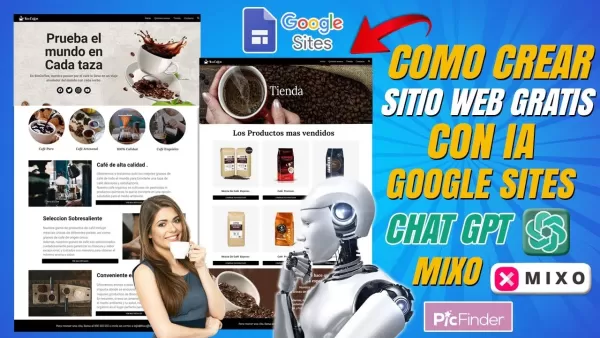
How to Build Beautiful Websites Using AI and Google SitesTable of Contents:IntroductionMastering Web Design and Creation with Google SitesThe Role of Artificial Intelligence in Modern Web DesignBuilding a Site with Google TemplatesUsing AI Tools Like
Related Special Topic Recommendations
chatbot
ZTE, Tencent Forge AI Cloud Partnership with Native Work Buddy
ZTE hosted an AI Cloud Computer Experience Day in Beijing, announcing a strategic partnership with Tencent to launch a new AI cloud computer featuring Tencent’s Work Buddy. The market responded swiftly: on June 4, ZTE’s A-shares rose over 5% to 38.5
Wanxiang Shengsheng Unveils Low-Cost AI Audiobook Tool at Under 8 Yuan per 10k Characters
Two months after its public beta, Wanzhuang Yousheng officially launched its automated production system, "Fully Automatic AI Multi-voice Audiobook Creation," a feature that had already won over rights holders during internal trials.Launched by the c
How to fix Core Web Vitals for better SEO ranking
How to Build Beautiful Websites Using AI and Google SitesTable of Contents:IntroductionMastering Web Design and Creation with Google SitesThe Role of Artificial Intelligence in Modern Web DesignBuilding a Site with Google TemplatesUsing AI Tools Like
Related Special Topic Recommendations
chatbot
 AI Customer Chatbot Tools for Website Support
2026 Latest Best Top-Rated AI Customer Chatbot Tools for Website Support are here on XIX.AI! Our curated list features powerful, game-changing solutions that boost response speeds, improve customer satisfaction, and save tons of manual work. Each option goes through rigorous real-world tests, complete with free vs paid comparison details. Explore now to find the perfect tool that boosts your online support efficiency!
 10 tools
 xix.ai
Social Media
Instagram AI Comment Reply Tools for Shops, DMs, and Community Management
xix.ai
Social Media
Instagram AI Comment Reply Tools for Shops, DMs, and Community Management
2026 Latest Best Instagram AI Comment Reply Tools for Shops, DMs, and Community Management! XIX.AI has curated a top-rated list of powerful game-changing solutions featuring weekly updated rankings, free vs paid comparison, and real-world tests. These must-try tools help boost productivity significantly by streamlining reply tasks, saving time, and enhancing customer engagement across all social media platforms. Explore now to discover your perfect tool for seamless community management!
10 tools
xix.ai
Image editing
Best AI Photo Retouch Tools for Portrait Editing
2026 Latest Best Top-Rated AI Photo Retouch Tools for Portrait Editing are here on XIX.AI! This curated list features powerful, game-changing solutions that help creators boost writing efficiency and unlock their full creative potential. We conduct real-world tests and provide detailed free vs paid comparison along with weekly updated rankings to ensure you find the must-try perfect tool for flawless portrait edits. Explore now to discover your ideal choice!
12 tools
xix.ai
Text-to-speech
ElevenLabs Voice Cloning Tools for Podcasts, Courses, and Product Walkthroughs
2026 Latest Best Top-rated Voice Cloning Tools for Podcasting, Course Creation, and Product Walkthroughs are here on XIX.AI. This curated list features powerful game-changing solutions that undergo real-world tests to deliver flawless results every time. You’ll find a free vs paid comparison along with detailed rankings to help you choose the most suitable option for boosting your productivity. Explore now and Discover your perfect tool for enhancing audio content creation.
9 tools
xix.ai
writing
AI Rewrite Tools for Business Writing: Make Dense Copy Clearer
2026 Latest Best Top-rated AI Rewrite Tools for Business Writing are here on XIX.AI! This curated list features powerful, game-changing tools that undergo real-world tests to make dense copy clearer and boost writing efficiency. Get a free vs paid comparison and see which option suits your needs. Explore now to discover your perfect tool and unlock your AI edge in business communication.
13 tools
xix.ai
Music composition
AI Songwriting Tools for Lyrics and Melody Ideas
2026 Latest Best Top-Rated AI Songwriting Tools for Lyrics and Melody Ideas are here on XIX.AI! This curated collection features powerful, game-changing options that go through rigorous real-world tests to deliver accurate lyric and melody suggestions. Get a free vs paid comparison, see detailed rankings, and discover must-try tools that can boost your creative workflow significantly. Explore now to find the perfect fit for your needs!
8 tools
xix.ai

 Comments (0)
0/500
Comments (0)
0/500
The biopharmaceutical sector is transitioning from basic chat assistants to agentic AI. Bristol Myers Squibb (BMS) has announced a strategic partnership with Anthropic, deploying Claude Enterprise as its global intelligent platform. This advanced AI system is now accessible to over 30,000 employees worldwide.
From Conversation to Agent: AI in Pharmaceutical R&D
This partnership represents a major shift in BMS's AI strategy. Rather than relying on simple conversational tools, BMS is integrating Claude's agentic capabilities directly into core systems and daily workflows. The initiative targets three key areas:
Accelerating Software and Algorithm Development: By using Anthropic's Claude Code, BMS's engineering and data science teams can significantly speed up software development. This approach standardizes cross-business collaboration and breaks down industry-wide data silos, allowing for the reconstruction and use of data and expert knowledge previously locked in isolated systems.
Embedding Intelligent Agents in Core Value Chains: BMS is integrating Claude as an agentic layer into high-frequency workflows:
Drug Discovery: Leveraging AI's reasoning capabilities to analyze decades of scientific, molecular, and clinical data, helping researchers identify and optimize targets in oncology and hematology.
Clinical Development: AI automates tedious documentation, from drafting clinical study reports to preparing patient safety narratives. This aims to significantly shorten the timeline from data lock to filing.
Production and Quality Control: Full automation is achieved for root cause investigations and corrective and preventive action (CAPA) documentation. This optimizes batch release decisions, speeding up production while maintaining compliance.
Activating Institutional Knowledge Bases: Secure integration with internal scientific, clinical, and commercial databases allows Claude to retrieve cross-departmental expertise in real time. This ensures employees have accurate contextual support for decision-making.
Industry Context: McKinsey's Efficiency Leap
McKinsey predicts that Agentic AI could reshape biopharmaceutical operations within five years, potentially boosting clinical R&D efficiency by 35% to 45%. This forecast is materializing as AI optimizes clinical trial design, accelerates subject matching, and reduces attrition rates. By analyzing historical trial data, real-world evidence, and patient records, AI helps pharmaceutical companies gain a competitive edge in drug development.
Life Sciences Competition: Anthropic vs. OpenAI
This collaboration strengthens Anthropic's position in life sciences, where competition is fierce. OpenAI has already partnered with Moderna and Novo Nordisk, focusing on drug discovery and process automation. In response, Anthropic aims to embed its intelligent layer into global pharmaceutical infrastructure, leveraging Claude's reasoning capabilities and commitment to enterprise data security.
For Bristol Myers Squibb, this partnership is more than a tech upgrade; it is a critical step toward becoming an AI-driven pharmaceutical company. By transforming AI from a passive tool into an autonomous agent, BMS addresses long-standing industry challenges like lengthy development cycles and high costs, accelerating the delivery of innovative drugs to patients globally.








 ZTE, Tencent Forge AI Cloud Partnership with Native Work Buddy
ZTE hosted an AI Cloud Computer Experience Day in Beijing, announcing a strategic partnership with Tencent to launch a new AI cloud computer featuring Tencent’s Work Buddy. The market responded swiftly: on June 4, ZTE’s A-shares rose over 5% to 38.5
Wanxiang Shengsheng Unveils Low-Cost AI Audiobook Tool at Under 8 Yuan per 10k Characters
Two months after its public beta, Wanzhuang Yousheng officially launched its automated production system, "Fully Automatic AI Multi-voice Audiobook Creation," a feature that had already won over rights holders during internal trials.Launched by the c
ZTE, Tencent Forge AI Cloud Partnership with Native Work Buddy
ZTE hosted an AI Cloud Computer Experience Day in Beijing, announcing a strategic partnership with Tencent to launch a new AI cloud computer featuring Tencent’s Work Buddy. The market responded swiftly: on June 4, ZTE’s A-shares rose over 5% to 38.5
Wanxiang Shengsheng Unveils Low-Cost AI Audiobook Tool at Under 8 Yuan per 10k Characters
Two months after its public beta, Wanzhuang Yousheng officially launched its automated production system, "Fully Automatic AI Multi-voice Audiobook Creation," a feature that had already won over rights holders during internal trials.Launched by the c
 How to fix Core Web Vitals for better SEO ranking
How to Build Beautiful Websites Using AI and Google SitesTable of Contents:IntroductionMastering Web Design and Creation with Google SitesThe Role of Artificial Intelligence in Modern Web DesignBuilding a Site with Google TemplatesUsing AI Tools Like
How to fix Core Web Vitals for better SEO ranking
How to Build Beautiful Websites Using AI and Google SitesTable of Contents:IntroductionMastering Web Design and Creation with Google SitesThe Role of Artificial Intelligence in Modern Web DesignBuilding a Site with Google TemplatesUsing AI Tools Like
2026 Latest Best Top-Rated AI Customer Chatbot Tools for Website Support are here on XIX.AI! Our curated list features powerful, game-changing solutions that boost response speeds, improve customer satisfaction, and save tons of manual work. Each option goes through rigorous real-world tests, complete with free vs paid comparison details. Explore now to find the perfect tool that boosts your online support efficiency!
10 tools
xix.ai
2026 Latest Best Instagram AI Comment Reply Tools for Shops, DMs, and Community Management! XIX.AI has curated a top-rated list of powerful game-changing solutions featuring weekly updated rankings, free vs paid comparison, and real-world tests. These must-try tools help boost productivity significantly by streamlining reply tasks, saving time, and enhancing customer engagement across all social media platforms. Explore now to discover your perfect tool for seamless community management!
10 tools
xix.ai

2026 Latest Best Top-Rated AI Photo Retouch Tools for Portrait Editing are here on XIX.AI! This curated list features powerful, game-changing solutions that help creators boost writing efficiency and unlock their full creative potential. We conduct real-world tests and provide detailed free vs paid comparison along with weekly updated rankings to ensure you find the must-try perfect tool for flawless portrait edits. Explore now to discover your ideal choice!
12 tools
xix.ai
2026 Latest Best Top-rated Voice Cloning Tools for Podcasting, Course Creation, and Product Walkthroughs are here on XIX.AI. This curated list features powerful game-changing solutions that undergo real-world tests to deliver flawless results every time. You’ll find a free vs paid comparison along with detailed rankings to help you choose the most suitable option for boosting your productivity. Explore now and Discover your perfect tool for enhancing audio content creation.
9 tools
xix.ai
2026 Latest Best Top-rated AI Rewrite Tools for Business Writing are here on XIX.AI! This curated list features powerful, game-changing tools that undergo real-world tests to make dense copy clearer and boost writing efficiency. Get a free vs paid comparison and see which option suits your needs. Explore now to discover your perfect tool and unlock your AI edge in business communication.
13 tools
xix.ai
2026 Latest Best Top-Rated AI Songwriting Tools for Lyrics and Melody Ideas are here on XIX.AI! This curated collection features powerful, game-changing options that go through rigorous real-world tests to deliver accurate lyric and melody suggestions. Get a free vs paid comparison, see detailed rankings, and discover must-try tools that can boost your creative workflow significantly. Explore now to find the perfect fit for your needs!
8 tools
xix.ai












