


 Home
HomeBond uses AI to help users break their doomscrolling habit
Traditional social media platforms were designed to keep users glued to their devices, endlessly scrolling through eye-straining feeds of memes and low-quality videos, all to create more engaging spaces for ads. In recent years, however, a growing number of companies have capitalized on user burnout by promoting real-world experiences or removing addictive features like infinite scroll.
Bond, which officially launched on Tuesday, is one such platform. Co-founder and CEO Dino Becirovic says the site offers an AI-powered solution to America's screen addiction.
Here's how it works: much like a standard social network, users post about their recent activities. Bond allows them to update their profiles with what it calls "memories" through photos, videos, and audio files.
Unlike other platforms, Bond is designed to act as an idea generator for what users should do in the real world.
Experiences stored in Bond feed its AI system, which learns to provide personalized, event-based recommendations, according to Becirovic.
For example, if you frequently post about loving pho and craving it, Bond might recommend a nearby Vietnamese restaurant with good reviews. Or if you're into heavy metal, it could alert you that Iron Maiden is playing in your city next week.
The more you share your experiences, the better the system's recommendations become, Becirovic says.
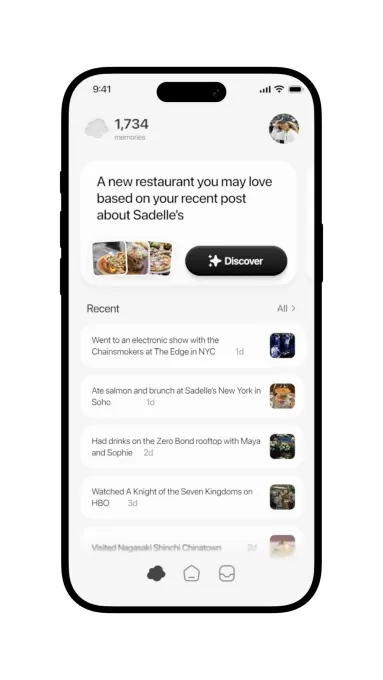
Image Credits:Bond
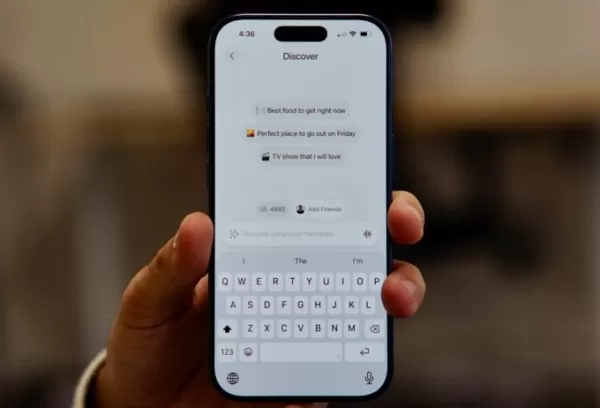
The layout resembles Instagram, but without a traditional feed. Instead, user profiles are displayed in a cluster format. Clicking a profile reveals the user's current stories, which disappear from the public profile after 24 hours, Becirovic said, but remain stored in a private archive. Users can search their memory archive anytime.
Bond's team includes people who previously built major social media apps like TikTok, Twitter, and Facebook, the company says. Becirovic previously worked at Kleiner Perkins and Index Ventures, while founding researcher Arthur Bražinskas co-led user signal integration at Google Gemini.
What's the revenue path for a company like this? Most social media platforms are essentially giant ad vehicles, generating the bulk of their revenue from advertising. Bond has no ads, so how will it make money?
Interestingly, Becirovic envisions a future where users can license their data from Bond's archives to companies for AI training. In this model, Bond would take a small licensing fee, creating ongoing revenue and positioning itself as a data provider for AI companies refining their models.
"The idea behind this licensing model is that you can monetize your memories," he said. "If we become a platform with the right incentive structure to get billions of people to share about their daily lives, we'll naturally become a very attractive place for training GPT‑6, GPT‑7, and all the variants that will come in the future."
Processed with DarkroomImage Credits:Bond
In another scenario, Bond would use its accumulated data as a product recommendation tool integrated with e‑commerce sites. "Our users would opt into this experience. If we are able to do this, we believe we could capture some value from the transaction with merchants by enabling a better user experience, driving conversion, and/or increasing throughput," Becirovic told TechCrunch in an email.
Becirovic said Bond would never sell user data for advertising purposes, and users can "delete any memories by either deleting them in the Memory tab or using natural language in Memory chat." He added: "Users can also delete their profile if they are not getting value from Bond. As the product grows, we will introduce more privacy control features to our users for them to manage their data."
Becirovic said Bond will improve its encryption over time, though he was somewhat vague about the platform's current protections: "E2EE encryption is a priority for us in the near future after launch. In the meantime, we store all user data securely in our database and ensure it is protected," he said.
For now, Becirovic seems primarily focused on making Bond appealing. "Monetization is not a short-term priority," he said. "Our initial focus is on creating an application where users get more value the more they capture their memories."
Related article
 Warner Music acquires AI attribution startup Sureel AI
Warner Music Group (WMG) confirmed on Wednesday that it is acquiring Sureel AI, an artificial intelligence attribution startup. Sureel’s proprietary technology generates “AI DNA” for musical tracks, deconstructing them into constituent elements to tr
Amazon introduces Alexa for Shopping while pushing Rufus to the background
Amazon has launched Alexa for Shopping, merging its Rufus shopping chatbot with Alexa+ across the app, website, and Echo Show devices.The assistant answers product queries, compares items, tracks prices, and supports shopping reminders. It also handl
Microsoft, Azure and AI Tech Combat California Wildfire Risks
Microsoft invests in AI-driven wildfire detection, with Juan Lavista Ferres, CVP and Chief Data Scientist, discussing strategies to mitigate environmental damage.According to NASA, climate change impacts everyone on Earth, manifesting as rising tempe
Related Special Topic Recommendations
Data Analysis
Warner Music acquires AI attribution startup Sureel AI
Warner Music Group (WMG) confirmed on Wednesday that it is acquiring Sureel AI, an artificial intelligence attribution startup. Sureel’s proprietary technology generates “AI DNA” for musical tracks, deconstructing them into constituent elements to tr
Amazon introduces Alexa for Shopping while pushing Rufus to the background
Amazon has launched Alexa for Shopping, merging its Rufus shopping chatbot with Alexa+ across the app, website, and Echo Show devices.The assistant answers product queries, compares items, tracks prices, and supports shopping reminders. It also handl
Microsoft, Azure and AI Tech Combat California Wildfire Risks
Microsoft invests in AI-driven wildfire detection, with Juan Lavista Ferres, CVP and Chief Data Scientist, discussing strategies to mitigate environmental damage.According to NASA, climate change impacts everyone on Earth, manifesting as rising tempe
Related Special Topic Recommendations
Data Analysis
 AI SQL Copilots for Revenue Dashboards, Funnel Analysis, and Product Metrics
2026 Latest Best AI SQL Copilots Ranked Top-Rated! XIX.AI curates a powerful game-changing collection for weekly updated real-world tests. These must-try tools help you generate accurate revenue dashboards, analyze sales funnels, and track product metrics swiftly, boosting productivity massively. Explore now to Discover your perfect tool for data-driven decision making! 238 characters
 9 tools
 xix.ai
Music composition
Best AI Melody Writing Tools for Song Drafts
xix.ai
Music composition
Best AI Melody Writing Tools for Song Drafts
2026 Latest Best Top-Rated AI Melody Writing Tools for Song Drafts! XIX.AI has curated a highly powerful game-changing collection that goes through rigorous real-world tests to deliver the best writing experience. You can find detailed free vs paid comparisons, accurate rankings, and must-try options designed to help you create stunning song drafts effortlessly and boost your creative productivity significantly. Explore now to discover your perfect tool!
8 tools
xix.ai
chatbot
Best AI Conversation Trainer Tools for Interview Practice
2026 Latest Best Top-rated AI Conversation Trainer Tools for Interview Practice are here on XIX.AI! This curated collection features powerful, game-changing tools that go through rigorous real-world tests to deliver accurate feedback. You’ll find a free vs paid comparison and detailed rankings to help you choose the must-try option that boosts your confidence and skills. Explore now to Discover your perfect tool for interview success!
12 tools
xix.ai
Design & Art
Best AI Style Transfer Tools for Creative Experiments
2026 Latest Best Top-rated AI Style Transfer Tools for Creative Experiments! XIX.AI has curated a powerful, game-changing collection of must-try tools that deliver exceptional results through real-world tests and rigorous rankings. These top solutions help creatives boost productivity significantly by accelerating content creation and unlocking endless creative possibilities. Explore now to discover your perfect tool and start creating today!
9 tools
xix.ai
Comic Creation
Best AI Dialogue Bubble Tools for Visual Storytelling
2026 Latest Best Top-Rated AI Dialogue Bubble Tools for Visual Storytelling are here on XIX.AI! This curated collection features powerful, game-changing tools that help creators boost productivity and overcome creative bottlenecks. Get a free vs paid comparison, see real-world tests, and check the latest rankings to find the must-try solutions perfect for crafting engaging visual narratives. Explore now to discover your ideal tool!
10 tools
xix.ai
Meeting Assistant
Top AI Meeting Summary Tools: Track Decisions and Follow-Ups Clearly
2026 Latest Top-Rated Best AI Meeting Summary Tools for Clear Decision Tracking and Effortless Follow-Ups. This curated list showcases powerful, game-changing solutions that boost productivity dramatically by automating meeting notes, identifying key action items, and streamlining team coordination across all projects. Get a free vs paid comparison along with real-world tests and weekly updated rankings to help you find the perfect tool. Explore now to unlock your AI edge!
9 tools
xix.ai

 Comments (0)
0/500
Comments (0)
0/500
Traditional social media platforms were designed to keep users glued to their devices, endlessly scrolling through eye-straining feeds of memes and low-quality videos, all to create more engaging spaces for ads. In recent years, however, a growing number of companies have capitalized on user burnout by promoting real-world experiences or removing addictive features like infinite scroll.
Bond, which officially launched on Tuesday, is one such platform. Co-founder and CEO Dino Becirovic says the site offers an AI-powered solution to America's screen addiction.
Here's how it works: much like a standard social network, users post about their recent activities. Bond allows them to update their profiles with what it calls "memories" through photos, videos, and audio files.
Unlike other platforms, Bond is designed to act as an idea generator for what users should do in the real world.
Experiences stored in Bond feed its AI system, which learns to provide personalized, event-based recommendations, according to Becirovic.
For example, if you frequently post about loving pho and craving it, Bond might recommend a nearby Vietnamese restaurant with good reviews. Or if you're into heavy metal, it could alert you that Iron Maiden is playing in your city next week.
The more you share your experiences, the better the system's recommendations become, Becirovic says.
Image Credits:Bond
The layout resembles Instagram, but without a traditional feed. Instead, user profiles are displayed in a cluster format. Clicking a profile reveals the user's current stories, which disappear from the public profile after 24 hours, Becirovic said, but remain stored in a private archive. Users can search their memory archive anytime.
Bond's team includes people who previously built major social media apps like TikTok, Twitter, and Facebook, the company says. Becirovic previously worked at Kleiner Perkins and Index Ventures, while founding researcher Arthur Bražinskas co-led user signal integration at Google Gemini.
What's the revenue path for a company like this? Most social media platforms are essentially giant ad vehicles, generating the bulk of their revenue from advertising. Bond has no ads, so how will it make money?
Interestingly, Becirovic envisions a future where users can license their data from Bond's archives to companies for AI training. In this model, Bond would take a small licensing fee, creating ongoing revenue and positioning itself as a data provider for AI companies refining their models.
"The idea behind this licensing model is that you can monetize your memories," he said. "If we become a platform with the right incentive structure to get billions of people to share about their daily lives, we'll naturally become a very attractive place for training GPT‑6, GPT‑7, and all the variants that will come in the future."
Processed with DarkroomImage Credits:Bond
In another scenario, Bond would use its accumulated data as a product recommendation tool integrated with e‑commerce sites. "Our users would opt into this experience. If we are able to do this, we believe we could capture some value from the transaction with merchants by enabling a better user experience, driving conversion, and/or increasing throughput," Becirovic told TechCrunch in an email.
Becirovic said Bond would never sell user data for advertising purposes, and users can "delete any memories by either deleting them in the Memory tab or using natural language in Memory chat." He added: "Users can also delete their profile if they are not getting value from Bond. As the product grows, we will introduce more privacy control features to our users for them to manage their data."
Becirovic said Bond will improve its encryption over time, though he was somewhat vague about the platform's current protections: "E2EE encryption is a priority for us in the near future after launch. In the meantime, we store all user data securely in our database and ensure it is protected," he said.
For now, Becirovic seems primarily focused on making Bond appealing. "Monetization is not a short-term priority," he said. "Our initial focus is on creating an application where users get more value the more they capture their memories."








 Warner Music acquires AI attribution startup Sureel AI
Warner Music Group (WMG) confirmed on Wednesday that it is acquiring Sureel AI, an artificial intelligence attribution startup. Sureel’s proprietary technology generates “AI DNA” for musical tracks, deconstructing them into constituent elements to tr
Amazon introduces Alexa for Shopping while pushing Rufus to the background
Amazon has launched Alexa for Shopping, merging its Rufus shopping chatbot with Alexa+ across the app, website, and Echo Show devices.The assistant answers product queries, compares items, tracks prices, and supports shopping reminders. It also handl
Warner Music acquires AI attribution startup Sureel AI
Warner Music Group (WMG) confirmed on Wednesday that it is acquiring Sureel AI, an artificial intelligence attribution startup. Sureel’s proprietary technology generates “AI DNA” for musical tracks, deconstructing them into constituent elements to tr
Amazon introduces Alexa for Shopping while pushing Rufus to the background
Amazon has launched Alexa for Shopping, merging its Rufus shopping chatbot with Alexa+ across the app, website, and Echo Show devices.The assistant answers product queries, compares items, tracks prices, and supports shopping reminders. It also handl
 Microsoft, Azure and AI Tech Combat California Wildfire Risks
Microsoft invests in AI-driven wildfire detection, with Juan Lavista Ferres, CVP and Chief Data Scientist, discussing strategies to mitigate environmental damage.According to NASA, climate change impacts everyone on Earth, manifesting as rising tempe
Microsoft, Azure and AI Tech Combat California Wildfire Risks
Microsoft invests in AI-driven wildfire detection, with Juan Lavista Ferres, CVP and Chief Data Scientist, discussing strategies to mitigate environmental damage.According to NASA, climate change impacts everyone on Earth, manifesting as rising tempe

2026 Latest Best AI SQL Copilots Ranked Top-Rated! XIX.AI curates a powerful game-changing collection for weekly updated real-world tests. These must-try tools help you generate accurate revenue dashboards, analyze sales funnels, and track product metrics swiftly, boosting productivity massively. Explore now to Discover your perfect tool for data-driven decision making! 238 characters
9 tools
xix.ai

2026 Latest Best Top-Rated AI Melody Writing Tools for Song Drafts! XIX.AI has curated a highly powerful game-changing collection that goes through rigorous real-world tests to deliver the best writing experience. You can find detailed free vs paid comparisons, accurate rankings, and must-try options designed to help you create stunning song drafts effortlessly and boost your creative productivity significantly. Explore now to discover your perfect tool!
8 tools
xix.ai
2026 Latest Best Top-rated AI Conversation Trainer Tools for Interview Practice are here on XIX.AI! This curated collection features powerful, game-changing tools that go through rigorous real-world tests to deliver accurate feedback. You’ll find a free vs paid comparison and detailed rankings to help you choose the must-try option that boosts your confidence and skills. Explore now to Discover your perfect tool for interview success!
12 tools
xix.ai

2026 Latest Best Top-rated AI Style Transfer Tools for Creative Experiments! XIX.AI has curated a powerful, game-changing collection of must-try tools that deliver exceptional results through real-world tests and rigorous rankings. These top solutions help creatives boost productivity significantly by accelerating content creation and unlocking endless creative possibilities. Explore now to discover your perfect tool and start creating today!
9 tools
xix.ai

2026 Latest Best Top-Rated AI Dialogue Bubble Tools for Visual Storytelling are here on XIX.AI! This curated collection features powerful, game-changing tools that help creators boost productivity and overcome creative bottlenecks. Get a free vs paid comparison, see real-world tests, and check the latest rankings to find the must-try solutions perfect for crafting engaging visual narratives. Explore now to discover your ideal tool!
10 tools
xix.ai
2026 Latest Top-Rated Best AI Meeting Summary Tools for Clear Decision Tracking and Effortless Follow-Ups. This curated list showcases powerful, game-changing solutions that boost productivity dramatically by automating meeting notes, identifying key action items, and streamlining team coordination across all projects. Get a free vs paid comparison along with real-world tests and weekly updated rankings to help you find the perfect tool. Explore now to unlock your AI edge!
9 tools
xix.ai












