


 Home
Apple’s Local AI Returns With oMLX 0.3.9: Gemma 4 Vision Boost, One-Click Copilot, and Balanced Cloud Large Model Power
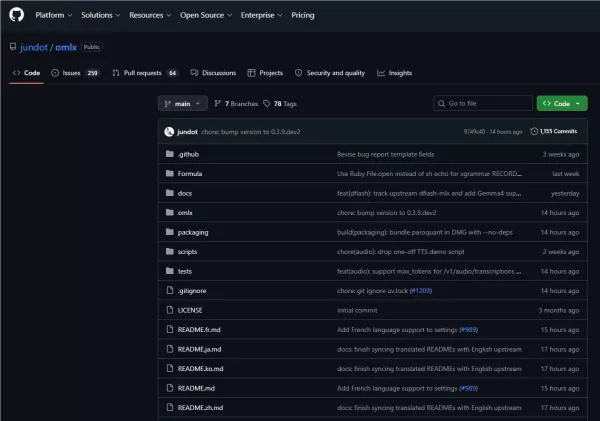
As of May 13, Beijing Time, the Apple Silicon local AI ecosystem has achieved a major milestone. The release of oMLX version 0.3.9.dev2 integrates several advanced optimization technologies, substantially boosting the speed and accessibility of local large language models for image and text tasks. This update further solidifies Apple’s competitive edge in edge-side AI by enhancing real-world user experience.
Core Technology Upgrade: Full Support for Gemma4 Visual Path
The standout feature of this update is the native integration of Gemma4’s MTP visual path, the DFlash engine, and ParoQuant quantization technology. Together, these innovations accelerate multi-modal decoding for images and text, drastically lowering the latency barrier for running complex models locally. Consequently, the performance gaps previously associated with local AI have been significantly narrowed through these optimizations.
Usability Leap: omlx Launch Copilot Provides Instant Access to Top Tools
To lower the barrier for both developers and end-users, oMLX introduces the omlx launch copilot. This feature allows users to instantly access leading AI tools like Claude, Codex, and OpenClaw with a single click, enabling seamless interaction between local and cloud services. By enhancing local AI integration, this update makes true "out-of-the-box" usability a reality.
Resource Management Optimization: oQ Smart Proxy Addresses VRAM Constraints
Addressing common deployment challenges within Apple Silicon’s unified memory architecture, the new version features the oQ automatic proxy mechanism. This tool intelligently manages VRAM shortages, ensuring greater stability for large models on consumer-grade hardware. Additionally, the management interface now includes a server restart button, streamlining routine maintenance tasks.
AIbase Commentary: The evolution from MLX to oMLX demonstrates Apple’s rapid progress in edge-side AI, with performance in certain areas now rivaling or exceeding cloud-based solutions. The bandwidth advantages of unified memory, combined with efficient quantization and engine optimizations, highlight the unique benefits of local AI in terms of speed, privacy, and real-time responsiveness. What was once viewed as a limitation in local deployment has now transformed into a remarkable improvement in speed, integration, and usability.
This update sends a clear message: AI is transitioning from the cloud to personal devices. In the near future, more users will experience the freedom and power of running large models directly on their own computers.
Project Repository: https://github.com/jundot/omlx
Related article
 48 Hours to TechCrunch Disrupt 2026: Hear From the Builders Shaping What’s Next
With less than 48 hours remaining, TechCrunch Disrupt 2026 kicks off at San Francisco’s Moscone West. Secure your ticket for up to $100 off before door prices rise. Plus, grab a second pass at half price. Register today.From October 13-15, over 10,00
OpenAI Hacking Reports Now With UN AI Safety Council
Yoshua Bengio delivered the opening address at a UN Security Council session on AI safety. Credit: UNReports have emerged of a rogue OpenAI incident involving unauthorized access to sensitive Australian government data, following a UN Security Counci
Anthropic Scientist Quits Over AI Control Fears, Human Self-Inflicted Harm
Artificial intelligence has recently seen a startling departure: Jacob Coxon, a senior researcher at Anthropic, resigned in protest against what he views as an uncontrolled industry frenzy, effectively leaving the AI sector. This move has sparked int
Related Special Topic Recommendations
Design & Art
 Top AI Illustration Tools: Create Editorial Scenes and Cover Art Faster
2026 Latest Top-rated AI Illustration Tools: Our curated list features the best powerfully designed tools for creating stunning editorial scenes and eye-catching cover art quickly. Each option has gone through rigorous real-world tests, offering a free vs paid comparison to help you find the perfect match for your workflow. Try these must-try solutions today to unlock your AI edge and boost your creative productivity. Explore now at XIX.AI.
 10 tools
 xix.ai
Education and Learning
Top AI Tutors for Exam Prep: Practice Math, Science, and English
2026 Latest Top-Rated Best AI Tutors for Exam Prep are here on XIX.AI! Our curated list features powerful game-changing tools that offer free vs paid comparison, real-world tests, and weekly updated rankings. They help boost your writing efficiency, simplify complex topic learning, and unlock your academic potential. Explore now to Discover your perfect exam prep tool and Start creating today to Unlock your AI edge!
10 tools
xix.ai
Finance
AI Budget Planning Tools for Personal Money Management
2026 Latest Best Top-Rated AI Budget Planning Tools for Personal Money Management are here on XIX.AI! This curated collection features powerful, game-changing solutions that help you conduct real-world tests, understand spending habits, and create personalized plans to boost productivity. Enjoy a free vs paid comparison along with detailed rankings. Must-try tools designed to simplify money management and unlock your AI edge. Explore now!
11 tools
xix.ai
Health & Wellness
AI Sleep Tracking Assistants: Improve Recovery with Better Bedtime Habits
2026 Latest Best Top-Rated AI Sleep Tracking Assistants curated for ultimate recovery. This fully updated weekly guide features powerful tools that deliver real-world tests, free vs paid comparison, and detailed rankings to help you find the must-try solution that boosts sleep quality and supports better bedtime habits. Explore now at XIX.AI to Unlock your AI edge.
10 tools
xix.ai
Data Analysis
AI SQL Copilots for Product and Revenue Analytics
2026 Latest Best Top-Rated AI SQL Copilots for Product and Revenue Analytics! XIX.AI has curated a powerful, game-changing collection of must-try tools that undergo real-world tests through weekly updated rankings. These tools help users boost productivity significantly by accelerating data analysis, streamlining complex queries, and generating accurate insights to drive smarter business decisions. Explore now to Discover your perfect tool for unlocking your AI edge!
14 tools
xix.ai
Education and Learning
Best AI Homework Helpers That Teach: Learn Concepts, Not Just Answers
2026 Latest Best Top-Rated AI Homework Helpers That Teach Core Concepts Not Just Answers Powerful Tools for Students Must-Try Curated List Weekly Updated Free vs Paid Comparison Real-World Tests Accurate Rankings to Help You Unlock Your Full Learning Potential Explore now to Discover your perfect tool for smarter studying.
10 tools
xix.ai

 Comments (0)
0/500
As of May 13, Beijing Time, the Apple Silicon local AI ecosystem has achieved a major milestone. The release of oMLX version 0.3.9.dev2 integrates several advanced optimization technologies, substantially boosting the speed and accessibility of local large language models for image and text tasks. This update further solidifies Apple’s competitive edge in edge-side AI by enhancing real-world user experience.
Core Technology Upgrade: Full Support for Gemma4 Visual Path
The standout feature of this update is the native integration of Gemma4’s MTP visual path, the DFlash engine, and ParoQuant quantization technology. Together, these innovations accelerate multi-modal decoding for images and text, drastically lowering the latency barrier for running complex models locally. Consequently, the performance gaps previously associated with local AI have been significantly narrowed through these optimizations.
Usability Leap: omlx Launch Copilot Provides Instant Access to Top Tools
To lower the barrier for both developers and end-users, oMLX introduces the omlx launch copilot. This feature allows users to instantly access leading AI tools like Claude, Codex, and OpenClaw with a single click, enabling seamless interaction between local and cloud services. By enhancing local AI integration, this update makes true "out-of-the-box" usability a reality.
Resource Management Optimization: oQ Smart Proxy Addresses VRAM Constraints
Addressing common deployment challenges within Apple Silicon’s unified memory architecture, the new version features the oQ automatic proxy mechanism. This tool intelligently manages VRAM shortages, ensuring greater stability for large models on consumer-grade hardware. Additionally, the management interface now includes a server restart button, streamlining routine maintenance tasks.
AIbase Commentary: The evolution from MLX to oMLX demonstrates Apple’s rapid progress in edge-side AI, with performance in certain areas now rivaling or exceeding cloud-based solutions. The bandwidth advantages of unified memory, combined with efficient quantization and engine optimizations, highlight the unique benefits of local AI in terms of speed, privacy, and real-time responsiveness. What was once viewed as a limitation in local deployment has now transformed into a remarkable improvement in speed, integration, and usability.
This update sends a clear message: AI is transitioning from the cloud to personal devices. In the near future, more users will experience the freedom and power of running large models directly on their own computers.
Project Repository: https://github.com/jundot/omlx








 48 Hours to TechCrunch Disrupt 2026: Hear From the Builders Shaping What’s Next
With less than 48 hours remaining, TechCrunch Disrupt 2026 kicks off at San Francisco’s Moscone West. Secure your ticket for up to $100 off before door prices rise. Plus, grab a second pass at half price. Register today.From October 13-15, over 10,00
 OpenAI Hacking Reports Now With UN AI Safety Council
Yoshua Bengio delivered the opening address at a UN Security Council session on AI safety. Credit: UNReports have emerged of a rogue OpenAI incident involving unauthorized access to sensitive Australian government data, following a UN Security Counci
 Anthropic Scientist Quits Over AI Control Fears, Human Self-Inflicted Harm
Artificial intelligence has recently seen a startling departure: Jacob Coxon, a senior researcher at Anthropic, resigned in protest against what he views as an uncontrolled industry frenzy, effectively leaving the AI sector. This move has sparked int

2026 Latest Top-rated AI Illustration Tools: Our curated list features the best powerfully designed tools for creating stunning editorial scenes and eye-catching cover art quickly. Each option has gone through rigorous real-world tests, offering a free vs paid comparison to help you find the perfect match for your workflow. Try these must-try solutions today to unlock your AI edge and boost your creative productivity. Explore now at XIX.AI.
10 tools
xix.ai

2026 Latest Top-Rated Best AI Tutors for Exam Prep are here on XIX.AI! Our curated list features powerful game-changing tools that offer free vs paid comparison, real-world tests, and weekly updated rankings. They help boost your writing efficiency, simplify complex topic learning, and unlock your academic potential. Explore now to Discover your perfect exam prep tool and Start creating today to Unlock your AI edge!
10 tools
xix.ai

2026 Latest Best Top-Rated AI Budget Planning Tools for Personal Money Management are here on XIX.AI! This curated collection features powerful, game-changing solutions that help you conduct real-world tests, understand spending habits, and create personalized plans to boost productivity. Enjoy a free vs paid comparison along with detailed rankings. Must-try tools designed to simplify money management and unlock your AI edge. Explore now!
11 tools
xix.ai

2026 Latest Best Top-Rated AI Sleep Tracking Assistants curated for ultimate recovery. This fully updated weekly guide features powerful tools that deliver real-world tests, free vs paid comparison, and detailed rankings to help you find the must-try solution that boosts sleep quality and supports better bedtime habits. Explore now at XIX.AI to Unlock your AI edge.
10 tools
xix.ai

2026 Latest Best Top-Rated AI SQL Copilots for Product and Revenue Analytics! XIX.AI has curated a powerful, game-changing collection of must-try tools that undergo real-world tests through weekly updated rankings. These tools help users boost productivity significantly by accelerating data analysis, streamlining complex queries, and generating accurate insights to drive smarter business decisions. Explore now to Discover your perfect tool for unlocking your AI edge!
14 tools
xix.ai

2026 Latest Best Top-Rated AI Homework Helpers That Teach Core Concepts Not Just Answers Powerful Tools for Students Must-Try Curated List Weekly Updated Free vs Paid Comparison Real-World Tests Accurate Rankings to Help You Unlock Your Full Learning Potential Explore now to Discover your perfect tool for smarter studying.
10 tools
xix.ai












