


 Home
HomeApple Unveils Wearable AI Pin in Major Hardware Push
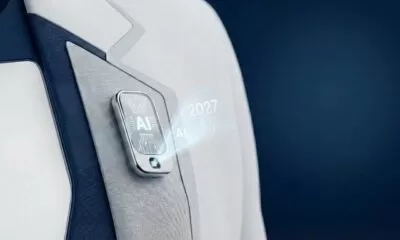
Apple is reportedly developing an AI-driven wearable pin that could launch as soon as 2027, according to The Information. This initiative marks Apple's first venture into dedicated AI hardware and serves as a direct counter to OpenAI's own device plans.
The gadget is said to resemble a slightly thicker AirTag, featuring an aluminum-and-glass casing. It reportedly includes two cameras—one standard and one wide-angle—along with three microphones, a speaker, and a physical button. Similar to OpenAI’s proposed device, it moves away from a conventional screen, focusing instead on ambient interaction using voice and sensors.
The timing of this report is notable. It emerged just two days after OpenAI’s Chief Global Affairs Officer, Chris Lehane, informed Axios that the company remains “on schedule” to introduce its first AI hardware in late 2026. Designed by former Apple design lead Jony Ive through OpenAI’s $6.5 billion acquisition of his startup io, the device has been described as pocket-sized, context-aware, and entirely screen-free.
Reactive or Strategic?
A common interpretation is that Apple was caught unprepared. Last year, the company restructured its AI leadership after Apple Intelligence failed to drive the iPhone upgrade surge investors anticipated. It then partnered with Google to enhance Siri using Gemini—a step described as “interim” while Apple develops its own foundational models.
Another view, however, suggests Apple is simply sticking to its playbook: allowing others to test the market before stepping in with more refined hardware execution.
The Humane AI Pin offered a cautionary example. Launched in 2024 by former Apple staff, the $699 device received harsh criticism and sold fewer than 10,000 units. By February 2025, it was discontinued and sold to HP for $116 million. The takeaway wasn’t that AI wearables are a lost cause, but that the underlying technology and use cases weren't yet ready for mainstream adoption.
Apple’s 2027 timeline indicates the company is banking on core AI capabilities—such as low-latency language models, dependable voice recognition, and on-device inference—maturing over the next year and a half. If the upgraded Siri chatbot Apple intends to release with iOS 27 proves effective, the pin could naturally extend an ecosystem already used by 1.5 billion iPhone owners.
The Stakes of the AI Hardware Race
OpenAI has set aggressive goals: industry forecasts suggest AI wearables could hit 100 million annual shipments. That’s an ambitious target for a company with no consumer hardware experience—and one said to be still working through challenges related to device personality, data privacy, and computing infrastructure.
Apple, on the other hand, has shipped more than 3 billion iPhones. Its supply chain connections are deeply established over decades. It oversees the chip design, operating system, and services layer. If AI wearables gain traction, Apple’s inherent strengths would pose a serious challenge for OpenAI, even with Ive’s design input.
Recent high-profile acquisitions in the AI space—OpenAI’s purchase of io, Meta’s $2 billion Manus deal—reflect a shared belief that the smartphone interface has peaked. Silicon Valley is wagering that AI requires new kinds of devices to deliver on the vision of ambient computing.
Apple’s entry reinforces that belief while significantly raising the competitive bar. The company that shaped the smartphone era clearly views AI hardware as the next major platform worth pursuing.
The Information noted that Apple’s project is still in early development and could be shelved. That’s typical for many Apple hardware prototypes—the company is known for testing numerous concepts that never reach the public. Still, the reporting indicates Apple is investing engineering resources and taking the category seriously.
For consumers, this rivalry is promising. OpenAI’s hardware aspirations have prompted a reaction from the world’s most valuable company. Whether you eventually wear an Apple pin or an OpenAI device, the human judgment needed to make AI assistants truly helpful will be tested across devices created by two very different organizations—one behind ChatGPT, the other behind the iPhone.
That’s a contest well worth following.
Related article
 DeepMind CEO Hassabis: I sleep six hours a day, usually feel energetic around 1 a.m.
Fortune recently featured an interview with Demis Hassabis, CEO of Google DeepMind, revealing his unconventional approach to rest and productivity. Hassabis disclosed that he sleeps very little, structuring his waking hours into two distinct work blo
OpenAI, Anthropic Vie for Market Share Despite Revenue Shortfalls
Despite recent reports suggesting OpenAI missed revenue targets, creating pressure on tech stocks this Tuesday, private AI lab investors remain resilient. Seasoned backers have confirmed they will not reduce investment despite negative media coverage
California AV Compliance: A New Era of Tickets, Geofences, and 1M Miles
Guident operates an AuveTech shuttle in South Florida, managing a four-mile route in West Palm Beach and a one-mile route in Boca Raton using its remote monitoring technology. | Credit: GuidentCalifornia is redefining the regulatory landscape for dri
Related Special Topic Recommendations
chatbot
DeepMind CEO Hassabis: I sleep six hours a day, usually feel energetic around 1 a.m.
Fortune recently featured an interview with Demis Hassabis, CEO of Google DeepMind, revealing his unconventional approach to rest and productivity. Hassabis disclosed that he sleeps very little, structuring his waking hours into two distinct work blo
OpenAI, Anthropic Vie for Market Share Despite Revenue Shortfalls
Despite recent reports suggesting OpenAI missed revenue targets, creating pressure on tech stocks this Tuesday, private AI lab investors remain resilient. Seasoned backers have confirmed they will not reduce investment despite negative media coverage
California AV Compliance: A New Era of Tickets, Geofences, and 1M Miles
Guident operates an AuveTech shuttle in South Florida, managing a four-mile route in West Palm Beach and a one-mile route in Boca Raton using its remote monitoring technology. | Credit: GuidentCalifornia is redefining the regulatory landscape for dri
Related Special Topic Recommendations
chatbot
 Best AI Roleplay Chat Apps for Language Practice, Interview Prep, and Daily Fluency
2026 Latest Best Top-rated AI Roleplay Chat Apps for Language Practice, Interview Prep, and Daily Fluency! XIX.AI curates a powerful game-changing collection that offers free vs paid comparison, real-world tests, and updated rankings weekly. These must-try tools help you boost writing skills, overcome fluency challenges, and improve communication efficiency across all daily scenarios. Explore now to discover your perfect tool for language growth!
 10 tools
 xix.ai
Music composition
AI Stem Separation Tools for Remix Production, Sampling Prep, and Karaoke Masters
xix.ai
Music composition
AI Stem Separation Tools for Remix Production, Sampling Prep, and Karaoke Masters
2026 Latest Best Top-rated AI Stem Separation Tools Curated for Remix Production, Sampling Prep, and Karaoke Masters. These powerful game-changing tools offer real-world tests to deliver precise audio isolation, boosting productivity significantly. XIX.AI provides a weekly updated free vs paid comparison guide to help you find the must-try solution that suits your needs. Explore now to unlock your AI edge.
8 tools
xix.ai
Data Analysis
AI SQL Copilots for Revenue Dashboards, Funnel Analysis, and Product Metrics
2026 Latest Best AI SQL Copilots Ranked Top-Rated! XIX.AI curates a powerful game-changing collection for weekly updated real-world tests. These must-try tools help you generate accurate revenue dashboards, analyze sales funnels, and track product metrics swiftly, boosting productivity massively. Explore now to Discover your perfect tool for data-driven decision making! 238 characters
9 tools
xix.ai
Music composition
Best AI Melody Writing Tools for Song Drafts
2026 Latest Best Top-Rated AI Melody Writing Tools for Song Drafts! XIX.AI has curated a highly powerful game-changing collection that goes through rigorous real-world tests to deliver the best writing experience. You can find detailed free vs paid comparisons, accurate rankings, and must-try options designed to help you create stunning song drafts effortlessly and boost your creative productivity significantly. Explore now to discover your perfect tool!
8 tools
xix.ai
chatbot
Best AI Conversation Trainer Tools for Interview Practice
2026 Latest Best Top-rated AI Conversation Trainer Tools for Interview Practice are here on XIX.AI! This curated collection features powerful, game-changing tools that go through rigorous real-world tests to deliver accurate feedback. You’ll find a free vs paid comparison and detailed rankings to help you choose the must-try option that boosts your confidence and skills. Explore now to Discover your perfect tool for interview success!
12 tools
xix.ai
Design & Art
Best AI Style Transfer Tools for Creative Experiments
2026 Latest Best Top-rated AI Style Transfer Tools for Creative Experiments! XIX.AI has curated a powerful, game-changing collection of must-try tools that deliver exceptional results through real-world tests and rigorous rankings. These top solutions help creatives boost productivity significantly by accelerating content creation and unlocking endless creative possibilities. Explore now to discover your perfect tool and start creating today!
9 tools
xix.ai

 Comments (0)
0/500
Comments (0)
0/500
Apple is reportedly developing an AI-driven wearable pin that could launch as soon as 2027, according to The Information. This initiative marks Apple's first venture into dedicated AI hardware and serves as a direct counter to OpenAI's own device plans.
The gadget is said to resemble a slightly thicker AirTag, featuring an aluminum-and-glass casing. It reportedly includes two cameras—one standard and one wide-angle—along with three microphones, a speaker, and a physical button. Similar to OpenAI’s proposed device, it moves away from a conventional screen, focusing instead on ambient interaction using voice and sensors.
The timing of this report is notable. It emerged just two days after OpenAI’s Chief Global Affairs Officer, Chris Lehane, informed Axios that the company remains “on schedule” to introduce its first AI hardware in late 2026. Designed by former Apple design lead Jony Ive through OpenAI’s $6.5 billion acquisition of his startup io, the device has been described as pocket-sized, context-aware, and entirely screen-free.
Reactive or Strategic?
A common interpretation is that Apple was caught unprepared. Last year, the company restructured its AI leadership after Apple Intelligence failed to drive the iPhone upgrade surge investors anticipated. It then partnered with Google to enhance Siri using Gemini—a step described as “interim” while Apple develops its own foundational models.
Another view, however, suggests Apple is simply sticking to its playbook: allowing others to test the market before stepping in with more refined hardware execution.
The Humane AI Pin offered a cautionary example. Launched in 2024 by former Apple staff, the $699 device received harsh criticism and sold fewer than 10,000 units. By February 2025, it was discontinued and sold to HP for $116 million. The takeaway wasn’t that AI wearables are a lost cause, but that the underlying technology and use cases weren't yet ready for mainstream adoption.
Apple’s 2027 timeline indicates the company is banking on core AI capabilities—such as low-latency language models, dependable voice recognition, and on-device inference—maturing over the next year and a half. If the upgraded Siri chatbot Apple intends to release with iOS 27 proves effective, the pin could naturally extend an ecosystem already used by 1.5 billion iPhone owners.
The Stakes of the AI Hardware Race
OpenAI has set aggressive goals: industry forecasts suggest AI wearables could hit 100 million annual shipments. That’s an ambitious target for a company with no consumer hardware experience—and one said to be still working through challenges related to device personality, data privacy, and computing infrastructure.
Apple, on the other hand, has shipped more than 3 billion iPhones. Its supply chain connections are deeply established over decades. It oversees the chip design, operating system, and services layer. If AI wearables gain traction, Apple’s inherent strengths would pose a serious challenge for OpenAI, even with Ive’s design input.
Recent high-profile acquisitions in the AI space—OpenAI’s purchase of io, Meta’s $2 billion Manus deal—reflect a shared belief that the smartphone interface has peaked. Silicon Valley is wagering that AI requires new kinds of devices to deliver on the vision of ambient computing.
Apple’s entry reinforces that belief while significantly raising the competitive bar. The company that shaped the smartphone era clearly views AI hardware as the next major platform worth pursuing.
The Information noted that Apple’s project is still in early development and could be shelved. That’s typical for many Apple hardware prototypes—the company is known for testing numerous concepts that never reach the public. Still, the reporting indicates Apple is investing engineering resources and taking the category seriously.
For consumers, this rivalry is promising. OpenAI’s hardware aspirations have prompted a reaction from the world’s most valuable company. Whether you eventually wear an Apple pin or an OpenAI device, the human judgment needed to make AI assistants truly helpful will be tested across devices created by two very different organizations—one behind ChatGPT, the other behind the iPhone.
That’s a contest well worth following.








 DeepMind CEO Hassabis: I sleep six hours a day, usually feel energetic around 1 a.m.
Fortune recently featured an interview with Demis Hassabis, CEO of Google DeepMind, revealing his unconventional approach to rest and productivity. Hassabis disclosed that he sleeps very little, structuring his waking hours into two distinct work blo
DeepMind CEO Hassabis: I sleep six hours a day, usually feel energetic around 1 a.m.
Fortune recently featured an interview with Demis Hassabis, CEO of Google DeepMind, revealing his unconventional approach to rest and productivity. Hassabis disclosed that he sleeps very little, structuring his waking hours into two distinct work blo
 OpenAI, Anthropic Vie for Market Share Despite Revenue Shortfalls
Despite recent reports suggesting OpenAI missed revenue targets, creating pressure on tech stocks this Tuesday, private AI lab investors remain resilient. Seasoned backers have confirmed they will not reduce investment despite negative media coverage
California AV Compliance: A New Era of Tickets, Geofences, and 1M Miles
Guident operates an AuveTech shuttle in South Florida, managing a four-mile route in West Palm Beach and a one-mile route in Boca Raton using its remote monitoring technology. | Credit: GuidentCalifornia is redefining the regulatory landscape for dri
OpenAI, Anthropic Vie for Market Share Despite Revenue Shortfalls
Despite recent reports suggesting OpenAI missed revenue targets, creating pressure on tech stocks this Tuesday, private AI lab investors remain resilient. Seasoned backers have confirmed they will not reduce investment despite negative media coverage
California AV Compliance: A New Era of Tickets, Geofences, and 1M Miles
Guident operates an AuveTech shuttle in South Florida, managing a four-mile route in West Palm Beach and a one-mile route in Boca Raton using its remote monitoring technology. | Credit: GuidentCalifornia is redefining the regulatory landscape for dri

2026 Latest Best Top-rated AI Roleplay Chat Apps for Language Practice, Interview Prep, and Daily Fluency! XIX.AI curates a powerful game-changing collection that offers free vs paid comparison, real-world tests, and updated rankings weekly. These must-try tools help you boost writing skills, overcome fluency challenges, and improve communication efficiency across all daily scenarios. Explore now to discover your perfect tool for language growth!
10 tools
xix.ai

2026 Latest Best Top-rated AI Stem Separation Tools Curated for Remix Production, Sampling Prep, and Karaoke Masters. These powerful game-changing tools offer real-world tests to deliver precise audio isolation, boosting productivity significantly. XIX.AI provides a weekly updated free vs paid comparison guide to help you find the must-try solution that suits your needs. Explore now to unlock your AI edge.
8 tools
xix.ai

2026 Latest Best AI SQL Copilots Ranked Top-Rated! XIX.AI curates a powerful game-changing collection for weekly updated real-world tests. These must-try tools help you generate accurate revenue dashboards, analyze sales funnels, and track product metrics swiftly, boosting productivity massively. Explore now to Discover your perfect tool for data-driven decision making! 238 characters
9 tools
xix.ai

2026 Latest Best Top-Rated AI Melody Writing Tools for Song Drafts! XIX.AI has curated a highly powerful game-changing collection that goes through rigorous real-world tests to deliver the best writing experience. You can find detailed free vs paid comparisons, accurate rankings, and must-try options designed to help you create stunning song drafts effortlessly and boost your creative productivity significantly. Explore now to discover your perfect tool!
8 tools
xix.ai

2026 Latest Best Top-rated AI Conversation Trainer Tools for Interview Practice are here on XIX.AI! This curated collection features powerful, game-changing tools that go through rigorous real-world tests to deliver accurate feedback. You’ll find a free vs paid comparison and detailed rankings to help you choose the must-try option that boosts your confidence and skills. Explore now to Discover your perfect tool for interview success!
12 tools
xix.ai

2026 Latest Best Top-rated AI Style Transfer Tools for Creative Experiments! XIX.AI has curated a powerful, game-changing collection of must-try tools that deliver exceptional results through real-world tests and rigorous rankings. These top solutions help creatives boost productivity significantly by accelerating content creation and unlocking endless creative possibilities. Explore now to discover your perfect tool and start creating today!
9 tools
xix.ai












