


 Home
Home
Anthropic Launches New Claude AI Features for Students and Developers, Challenging OpenAI and Google

Anthropic is introducing new "learning modes" for its Claude AI assistant, transforming the chatbot from a simple answer provider into an educational partner. This development comes as major tech companies compete to capture the rapidly expanding AI education market while responding to growing concerns that AI may compromise authentic learning experiences.
The San Francisco-based AI startup will launch these features today across its general Claude.ai service and specialized Claude Code programming tool. These learning modes signify a strategic shift in how AI companies are marketing their products for education—prioritizing guided exploration over instant solutions amid educator worries about student over-reliance on AI-generated responses.
"We're developing AI not to replace human capabilities but to thoughtfully enhance them for different users and applications," an Anthropic spokesperson explained to VentureBeat, emphasizing the company's philosophical stance as the industry navigates the balance between productivity benefits and educational merit.
Tech giants invest billions in AI education tools as student usage surges
This launch occurs amid intensifying competition in AI-powered education solutions. OpenAI rolled out its Study Mode for ChatGPT in late July, while Google introduced Guided Learning for its Gemini assistant in early August, committing $1 billion over three years to AI education projects. This timing aligns strategically with the critical back-to-school period for capturing student and institutional adoption.
The global education technology market, valued at approximately $340 billion, has become a primary battleground for AI companies establishing dominance before the technology matures. Educational institutions represent not only immediate revenue opportunities but also the chance to influence how an entire generation interacts with AI tools, potentially creating enduring competitive advantages.
"This demonstrates our approach to AI development—combining rapid deployment velocity with deliberate design that serves diverse user needs," the Anthropic spokesperson noted, referencing the company's recent product releases including Claude Opus 4.1 and automated security reviews as evidence of its accelerated development pace.
How Claude's new Socratic approach addresses the instant answer dilemma
For Claude.ai users, the learning mode employs Socratic methodology, guiding users through complex concepts with thoughtful questions rather than providing immediate solutions. Initially launched in April for Claude for Education users, this feature now becomes available to all users through a simple style selection menu.
The more innovative implementation appears in Claude Code, where Anthropic has created two distinct learning modes for software developers. The "Explanatory" mode offers detailed commentary on coding decisions and trade-offs, while the "Learning" mode interrupts tasks to prompt developers to complete sections marked with "#TODO" comments, creating collaborative problem-solving opportunities.
This developer-focused strategy addresses a rising concern in the technology sector: junior programmers who can generate code using AI tools but cannot comprehend or debug their own work. "The reality is that junior developers using conventional AI coding tools often spend considerable time reviewing and debugging code they didn't write and sometimes don't understand," according to the Anthropic spokesperson.
Why businesses are adopting AI tools that deliberately reduce speed
The business rationale for corporate adoption of learning modes might appear contradictory—why would companies want tools that intentionally slow their developers? However, Anthropic contends this reflects a more nuanced understanding of productivity that balances immediate output with long-term skill development.
"Our approach enables learning while working, building career-advancing skills while still benefiting from coding agent productivity enhancements," the company clarified. This positioning contrasts with the industry's broader movement toward fully autonomous AI agents, demonstrating Anthropic's commitment to human-in-the-loop design principles.
The learning modes operate through modified system prompts rather than fine-tuned models, enabling Anthropic to rapidly iterate based on user input. The company has conducted internal testing with engineers of varying technical expertise and plans to monitor impact now that the tools reach a wider audience.
Universities struggle to balance AI integration with academic integrity issues
The concurrent release of similar features by Anthropic, OpenAI, and Google reflects mounting pressure to address valid concerns about AI's educational impact. Critics contend that easy access to AI-generated responses undermines the cognitive effort essential for profound learning and skill development.
A recent WIRED analysis observed that while these study modes represent advancement, they don't resolve the core challenge: "the responsibility remains with users to interact with the software deliberately, ensuring genuine comprehension of the material." The temptation to switch out of learning mode for quick answers remains readily accessible.
Educational institutions are wrestling with these trade-offs as they incorporate AI tools into curricula. Northeastern University, the London School of Economics, and Champlain College have partnered with Anthropic for institution-wide Claude access, while Google has established partnerships with over 100 universities for its AI education programs.
Behind the technology: how Anthropic created AI that educates rather than informs
Anthropic's learning modes function by adjusting system prompts to remove efficiency-focused instructions typically embedded in Claude Code, instead directing the AI to identify strategic moments for educational insights and user engagement. This approach facilitates quick iteration but may produce occasional inconsistencies across conversations.
"We selected this method because it allows us to rapidly learn from actual student feedback and enhance the experience—even if it results in some behavioral inconsistencies and errors across discussions," the company elaborated. Future roadmaps include incorporating these behaviors directly into core models once optimal approaches are identified through user input.
The company is also investigating enhanced visualizations for complex concepts, goal establishment and progress monitoring across conversations, and deeper personalization based on individual proficiency levels—features that could further distinguish Claude from competitors in the educational AI landscape.
As students return to classrooms equipped with increasingly advanced AI tools, the ultimate measure of learning modes won't be user engagement statistics or revenue increases. Instead, success will depend on whether a generation raised alongside artificial intelligence can preserve the intellectual curiosity and critical thinking abilities that no algorithm can duplicate. The question isn't whether AI will revolutionize education—it's whether companies like Anthropic can guarantee that revolution amplifies rather than diminishes human potential.
Related article
 PHP Armageddon: OpenAI, Google’s Wiz uncover ancient holes, sparking internet panic
The U.S. National Security Agency issued a critical alert on Wednesday regarding two severe vulnerabilities in PHP, for which patches have already been released by the PHP Foundation.As a server-side scripting language, PHP powers approximately 70% o
Google AI Overviews Gain Ground in Search Results
According to Similarweb’s 2026 Generative AI Landscape report, Google’s AI-generated summaries appeared in 43% of US searches, a significant rise from 15% recorded a year prior.While AI Overviews present generated summaries within standard search res
OpenAI launches GPT-5.5 Instant as ChatGPT’s new default model
OpenAI launched GPT-5.5 Instant on Monday, replacing GPT-5.3 Instant as the default ChatGPT model. The company states that this update minimizes hallucinations in high-stakes fields like law, medicine, and finance, while preserving the fast response
Related Special Topic Recommendations
Design & Art
PHP Armageddon: OpenAI, Google’s Wiz uncover ancient holes, sparking internet panic
The U.S. National Security Agency issued a critical alert on Wednesday regarding two severe vulnerabilities in PHP, for which patches have already been released by the PHP Foundation.As a server-side scripting language, PHP powers approximately 70% o
Google AI Overviews Gain Ground in Search Results
According to Similarweb’s 2026 Generative AI Landscape report, Google’s AI-generated summaries appeared in 43% of US searches, a significant rise from 15% recorded a year prior.While AI Overviews present generated summaries within standard search res
OpenAI launches GPT-5.5 Instant as ChatGPT’s new default model
OpenAI launched GPT-5.5 Instant on Monday, replacing GPT-5.3 Instant as the default ChatGPT model. The company states that this update minimizes hallucinations in high-stakes fields like law, medicine, and finance, while preserving the fast response
Related Special Topic Recommendations
Design & Art
 Top AI Illustration Tools: Create Editorial Scenes and Cover Art Faster
2026 Latest Top-rated AI Illustration Tools: Our curated list features the best powerfully designed tools for creating stunning editorial scenes and eye-catching cover art quickly. Each option has gone through rigorous real-world tests, offering a free vs paid comparison to help you find the perfect match for your workflow. Try these must-try solutions today to unlock your AI edge and boost your creative productivity. Explore now at XIX.AI.
 10 tools
 xix.ai
Education and Learning
Top AI Tutors for Exam Prep: Practice Math, Science, and English
xix.ai
Education and Learning
Top AI Tutors for Exam Prep: Practice Math, Science, and English
2026 Latest Top-Rated Best AI Tutors for Exam Prep are here on XIX.AI! Our curated list features powerful game-changing tools that offer free vs paid comparison, real-world tests, and weekly updated rankings. They help boost your writing efficiency, simplify complex topic learning, and unlock your academic potential. Explore now to Discover your perfect exam prep tool and Start creating today to Unlock your AI edge!
10 tools
xix.ai
Finance
AI Budget Planning Tools for Personal Money Management
2026 Latest Best Top-Rated AI Budget Planning Tools for Personal Money Management are here on XIX.AI! This curated collection features powerful, game-changing solutions that help you conduct real-world tests, understand spending habits, and create personalized plans to boost productivity. Enjoy a free vs paid comparison along with detailed rankings. Must-try tools designed to simplify money management and unlock your AI edge. Explore now!
11 tools
xix.ai
Health & Wellness
AI Sleep Tracking Assistants: Improve Recovery with Better Bedtime Habits
2026 Latest Best Top-Rated AI Sleep Tracking Assistants curated for ultimate recovery. This fully updated weekly guide features powerful tools that deliver real-world tests, free vs paid comparison, and detailed rankings to help you find the must-try solution that boosts sleep quality and supports better bedtime habits. Explore now at XIX.AI to Unlock your AI edge.
10 tools
xix.ai
Data Analysis
AI SQL Copilots for Product and Revenue Analytics
2026 Latest Best Top-Rated AI SQL Copilots for Product and Revenue Analytics! XIX.AI has curated a powerful, game-changing collection of must-try tools that undergo real-world tests through weekly updated rankings. These tools help users boost productivity significantly by accelerating data analysis, streamlining complex queries, and generating accurate insights to drive smarter business decisions. Explore now to Discover your perfect tool for unlocking your AI edge!
14 tools
xix.ai
Education and Learning
Best AI Homework Helpers That Teach: Learn Concepts, Not Just Answers
2026 Latest Best Top-Rated AI Homework Helpers That Teach Core Concepts Not Just Answers Powerful Tools for Students Must-Try Curated List Weekly Updated Free vs Paid Comparison Real-World Tests Accurate Rankings to Help You Unlock Your Full Learning Potential Explore now to Discover your perfect tool for smarter studying.
10 tools
xix.ai

 Comments (0)
0/500
Comments (0)
0/500
Anthropic is introducing new "learning modes" for its Claude AI assistant, transforming the chatbot from a simple answer provider into an educational partner. This development comes as major tech companies compete to capture the rapidly expanding AI education market while responding to growing concerns that AI may compromise authentic learning experiences.
The San Francisco-based AI startup will launch these features today across its general Claude.ai service and specialized Claude Code programming tool. These learning modes signify a strategic shift in how AI companies are marketing their products for education—prioritizing guided exploration over instant solutions amid educator worries about student over-reliance on AI-generated responses.
"We're developing AI not to replace human capabilities but to thoughtfully enhance them for different users and applications," an Anthropic spokesperson explained to VentureBeat, emphasizing the company's philosophical stance as the industry navigates the balance between productivity benefits and educational merit.
Tech giants invest billions in AI education tools as student usage surges
This launch occurs amid intensifying competition in AI-powered education solutions. OpenAI rolled out its Study Mode for ChatGPT in late July, while Google introduced Guided Learning for its Gemini assistant in early August, committing $1 billion over three years to AI education projects. This timing aligns strategically with the critical back-to-school period for capturing student and institutional adoption.
The global education technology market, valued at approximately $340 billion, has become a primary battleground for AI companies establishing dominance before the technology matures. Educational institutions represent not only immediate revenue opportunities but also the chance to influence how an entire generation interacts with AI tools, potentially creating enduring competitive advantages.
"This demonstrates our approach to AI development—combining rapid deployment velocity with deliberate design that serves diverse user needs," the Anthropic spokesperson noted, referencing the company's recent product releases including Claude Opus 4.1 and automated security reviews as evidence of its accelerated development pace.
How Claude's new Socratic approach addresses the instant answer dilemma
For Claude.ai users, the learning mode employs Socratic methodology, guiding users through complex concepts with thoughtful questions rather than providing immediate solutions. Initially launched in April for Claude for Education users, this feature now becomes available to all users through a simple style selection menu.
The more innovative implementation appears in Claude Code, where Anthropic has created two distinct learning modes for software developers. The "Explanatory" mode offers detailed commentary on coding decisions and trade-offs, while the "Learning" mode interrupts tasks to prompt developers to complete sections marked with "#TODO" comments, creating collaborative problem-solving opportunities.
This developer-focused strategy addresses a rising concern in the technology sector: junior programmers who can generate code using AI tools but cannot comprehend or debug their own work. "The reality is that junior developers using conventional AI coding tools often spend considerable time reviewing and debugging code they didn't write and sometimes don't understand," according to the Anthropic spokesperson.
Why businesses are adopting AI tools that deliberately reduce speed
The business rationale for corporate adoption of learning modes might appear contradictory—why would companies want tools that intentionally slow their developers? However, Anthropic contends this reflects a more nuanced understanding of productivity that balances immediate output with long-term skill development.
"Our approach enables learning while working, building career-advancing skills while still benefiting from coding agent productivity enhancements," the company clarified. This positioning contrasts with the industry's broader movement toward fully autonomous AI agents, demonstrating Anthropic's commitment to human-in-the-loop design principles.
The learning modes operate through modified system prompts rather than fine-tuned models, enabling Anthropic to rapidly iterate based on user input. The company has conducted internal testing with engineers of varying technical expertise and plans to monitor impact now that the tools reach a wider audience.
Universities struggle to balance AI integration with academic integrity issues
The concurrent release of similar features by Anthropic, OpenAI, and Google reflects mounting pressure to address valid concerns about AI's educational impact. Critics contend that easy access to AI-generated responses undermines the cognitive effort essential for profound learning and skill development.
A recent WIRED analysis observed that while these study modes represent advancement, they don't resolve the core challenge: "the responsibility remains with users to interact with the software deliberately, ensuring genuine comprehension of the material." The temptation to switch out of learning mode for quick answers remains readily accessible.
Educational institutions are wrestling with these trade-offs as they incorporate AI tools into curricula. Northeastern University, the London School of Economics, and Champlain College have partnered with Anthropic for institution-wide Claude access, while Google has established partnerships with over 100 universities for its AI education programs.
Behind the technology: how Anthropic created AI that educates rather than informs
Anthropic's learning modes function by adjusting system prompts to remove efficiency-focused instructions typically embedded in Claude Code, instead directing the AI to identify strategic moments for educational insights and user engagement. This approach facilitates quick iteration but may produce occasional inconsistencies across conversations.
"We selected this method because it allows us to rapidly learn from actual student feedback and enhance the experience—even if it results in some behavioral inconsistencies and errors across discussions," the company elaborated. Future roadmaps include incorporating these behaviors directly into core models once optimal approaches are identified through user input.
The company is also investigating enhanced visualizations for complex concepts, goal establishment and progress monitoring across conversations, and deeper personalization based on individual proficiency levels—features that could further distinguish Claude from competitors in the educational AI landscape.
As students return to classrooms equipped with increasingly advanced AI tools, the ultimate measure of learning modes won't be user engagement statistics or revenue increases. Instead, success will depend on whether a generation raised alongside artificial intelligence can preserve the intellectual curiosity and critical thinking abilities that no algorithm can duplicate. The question isn't whether AI will revolutionize education—it's whether companies like Anthropic can guarantee that revolution amplifies rather than diminishes human potential.








 PHP Armageddon: OpenAI, Google’s Wiz uncover ancient holes, sparking internet panic
The U.S. National Security Agency issued a critical alert on Wednesday regarding two severe vulnerabilities in PHP, for which patches have already been released by the PHP Foundation.As a server-side scripting language, PHP powers approximately 70% o
PHP Armageddon: OpenAI, Google’s Wiz uncover ancient holes, sparking internet panic
The U.S. National Security Agency issued a critical alert on Wednesday regarding two severe vulnerabilities in PHP, for which patches have already been released by the PHP Foundation.As a server-side scripting language, PHP powers approximately 70% o
 Google AI Overviews Gain Ground in Search Results
According to Similarweb’s 2026 Generative AI Landscape report, Google’s AI-generated summaries appeared in 43% of US searches, a significant rise from 15% recorded a year prior.While AI Overviews present generated summaries within standard search res
Google AI Overviews Gain Ground in Search Results
According to Similarweb’s 2026 Generative AI Landscape report, Google’s AI-generated summaries appeared in 43% of US searches, a significant rise from 15% recorded a year prior.While AI Overviews present generated summaries within standard search res
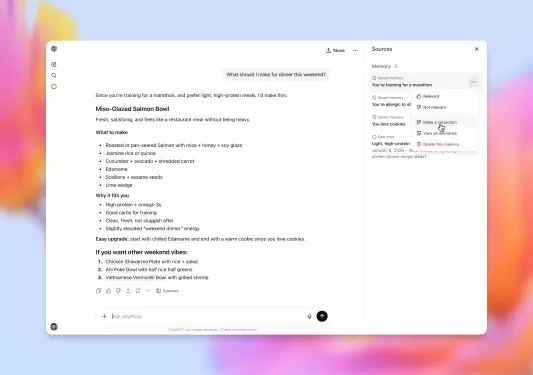 OpenAI launches GPT-5.5 Instant as ChatGPT’s new default model
OpenAI launched GPT-5.5 Instant on Monday, replacing GPT-5.3 Instant as the default ChatGPT model. The company states that this update minimizes hallucinations in high-stakes fields like law, medicine, and finance, while preserving the fast response
OpenAI launches GPT-5.5 Instant as ChatGPT’s new default model
OpenAI launched GPT-5.5 Instant on Monday, replacing GPT-5.3 Instant as the default ChatGPT model. The company states that this update minimizes hallucinations in high-stakes fields like law, medicine, and finance, while preserving the fast response

2026 Latest Top-rated AI Illustration Tools: Our curated list features the best powerfully designed tools for creating stunning editorial scenes and eye-catching cover art quickly. Each option has gone through rigorous real-world tests, offering a free vs paid comparison to help you find the perfect match for your workflow. Try these must-try solutions today to unlock your AI edge and boost your creative productivity. Explore now at XIX.AI.
10 tools
xix.ai

2026 Latest Top-Rated Best AI Tutors for Exam Prep are here on XIX.AI! Our curated list features powerful game-changing tools that offer free vs paid comparison, real-world tests, and weekly updated rankings. They help boost your writing efficiency, simplify complex topic learning, and unlock your academic potential. Explore now to Discover your perfect exam prep tool and Start creating today to Unlock your AI edge!
10 tools
xix.ai

2026 Latest Best Top-Rated AI Budget Planning Tools for Personal Money Management are here on XIX.AI! This curated collection features powerful, game-changing solutions that help you conduct real-world tests, understand spending habits, and create personalized plans to boost productivity. Enjoy a free vs paid comparison along with detailed rankings. Must-try tools designed to simplify money management and unlock your AI edge. Explore now!
11 tools
xix.ai

2026 Latest Best Top-Rated AI Sleep Tracking Assistants curated for ultimate recovery. This fully updated weekly guide features powerful tools that deliver real-world tests, free vs paid comparison, and detailed rankings to help you find the must-try solution that boosts sleep quality and supports better bedtime habits. Explore now at XIX.AI to Unlock your AI edge.
10 tools
xix.ai

2026 Latest Best Top-Rated AI SQL Copilots for Product and Revenue Analytics! XIX.AI has curated a powerful, game-changing collection of must-try tools that undergo real-world tests through weekly updated rankings. These tools help users boost productivity significantly by accelerating data analysis, streamlining complex queries, and generating accurate insights to drive smarter business decisions. Explore now to Discover your perfect tool for unlocking your AI edge!
14 tools
xix.ai
2026 Latest Best Top-Rated AI Homework Helpers That Teach Core Concepts Not Just Answers Powerful Tools for Students Must-Try Curated List Weekly Updated Free vs Paid Comparison Real-World Tests Accurate Rankings to Help You Unlock Your Full Learning Potential Explore now to Discover your perfect tool for smarter studying.
10 tools
xix.ai












